Construction Technology That Cuts Rework on Site
For project managers and site leaders, rework is more than a cost issue—it disrupts schedules, drains labor efficiency, and weakens delivery confidence. Today, construction technology is changing that equation through real-time data, digital coordination, and smarter field execution. This article explores how the right tools and workflows can reduce on-site errors, improve quality control, and help teams deliver infrastructure projects with greater speed, accuracy, and resilience.
What does construction technology really mean when the goal is to cut rework?
In practice, construction technology means tools and systems that prevent mistakes before crews repeat work.
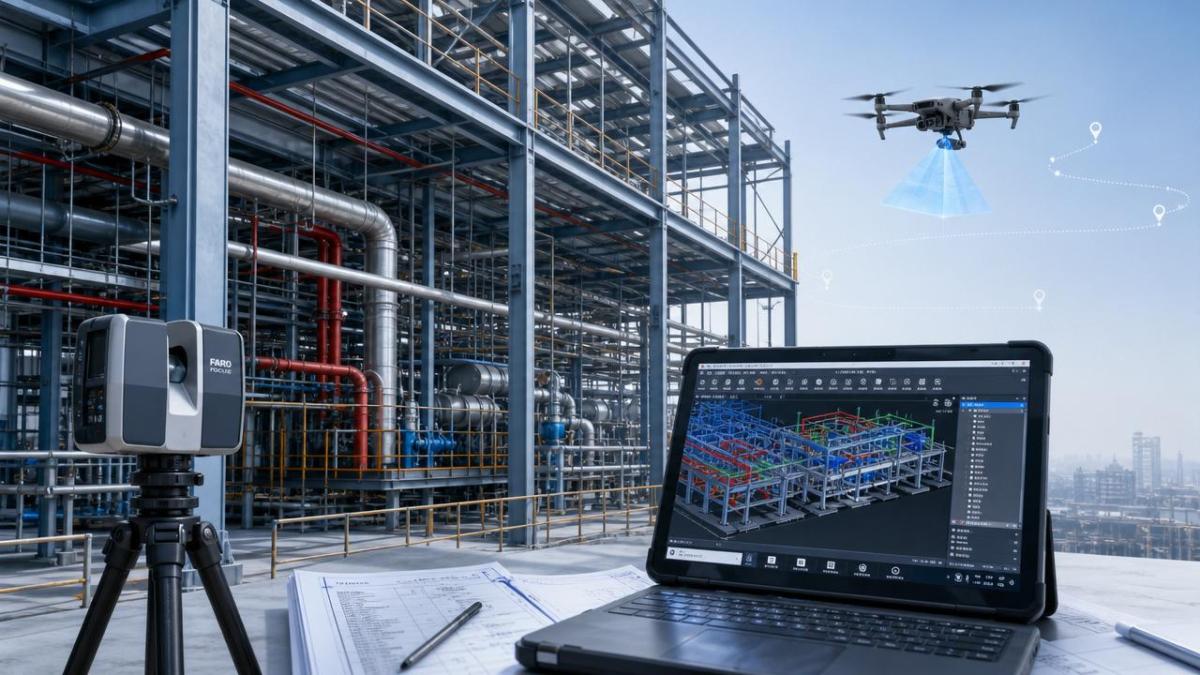
It includes BIM, digital layout, drones, mobile QA apps, sensors, prefabrication workflows, and connected reporting platforms.
Rework often starts with missing information, outdated drawings, poor handoffs, or incorrect field measurements.
Traditional supervision catches issues late. Modern construction technology helps teams detect conflicts earlier and respond faster.
Why rework happens so often on site
- Design information is not updated across all teams.
- Dimensions are transferred manually and incorrectly.
- Trade sequencing is poorly coordinated.
- Quality checks rely on memory or paper records.
- Site conditions differ from assumptions in the plan.
When these gaps combine, even small errors multiply across concrete, steel, MEP, finishing, and commissioning stages.
How digital tools change the outcome
A connected model creates one reference point. A connected field app creates one record of what was built.
That combination turns construction technology from a software purchase into a risk reduction system.
Which construction technology tools reduce rework the fastest?
Not every tool delivers the same speed of impact. Some technologies show value within weeks, not months.
1. BIM and clash detection
BIM helps teams identify geometric conflicts before fabrication or installation begins.
This is especially useful in transport hubs, industrial buildings, utilities, and dense urban infrastructure projects.
2. Mobile field management apps
These apps standardize checklists, inspections, punch items, RFIs, and photo records.
They reduce verbal ambiguity and improve traceability, which directly lowers repeated corrective work.
3. Digital layout and laser scanning
Digital layout increases placement accuracy for anchors, sleeves, walls, and structural elements.
Laser scanning compares as-built conditions with design intent, revealing deviations before downstream work continues.
4. Drones and progress capture
Drones help verify earthwork, access routes, facade progress, and storage conditions.
They improve visibility across large sites where supervisors cannot continuously monitor every zone.
5. Prefabrication linked to digital coordination
Prefabrication reduces field variability, but only when drawings, tolerances, and logistics are tightly controlled.
This is where construction technology delivers outsized value by aligning design, production, and installation data.
Where does construction technology work best across infrastructure and building projects?
The strongest gains appear in projects with many interfaces, strict tolerances, and expensive schedule dependencies.
High-impact application scenarios
- Rail and metro stations with heavy MEP congestion.
- Smart buildings requiring integrated controls and sensors.
- Industrial plants where downtime from errors is very costly.
- Bridges and civil structures needing precise formwork and alignment.
- Urban redevelopment projects with limited access and many stakeholders.
In these settings, construction technology supports better coordination between design offices, fabricators, field teams, and operators.
It also helps document compliance, which matters in regulated infrastructure and public-sector delivery.
Can smaller projects benefit too?
Yes, if implementation stays simple. A mobile QA workflow and digital drawings can already prevent avoidable repeat tasks.
The right question is not project size alone. It is how costly one error becomes.
How should teams choose construction technology without overspending or overcomplicating delivery?
Selection should begin with failure points, not product features.
If layout mistakes are frequent, prioritize scanning or digital positioning. If coordination fails, start with model-based reviews.
Decision criteria that matter most
A good construction technology choice solves one visible problem first and expands after proof is clear.
What should not drive the decision?
Do not choose tools only because competitors use them or because dashboards look impressive.
If the field team cannot trust or use the system daily, rework will remain unchanged.
What risks and misconceptions can limit the value of construction technology?
One common misconception is that software alone fixes poor planning or weak site discipline.
In reality, construction technology works best when paired with clear responsibilities and consistent review routines.
Frequent implementation mistakes
- Uploading data without validating its accuracy.
- Running parallel paper and digital systems too long.
- Ignoring subcontractor onboarding and training.
- Tracking too many metrics without action triggers.
- Starting enterprise-wide instead of piloting one workflow.
Another risk is fragmented adoption. Design uses one platform, site teams use another, and reports stay disconnected.
That creates digital noise rather than fewer errors.
How to avoid these setbacks
Define one source of truth. Set approval rules. Standardize issue naming. Review field deviations weekly.
Most importantly, measure rework categories before and after deployment, not just software usage rates.
How can teams implement construction technology step by step for measurable results?
A phased approach protects budget, builds trust, and makes benefits visible early.
Recommended rollout sequence
- Identify the top three rework sources from recent projects.
- Match each source to a practical construction technology tool.
- Run a limited pilot on one package or zone.
- Train users with real site cases, not generic tutorials.
- Track response time, defect closure, and repeated task rates.
- Expand only after process adjustments and clear field acceptance.
This method supports both major infrastructure programs and smaller building portfolios.
Quick FAQ reference table
The best construction technology strategy is practical, measurable, and built around field realities.
For organizations shaping modern infrastructure, reducing rework is not only about cost control.
It is about delivering reliable assets, improving sustainability, and creating a stronger digital foundation for future projects.
Start with one workflow, one pilot, and one measurable problem. Then scale what proves value on site.
Get weekly intelligence in your inbox.
No noise. No sponsored content. Pure intelligence.
News Recommendations
 Sep 19, 2026How an electronics application guide helps prevent component mismatchHow an electronics application guide helps prevent component mismatch
 Sep 18, 2026When a resource allocation platform improves project deliveryWhen a resource allocation platform improves project delivery
 Sep 17, 2026What to compare when evaluating mineral processing equipment manufacturersWhat to compare when evaluating mineral processing equipment manufacturers
 Sep 16, 2026How mineral separation optimization can reduce concentrate lossesHow mineral separation optimization can reduce concentrate losses
 Sep 15, 2026How to assess lifecycle costs in urban tech procurementHow to assess lifecycle costs in urban tech procurement
 Sep 14, 2026Heavy industry technology trends reshaping capital investment prioritiesHeavy industry technology trends reshaping capital investment priorities
 Sep 14, 2026Global Industrial Equipment Procurement: How Top OEMs Qualify Suppliers for Mining & Infrastructure ProjectsGlobal Industrial Equipment Procurement: How Top OEMs Qualify Suppliers for Mining & Infrastructure Projects
 Sep 14, 2026Industrial & Mining Equipment Procurement: Balancing Local Sourcing, Lead Time, and Certification RequirementsIndustrial & Mining Equipment Procurement: Balancing Local Sourcing, Lead Time, and Certification Requirements
 Sep 14, 2026Infrastructure & Equipment Upgrades: What Procurement Teams Must Verify Before Signing Off on New ContractsInfrastructure & Equipment Upgrades: What Procurement Teams Must Verify Before Signing Off on New Contracts
 Sep 14, 2026Why Infrastructure Equipment Buyers Are Shifting from Catalog-Based to Capability-Based Supplier SelectionWhy Infrastructure Equipment Buyers Are Shifting from Catalog-Based to Capability-Based Supplier Selection
 Sep 14, 2026Process Automation Project Execution: How to Align Supplier Capabilities with PLC Integration, Cybersecurity & Commissioning MilestonesProcess Automation Project Execution: How to Align Supplier Capabilities with PLC Integration, Cybersecurity & Commissioning Milestones
 Sep 14, 2026Are intelligent traffic systems worth the investment for small cities?Are intelligent traffic systems worth the investment for small cities?
 Sep 14, 2026How do intelligent traffic systems handle sensor failures?How do intelligent traffic systems handle sensor failures?
 Sep 14, 2026What should I check before accepting a smart building system?What should I check before accepting a smart building system?
 Sep 14, 2026Is a smart building system worth the maintenance cost?Is a smart building system worth the maintenance cost?
 Sep 14, 2026What data is needed for reliable resource allocation planning?What data is needed for reliable resource allocation planning?
 Sep 14, 2026How can resource allocation software reduce equipment idle time?How can resource allocation software reduce equipment idle time?
 Sep 14, 2026How should smart devices be maintained in harsh outdoor conditions?How should smart devices be maintained in harsh outdoor conditions?
 Sep 14, 2026Do smart devices improve worker safety on construction sites?Do smart devices improve worker safety on construction sites?
 Sep 14, 2026What environmental risks must be assessed before deep-sea mining?What environmental risks must be assessed before deep-sea mining?
 Sep 14, 2026Is deep-sea mining equipment commercially viable in 2026?Is deep-sea mining equipment commercially viable in 2026?
 Sep 14, 2026What Inspection Checks Should Procurement Teams Perform Before Ordering Dredging Equipment in 2026?What Inspection Checks Should Procurement Teams Perform Before Ordering Dredging Equipment in 2026?
 Sep 13, 2026How to verify an industrial product information source before specifying equipmentHow to verify an industrial product information source before specifying equipment
 Sep 12, 2026Which intelligent traffic systems hardware fits an urban intersection?Which intelligent traffic systems hardware fits an urban intersection?
 Sep 11, 2026How pump capacity affects response coverage for municipal fire fighting vehiclesHow pump capacity affects response coverage for municipal fire fighting vehicles
 Sep 10, 2026What to verify before choosing a heavy industry equipment supplierWhat to verify before choosing a heavy industry equipment supplier
 Sep 09, 2026When do adaptive urban traffic control systems reduce corridor delays?When do adaptive urban traffic control systems reduce corridor delays?