Prefabricated Construction Techniques That Save Time
Prefabricated construction techniques are changing how operators deliver projects under tight schedules, labor constraints, and rising quality demands. From factory-built components to faster on-site assembly, these methods help reduce delays, improve safety, and increase consistency across complex builds. This introduction explores practical prefabrication approaches that save time while supporting smarter, more efficient construction workflows.
For operators, the key question is simple: which prefabricated construction techniques actually save time without creating new coordination problems on site? The short answer is that the biggest gains come from methods that reduce field labor, simplify sequencing, and improve installation predictability.
Search intent around prefabricated construction techniques is usually practical rather than academic. Readers want to know what works in real projects, where time savings come from, what preparation is required, and which trade-offs affect lifting, transport, tolerances, and crew workflow.
Operators also care less about theory and more about execution. They need clear guidance on installation speed, quality control, site logistics, equipment planning, safety impacts, and how prefabrication changes day-to-day tasks during assembly, inspection, and handover.
This article focuses on the techniques that create measurable schedule advantages. It also explains where delays can still happen, how to avoid common mistakes, and how operators can support smoother outcomes from delivery to final connection.
Why operators see time savings with prefabricated construction techniques
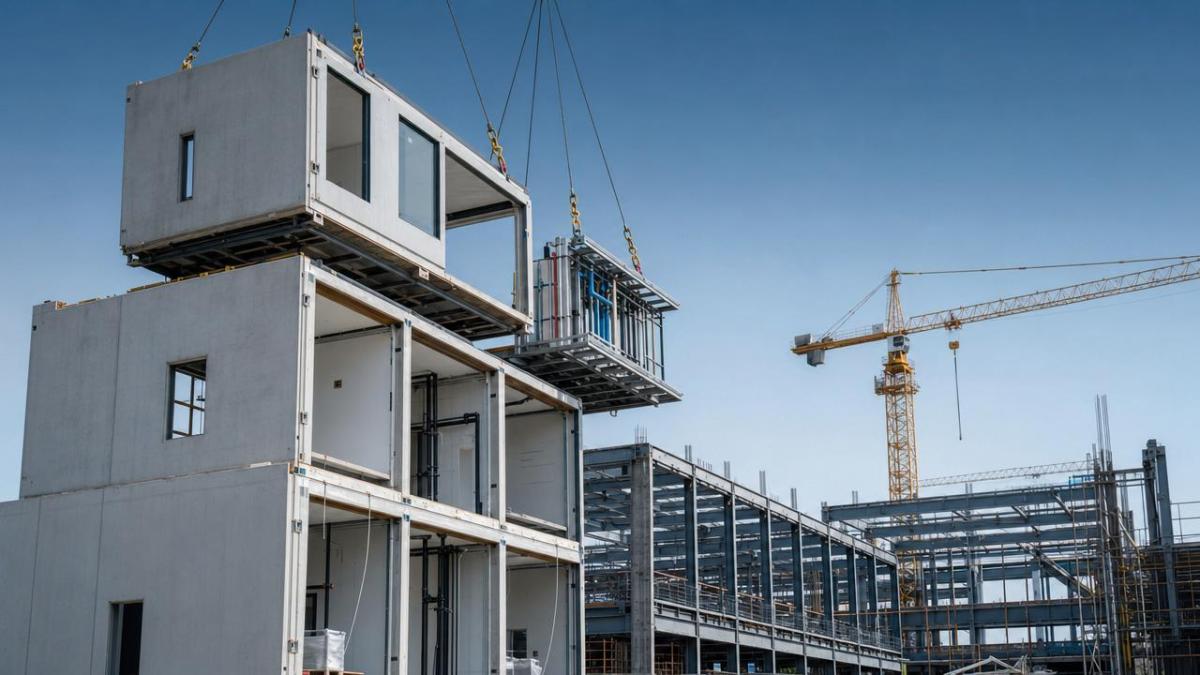
The main reason prefabrication saves time is that work moves from an unpredictable site environment into a controlled factory setting. That shift reduces weather disruption, trade overlap, material handling delays, and rework caused by inconsistent site conditions.
Instead of building every element piece by piece in the field, crews receive larger, more complete assemblies ready for placement. This shortens installation sequences and allows multiple activities to run in parallel, with fabrication off site and foundations progressing on site.
For operators, that often means fewer repetitive manual tasks and more focus on positioning, alignment, fastening, testing, and coordination. When modules arrive as planned, site workflow becomes easier to organize and daily productivity becomes more consistent.
Another important benefit is reduced dependence on scarce skilled labor for every construction stage. Prefabricated systems concentrate precision work in manufacturing facilities, while site teams handle assembly tasks that can be completed faster with clear installation procedures.
However, the schedule advantage is not automatic. Time is only saved when design, manufacturing, transport, crane planning, storage, and installation are aligned. Poor planning can cancel out prefabrication benefits and create bottlenecks just as serious as traditional delays.
Which prefabricated construction techniques save the most time on site
Not all prefabrication methods create the same level of schedule improvement. Operators usually see the greatest time savings from techniques that reduce wet trades, minimize field cutting, and lower the number of separate installation steps required.
Panelized wall systems are one of the fastest options for many building types. Exterior and interior wall panels can arrive with framing, insulation, sheathing, and sometimes windows preinstalled, reducing enclosure time and helping crews dry in the building faster.
Volumetric modular construction delivers even greater time compression when full room-sized units are manufactured off site. Bathrooms, hotel rooms, student housing units, and medical spaces can be installed quickly because much of the internal fit-out is already complete.
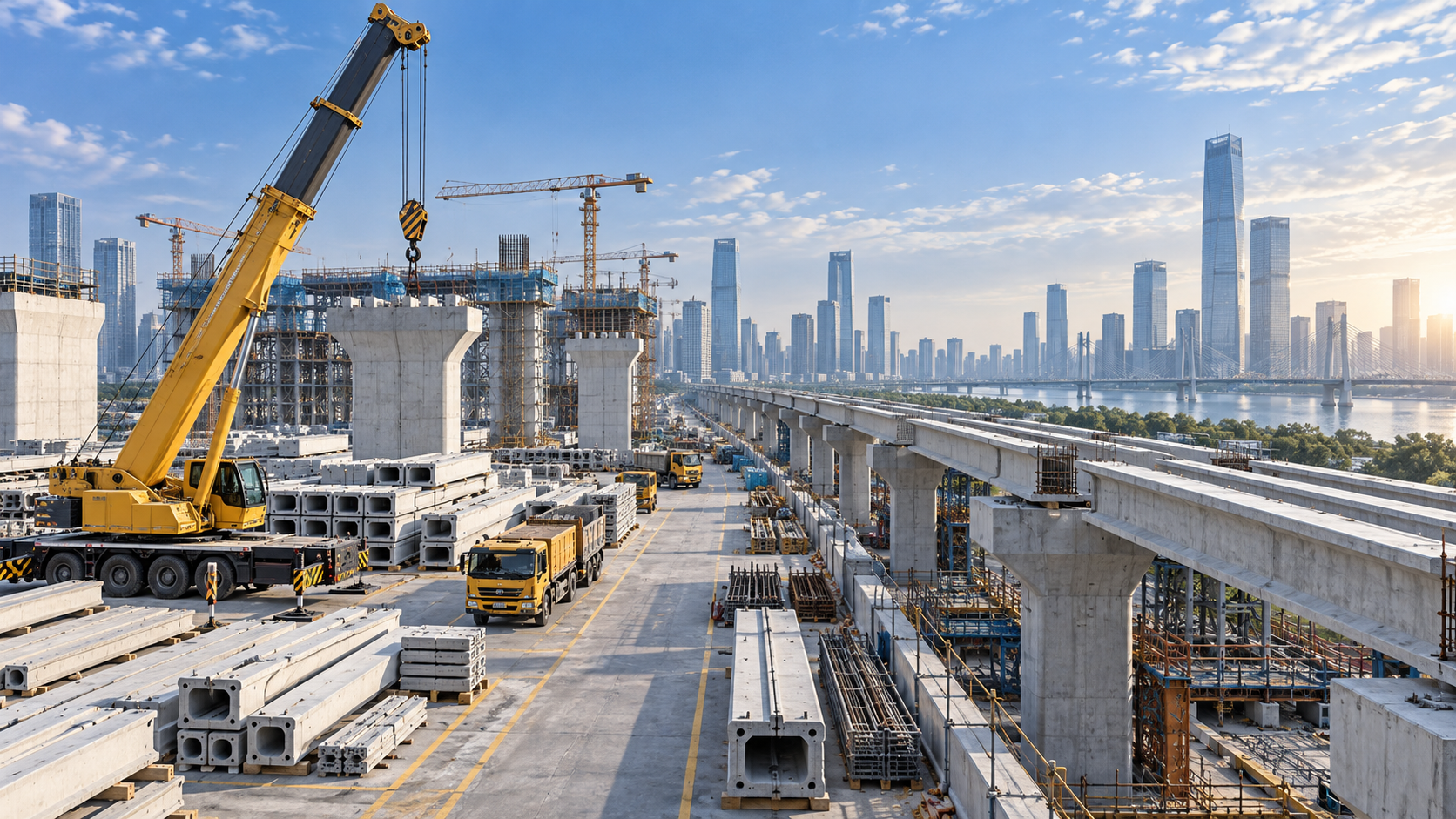
Precast concrete components are another proven solution. Columns, beams, stairs, slabs, and façade panels can be fabricated with tight quality control, then lifted into place rapidly. This reduces formwork, curing time, and congestion associated with cast-in-place processes.
Prefabricated MEP racks and corridor modules often deliver some of the most practical savings. Ducts, piping, cable trays, supports, and valves are assembled in advance, which shortens overhead installation time and reduces clashes between different subcontractor crews.
Bathroom pods are especially effective in projects with repeated room layouts. Because plumbing, finishes, fixtures, waterproofing, and electrical work are completed before delivery, operators spend less time coordinating multiple trades in confined spaces.
Prefabricated structural steel assemblies also improve speed when connections are standardized and lifting plans are well prepared. Site crews can erect sections rapidly, especially when welding is minimized and bolted connections are designed for efficient access.
For civil and infrastructure works, modular bridge elements, utility vaults, equipment skids, and plant rooms can significantly shorten shutdown windows. In these settings, saving time often means reducing service interruption as much as reducing labor hours.
How operators can tell whether a prefabricated method will really save time
The most useful test is not whether a component is prefabricated, but whether it removes critical-path work from the site. If fabrication happens off site while foundations, access routes, or core structure proceed at the same time, schedule savings are more likely.
Operators should also check how many site activities are eliminated. A technique usually saves meaningful time when it reduces measuring, cutting, forming, welding, curing, finishing, or trade handoffs. Fewer handoffs usually mean fewer waiting periods and fewer errors.
Repeatability is another strong indicator. Prefabrication performs best when projects include standardized dimensions, repeated room types, repeated service layouts, or recurring structural bays. High repetition improves factory efficiency and makes installation routines more predictable.
Access and lifting conditions matter just as much. If modules are difficult to transport, staging space is limited, or crane time is constrained, apparent time savings may shrink. A fast factory process can still fail if deliveries cannot be unloaded and set efficiently.
Tolerance management is another deciding factor. Operators should review dimensional accuracy in supporting works before prefabricated elements arrive. Small alignment errors in slabs, embeds, or support frames can slow installation and force adjustments that consume valuable time.
The procurement timeline should also be considered. Some prefabricated components require earlier design freeze and longer manufacturing lead times. If project decisions are changing late, the schedule risk may shift from site delays to production delays or redesign waste.
Common site problems that reduce the benefits of prefabrication
One of the most common problems is incomplete coordination before fabrication starts. If drawings are not finalized across architecture, structure, and MEP, modules may arrive with connection conflicts, missing penetrations, or access issues that create rework on site.
Another issue is poor delivery sequencing. Prefabricated systems often depend on just-in-time logistics. When trucks arrive too early, too late, or in the wrong order, crews lose rhythm, storage areas fill up, and crane operations become less efficient.
Operators also face problems when site teams are trained too late. Even high-quality prefabricated units can be installed slowly if crews do not understand lifting points, temporary bracing, connection details, inspection steps, or the exact installation sequence.
Damage during transport and handling is another hidden schedule risk. Protective packaging, rigging methods, and unloading procedures must match the product type. Repairs to finishes, corners, waterproofing layers, or service connections can erase expected time savings quickly.
Weather risk does not disappear entirely. While factory production avoids many site disruptions, crane lifts, sealing work, and final connections may still depend on acceptable conditions. Wind restrictions are especially important for large panels and volumetric modules.
Finally, unrealistic expectations can cause frustration. Prefabrication does not remove the need for supervision, verification, and coordination. It changes where work happens and compresses installation time, but it increases the importance of preparation and precise execution.
Best practices for operators working with prefabricated systems
Operators can protect schedule gains by becoming involved before installation starts. Reviewing shop drawings, connection details, lifting methods, and sequencing plans early helps site teams identify practical issues that may not be obvious during office-based planning.
Pre-installation mock-ups are highly valuable, especially for new systems. A small trial run helps crews confirm tolerances, tools, rigging, access routes, bracing needs, and inspection points. Problems found during a mock-up are much cheaper than problems found during production lifts.
Clear labeling is another major efficiency factor. Components should be marked in a way that matches erection drawings, delivery sequence, and installation zones. Good labeling reduces searching time and prevents misplacement when multiple crews are working at once.
Site layout planning should support fast unloading and staging. Operators need designated areas for temporary storage, protection from damage, forklift paths, crane access, and waste control. Tight sites especially require disciplined movement plans to avoid congestion.
Daily coordination between logistics, lifting teams, installers, and supervisors is essential. Because prefabrication compresses field tasks, even short disruptions can have a larger effect. A missed truck slot or crane delay can interrupt several linked activities at once.
Operators should also verify connection readiness before units arrive. Embeds, anchors, sleeves, supports, and reference lines must be checked in advance. Installation crews work fastest when they can place and secure units without stopping for correction work.
Digital tools can help significantly. QR-coded components, model-based installation references, and mobile punch lists improve tracking and reduce confusion. In well-managed projects, prefabrication and digital coordination reinforce each other and create stronger schedule control.
Where prefabricated construction techniques work best
Prefabrication is especially effective in projects with high repetition, tight deadlines, or difficult site labor conditions. Residential blocks, hotels, hospitals, schools, data centers, utility plants, and transport facilities often benefit because many spaces follow repeatable patterns.
Remote or restricted sites also see strong value. When material deliveries are difficult or local skilled labor is limited, sending more complete assemblies to the site can reduce operational complexity and improve consistency in installation quality.
Healthcare and hospitality projects often gain from bathroom pods, MEP modules, and headwall systems because these elements involve many coordinated trades in compact spaces. Factory assembly reduces conflict and supports faster room turnover during installation.
Industrial and infrastructure projects benefit when shutdown windows are short. Prefabricated pipe racks, equipment skids, electrical rooms, and bridge elements help crews complete upgrades or replacements faster, reducing downtime and improving planning reliability.
That said, highly customized projects with frequent late design changes may be less suitable for aggressive prefabrication. In those cases, operators should focus on targeted prefabricated elements rather than forcing a fully modular strategy that may reduce flexibility.
What time savings should operators realistically expect
Actual results vary by project type, team capability, and supply chain maturity, but time savings are usually strongest in enclosure, interior fit-out, and MEP coordination. The biggest gains often come from reducing rework and compressing overlapping trade schedules.
Operators should expect prefabrication to improve predictability as much as speed. A project that finishes with fewer stoppages, fewer defects, and fewer labor spikes often delivers more real value than one that only appears faster on paper.
In many cases, prefabricated construction techniques do not just shorten one activity. They stabilize the whole workflow. Earlier enclosure, cleaner coordination, faster inspections, and reduced punch-list volume can help downstream tasks move with less disruption.
The best results usually come from selective adoption. Rather than prefabricating everything, successful teams identify high-impact systems where off-site manufacturing removes the most uncertainty from site operations and supports repeatable installation performance.
Conclusion: prefabrication saves time when execution is disciplined
For operators, the value of prefabricated construction techniques is clear when they reduce field complexity, speed up installation, and improve coordination across trades. The methods that save the most time are those that remove critical work from the site without adding new bottlenecks.
Panelized systems, modular rooms, precast elements, MEP racks, and prefabricated service pods can all deliver major schedule gains. But those gains depend on accurate design, reliable logistics, lifting readiness, trained crews, and strong tolerance control.
If operators assess prefabrication through the lens of workflow, sequencing, and site readiness, they can make better decisions about where these methods fit. Used well, prefabrication is not just a faster way to build. It is a smarter way to organize construction.
Get weekly intelligence in your inbox.
No noise. No sponsored content. Pure intelligence.
News Recommendations
 Sep 19, 2026How an electronics application guide helps prevent component mismatchHow an electronics application guide helps prevent component mismatch
 Sep 18, 2026When a resource allocation platform improves project deliveryWhen a resource allocation platform improves project delivery
 Sep 17, 2026What to compare when evaluating mineral processing equipment manufacturersWhat to compare when evaluating mineral processing equipment manufacturers
 Sep 16, 2026How mineral separation optimization can reduce concentrate lossesHow mineral separation optimization can reduce concentrate losses
 Sep 15, 2026How to assess lifecycle costs in urban tech procurementHow to assess lifecycle costs in urban tech procurement
 Sep 14, 2026Heavy industry technology trends reshaping capital investment prioritiesHeavy industry technology trends reshaping capital investment priorities
 Sep 14, 2026Why Infrastructure Equipment Buyers Are Shifting from Catalog-Based to Capability-Based Supplier SelectionWhy Infrastructure Equipment Buyers Are Shifting from Catalog-Based to Capability-Based Supplier Selection
 Sep 14, 2026Process Automation Project Execution: How to Align Supplier Capabilities with PLC Integration, Cybersecurity & Commissioning MilestonesProcess Automation Project Execution: How to Align Supplier Capabilities with PLC Integration, Cybersecurity & Commissioning Milestones
 Sep 14, 2026Are intelligent traffic systems worth the investment for small cities?Are intelligent traffic systems worth the investment for small cities?
 Sep 14, 2026How do intelligent traffic systems handle sensor failures?How do intelligent traffic systems handle sensor failures?
 Sep 14, 2026What should I check before accepting a smart building system?What should I check before accepting a smart building system?
 Sep 14, 2026Is a smart building system worth the maintenance cost?Is a smart building system worth the maintenance cost?
 Sep 14, 2026What data is needed for reliable resource allocation planning?What data is needed for reliable resource allocation planning?
 Sep 14, 2026How can resource allocation software reduce equipment idle time?How can resource allocation software reduce equipment idle time?
 Sep 14, 2026How should smart devices be maintained in harsh outdoor conditions?How should smart devices be maintained in harsh outdoor conditions?
 Sep 14, 2026Do smart devices improve worker safety on construction sites?Do smart devices improve worker safety on construction sites?
 Sep 14, 2026What environmental risks must be assessed before deep-sea mining?What environmental risks must be assessed before deep-sea mining?
 Sep 14, 2026Is deep-sea mining equipment commercially viable in 2026?Is deep-sea mining equipment commercially viable in 2026?
 Sep 14, 2026What Inspection Checks Should Procurement Teams Perform Before Ordering Dredging Equipment in 2026?What Inspection Checks Should Procurement Teams Perform Before Ordering Dredging Equipment in 2026?
 Sep 13, 2026How to verify an industrial product information source before specifying equipmentHow to verify an industrial product information source before specifying equipment
 Sep 12, 2026Which intelligent traffic systems hardware fits an urban intersection?Which intelligent traffic systems hardware fits an urban intersection?
 Sep 11, 2026How pump capacity affects response coverage for municipal fire fighting vehiclesHow pump capacity affects response coverage for municipal fire fighting vehicles
 Sep 10, 2026What to verify before choosing a heavy industry equipment supplierWhat to verify before choosing a heavy industry equipment supplier
 Sep 09, 2026When do adaptive urban traffic control systems reduce corridor delays?When do adaptive urban traffic control systems reduce corridor delays?
 Sep 08, 2026When logistics technology solutions in North America reduce delivery delaysWhen logistics technology solutions in North America reduce delivery delays
 Sep 07, 2026How reliable are wireless mining safety systems in underground mines?How reliable are wireless mining safety systems in underground mines?
 Sep 07, 2026How to assess a smart lighting technology platform for interoperabilityHow to assess a smart lighting technology platform for interoperability