Prefabricated Construction Benefits: Faster Builds, Fewer Site Risks
For enterprise decision-makers facing tighter timelines, rising labor costs, and stricter safety demands, understanding prefabricated construction benefits is no longer optional. From faster delivery to lower site exposure, prefabrication is changing how projects move from design to installation. Across buildings, transport assets, utilities, and industrial facilities, it offers a practical path to better schedule control, safer execution, and more consistent quality.
Why a checklist approach matters for prefabricated construction benefits
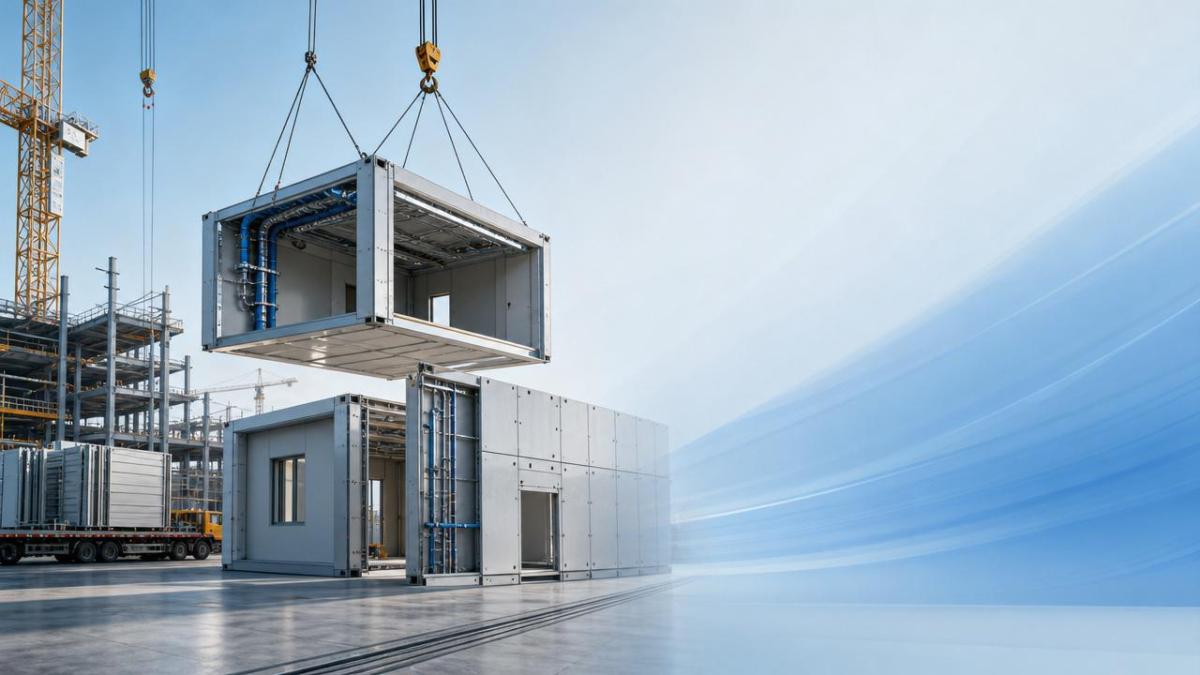
The value of prefabrication is real, but it is not automatic. Teams often focus on speed alone and miss design freeze timing, transport limits, crane access, or tolerance management. A checklist keeps decisions grounded in field realities.
This matters in the broader infrastructure and urban technology landscape. Modular building systems now connect with digital design, off-site manufacturing, logistics planning, and smart jobsite controls. That makes prefabricated construction benefits both strategic and operational.
When evaluated with clear criteria, prefabrication can reduce weather delays, cut rework, improve labor productivity, and lower accident exposure. The following checklist helps verify where those gains are most likely to appear.
Core checklist: how to capture prefabricated construction benefits
- Define repeatable components early, such as wall panels, MEP racks, bathroom pods, stair cores, or structural steel assemblies with stable dimensional rules.
- Freeze critical design interfaces before fabrication, especially connection points, embed locations, service penetrations, and tolerance bands between trades.
- Map logistics from factory to site, including route clearance, load dimensions, storage constraints, lifting sequences, and weather protection during transit.
- Verify manufacturing capacity and quality systems, ensuring suppliers can maintain output, traceability, inspection records, and material consistency across batches.
- Model installation sequencing in detail, aligning crane utilization, delivery windows, crew access, temporary works, and follow-on trades to avoid idle time.
- Compare full project economics, not unit cost alone, by including schedule compression, reduced waste, lower supervision needs, and fewer safety incidents.
- Integrate digital coordination tools, using BIM, clash detection, QR tracking, and production dashboards to support decision-making across factory and site teams.
- Assess regulatory and code fit early, covering fire ratings, acoustic performance, structural compliance, transport permits, and inspection acceptance paths.
- Plan site readiness before delivery, confirming foundations, anchor points, access roads, laydown zones, and utilities are prepared for immediate installation.
- Measure outcomes after deployment, tracking cycle time, punch-list volume, injury exposure hours, defect rates, and carbon or waste reductions.
Used together, these checks turn prefabricated construction benefits from a marketing claim into a measurable delivery strategy. They also help identify projects where hybrid methods make more sense than full modularization.
Where prefabricated construction benefits are strongest
Commercial and residential building programs
In hotels, apartments, student housing, and healthcare support buildings, repeated room layouts create ideal conditions for off-site fabrication. Bathroom pods, facade panels, and corridor service modules can be produced in parallel with foundation and structural works.
This parallel workflow is one of the clearest prefabricated construction benefits. It compresses overall duration and reduces trade stacking, which often drives site congestion and safety exposure.
Industrial plants and process facilities
Pipe racks, electrical skids, plant rooms, and equipment frames are frequently assembled off-site, where welding, inspection, and testing are easier to control. Factory conditions support repeatability and more reliable documentation.
For industrial projects, prefabricated construction benefits often show up as fewer hot works on site, shorter shutdown windows, and better commissioning readiness. That can directly improve operational continuity.
Transport, utility, and civic infrastructure
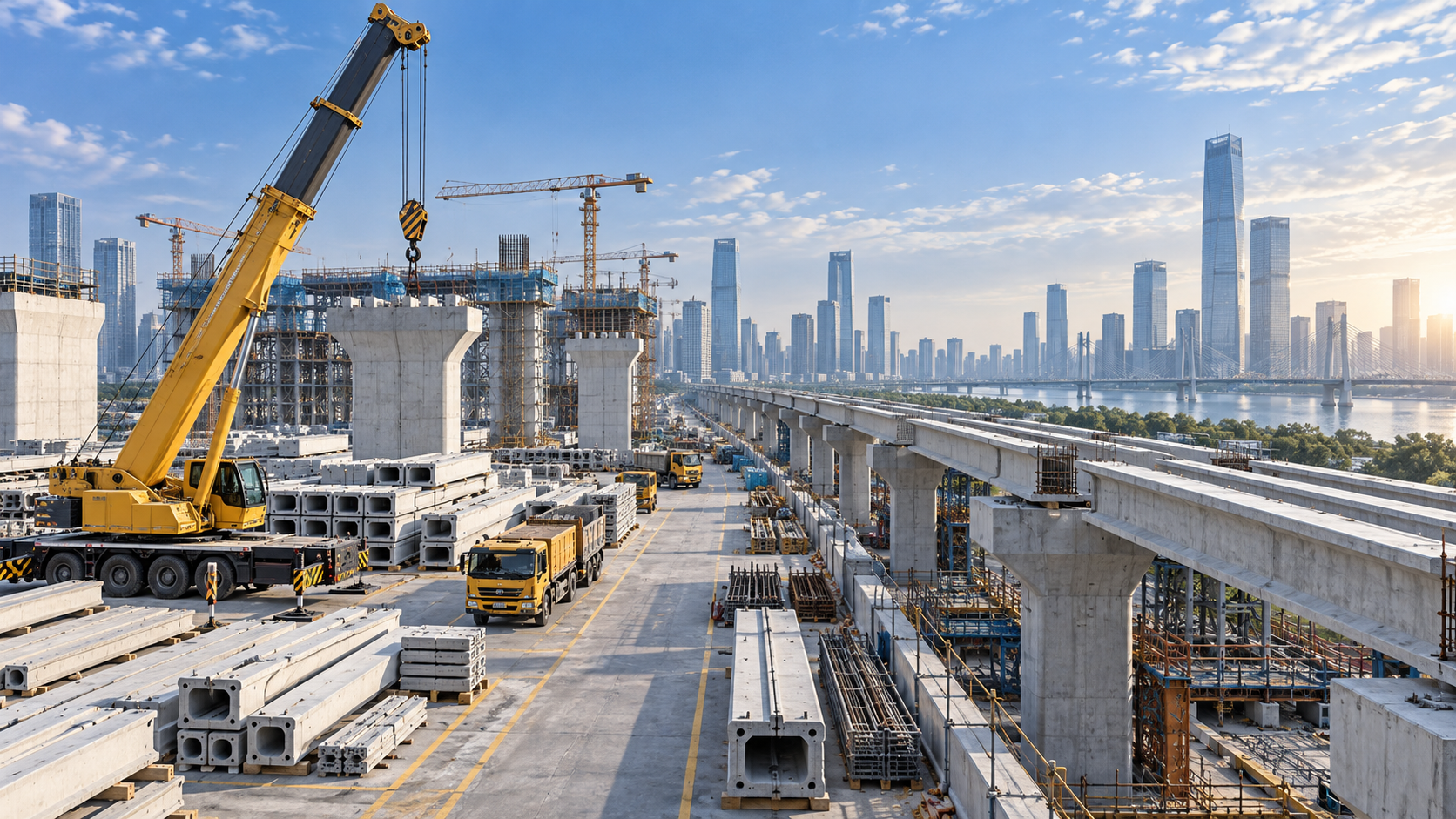
Rail platforms, bridge elements, utility vaults, substations, and service enclosures increasingly use modular or precast systems. The main advantage is limiting disruption in live urban environments.
In these contexts, prefabricated construction benefits extend beyond the project boundary. Faster installation reduces traffic impacts, service interruption, and public exposure to active construction zones.
Commonly overlooked items that weaken project outcomes
Late design changes after fabrication starts
Prefabrication rewards discipline. Once production begins, small drawing revisions can trigger large rework costs, delivery delays, or unusable modules. Interface governance must be tighter than in conventional builds.
Underestimating transport and lifting constraints
A module that works on paper may fail on the road or at the crane hook. Turning radius, bridge clearance, escort rules, wind limits, and lifting capacity can erase expected prefabricated construction benefits if checked too late.
Treating suppliers as vendors instead of delivery partners
Off-site production depends on communication rhythm. Procurement teams that engage fabricators only after major decisions often lose chances to simplify geometry, standardize details, and improve manufacturability.
Ignoring tolerance buildup between systems
Misalignment between structure, facade, and MEP modules can create installation friction. Survey control, datum management, and mock-up validation are essential to preserve the quality-related prefabricated construction benefits.
Measuring only direct labor savings
The strongest business case may come from schedule certainty, less waste, fewer defects, and reduced incident exposure. Narrow cost comparisons can undervalue the broader return.
Practical execution advice for better results
- Start with a component-level feasibility review during concept design, not after tender, so prefabrication shapes the project instead of patching it.
- Run factory-site coordination meetings weekly, focusing on production status, quality hold points, delivery dates, and installation prerequisites.
- Use mock-ups to validate joints, finishes, and access zones before mass production, especially for high-visibility or safety-critical assemblies.
- Link BIM objects with procurement and logistics data to improve traceability and support rapid issue resolution during installation.
- Set acceptance criteria for each module before shipment, including dimensional checks, protection methods, and documentation completeness.
These steps help convert prefabricated construction benefits into repeatable project performance. They are especially useful in programs with multiple sites, phased delivery, or pressure to standardize quality across regions.
Summary and next actions
The most important prefabricated construction benefits are not limited to faster builds. They include fewer site risks, stronger quality control, better labor efficiency, and improved delivery predictability. In many sectors, these advantages align directly with safety, sustainability, and asset performance goals.
To move from interest to action, begin with a structured review of repeatable components, logistics constraints, design maturity, supplier capability, and installation sequencing. Then pilot prefabrication on a package where outcomes can be measured clearly.
In an industry moving toward digital coordination and lower-risk execution, prefabrication is no longer a niche method. It is a practical delivery model for organizations seeking resilience, speed, and smarter infrastructure outcomes.
Get weekly intelligence in your inbox.
No noise. No sponsored content. Pure intelligence.
News Recommendations
 Sep 19, 2026How an electronics application guide helps prevent component mismatchHow an electronics application guide helps prevent component mismatch
 Sep 18, 2026When a resource allocation platform improves project deliveryWhen a resource allocation platform improves project delivery
 Sep 17, 2026What to compare when evaluating mineral processing equipment manufacturersWhat to compare when evaluating mineral processing equipment manufacturers
 Sep 16, 2026How mineral separation optimization can reduce concentrate lossesHow mineral separation optimization can reduce concentrate losses
 Sep 15, 2026How to assess lifecycle costs in urban tech procurementHow to assess lifecycle costs in urban tech procurement
 Sep 14, 2026Heavy industry technology trends reshaping capital investment prioritiesHeavy industry technology trends reshaping capital investment priorities
 Sep 14, 2026Global Industrial Equipment Procurement: How Top OEMs Qualify Suppliers for Mining & Infrastructure ProjectsGlobal Industrial Equipment Procurement: How Top OEMs Qualify Suppliers for Mining & Infrastructure Projects
 Sep 14, 2026Industrial & Mining Equipment Procurement: Balancing Local Sourcing, Lead Time, and Certification RequirementsIndustrial & Mining Equipment Procurement: Balancing Local Sourcing, Lead Time, and Certification Requirements
 Sep 14, 2026Infrastructure & Equipment Upgrades: What Procurement Teams Must Verify Before Signing Off on New ContractsInfrastructure & Equipment Upgrades: What Procurement Teams Must Verify Before Signing Off on New Contracts
 Sep 14, 2026Why Infrastructure Equipment Buyers Are Shifting from Catalog-Based to Capability-Based Supplier SelectionWhy Infrastructure Equipment Buyers Are Shifting from Catalog-Based to Capability-Based Supplier Selection
 Sep 14, 2026Process Automation Project Execution: How to Align Supplier Capabilities with PLC Integration, Cybersecurity & Commissioning MilestonesProcess Automation Project Execution: How to Align Supplier Capabilities with PLC Integration, Cybersecurity & Commissioning Milestones
 Sep 14, 2026Are intelligent traffic systems worth the investment for small cities?Are intelligent traffic systems worth the investment for small cities?
 Sep 14, 2026How do intelligent traffic systems handle sensor failures?How do intelligent traffic systems handle sensor failures?
 Sep 14, 2026What should I check before accepting a smart building system?What should I check before accepting a smart building system?
 Sep 14, 2026Is a smart building system worth the maintenance cost?Is a smart building system worth the maintenance cost?
 Sep 14, 2026What data is needed for reliable resource allocation planning?What data is needed for reliable resource allocation planning?
 Sep 14, 2026How can resource allocation software reduce equipment idle time?How can resource allocation software reduce equipment idle time?
 Sep 14, 2026How should smart devices be maintained in harsh outdoor conditions?How should smart devices be maintained in harsh outdoor conditions?
 Sep 14, 2026Do smart devices improve worker safety on construction sites?Do smart devices improve worker safety on construction sites?
 Sep 14, 2026What environmental risks must be assessed before deep-sea mining?What environmental risks must be assessed before deep-sea mining?
 Sep 14, 2026Is deep-sea mining equipment commercially viable in 2026?Is deep-sea mining equipment commercially viable in 2026?
 Sep 14, 2026What Inspection Checks Should Procurement Teams Perform Before Ordering Dredging Equipment in 2026?What Inspection Checks Should Procurement Teams Perform Before Ordering Dredging Equipment in 2026?
 Sep 13, 2026How to verify an industrial product information source before specifying equipmentHow to verify an industrial product information source before specifying equipment
 Sep 12, 2026Which intelligent traffic systems hardware fits an urban intersection?Which intelligent traffic systems hardware fits an urban intersection?
 Sep 11, 2026How pump capacity affects response coverage for municipal fire fighting vehiclesHow pump capacity affects response coverage for municipal fire fighting vehicles
 Sep 10, 2026What to verify before choosing a heavy industry equipment supplierWhat to verify before choosing a heavy industry equipment supplier
 Sep 09, 2026When do adaptive urban traffic control systems reduce corridor delays?When do adaptive urban traffic control systems reduce corridor delays?