How Mining SPVs Improve Haul Site Safety
In high-risk haul site environments, safety managers and quality control teams need smarter ways to reduce collisions, improve visibility, and strengthen operational control. Special purpose vehicles for mining play a critical role by supporting safer material transport, emergency response, and site coordination. Understanding how mining SPVs improve haul site safety helps decision-makers build more resilient, efficient, and compliant mining operations.
Why do haul sites need special purpose vehicles for mining?
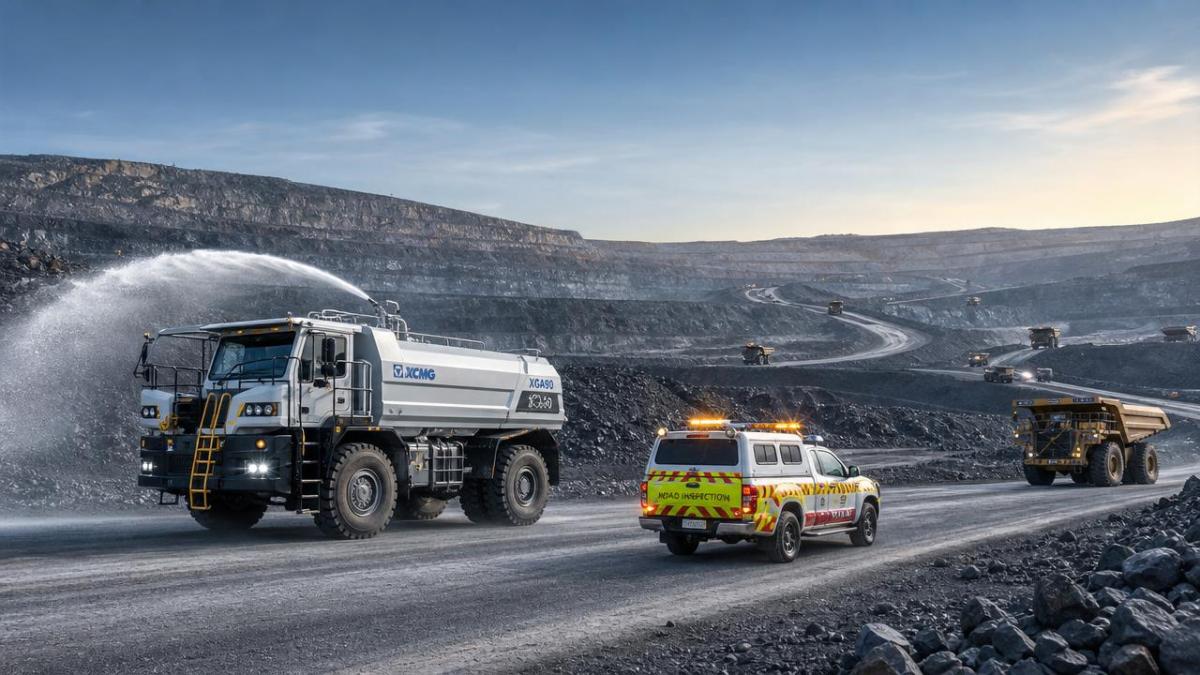
A haul site is not just a road between loading and dumping points. It is a dynamic system where haul trucks, service units, pedestrians, light vehicles, and changing ground conditions interact under dust, noise, slope pressure, and time-sensitive production targets.
That complexity creates a safety gap. Standard support vehicles often lack the visibility package, warning systems, maneuverability, and task-specific equipment needed to control risk in mining zones. This is where special purpose vehicles for mining become operational safety tools rather than simple transport assets.
For quality control personnel and safety managers, the issue is not only whether a vehicle can move people or materials. The real question is whether it reduces exposure to high-energy hazards, supports inspection discipline, and integrates with site safety protocols.
- They separate incompatible traffic flows, such as maintenance crews and production haul trucks, reducing interaction points.
- They carry inspection, fire suppression, lighting, communications, or spill-response systems directly to the risk area.
- They improve incident response time when a breakdown, tire fire, berm failure, or visibility event develops on active haul roads.
- They support procedural compliance by giving teams the right platform for pre-start checks, escorting, isolation, and emergency access.
What qualifies as an SPV in a mining safety context?
In mining, SPVs include purpose-built water trucks for dust control, service trucks for field maintenance, rescue and fire vehicles, tire handlers, mobile lighting units, crew transporters, recovery vehicles, and road inspection units. Their value lies in specialized mission design, not in generic road transport capability.
GIUT’s cross-sector perspective is useful here because modern mine safety increasingly borrows from smart construction jobsites, city traffic control logic, and connected fleet management. The result is a more intelligent safety layer around heavy mobile equipment.
Which mining SPVs improve haul site safety most directly?
Not every support vehicle has the same safety impact. For teams responsible for hazard control, the strongest gains usually come from SPVs that manage dust, visibility, response readiness, road condition, and maintenance exposure.
The table below helps safety managers compare common special purpose vehicles for mining by task, risk focus, and operational value on haul roads.
This comparison shows why special purpose vehicles for mining should be selected by hazard profile rather than by fleet habit. A water truck reduces airborne dust, but it will not replace an inspection unit that documents road edge failure or missing barricades. Matching vehicle function to risk source is essential.
High-priority applications for safety teams
- Dust-intensive open-pit operations where visibility drops quickly during dry seasons and shift changes.
- Long uphill and downhill haul routes where brake events, wheel slip, and drainage failures can escalate fast.
- Mixed-traffic zones that combine contractors, graders, fuel support, and production trucks in narrow corridors.
- Night operations where mobile lighting, reflective marking, and emergency reach are critical to control.
How do special purpose vehicles for mining reduce the most common haul road hazards?
Most haul site incidents are not caused by one single failure. They emerge from a chain: poor visibility, delayed detection, bad road condition, weak communication, and inadequate response tools. Mining SPVs break that chain at multiple points.
1. They improve visibility and traffic awareness
Dust control trucks reduce suspended particles on ramps and intersections. Escort and inspection units can be fitted with beacons, reflective livery, reverse alarms, and camera coverage that make them easier to detect in blind areas. For safety managers, this directly supports traffic management plans.
2. They shorten the time between hazard identification and intervention
A dedicated road inspection SPV can identify berm erosion, potholes, pooling water, or fallen rocks before a haul truck loses control. A service truck with proper tools and containment systems reduces the time a disabled machine remains exposed on the road shoulder.
3. They reduce worker exposure during field tasks
Quality control and maintenance teams often need to inspect tires, brakes, structural points, fluid leaks, and road conditions. Special purpose vehicles for mining provide safer access platforms, on-board lighting, communications, and storage, reducing ad hoc roadside setups.
4. They support emergency preparedness
A fast, terrain-capable fire or rescue SPV matters when a truck fire starts on a ramp or a worker needs medical extraction from an isolated haul sector. In mining, response delay is often the difference between a contained event and a major loss.
5. They create better operational discipline
Dedicated vehicles reinforce dedicated procedures. When a mine uses specific SPVs for dust management, road audits, spill control, and emergency access, responsibilities become clearer, inspections are easier to verify, and deviations are easier to trace.
What should safety managers check before selecting mining SPVs?
Procurement mistakes usually happen when teams buy around payload or price only. For haul site safety, the better method is to evaluate vehicle fit against route conditions, exposure scenarios, compliance needs, and maintenance capability.
The selection table below is designed for buyers comparing special purpose vehicles for mining across operational and safety criteria.
The table also highlights a practical truth: the lowest purchase price may create the highest safety cost if the vehicle lacks visibility systems, field support, or adaptation to harsh mine roads. A quality-focused procurement review should include life-cycle risk, not just initial capex.
A practical buying checklist
- Map the hazard. Identify whether dust, fire risk, road defects, breakdown exposure, or emergency access is the main problem.
- Define the mission. Specify payload, crew count, fluid system, tool storage, pump performance, or rescue equipment as required.
- Verify environmental fit. Check temperature range, corrosion exposure, altitude, road grade, and operating hour expectations.
- Review supportability. Confirm spare parts, operator training, commissioning support, and maintenance documentation.
- Assess interface with site systems. Ensure the SPV can work with dispatch, traffic rules, inspection workflows, and emergency plans.
What technical features matter most on modern haul sites?
Special purpose vehicles for mining are becoming more intelligent. Safety performance now depends as much on information flow as on mechanical configuration. This matters to GIUT’s audience because heavy industry increasingly operates like a connected infrastructure system rather than a collection of isolated machines.
Core feature priorities
- 360-degree or multi-angle camera visibility for low-light, dust, and reversing operations.
- High-output lighting and reflective identification for night haul cycles and poor weather conditions.
- Telemetry or fleet monitoring interfaces to support dispatch visibility and maintenance planning.
- Anti-slip access, ergonomic storage, and secure platform design to reduce fall and manual handling risks.
- On-board communication systems for fast coordination with control rooms, dispatchers, and emergency teams.
Why digital integration matters
When a mine treats SPVs as connected assets, not isolated tools, safety performance becomes measurable. Inspection routes can be logged. Dust suppression can be scheduled by trigger points. Service interventions can be tracked against incident frequency. This is where infrastructure intelligence adds value beyond equipment supply.
For safety managers, the gain is clearer evidence. It becomes easier to demonstrate that controls were deployed, response windows were reduced, and road condition management followed a repeatable process.
How should teams balance cost, alternatives, and risk?
Budget pressure is real, especially when mines try to extend the life of general-purpose vehicles or adapt old units to new tasks. Sometimes retrofits make sense. Often they create hidden safety and maintenance compromises.
When retrofitting may be reasonable
- The mission is limited, such as periodic road inspection on short routes.
- The base vehicle already meets terrain and braking demands.
- Visibility, electrical load, and structural changes can be validated properly.
When a dedicated SPV is the safer choice
- The vehicle must support emergency response, fire suppression, or hazardous material control.
- The site has steep grades, heavy traffic, and continuous operating hours.
- Downtime carries high production and safety consequences.
- The operation requires reliable documentation for audits, contractor control, or corporate safety reviews.
In many cases, the decision should be based on risk concentration. If one incident involving dust, fire, or delayed rescue could stop production or cause severe harm, special purpose vehicles for mining usually justify their cost through risk reduction, not only task efficiency.
What compliance and implementation issues are often overlooked?
Even a capable SPV will underperform if implementation is weak. Safety managers should look beyond delivery and focus on integration into the site’s traffic management, emergency response, and inspection systems.
Common gaps after purchase
- Operators are trained on driving, but not on task-specific use such as controlled spraying, isolation support, or rescue access.
- The mine has no formal inspection checklist for the SPV’s pumps, warning systems, lighting, and communication devices.
- Traffic rules do not clearly define right-of-way, parking zones, or interaction with ultra-class haul trucks.
- Maintenance planning ignores the harsher duty cycle of mine roads, causing support vehicles to fail when they are needed most.
Standards and documentation approach
Requirements vary by jurisdiction and site policy, so teams should confirm applicable mining, roadworthiness, fire protection, and occupational safety obligations. In procurement reviews, it is reasonable to request technical documentation, inspection points, operating manuals, and evidence of safety feature configuration.
A disciplined implementation plan should cover commissioning, operator familiarization, preventive maintenance intervals, spare parts lists, and reporting logic for defects found during haul road operations.
FAQ: what do safety and quality teams ask most about mining SPVs?
How do I know which special purpose vehicles for mining my site needs first?
Start with incident patterns and exposure mapping. If near misses cluster around dust and poor sightlines, prioritize water trucks and visibility-focused road units. If breakdowns are causing unsafe roadside work, service trucks may come first. If emergency access is weak, a rescue-capable SPV becomes urgent.
Are mining SPVs only for large open-pit operations?
No. Smaller mines also benefit when routes are steep, visibility is unstable, or contractor traffic is mixed. The scale of the SPV may differ, but the need for fit-for-purpose support vehicles remains. Safety value depends on site complexity, not only mine size.
What is the most common selection mistake?
Buying a vehicle that can perform the task in theory but cannot do it safely in real mine conditions. Examples include insufficient lighting, poor braking on grades, limited turning control, weak tool storage, or lack of dust-resistant visibility systems.
How long does implementation usually take?
That depends on configuration complexity, local compliance checks, and whether custom bodies or systems are required. Safety managers should ask early about specification confirmation, factory build time, inspection procedures, operator training, spare parts readiness, and site acceptance planning.
Why work with GIUT when evaluating haul site safety solutions?
Mining safety decisions increasingly sit at the intersection of heavy equipment, infrastructure design, digital monitoring, and operational governance. GIUT approaches this challenge as an integrated intelligence platform, linking mining and resource technology with smart mobility logic, equipment evolution, and frontline engineering insight.
That means decision-makers do not have to evaluate special purpose vehicles for mining in isolation. They can assess them in relation to traffic systems, inspection workflows, maintenance strategy, emergency planning, and long-term site modernization.
Contact us for practical evaluation support
If your team is reviewing haul road safety improvements, GIUT can help you structure the discussion around real decision points. You can consult us on parameter confirmation, vehicle category selection, visibility and warning configurations, delivery cycle planning, customization scope, certification expectations, sample or specification review, and quotation communication pathways.
For quality control managers and safety leaders, this shortens the path from risk identification to actionable procurement criteria. Instead of comparing brochures, you can compare operational fit, compliance readiness, and life-cycle safety value.
Get weekly intelligence in your inbox.
No noise. No sponsored content. Pure intelligence.
News Recommendations
 Sep 19, 2026How an electronics application guide helps prevent component mismatchHow an electronics application guide helps prevent component mismatch
 Sep 18, 2026When a resource allocation platform improves project deliveryWhen a resource allocation platform improves project delivery
 Sep 17, 2026What to compare when evaluating mineral processing equipment manufacturersWhat to compare when evaluating mineral processing equipment manufacturers
 Sep 16, 2026How mineral separation optimization can reduce concentrate lossesHow mineral separation optimization can reduce concentrate losses
 Sep 15, 2026How to assess lifecycle costs in urban tech procurementHow to assess lifecycle costs in urban tech procurement
 Sep 14, 2026Heavy industry technology trends reshaping capital investment prioritiesHeavy industry technology trends reshaping capital investment priorities
 Sep 14, 2026Global Industrial Equipment Procurement: How Top OEMs Qualify Suppliers for Mining & Infrastructure ProjectsGlobal Industrial Equipment Procurement: How Top OEMs Qualify Suppliers for Mining & Infrastructure Projects
 Sep 14, 2026Industrial & Mining Equipment Procurement: Balancing Local Sourcing, Lead Time, and Certification RequirementsIndustrial & Mining Equipment Procurement: Balancing Local Sourcing, Lead Time, and Certification Requirements
 Sep 14, 2026Infrastructure & Equipment Upgrades: What Procurement Teams Must Verify Before Signing Off on New ContractsInfrastructure & Equipment Upgrades: What Procurement Teams Must Verify Before Signing Off on New Contracts
 Sep 14, 2026Why Infrastructure Equipment Buyers Are Shifting from Catalog-Based to Capability-Based Supplier SelectionWhy Infrastructure Equipment Buyers Are Shifting from Catalog-Based to Capability-Based Supplier Selection
 Sep 14, 2026Process Automation Project Execution: How to Align Supplier Capabilities with PLC Integration, Cybersecurity & Commissioning MilestonesProcess Automation Project Execution: How to Align Supplier Capabilities with PLC Integration, Cybersecurity & Commissioning Milestones
 Sep 14, 2026Are intelligent traffic systems worth the investment for small cities?Are intelligent traffic systems worth the investment for small cities?
 Sep 14, 2026How do intelligent traffic systems handle sensor failures?How do intelligent traffic systems handle sensor failures?
 Sep 14, 2026What should I check before accepting a smart building system?What should I check before accepting a smart building system?
 Sep 14, 2026Is a smart building system worth the maintenance cost?Is a smart building system worth the maintenance cost?
 Sep 14, 2026What data is needed for reliable resource allocation planning?What data is needed for reliable resource allocation planning?
 Sep 14, 2026How can resource allocation software reduce equipment idle time?How can resource allocation software reduce equipment idle time?
 Sep 14, 2026How should smart devices be maintained in harsh outdoor conditions?How should smart devices be maintained in harsh outdoor conditions?
 Sep 14, 2026Do smart devices improve worker safety on construction sites?Do smart devices improve worker safety on construction sites?
 Sep 14, 2026What environmental risks must be assessed before deep-sea mining?What environmental risks must be assessed before deep-sea mining?
 Sep 14, 2026Is deep-sea mining equipment commercially viable in 2026?Is deep-sea mining equipment commercially viable in 2026?
 Sep 14, 2026What Inspection Checks Should Procurement Teams Perform Before Ordering Dredging Equipment in 2026?What Inspection Checks Should Procurement Teams Perform Before Ordering Dredging Equipment in 2026?
 Sep 13, 2026How to verify an industrial product information source before specifying equipmentHow to verify an industrial product information source before specifying equipment
 Sep 12, 2026Which intelligent traffic systems hardware fits an urban intersection?Which intelligent traffic systems hardware fits an urban intersection?
 Sep 11, 2026How pump capacity affects response coverage for municipal fire fighting vehiclesHow pump capacity affects response coverage for municipal fire fighting vehicles
 Sep 10, 2026What to verify before choosing a heavy industry equipment supplierWhat to verify before choosing a heavy industry equipment supplier
 Sep 09, 2026When do adaptive urban traffic control systems reduce corridor delays?When do adaptive urban traffic control systems reduce corridor delays?