Deep-Sea Mining Tech: What to Evaluate First
Before investing in mining technology for deep sea operations, technical evaluators need to identify what matters most: system reliability, environmental risk, data accuracy, and lifecycle cost. In a sector shaped by extreme conditions and growing regulation, early-stage assessment determines whether a solution can perform safely, scale efficiently, and support long-term resource development.
What should technical evaluators assess first in mining technology for deep sea projects?
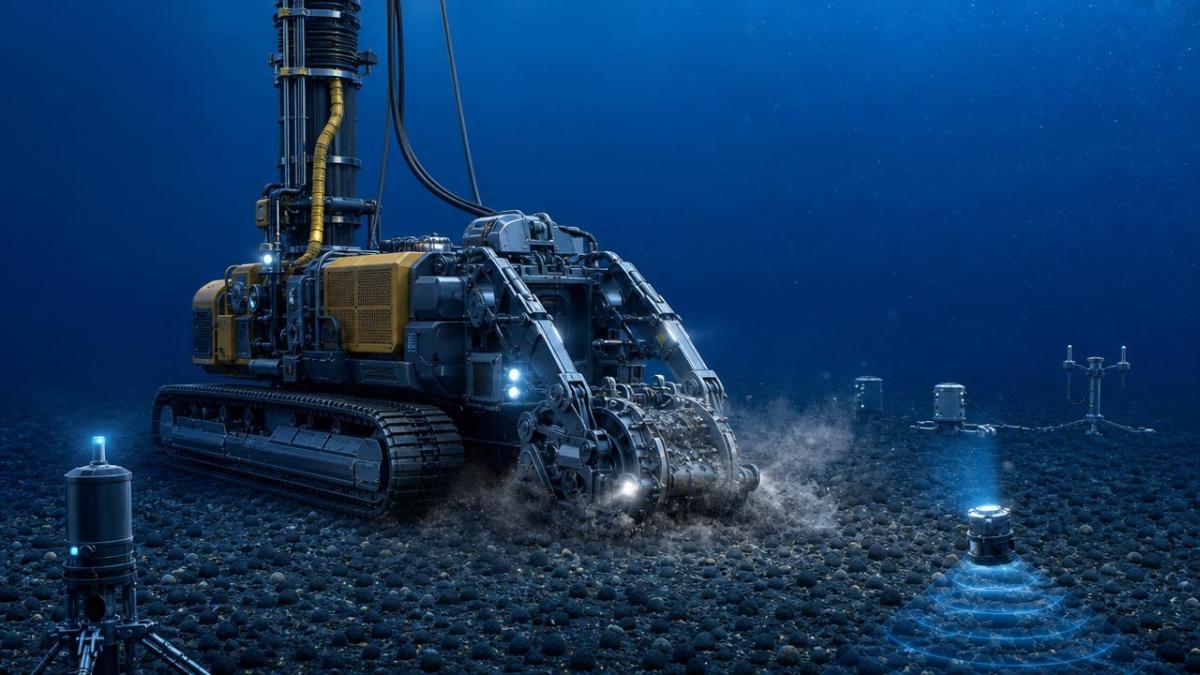
For most technical teams, the first mistake is starting with extraction capacity alone. In mining technology for deep sea projects, the real first screen is operational survivability under pressure, corrosion, remoteness, and unstable seabed conditions.
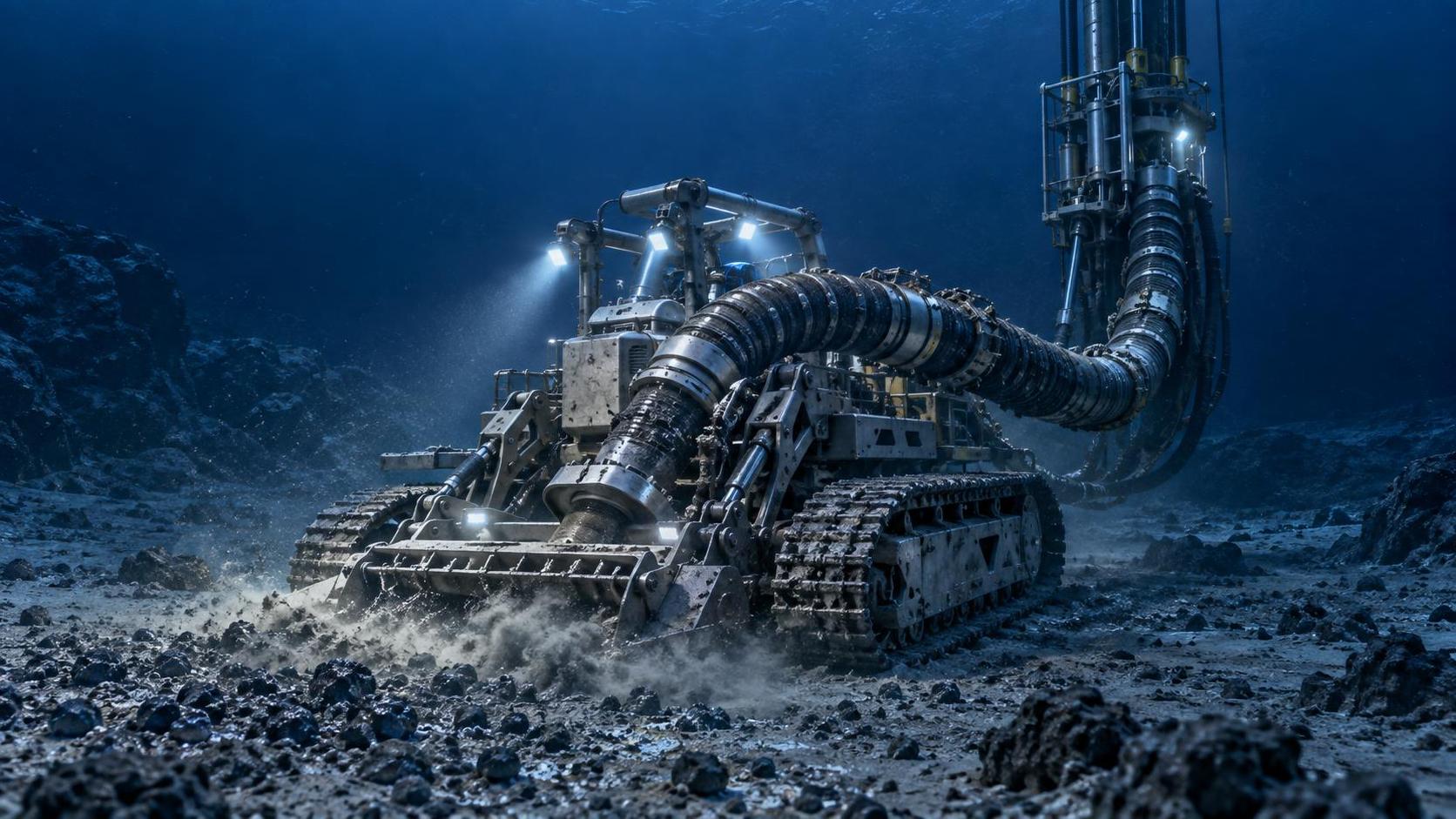
A second mistake is treating the equipment as a standalone machine. Deep-sea systems behave as integrated infrastructure, where subsea collectors, risers, pumps, power supply, navigation, and surface support vessels depend on one another.
GIUT approaches this field from an infrastructure intelligence perspective. That matters because technical evaluation is not just a product review. It is a system review covering engineering logic, deployment conditions, compliance exposure, and future scalability.
A practical first-pass checklist
- Can the system maintain stable performance at planned operating depth, including pressure tolerance, thermal control, and sealing integrity?
- Does the sensor package provide decision-grade data for navigation, ore recognition, seabed mapping, and equipment health monitoring?
- What is the expected maintenance interval, and how difficult is intervention when a fault occurs far offshore?
- How does the design reduce sediment plume generation, habitat disturbance, and accidental discharge risk?
- Can the architecture scale from pilot testing to commercial operation without forcing a complete redesign of the support chain?
If a vendor cannot answer these points clearly, the solution may be impressive in concept but weak in field readiness. Technical evaluators should push for evidence, test methodology, and integration detail from the beginning.
Which performance dimensions matter more than headline output?
The table below helps evaluators rank the most important performance dimensions for mining technology for deep sea use cases. It is designed for screening before procurement modeling or pilot approval.
The key takeaway is simple: extraction rate is only one metric. A technically mature deep-sea mining solution proves that its performance is stable, measurable, and supportable across the full mission profile.
Why data accuracy deserves early attention
In mining technology for deep sea operations, inaccurate data creates a chain reaction. It affects route planning, collector traction, ore boundary interpretation, and environmental baseline comparison. Evaluators should ask not only what sensors are used, but how data is validated and fused.
This is where GIUT’s cross-sector perspective helps. Smart city systems, rail signaling, and heavy equipment telematics all teach the same lesson: reliable infrastructure decisions depend on trusted data architecture, not isolated sensor claims.
How do you compare different mining technology for deep sea solution paths?
Technical evaluators often need to compare not just suppliers, but solution architectures. The table below outlines common decision tradeoffs between early-stage deep-sea mining system concepts.
No single path is universally right. The right choice depends on deposit type, operating depth, vessel strategy, environmental constraints, and the project’s tolerance for pilot-stage uncertainty.
Questions that improve comparison quality
- Is the solution optimized for nodules, crusts, or another seabed resource condition?
- What assumptions were used for sea state, vessel availability, and campaign duration?
- Can the system continue safe operation when one subsystem degrades rather than fails completely?
- How much of the architecture is proven in offshore or subsea industries outside mining?
What procurement teams often miss: lifecycle cost, serviceability, and integration risk
Purchase price rarely tells the true story. In mining technology for deep sea environments, vessel time, offshore maintenance complexity, spare inventory, software support, and environmental monitoring obligations can outweigh the initial equipment quote.
Evaluators should therefore build a lifecycle view early. A lower-cost collector may become a higher-cost asset if it requires frequent retrieval, specialized support tools, or nonstandard replacement parts.
A procurement-oriented review framework
- Acquisition cost: core equipment, launch and recovery interfaces, software licenses, commissioning support.
- Operational cost: energy demand, vessel time, crew requirements, offshore troubleshooting burden.
- Maintenance cost: wear components, seal replacement cycles, hydraulic or electrical service intervals.
- Integration cost: compatibility with survey data systems, control room architecture, telemetry networks, and reporting tools.
- Risk cost: delays from compliance gaps, failed sea trials, data quality disputes, or poor environmental traceability.
This broader framework aligns with GIUT’s infrastructure-focused methodology. Complex industrial systems are never judged by acquisition alone. They are judged by total deployability across technical, regulatory, and operational dimensions.
How should compliance and environmental risk shape evaluation?
Even at the technology screening stage, compliance cannot be postponed. Mining technology for deep sea projects faces scrutiny from environmental authorities, marine governance frameworks, and stakeholder review processes. A technically capable system with weak impact control may stall before commercial use.
Technical evaluators do not need to become legal specialists, but they should verify whether the system can support environmental baseline measurement, disturbance tracking, and operational transparency.
Compliance-related signals to ask for
Standards can vary by project geography and governance pathway, but the principle is constant: a credible system must produce evidence, not just promises. That is especially true when environmental performance is under review.
Which application scenarios call for different evaluation priorities?
Not every deep-sea resource project requires the same evaluation lens. Technical teams should match mining technology for deep sea systems to the operational scenario rather than apply one generic scorecard.
Scenario-based priorities
- Pilot testing campaign: prioritize modularity, data richness, retrievability, and test flexibility over maximum throughput.
- Long-duration commercial planning: prioritize uptime, parts standardization, maintainability, and vessel integration stability.
- Environmentally sensitive zone assessment: prioritize low-disturbance collection methods, monitoring coverage, and transparent data handling.
- Remote or logistically constrained offshore area: prioritize autonomy, remote diagnostics, reduced crew burden, and robust fault isolation.
This scenario logic mirrors broader infrastructure evaluation practice. Whether the asset is a smart rail system or subsea mining platform, the right technology choice depends on mission context, not brochure-level specifications.
Common misconceptions technical evaluators should avoid
“More automation always means lower risk”
Automation can reduce crew burden and improve consistency, but only when sensing, control logic, and exception handling are mature. Poorly tuned autonomy in a deep-sea environment can increase recovery events and obscure root causes.
“Land mining experience transfers directly”
Many mechanical principles do transfer, but subsea pressure, communication delay, launch and recovery, and marine environmental controls change the engineering reality. Deep-sea mining is as much an offshore systems problem as a mineral extraction problem.
“If pilot tests work, commercial scale is straightforward”
Pilot success proves a concept under limited conditions. Commercial readiness requires stable logistics, service support, interoperable software, repeatable environmental reporting, and sustainable cost performance over time.
FAQ: practical questions about mining technology for deep sea evaluation
How do I choose between a pilot-scale system and a larger integrated solution?
Start with your decision objective. If you need deposit validation, baseline impact measurement, or subsystem learning, a modular pilot platform is usually more defensible. If the project already has mature geological data and defined offshore support capacity, an integrated path may be justified.
What are the most important documents to request from suppliers?
Ask for subsystem architecture, operating envelope assumptions, maintenance philosophy, test records, sensor calibration approach, fault response logic, and interface requirements. For mining technology for deep sea deployment, documentation quality often predicts field readiness.
Which cost items are most often underestimated?
Vessel standby, offshore retrieval events, spare sealing assemblies, telemetry integration, environmental reporting workflows, and software adaptation costs are commonly underestimated. These items can shift the business case materially.
How much weight should environmental monitoring capability carry?
It should carry significant weight from the start. In many projects, the ability to measure and explain impact is not a side function. It is central to whether operations remain acceptable to regulators, partners, and investors.
Why choose GIUT when evaluating deep-sea mining technologies?
GIUT supports technical evaluators with a broader engineering lens. Our strength is not limited to mining alone. We connect insights from heavy industry, infrastructure systems, smart sensing, equipment intelligence, and operational data architecture to help teams evaluate complex physical-world technologies with more discipline.
That cross-sector perspective is valuable in mining technology for deep sea projects because these systems sit at the intersection of subsea engineering, industrial automation, environmental governance, and lifecycle asset management. Narrow evaluation often misses the real project risk.
What you can consult us about
- Parameter confirmation for pressure tolerance, sensing packages, corrosion strategy, and maintainability assumptions.
- Solution selection between pilot systems, modular architectures, and larger integrated collection concepts.
- Delivery cycle planning, offshore support dependencies, and subsystem interface review.
- Custom evaluation frameworks for environmental monitoring capability, data traceability, and operational risk.
- Requirement mapping for certification, documentation readiness, supplier comparison, and quotation discussion.
If your team is screening mining technology for deep sea deployment, GIUT can help structure the evaluation before cost, compliance, and integration problems become expensive. A stronger early assessment usually leads to better supplier conversations, more realistic pilot design, and more resilient long-term project planning.
Get weekly intelligence in your inbox.
No noise. No sponsored content. Pure intelligence.
News Recommendations
 Sep 19, 2026How an electronics application guide helps prevent component mismatchHow an electronics application guide helps prevent component mismatch
 Sep 18, 2026When a resource allocation platform improves project deliveryWhen a resource allocation platform improves project delivery
 Sep 17, 2026What to compare when evaluating mineral processing equipment manufacturersWhat to compare when evaluating mineral processing equipment manufacturers
 Sep 16, 2026How mineral separation optimization can reduce concentrate lossesHow mineral separation optimization can reduce concentrate losses
 Sep 15, 2026How to assess lifecycle costs in urban tech procurementHow to assess lifecycle costs in urban tech procurement
 Sep 14, 2026Heavy industry technology trends reshaping capital investment prioritiesHeavy industry technology trends reshaping capital investment priorities
 Sep 14, 2026Global Industrial Equipment Procurement: How Top OEMs Qualify Suppliers for Mining & Infrastructure ProjectsGlobal Industrial Equipment Procurement: How Top OEMs Qualify Suppliers for Mining & Infrastructure Projects
 Sep 14, 2026Industrial & Mining Equipment Procurement: Balancing Local Sourcing, Lead Time, and Certification RequirementsIndustrial & Mining Equipment Procurement: Balancing Local Sourcing, Lead Time, and Certification Requirements
 Sep 14, 2026Infrastructure & Equipment Upgrades: What Procurement Teams Must Verify Before Signing Off on New ContractsInfrastructure & Equipment Upgrades: What Procurement Teams Must Verify Before Signing Off on New Contracts
 Sep 14, 2026Why Infrastructure Equipment Buyers Are Shifting from Catalog-Based to Capability-Based Supplier SelectionWhy Infrastructure Equipment Buyers Are Shifting from Catalog-Based to Capability-Based Supplier Selection
 Sep 14, 2026Process Automation Project Execution: How to Align Supplier Capabilities with PLC Integration, Cybersecurity & Commissioning MilestonesProcess Automation Project Execution: How to Align Supplier Capabilities with PLC Integration, Cybersecurity & Commissioning Milestones
 Sep 14, 2026Are intelligent traffic systems worth the investment for small cities?Are intelligent traffic systems worth the investment for small cities?
 Sep 14, 2026How do intelligent traffic systems handle sensor failures?How do intelligent traffic systems handle sensor failures?
 Sep 14, 2026What should I check before accepting a smart building system?What should I check before accepting a smart building system?
 Sep 14, 2026Is a smart building system worth the maintenance cost?Is a smart building system worth the maintenance cost?
 Sep 14, 2026What data is needed for reliable resource allocation planning?What data is needed for reliable resource allocation planning?
 Sep 14, 2026How can resource allocation software reduce equipment idle time?How can resource allocation software reduce equipment idle time?
 Sep 14, 2026How should smart devices be maintained in harsh outdoor conditions?How should smart devices be maintained in harsh outdoor conditions?
 Sep 14, 2026Do smart devices improve worker safety on construction sites?Do smart devices improve worker safety on construction sites?
 Sep 14, 2026What environmental risks must be assessed before deep-sea mining?What environmental risks must be assessed before deep-sea mining?
 Sep 14, 2026Is deep-sea mining equipment commercially viable in 2026?Is deep-sea mining equipment commercially viable in 2026?
 Sep 14, 2026What Inspection Checks Should Procurement Teams Perform Before Ordering Dredging Equipment in 2026?What Inspection Checks Should Procurement Teams Perform Before Ordering Dredging Equipment in 2026?
 Sep 13, 2026How to verify an industrial product information source before specifying equipmentHow to verify an industrial product information source before specifying equipment
 Sep 12, 2026Which intelligent traffic systems hardware fits an urban intersection?Which intelligent traffic systems hardware fits an urban intersection?
 Sep 11, 2026How pump capacity affects response coverage for municipal fire fighting vehiclesHow pump capacity affects response coverage for municipal fire fighting vehicles
 Sep 10, 2026What to verify before choosing a heavy industry equipment supplierWhat to verify before choosing a heavy industry equipment supplier
 Sep 09, 2026When do adaptive urban traffic control systems reduce corridor delays?When do adaptive urban traffic control systems reduce corridor delays?