Land Minerals: Supply Risks to Watch in 2026
As 2026 approaches, land minerals are moving to the center of global supply risk assessments. For business evaluators, shifting resource nationalism, environmental constraints, permitting delays, and geopolitical realignment are reshaping availability, pricing, and project viability. This article highlights the critical signals to watch, helping decision-makers better understand where supply vulnerabilities may emerge and how they could affect infrastructure, industrial planning, and long-term investment strategy.
Why are land minerals becoming a sharper supply risk in 2026?
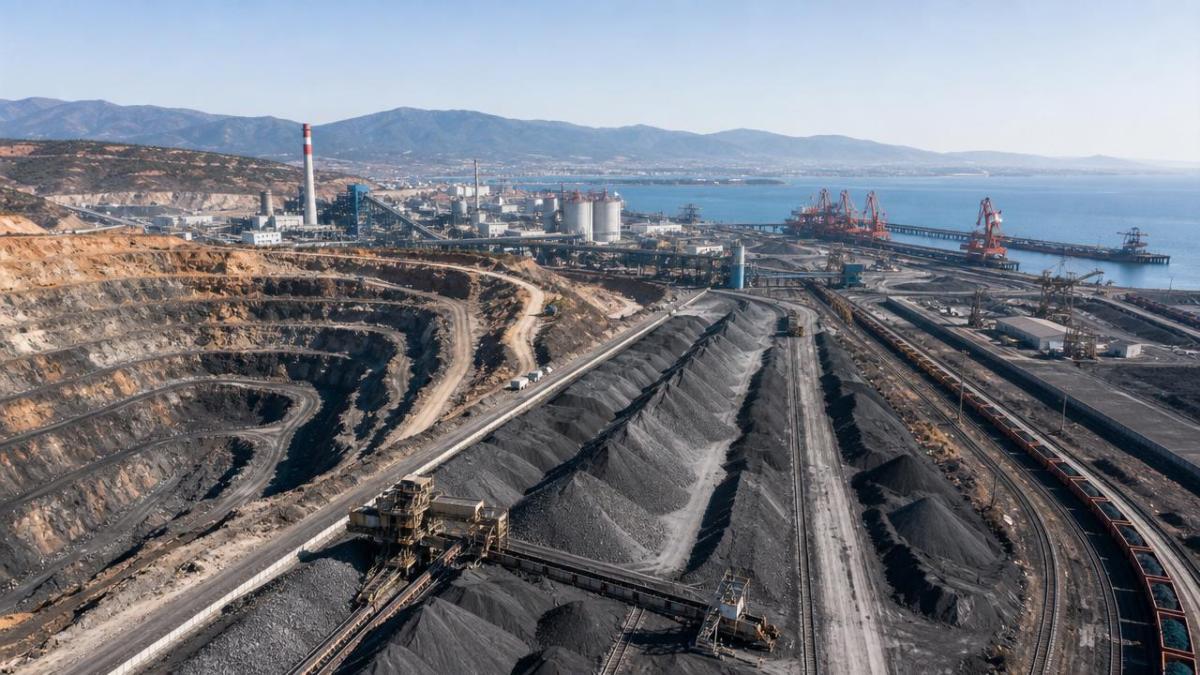
Land minerals sit at the base of construction systems, transport corridors, energy networks, industrial equipment, and smart urban infrastructure. That breadth matters. When supply tightens, the impact is rarely isolated to one commodity or one project package.
For business evaluators, the key issue is not only whether land minerals remain available. The real question is whether they can be delivered at the required grade, volume, timeline, and compliance level needed for bankable project execution.
In 2026, risk is rising because several pressures are converging at once. Governments want more domestic value capture. Communities demand stronger environmental oversight. Logistics networks remain vulnerable to conflict and weather disruption. Capital markets are becoming less patient with slow permitting cycles.
GIUT’s cross-sector perspective is useful here because land minerals do not move through a single market. They influence mine development, heavy machinery deployment, railway freight planning, concrete and steel demand, and smart city electrification programs at the same time.
- Resource nationalism is increasing royalty pressure, export restrictions, and local processing requirements.
- Environmental and water-use controls are extending approval timelines for new extraction projects.
- Power shortages, equipment lead times, and labor gaps are limiting output ramp-up even where reserves are known.
- Infrastructure users now compete across sectors, especially where the same land minerals feed transport, grid, building, and industrial manufacturing value chains.
Which supply signals should business evaluators monitor first?
Not every headline changes procurement exposure. Evaluators need early indicators that directly affect pricing, contract certainty, and project timing. The table below summarizes the land minerals signals that deserve routine monitoring in 2026 planning cycles.
These indicators help separate noise from material risk. A mine with strong reserves can still become a weak supplier if it lacks transport access, water security, stable power, or social license to operate.
What should be reviewed beyond reserve size?
Reserve headlines often dominate market commentary, yet business evaluators should prioritize deliverability. A resource is only commercially useful when extraction, processing, transport, and compliance can operate in sequence without major interruption.
- Ore grade consistency, because unstable quality can disrupt downstream manufacturing specifications.
- Water and power dependency, especially in remote inland regions with competing industrial demand.
- Road, rail, and bulk terminal connectivity, which determine whether supply can scale in practice.
- Community relations and land access, which increasingly affect schedule certainty.
How do land minerals risks affect infrastructure and industrial planning?
The effect of land minerals shortages is usually indirect at first. Project teams see longer quote validity limits, tighter allocation, or more force majeure language in supply contracts. Later, those signals translate into capex pressure and sequencing delays.
In construction and smart building, mineral availability can influence cement inputs, steel-related feedstocks, aggregates, specialty materials, and equipment manufacturing schedules. In railway and logistics systems, it affects track materials, signaling hardware supply chains, and freight capacity planning.
Urban technology also depends on land minerals more than many buyers assume. Grid expansion, battery systems, power electronics, waste treatment equipment, and sensor networks all depend on stable mineral-backed industrial chains.
This is why GIUT treats land minerals as a system issue rather than a mining-only issue. Evaluators who model risk across extraction, transport, processing, and end-use infrastructure gain a clearer view of where cost overruns may begin.
Typical downstream impacts to flag early
- Procurement windows shorten, making long internal approval chains more expensive.
- Contractors add contingency pricing for uncertain raw material inputs.
- Equipment suppliers request revised production calendars due to component shortages.
- Lenders push for stronger sensitivity analysis around supply and inflation assumptions.
Which risk categories matter most for 2026 land minerals decisions?
A practical evaluation framework should break land minerals exposure into categories that can be scored, compared, and updated. The matrix below helps commercial teams align supply risk with procurement action and investment timing.
This type of breakdown is especially useful for cross-border projects. A low-cost source of land minerals may appear attractive on paper, but once logistics fragility and approval uncertainty are included, a higher-priced but more stable source may produce a better total project outcome.
How should risk weighting change by project type?
A transport corridor project values schedule certainty differently from a long-horizon mining investment or a smart city utility rollout. Evaluators should avoid one generic scoring model for all cases.
- For EPC-driven infrastructure, delivery timing and substitute availability often deserve the highest weight.
- For industrial manufacturing, grade consistency and processing reliability carry more importance.
- For long-term concessions, regulatory durability and local stakeholder alignment should be weighted more heavily.
How to compare sourcing options for land minerals in a tighter market
When supply tightens, buyers often focus only on unit price. That is rarely enough. The more useful comparison is total sourcing resilience, including compliance burden, transport reliability, and replacement difficulty.
The table below offers a practical comparison model for business evaluators reviewing land minerals supply options across domestic, regional, and long-distance international channels.
For many 2026 projects, blended sourcing will become more attractive than lowest-cost concentration. It can reduce shutdown exposure, support schedule continuity, and improve negotiating leverage when one channel becomes constrained.
What should procurement and commercial teams do now?
Waiting for visible shortage is usually too late. The stronger approach is to redesign evaluation routines before the market becomes more unstable. This is particularly important for infrastructure owners, industrial buyers, and project developers with fixed delivery milestones.
A practical 2026 readiness checklist
- Map critical land minerals exposure by project package, not only by top-level commodity category.
- Identify single-country and single-processor dependencies within the supply chain.
- Review contract terms for allocation rules, substitution rights, escalation formulas, and shipment priority.
- Build at least two supply scenarios: stable market and constrained market with delayed permits or export limits.
- Coordinate evaluation teams across engineering, logistics, compliance, and finance rather than reviewing price in isolation.
The biggest missed opportunity is often internal fragmentation. Engineering teams know material criticality, logistics teams know route bottlenecks, and finance teams know exposure to delay. A better decision process joins those views before procurement commitments are locked.
Common questions about land minerals risk in 2026
Are land minerals supply risks mainly a mining issue?
No. Mining is only the starting point. The larger commercial risk often appears in processing, power access, inland transport, export administration, and downstream manufacturing. That is why business evaluators should examine the full chain from extraction to installed end-use.
Which projects are most sensitive to disruption in land minerals?
Projects with rigid commissioning dates, narrow technical specifications, or limited substitute materials are usually most exposed. This includes rail systems, heavy industrial plants, smart grid expansion, large urban construction packages, and specialized equipment manufacturing.
Should buyers lock in long-term contracts now?
It depends on demand certainty, storage economics, and substitution flexibility. Long-term agreements can improve visibility, but they should be paired with clear quality terms, escalation mechanisms, and fallback supply options. A long contract without operational flexibility can create a different form of risk.
What is the most common evaluation mistake?
Treating price forecasts as the main indicator. In tight markets, availability timing and compliance feasibility can matter more than nominal benchmark price. A slightly more expensive source may protect schedule integrity and reduce downstream claims or idle-capacity losses.
Why work with GIUT when assessing land minerals exposure?
GIUT brings an integrated view that connects mining and resource technology with infrastructure construction, railway logistics, urban systems, and heavy equipment deployment. That matters because land minerals risk rarely stays in one silo. It travels through the physical economy.
For business evaluators, this cross-sector intelligence supports more grounded decisions on sourcing resilience, project sequencing, and capex risk. Instead of reviewing mineral headlines alone, teams can examine how supply constraints may affect transport access, equipment timelines, and infrastructure delivery dependencies.
If you are reviewing land minerals exposure for 2026, you can consult GIUT on practical issues such as supply risk mapping, sourcing comparison logic, delivery cycle concerns, compliance checkpoints, scenario-based procurement evaluation, and infrastructure-linked demand impacts.
You may also reach out for support on parameter confirmation, solution selection, project timeline alignment, customized assessment frameworks, certification-related review points, and quotation communication across cross-border supply contexts. That conversation is most useful before final procurement strategy is fixed.
Get weekly intelligence in your inbox.
No noise. No sponsored content. Pure intelligence.
News Recommendations
 Sep 19, 2026How an electronics application guide helps prevent component mismatchHow an electronics application guide helps prevent component mismatch
 Sep 18, 2026When a resource allocation platform improves project deliveryWhen a resource allocation platform improves project delivery
 Sep 17, 2026What to compare when evaluating mineral processing equipment manufacturersWhat to compare when evaluating mineral processing equipment manufacturers
 Sep 16, 2026How mineral separation optimization can reduce concentrate lossesHow mineral separation optimization can reduce concentrate losses
 Sep 15, 2026How to assess lifecycle costs in urban tech procurementHow to assess lifecycle costs in urban tech procurement
 Sep 14, 2026Heavy industry technology trends reshaping capital investment prioritiesHeavy industry technology trends reshaping capital investment priorities
 Sep 14, 2026Global Industrial Equipment Procurement: How Top OEMs Qualify Suppliers for Mining & Infrastructure ProjectsGlobal Industrial Equipment Procurement: How Top OEMs Qualify Suppliers for Mining & Infrastructure Projects
 Sep 14, 2026Industrial & Mining Equipment Procurement: Balancing Local Sourcing, Lead Time, and Certification RequirementsIndustrial & Mining Equipment Procurement: Balancing Local Sourcing, Lead Time, and Certification Requirements
 Sep 14, 2026Infrastructure & Equipment Upgrades: What Procurement Teams Must Verify Before Signing Off on New ContractsInfrastructure & Equipment Upgrades: What Procurement Teams Must Verify Before Signing Off on New Contracts
 Sep 14, 2026Why Infrastructure Equipment Buyers Are Shifting from Catalog-Based to Capability-Based Supplier SelectionWhy Infrastructure Equipment Buyers Are Shifting from Catalog-Based to Capability-Based Supplier Selection
 Sep 14, 2026Process Automation Project Execution: How to Align Supplier Capabilities with PLC Integration, Cybersecurity & Commissioning MilestonesProcess Automation Project Execution: How to Align Supplier Capabilities with PLC Integration, Cybersecurity & Commissioning Milestones
 Sep 14, 2026Are intelligent traffic systems worth the investment for small cities?Are intelligent traffic systems worth the investment for small cities?
 Sep 14, 2026How do intelligent traffic systems handle sensor failures?How do intelligent traffic systems handle sensor failures?
 Sep 14, 2026What should I check before accepting a smart building system?What should I check before accepting a smart building system?
 Sep 14, 2026Is a smart building system worth the maintenance cost?Is a smart building system worth the maintenance cost?
 Sep 14, 2026What data is needed for reliable resource allocation planning?What data is needed for reliable resource allocation planning?
 Sep 14, 2026How can resource allocation software reduce equipment idle time?How can resource allocation software reduce equipment idle time?
 Sep 14, 2026How should smart devices be maintained in harsh outdoor conditions?How should smart devices be maintained in harsh outdoor conditions?
 Sep 14, 2026Do smart devices improve worker safety on construction sites?Do smart devices improve worker safety on construction sites?
 Sep 14, 2026What environmental risks must be assessed before deep-sea mining?What environmental risks must be assessed before deep-sea mining?
 Sep 14, 2026Is deep-sea mining equipment commercially viable in 2026?Is deep-sea mining equipment commercially viable in 2026?
 Sep 14, 2026What Inspection Checks Should Procurement Teams Perform Before Ordering Dredging Equipment in 2026?What Inspection Checks Should Procurement Teams Perform Before Ordering Dredging Equipment in 2026?
 Sep 13, 2026How to verify an industrial product information source before specifying equipmentHow to verify an industrial product information source before specifying equipment
 Sep 12, 2026Which intelligent traffic systems hardware fits an urban intersection?Which intelligent traffic systems hardware fits an urban intersection?
 Sep 11, 2026How pump capacity affects response coverage for municipal fire fighting vehiclesHow pump capacity affects response coverage for municipal fire fighting vehicles
 Sep 10, 2026What to verify before choosing a heavy industry equipment supplierWhat to verify before choosing a heavy industry equipment supplier
 Sep 09, 2026When do adaptive urban traffic control systems reduce corridor delays?When do adaptive urban traffic control systems reduce corridor delays?