Smart Building Solutions That Cut Energy and Retrofit Costs
For business evaluators weighing upgrade ROI, smart building solutions offer a practical path to lower energy use, reduce retrofit costs, and future-proof assets without disruptive overbuild. From intelligent controls to data-driven maintenance, these systems help owners align operational savings with sustainability goals. This article explains how to assess value, sequence investments, and choose scalable measures that improve performance across offices, campuses, logistics sites, and mixed-use facilities.
Why a Checklist Matters for Smart Building Solutions

Many upgrade programs fail because technology is purchased before the building baseline is understood. A checklist keeps decisions tied to energy, maintenance, comfort, and capital planning.
It also prevents common retrofit mistakes. These include overspecifying sensors, ignoring integration limits, and underestimating commissioning needs. In complex infrastructure portfolios, disciplined screening protects both cash flow and operational continuity.
Well-scoped smart building solutions usually combine controls, analytics, and targeted equipment upgrades. The goal is not to digitize everything. The goal is to unlock measurable savings with the least disruption.
Core Checklist: How to Evaluate Smart Building Solutions
- Audit current loads first. Measure HVAC, lighting, plug loads, occupancy patterns, and utility tariffs before selecting platforms, devices, or automation layers.
- Map retrofit constraints early. Check ceiling access, legacy controls, wiring condition, network coverage, and shutdown windows to avoid avoidable rework.
- Prioritize fast-payback controls. Start with scheduling, setpoint optimization, demand response, and fault detection before replacing functioning core equipment.
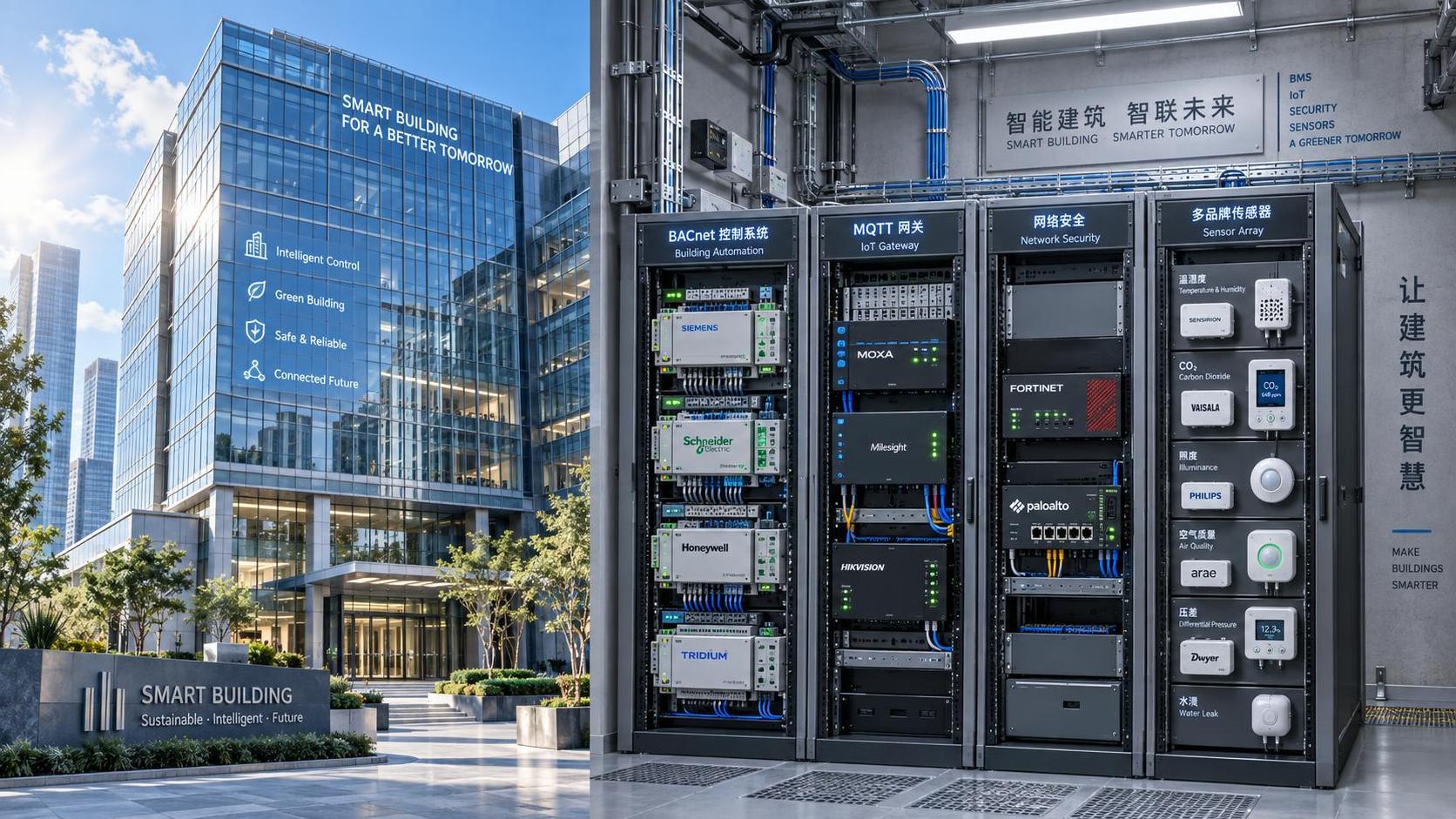
- Verify interoperability standards. Confirm BACnet, Modbus, KNX, or API compatibility so new smart building solutions connect with existing systems.
- Benchmark expected savings by use case. Compare lighting controls, smart meters, variable speed drives, and occupancy analytics against site-specific baselines.
- Quantify non-energy value. Include maintenance labor, uptime protection, indoor air quality, compliance reporting, and tenant experience in the business case.
- Plan data governance from day one. Define ownership, retention, cybersecurity controls, user permissions, and dashboard responsibilities before system rollout.
- Stage projects in modules. Pilot one building or one subsystem first, then expand proven smart building solutions across the wider portfolio.
- Budget for commissioning and tuning. Savings depend on setup quality, sensor calibration, alarm logic, and post-install optimization.
- Track outcomes monthly. Use energy intensity, comfort complaints, runtime hours, and maintenance tickets to verify projected ROI.
What Strong Projects Usually Include
- A clear baseline from utility data, BMS logs, and field inspection.
- A phased capital plan tied to asset age and replacement cycles.
- Open integration architecture instead of isolated point products.
- Documented KPIs for energy, comfort, uptime, and maintenance.
How Smart Building Solutions Cut Energy Costs
The biggest savings often come from better control, not bigger equipment. Buildings commonly waste energy through simultaneous heating and cooling, after-hours runtime, and poor ventilation reset logic.
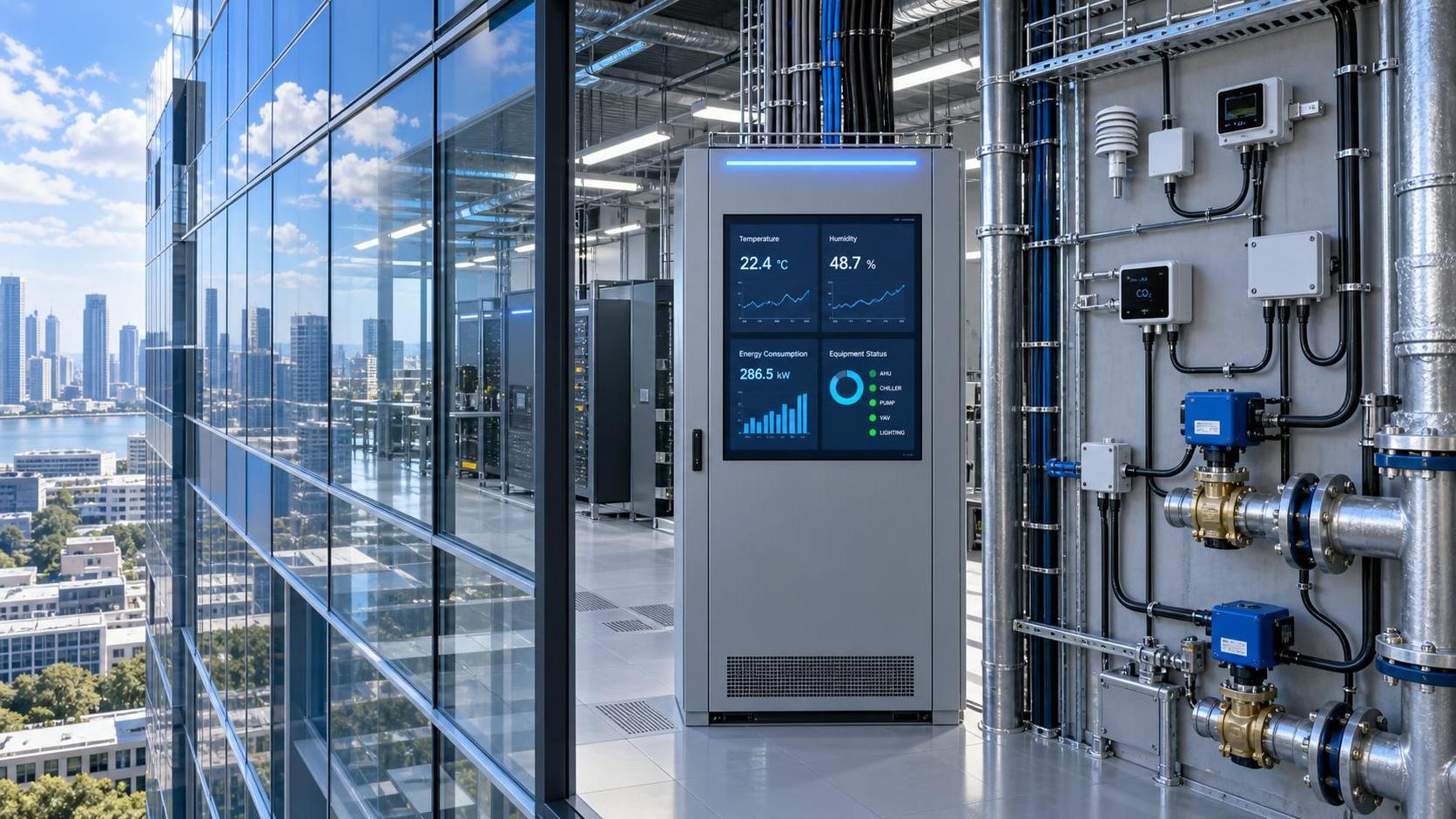
Smart building solutions correct these issues with sensors, schedules, and analytics. A tuned control layer can reduce unnecessary operation hours without affecting occupant comfort or safety.
High-Value Energy Measures
Lighting upgrades remain attractive when paired with daylight harvesting and occupancy control. However, HVAC optimization usually delivers larger whole-building savings in energy-intensive properties.
Submetering also matters. When operators can see where loads spike, they can correct scheduling errors, identify failing equipment, and manage peak demand charges more effectively.
How Smart Building Solutions Reduce Retrofit Costs
Retrofit cost control depends on scope discipline. Many sites can avoid full equipment replacement by extending asset life with controls retrofits, sensors, VFDs, and predictive maintenance tools.
Wireless devices can also lower installation cost where cable runs are difficult. That said, they must be tested for reliability, battery strategy, and interference in dense urban environments.
Another overlooked lever is sequencing. If a chiller, boiler, or air handler still has useful life, smart building solutions can optimize operation now and align major replacement with future capital cycles.
Scenario Guidance Across Modern Building Portfolios
Office Buildings
Hybrid occupancy has made static schedules obsolete. Smart building solutions should focus on demand-based ventilation, zone-level control, and meeting-room utilization data.
In older towers, integration with legacy BMS equipment is often the main challenge. Open protocol gateways and careful point mapping usually deliver better value than full rip-and-replace.
Campuses and Public Infrastructure
Campuses benefit from centralized monitoring because assets are distributed. Cross-building dashboards help compare performance, prioritize repairs, and standardize operating policies.
For public facilities, resilience and compliance matter as much as savings. Smart building solutions should support reporting, fault alarms, and continuity planning during utility or equipment disruptions.
Warehouses and Logistics Facilities
Large-volume spaces often waste energy through ventilation, dock operations, and high-bay lighting. Controls that respond to occupancy, daylight, and door activity usually outperform static programming.
Where temperature stability protects goods or equipment, predictive alerts are especially useful. Early detection reduces spoilage risk, downtime, and emergency repair premiums.
Mixed-Use and Hospitality Properties
These sites have variable demand profiles and multiple stakeholder expectations. Smart building solutions work best when control strategies are segmented by zone, schedule, and service priority.
Guest comfort, air quality, and quiet operation should be built into the ROI model. Energy savings that damage experience are rarely sustainable in service-driven environments.
Commonly Missed Risks and Oversights
Ignoring metering quality. Weak baseline data leads to inflated savings claims and poor prioritization. Validate interval data, sensor placement, and meter calibration before committing capital.
Underestimating integration work. Smart building solutions often fail at the handoff between old and new systems. Budget for mapping, testing, and vendor coordination.
Skipping operator training. Even the best platform underperforms if alarms are ignored or overrides remain permanent. Training should cover both normal operation and exception handling.
Chasing features over outcomes. Dashboards, AI labels, and visual layers add little value if the project does not improve runtime, comfort, or maintenance efficiency.
Overlooking cybersecurity. Connected devices expand attack surfaces. Segment networks, update firmware, and define remote access rules before scaling deployment.
Practical Execution Steps
- Collect twelve months of utility bills, maintenance logs, and control system data.
- Inspect major loads on site and document operational pain points.
- Rank opportunities by payback, disruption, and technical complexity.
- Pilot the best-fit smart building solutions in one asset or subsystem.
- Commission thoroughly, then compare actual results against baseline assumptions.
- Scale only after KPIs, governance rules, and support responsibilities are clear.
Conclusion and Next Action
The best smart building solutions do not begin with a technology catalog. They begin with a measured baseline, a realistic retrofit plan, and a disciplined focus on operational outcomes.
When chosen carefully, these systems lower energy consumption, reduce retrofit costs, and strengthen long-term asset resilience. Start with a site audit, define target KPIs, and test scalable measures that can expand across the portfolio with confidence.
Get weekly intelligence in your inbox.
No noise. No sponsored content. Pure intelligence.
News Recommendations
 Sep 19, 2026How an electronics application guide helps prevent component mismatchHow an electronics application guide helps prevent component mismatch
 Sep 18, 2026When a resource allocation platform improves project deliveryWhen a resource allocation platform improves project delivery
 Sep 17, 2026What to compare when evaluating mineral processing equipment manufacturersWhat to compare when evaluating mineral processing equipment manufacturers
 Sep 16, 2026How mineral separation optimization can reduce concentrate lossesHow mineral separation optimization can reduce concentrate losses
 Sep 15, 2026How to assess lifecycle costs in urban tech procurementHow to assess lifecycle costs in urban tech procurement
 Sep 14, 2026Heavy industry technology trends reshaping capital investment prioritiesHeavy industry technology trends reshaping capital investment priorities
 Sep 14, 2026Global Industrial Equipment Procurement: How Top OEMs Qualify Suppliers for Mining & Infrastructure ProjectsGlobal Industrial Equipment Procurement: How Top OEMs Qualify Suppliers for Mining & Infrastructure Projects
 Sep 14, 2026Industrial & Mining Equipment Procurement: Balancing Local Sourcing, Lead Time, and Certification RequirementsIndustrial & Mining Equipment Procurement: Balancing Local Sourcing, Lead Time, and Certification Requirements
 Sep 14, 2026Infrastructure & Equipment Upgrades: What Procurement Teams Must Verify Before Signing Off on New ContractsInfrastructure & Equipment Upgrades: What Procurement Teams Must Verify Before Signing Off on New Contracts
 Sep 14, 2026Why Infrastructure Equipment Buyers Are Shifting from Catalog-Based to Capability-Based Supplier SelectionWhy Infrastructure Equipment Buyers Are Shifting from Catalog-Based to Capability-Based Supplier Selection
 Sep 14, 2026Process Automation Project Execution: How to Align Supplier Capabilities with PLC Integration, Cybersecurity & Commissioning MilestonesProcess Automation Project Execution: How to Align Supplier Capabilities with PLC Integration, Cybersecurity & Commissioning Milestones
 Sep 14, 2026Are intelligent traffic systems worth the investment for small cities?Are intelligent traffic systems worth the investment for small cities?
 Sep 14, 2026How do intelligent traffic systems handle sensor failures?How do intelligent traffic systems handle sensor failures?
 Sep 14, 2026What should I check before accepting a smart building system?What should I check before accepting a smart building system?
 Sep 14, 2026Is a smart building system worth the maintenance cost?Is a smart building system worth the maintenance cost?
 Sep 14, 2026What data is needed for reliable resource allocation planning?What data is needed for reliable resource allocation planning?
 Sep 14, 2026How can resource allocation software reduce equipment idle time?How can resource allocation software reduce equipment idle time?
 Sep 14, 2026How should smart devices be maintained in harsh outdoor conditions?How should smart devices be maintained in harsh outdoor conditions?
 Sep 14, 2026Do smart devices improve worker safety on construction sites?Do smart devices improve worker safety on construction sites?
 Sep 14, 2026What environmental risks must be assessed before deep-sea mining?What environmental risks must be assessed before deep-sea mining?
 Sep 14, 2026Is deep-sea mining equipment commercially viable in 2026?Is deep-sea mining equipment commercially viable in 2026?
 Sep 14, 2026What Inspection Checks Should Procurement Teams Perform Before Ordering Dredging Equipment in 2026?What Inspection Checks Should Procurement Teams Perform Before Ordering Dredging Equipment in 2026?
 Sep 13, 2026How to verify an industrial product information source before specifying equipmentHow to verify an industrial product information source before specifying equipment
 Sep 12, 2026Which intelligent traffic systems hardware fits an urban intersection?Which intelligent traffic systems hardware fits an urban intersection?
 Sep 11, 2026How pump capacity affects response coverage for municipal fire fighting vehiclesHow pump capacity affects response coverage for municipal fire fighting vehicles
 Sep 10, 2026What to verify before choosing a heavy industry equipment supplierWhat to verify before choosing a heavy industry equipment supplier
 Sep 09, 2026When do adaptive urban traffic control systems reduce corridor delays?When do adaptive urban traffic control systems reduce corridor delays?