Fire Trucks Supplier Checklist for Fleet Reliability
Choosing the right fire trucks supplier is critical for fleet reliability, compliance, and frontline safety. For quality control and safety management teams, every purchasing decision affects vehicle uptime, maintenance costs, and emergency response readiness. This checklist helps you evaluate suppliers with a practical focus on build quality, certifications, parts support, and long-term service performance.
How should quality and safety teams evaluate a fire trucks supplier?
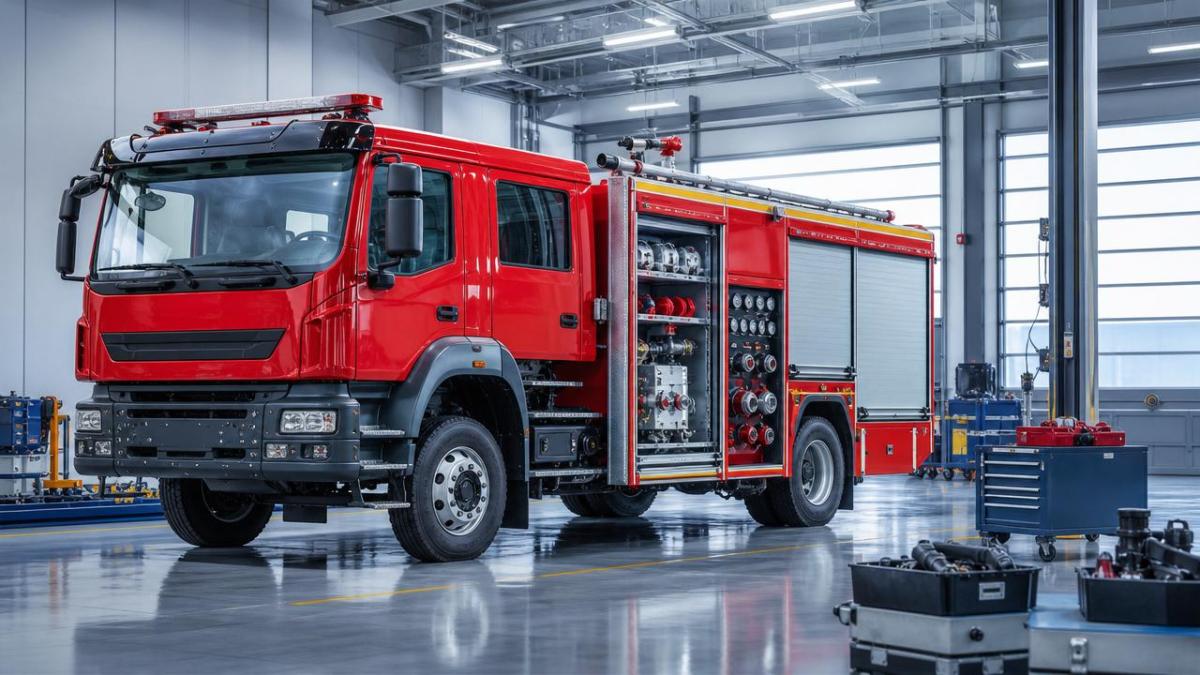
A fire truck is not a standard fleet asset. It operates under extreme load, variable terrain, compressed response timelines, and strict public safety expectations. That makes supplier selection a risk-control exercise, not just a purchasing task.
For quality control personnel, the central question is consistency. Can the supplier deliver repeatable manufacturing quality across chassis integration, pump systems, electrical architecture, tank fabrication, and body assembly? For safety managers, the focus is operational confidence. Will the unit perform safely in real incidents, maintenance windows, and driver handovers?
Within heavy industry and urban infrastructure, procurement decisions also connect to wider system resilience. Municipal fleets, industrial sites, mining zones, logistics hubs, and smart city emergency networks need specialized vehicles that fit local hazard profiles rather than generic catalog descriptions.
A capable fire trucks supplier should therefore be assessed across engineering depth, documentation quality, compliance readiness, lifecycle support, and integration awareness. This is especially important when fleets operate alongside construction projects, rail corridors, smart utilities, or industrial resource facilities.
- Check whether the supplier can explain design logic for the target application instead of only listing features.
- Confirm how manufacturing quality is controlled from welding and coating to hydraulic and electrical testing.
- Review how service parts, training, commissioning, and technical response are handled after delivery.
- Assess whether the supplier understands the compliance environment of your market and operating sector.
What should be on your fire trucks supplier checklist before RFQ approval?
Before issuing or approving a request for quotation, quality and safety teams should align on a structured checklist. This reduces the common problem of comparing suppliers on price while ignoring reliability drivers that shape total fleet performance.
The table below gives a practical supplier evaluation matrix for fire truck procurement decisions in mixed infrastructure, municipal, and industrial environments.
This checklist helps decision makers separate superficial product claims from measurable delivery capability. A dependable fire trucks supplier should be able to provide evidence for each line item, not just promise future clarification after contract award.
Core questions to ask suppliers during technical review
- Which components are built in-house, and which are sourced from external partners?
- What factory tests are performed before shipment, and can your team witness them?
- How are chassis modifications validated to protect braking, stability, and serviceability?
- What lead times apply to critical spare parts such as pump seals, valves, sensors, and electronic modules?
- How is operator training delivered for drivers, pump operators, workshop teams, and safety supervisors?
Which technical and build-quality factors most affect fleet reliability?
When buyers evaluate a fire trucks supplier, technical reliability often depends on a few decisive details. These details influence service intervals, failure frequency, operator safety, and equipment availability more than cosmetic finish or optional accessories.
Chassis integration and weight management
Poor weight distribution can create premature tire wear, unstable handling, and braking issues. The supplier should confirm gross vehicle weight, axle loads, mounted equipment mass, water and foam payload, and future accessory allowances. This is essential for urban, industrial, and off-road deployments.
Pump, foam, and hydraulic performance
A reliable pump system is not defined by nominal output alone. Quality teams should verify flow at different pressures, suction performance, priming time, cavitation resistance, seal serviceability, and valve accessibility. For petrochemical or industrial fire risk, foam proportioning consistency is equally important.
Corrosion protection and structural durability
Fire trucks often face water, chemicals, outdoor storage, and vibration. Review material selection for tanks, subframes, lockers, fasteners, and piping. Ask about coating process, drainage design, weld inspection, and measures that limit galvanic corrosion between dissimilar metals.
Electrical safety and maintainability
Electrical faults can immobilize a vehicle during critical deployment. A strong fire trucks supplier should use protected routing, clear circuit labeling, sealed connectors where needed, and accessible fuse or relay layouts. Maintenance teams benefit when fault isolation is straightforward and manuals match actual wiring.
- Inspect how hose beds, ladders, and rooftop equipment affect center of gravity and operator access.
- Check whether maintenance points can be reached without dismantling unrelated systems.
- Review locker ergonomics, anti-slip surfaces, and night-visibility provisions for safer field work.
How do standards, certification, and inspection readiness affect supplier selection?
Compliance is often where attractive quotations become operational risk. A fire trucks supplier serving public agencies, industrial emergency teams, or infrastructure operators should understand the standards environment in the destination market and communicate it clearly during pre-sales.
The table below outlines common compliance review points that quality and safety managers can adapt to local regulations, tender rules, and internal audit frameworks.
Because standards differ by region and application, buyers should request a compliance responsibility matrix early. This clarifies what the supplier provides, what local agents must support, and what the end user must verify before final acceptance.
Useful compliance habits during supplier review
- Ask for sample inspection documents with sensitive commercial data removed.
- Confirm whether witness testing can be arranged before shipment.
- Define acceptance criteria for pump output, tank leakage, finish quality, and operational training before order placement.
- Align vehicle documentation language with the workshop and operator teams who will use it daily.
Why do after-sales support and spare parts matter as much as the truck itself?
Even a well-built unit can become a weak asset if post-delivery support is slow or fragmented. A dependable fire trucks supplier should be assessed not only on manufacturing capability but also on response capacity after handover.
Quality teams should evaluate how technical service is organized. Is there a documented escalation path for warranty claims? Are spare parts stocked regionally or only supplied from the factory? Can the supplier support commissioning, operator training, and scheduled maintenance planning?
In infrastructure-heavy settings such as construction corridors, mining sites, smart utility districts, and transport hubs, downtime has cascading impact. A disabled fire truck can affect permit compliance, insurance expectations, emergency preparedness, and site continuity.
Minimum service topics to clarify in the contract phase
- Warranty scope for chassis-related interfaces, body structure, pump system, electrical modules, and corrosion issues.
- Expected lead time for consumables, critical wear parts, and long-lead replacement assemblies.
- Remote troubleshooting availability and required response windows.
- On-site training format for drivers, operators, and maintenance personnel.
- Recommended preventive maintenance intervals and parts kits for the first operating year.
How can buyers compare suppliers beyond price?
Lowest acquisition price rarely means lowest ownership cost. Fire truck procurement should compare whole-life value, especially when units support public safety or high-risk industrial operations. A structured comparison avoids choosing a supplier whose lower quote hides future downtime, rework, or compliance expense.
The following table can help procurement, quality, and safety teams compare a fire trucks supplier against alternatives using weighted decision logic.
For many buyers, the strongest supplier is the one that reduces uncertainty. Better documentation, parts planning, and application fit often save more than the apparent price gap over the service life of the vehicle.
What mistakes do buyers make when selecting a fire trucks supplier?
Several procurement mistakes repeat across municipal, industrial, and infrastructure fleets. Most are avoidable if quality and safety functions join the process early rather than reviewing only at acceptance stage.
- Choosing by tank volume or pump rating alone without checking chassis stability, payload margin, and operator ergonomics.
- Ignoring serviceability and spare parts planning until the first field failure occurs.
- Assuming generic compliance language is enough without matching it to local registration and operational requirements.
- Failing to define acceptance tests, document language, and training scope in the contract.
- Overlooking the differences between municipal firefighting, industrial fire risk, airport support, mining response, and logistics park deployment.
A more disciplined process begins with hazard mapping. Match the truck specification to fire load, access route, water source, crew size, climate exposure, and maintenance resources. Only then should you compare the fire trucks supplier options in commercial terms.
FAQ: practical questions from quality control and safety managers
How do I know whether a fire trucks supplier is suitable for industrial rather than municipal use?
Ask whether the supplier can adapt the vehicle to the actual hazard environment. Industrial sites may require stronger foam capability, corrosion resistance, off-road mobility, equipment lockers for site-specific tools, and compatibility with plant emergency procedures. A supplier that only offers standard municipal layouts may not be the right fit.
What documents should be mandatory before shipment?
At minimum, request inspection records, pump test results, tank test confirmation, vehicle configuration list, spare parts list, operator manual, maintenance manual, and acceptance checklist. If local regulation requires additional registration or conformity documents, define them in writing before production starts.
How important is factory acceptance testing for a fire trucks supplier evaluation?
It is highly important because it validates performance before transport and final delivery. Witnessed testing helps buyers confirm pump output, system leaks, electrical functions, warning devices, and equipment layout. It also reduces disputes during final acceptance at the operating site.
Should we prioritize local support or original manufacturing capability?
The best answer is balance. Original manufacturing capability matters for design quality, configuration control, and documentation. Local support matters for uptime, training, parts access, and field repairs. A strong fire trucks supplier either provides both or coordinates them clearly through authorized support channels.
Why work with an infrastructure intelligence partner when selecting a fire trucks supplier?
Fire truck procurement sits at the intersection of engineering, safety, urban resilience, and asset lifecycle management. That is why supplier evaluation benefits from a broader infrastructure perspective rather than a narrow equipment-only view.
GIUT brings cross-sector insight from heavy industry, infrastructure construction, smart city systems, logistics corridors, and special purpose vehicle analysis. This perspective helps buyers connect vehicle specification with real operating environments, regulatory complexity, and long-term maintenance realities.
If your team is screening a fire trucks supplier, we can support structured review around parameter confirmation, configuration matching, delivery timeline assessment, spare parts planning, documentation scope, and certification requirements. We can also help compare supplier proposals for municipal fleets, industrial sites, mining projects, logistics parks, and integrated smart city emergency platforms.
Contact us to discuss your target application, required pump and tank configuration, operating terrain, compliance expectations, training needs, and quotation comparison criteria. A sharper checklist now can prevent costly downtime and acceptance risk later.
Get weekly intelligence in your inbox.
No noise. No sponsored content. Pure intelligence.
News Recommendations
 May 23, 2026Infrastructure Encyclopedia: A Practical Planning GuideInfrastructure Encyclopedia: A Practical Planning Guide
 May 23, 2026Technological Iterations: When Upgrades Pay OffTechnological Iterations: When Upgrades Pay Off
 May 23, 2026Green Engineering Solutions That Lower Lifecycle CostGreen Engineering Solutions That Lower Lifecycle Cost
 May 23, 2026Deep-Sea Mining Tech: What to Evaluate FirstDeep-Sea Mining Tech: What to Evaluate First
 May 23, 2026Physical World Transformation: Key 2026 SignalsPhysical World Transformation: Key 2026 Signals
 May 23, 2026Digital Cities: 2026 Infrastructure PrioritiesDigital Cities: 2026 Infrastructure Priorities
 May 23, 2026Carbon Reduction Technologies: Cost vs ImpactCarbon Reduction Technologies: Cost vs Impact
 May 23, 2026Land Minerals: Supply Risks to Watch in 2026Land Minerals: Supply Risks to Watch in 2026
 May 23, 2026Smart Building Maintenance Tech: What Cuts DowntimeSmart Building Maintenance Tech: What Cuts Downtime
 May 23, 20262026 Market Shares: Where Growth Is Shifting2026 Market Shares: Where Growth Is Shifting
 May 22, 2026Prefabricated Construction Techniques That Save TimePrefabricated Construction Techniques That Save Time
 May 22, 2026Resource Development Gaps in Smart City PlansResource Development Gaps in Smart City Plans
 May 22, 2026Physical World Infrastructure Trends in Smart CitiesPhysical World Infrastructure Trends in Smart Cities
 May 22, 2026Carbon Reduction in Construction: 2026 Cost DriversCarbon Reduction in Construction: 2026 Cost Drivers
 May 22, 2026Top Risks When Choosing Construction CompaniesTop Risks When Choosing Construction Companies
 May 22, 2026Mining Technology Equipment: What to Compare FirstMining Technology Equipment: What to Compare First
 May 22, 2026How Mining SPVs Improve Haul Site SafetyHow Mining SPVs Improve Haul Site Safety
 May 22, 2026Green Engineering Certification Cost vs ROI in 2026Green Engineering Certification Cost vs ROI in 2026
 May 22, 2026Railway Maintenance Technologies That Cut DowntimeRailway Maintenance Technologies That Cut Downtime
 May 22, 20262026 Heavy Industry Technology Trends to Watch2026 Heavy Industry Technology Trends to Watch
 May 21, 2026Prefabricated Construction Benefits: Faster Builds, Fewer Site RisksPrefabricated Construction Benefits: Faster Builds, Fewer Site Risks
 May 21, 2026Special Purpose Vehicles for Construction: Key Safety ChecksSpecial Purpose Vehicles for Construction: Key Safety Checks
 May 21, 2026Physical World Digital Twin Use Cases for Smarter Site ControlPhysical World Digital Twin Use Cases for Smarter Site Control
 May 21, 2026Carbon Reduction Strategies That Lower Industrial Energy CostsCarbon Reduction Strategies That Lower Industrial Energy Costs
 May 21, 2026Infrastructure Construction Materials: Price Swings and Supply RisksInfrastructure Construction Materials: Price Swings and Supply Risks
 May 21, 2026Mining Technology Innovations Reshaping Extraction EfficiencyMining Technology Innovations Reshaping Extraction Efficiency
 May 21, 2026Resource Development Consulting Services: What Impacts Project ROIResource Development Consulting Services: What Impacts Project ROI