When Are Electric Fire Trucks Worth the Cost
As cities weigh cleaner fleets and smarter emergency response, the true value of electric fire trucks goes beyond sticker price. For buyers, operators, and project leaders comparing heavy equipment investments, the decision connects cost, safety, smart grids, digital twin planning, and long-term fleet performance. This article examines when electric fire trucks make financial and operational sense in modern civil engineering and digital cities strategies.
When does an electric fire truck make economic sense?
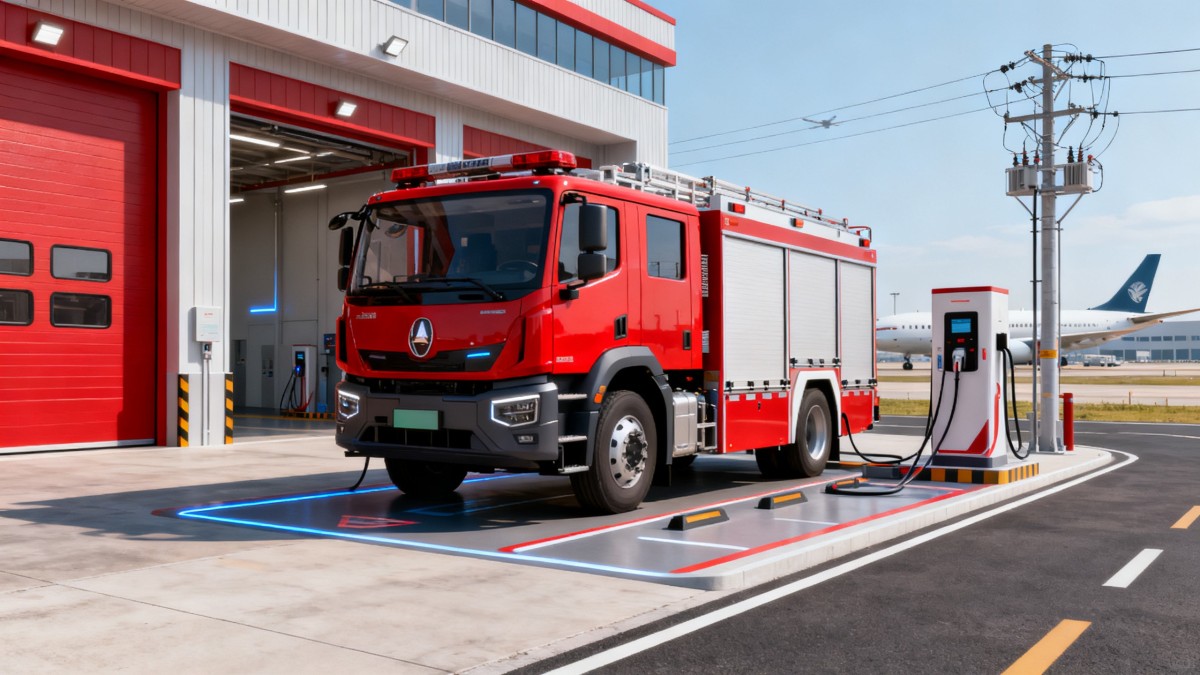
Electric fire trucks are rarely justified by purchase price alone. In most procurement reviews, the better question is whether the vehicle can reduce total cost of ownership across a 7–12 year service cycle while also supporting operational, environmental, and urban governance goals. For municipalities, airports, industrial parks, and smart city operators, the answer depends on duty profile, charging access, route density, and the cost of downtime.
Compared with diesel fire apparatus, electric platforms often involve higher upfront capital outlay but may lower energy, maintenance, and idle-related costs. The economics improve when vehicles run frequent short-to-medium missions, return to base predictably, and can recharge during planned windows of 2–6 hours. They also become more attractive where local policy rewards low-emission fleets or where noise reduction matters during nighttime deployment.
For technical evaluators, the central decision is not whether electric fire trucks are universally better. It is whether a specific use case aligns with battery range, pump load demands, climate exposure, station electrical capacity, and response standards. For project managers, this means looking at the truck as part of a wider emergency system, not as an isolated vehicle asset.
GIUT approaches this question from the intersection of special purpose equipment, urban tech, and infrastructure planning. That perspective matters because electric fire trucks perform best when fleet procurement, charging infrastructure, facility engineering, and digital monitoring are designed together in 3 linked layers: vehicle capability, site readiness, and operating model.
Three conditions that usually improve return on investment
- The truck operates in urban, campus, airport, tunnel, port, or industrial environments with predictable dispatch radii and frequent return-to-base cycles.
- The owner can install depot charging, typically coordinated with existing medium-voltage or commercial power infrastructure and smart load management.
- The organization values reduced local emissions, lower acoustic impact, and data-rich fleet management alongside conventional response performance.
If one or more of these conditions are missing, a hybrid strategy or a mixed fleet often makes more sense than a full transition. That is especially true for remote districts, mountainous regions, or long-duration standby operations where charging resilience is harder to guarantee.
Which applications favor electric fire trucks, and which do not?
Not every fire response profile benefits equally from electrification. Buyers should separate high-frequency urban intervention from heavy rural coverage, then map mission requirements to actual operating windows. A compact electric fire truck used for municipal response, industrial emergency readiness, or airport support can be highly practical. A large apparatus expected to travel long distances and operate pumps continuously for extended periods may face tighter energy constraints.
The table below helps procurement teams compare typical application environments. It is not a fixed technical rulebook, but it gives a useful screening tool for early-stage fleet planning, dealer discussions, and project budgeting.
In practice, the strongest candidates are facilities with fixed geography, centralized operations, and measurable sustainability targets. This is why airports, smart districts, industrial compounds, and transport hubs are often more suitable early adopters than dispersed municipal territories.
How operators and safety teams should judge suitability
Operators need clarity on 4 core issues: dispatch frequency, average mission length, pump use intensity, and recharge discipline. Safety managers add another layer by reviewing battery isolation procedures, workshop readiness, high-voltage training, and incident response planning. If a station cannot support these basic controls within a 3–6 month preparation window, adoption may be premature.
For distributors and system integrators, application fit also shapes after-sales obligations. Selling an electric fire truck into the wrong operating environment raises service pressure, customer dissatisfaction, and warranty disputes. Early scenario qualification is therefore not just a technical step but a commercial risk control measure.
Where duty cycles are mixed, a dual-fleet model often works well. One or two electric units can handle urban rapid response and standby coverage, while diesel units remain assigned to long-distance deployment or high-duration pumping. This phased approach gives data without forcing all-or-nothing procurement.
How should buyers compare cost, performance, and infrastructure readiness?
The procurement decision should balance capital expenditure against energy use, maintenance intervals, charger installation, and operational availability. Purchase teams often focus too heavily on vehicle price while underestimating station retrofit cost or overestimating achievable utilization. A credible comparison should cover at least 5 cost buckets: vehicle, charging equipment, electrical works, training, and lifecycle maintenance.
The table below provides a practical comparison framework for buyers, technical reviewers, and finance teams. It supports tender preparation, supplier meetings, and internal business-case discussions.
This comparison shows why cost alone can mislead. An electric fire truck can be the stronger long-term choice in a mature urban fleet, but a weaker choice in an isolated station with irregular deployment and limited electrical capacity. The right answer depends on system readiness, not only vehicle specification.
Five procurement checks before issuing a tender
- Confirm dispatch pattern over the last 12–24 months, including distance bands, standby time, and pumping duration.
- Assess station power capacity, transformer margin, backup supply, and likely charger installation path.
- Define charging strategy: overnight AC, faster DC opportunity charging, or a combined model.
- Set maintenance and safety requirements for high-voltage systems, workshop tools, and technician training.
- Require supplier clarity on delivery cycle, spare parts planning, software diagnostics, and battery warranty boundaries.
For most public and industrial buyers, these checks should happen before final price comparison. Otherwise, the cheapest quote may become the costliest project once electrical modifications, delayed commissioning, or unsuitable duty performance appear.
Where digital twin and smart city planning add value
Electric fire truck procurement becomes more defensible when linked to broader smart infrastructure strategy. In digital city projects, planners can model charging loads, dispatch routes, depot utilization, and emergency coverage in a unified operating framework. That helps decision-makers test scenarios before vehicle delivery and reduce commissioning surprises during the first 30–90 days of service.
This GIUT-style systems view is especially relevant for new districts, airports, rail hubs, and industrial campuses. In such environments, the truck is one layer of a connected asset ecosystem that may include smart grids, facility controls, traffic management, and emergency command systems.
What technical and compliance issues should not be overlooked?
Technical evaluation should go beyond battery size headlines. Fire service vehicles face unique demands: acceleration under load, auxiliary power draw, pump operation, lighting, communications equipment, and long standby intervals. Buyers should ask how energy is managed across driving, scene operation, and reserve capacity rather than focusing on a single nominal range figure.
Climate is another major factor. Low temperatures can affect battery efficiency and charging behavior, while high ambient heat can challenge thermal management during repeated missions. A practical specification review should account for local seasonal conditions, parking environment, and likely worst-case dispatch windows over a 24-hour cycle.
Compliance discussions should remain grounded in general vehicle safety, electrical safety, firefighting equipment standards, and local road-use regulations. Depending on market and application, buyers may need to review emergency lighting, braking, charging interface compatibility, electromagnetic considerations, and workshop handling rules for high-voltage systems.
A practical review checklist for technical teams
- Verify usable energy strategy, not only total battery capacity, and ask how much reserve remains after a typical dispatch-and-pump cycle.
- Check charger compatibility, recharge time bands, and whether site power supports simultaneous charging of 2 or more vehicles.
- Review maintenance access, isolation procedures, protective equipment, and workshop training requirements for operators and service staff.
- Confirm documentation for emergency shutoff, fault diagnosis, and safe recovery after electrical or collision incidents.
Quality and safety managers should also pay attention to commissioning discipline. A realistic rollout includes acceptance inspection, charging test, operational drill, operator familiarization, and maintenance handover. In many organizations, a 4-step launch process over 2–4 weeks is more effective than a rushed same-day handover.
What mistakes do buyers make, and how can they reduce risk?
The most common mistake is treating electric fire trucks as a direct one-for-one diesel replacement without reviewing mission energy demand. Another is assuming that sustainability goals automatically justify procurement. They do not. The truck must still meet response readiness, crew confidence, maintenance capability, and site resilience standards.
A second frequent error is neglecting infrastructure lead time. Vehicle delivery may be planned in one budget cycle, while charger installation, utility coordination, and station modification may need separate approvals and a longer timeline. If those paths are not synchronized, the truck can arrive before the site is usable.
A third mistake is weak stakeholder alignment. Procurement, fire operations, facility engineering, safety, finance, and IT may each view the project differently. Cross-functional review is essential because electric fire trucks sit at the overlap of vehicle acquisition, energy infrastructure, and digital fleet management.
FAQ for researchers, buyers, and operators
Are electric fire trucks suitable for all firefighting missions?
No. They are usually better suited to urban, campus, airport, logistics, tunnel, and industrial settings with managed distances and charging access. For long-range or prolonged high-load operations, diesel or mixed fleets may still be more practical.
What should procurement teams evaluate first?
Start with 3 basics: actual duty cycle, site electrical readiness, and required response resilience. After that, review supplier service capability, delivery timing, training scope, and whether the truck integrates with the organization’s operating model.
How long does implementation usually take?
For a prepared site, operational rollout may take several weeks from delivery to final commissioning. If charging infrastructure, utility approvals, or station modifications are still pending, the full project can extend significantly longer. Early planning reduces this risk.
Can a mixed fleet be a better option than full electrification?
Yes. A mixed fleet is often the most realistic transitional strategy. It lets operators gather performance data, train crews, and match vehicle type to mission profile instead of forcing one technology across all scenarios.
Why talk with us before you finalize an electric fire truck project?
GIUT supports decision-makers who need more than a product brochure. Our strength is connecting special purpose vehicle evaluation with infrastructure planning, smart city logic, facility engineering, and long-term fleet operations. That matters when your team must justify not only what to buy, but why the solution will work in the field.
If you are comparing electric fire trucks for municipal fleets, industrial campuses, airports, rail facilities, or smart districts, we can help structure the right questions before you commit budget. This includes scenario screening, charging-readiness review, procurement criteria, operational risk mapping, and deployment sequencing.
You can contact us to discuss parameter confirmation, application fit, delivery-cycle planning, charging infrastructure coordination, compliance review points, mixed-fleet strategy, and quotation alignment. For distributors, agents, and project consultants, we can also help clarify specification language and customer-side decision risks before tender release.
When electric fire trucks are matched to the right mission, site, and governance model, they can become a practical part of cleaner and smarter emergency fleets. The key is not chasing novelty. It is making an informed, infrastructure-aware investment that improves readiness, control, and lifecycle value.
Get weekly intelligence in your inbox.
No noise. No sponsored content. Pure intelligence.
News Recommendations
 Sep 19, 2026How an electronics application guide helps prevent component mismatchHow an electronics application guide helps prevent component mismatch
 Sep 18, 2026When a resource allocation platform improves project deliveryWhen a resource allocation platform improves project delivery
 Sep 17, 2026What to compare when evaluating mineral processing equipment manufacturersWhat to compare when evaluating mineral processing equipment manufacturers
 Sep 16, 2026How mineral separation optimization can reduce concentrate lossesHow mineral separation optimization can reduce concentrate losses
 Sep 15, 2026How to assess lifecycle costs in urban tech procurementHow to assess lifecycle costs in urban tech procurement
 Sep 14, 2026Heavy industry technology trends reshaping capital investment prioritiesHeavy industry technology trends reshaping capital investment priorities
 Sep 14, 2026Global Industrial Equipment Procurement: How Top OEMs Qualify Suppliers for Mining & Infrastructure ProjectsGlobal Industrial Equipment Procurement: How Top OEMs Qualify Suppliers for Mining & Infrastructure Projects
 Sep 14, 2026Industrial & Mining Equipment Procurement: Balancing Local Sourcing, Lead Time, and Certification RequirementsIndustrial & Mining Equipment Procurement: Balancing Local Sourcing, Lead Time, and Certification Requirements
 Sep 14, 2026Infrastructure & Equipment Upgrades: What Procurement Teams Must Verify Before Signing Off on New ContractsInfrastructure & Equipment Upgrades: What Procurement Teams Must Verify Before Signing Off on New Contracts
 Sep 14, 2026Why Infrastructure Equipment Buyers Are Shifting from Catalog-Based to Capability-Based Supplier SelectionWhy Infrastructure Equipment Buyers Are Shifting from Catalog-Based to Capability-Based Supplier Selection
 Sep 14, 2026Process Automation Project Execution: How to Align Supplier Capabilities with PLC Integration, Cybersecurity & Commissioning MilestonesProcess Automation Project Execution: How to Align Supplier Capabilities with PLC Integration, Cybersecurity & Commissioning Milestones
 Sep 14, 2026Are intelligent traffic systems worth the investment for small cities?Are intelligent traffic systems worth the investment for small cities?
 Sep 14, 2026How do intelligent traffic systems handle sensor failures?How do intelligent traffic systems handle sensor failures?
 Sep 14, 2026What should I check before accepting a smart building system?What should I check before accepting a smart building system?
 Sep 14, 2026Is a smart building system worth the maintenance cost?Is a smart building system worth the maintenance cost?
 Sep 14, 2026What data is needed for reliable resource allocation planning?What data is needed for reliable resource allocation planning?
 Sep 14, 2026How can resource allocation software reduce equipment idle time?How can resource allocation software reduce equipment idle time?
 Sep 14, 2026How should smart devices be maintained in harsh outdoor conditions?How should smart devices be maintained in harsh outdoor conditions?
 Sep 14, 2026Do smart devices improve worker safety on construction sites?Do smart devices improve worker safety on construction sites?
 Sep 14, 2026What environmental risks must be assessed before deep-sea mining?What environmental risks must be assessed before deep-sea mining?
 Sep 14, 2026Is deep-sea mining equipment commercially viable in 2026?Is deep-sea mining equipment commercially viable in 2026?
 Sep 14, 2026What Inspection Checks Should Procurement Teams Perform Before Ordering Dredging Equipment in 2026?What Inspection Checks Should Procurement Teams Perform Before Ordering Dredging Equipment in 2026?
 Sep 13, 2026How to verify an industrial product information source before specifying equipmentHow to verify an industrial product information source before specifying equipment
 Sep 12, 2026Which intelligent traffic systems hardware fits an urban intersection?Which intelligent traffic systems hardware fits an urban intersection?
 Sep 11, 2026How pump capacity affects response coverage for municipal fire fighting vehiclesHow pump capacity affects response coverage for municipal fire fighting vehicles
 Sep 10, 2026What to verify before choosing a heavy industry equipment supplierWhat to verify before choosing a heavy industry equipment supplier
 Sep 09, 2026When do adaptive urban traffic control systems reduce corridor delays?When do adaptive urban traffic control systems reduce corridor delays?