Cranes Supplier Selection: Lifting Capacity, Service, and Hidden Costs
Choosing the right cranes supplier is not just a technical decision—it is a financial one. For budget owners and approval teams, lifting capacity, after-sales service, delivery reliability, and hidden lifecycle costs can significantly affect project ROI. This guide helps financial decision-makers evaluate suppliers with greater clarity, reduce procurement risk, and support long-term operational value.
What Financial Approvers Really Need to Know Before Choosing a Cranes Supplier
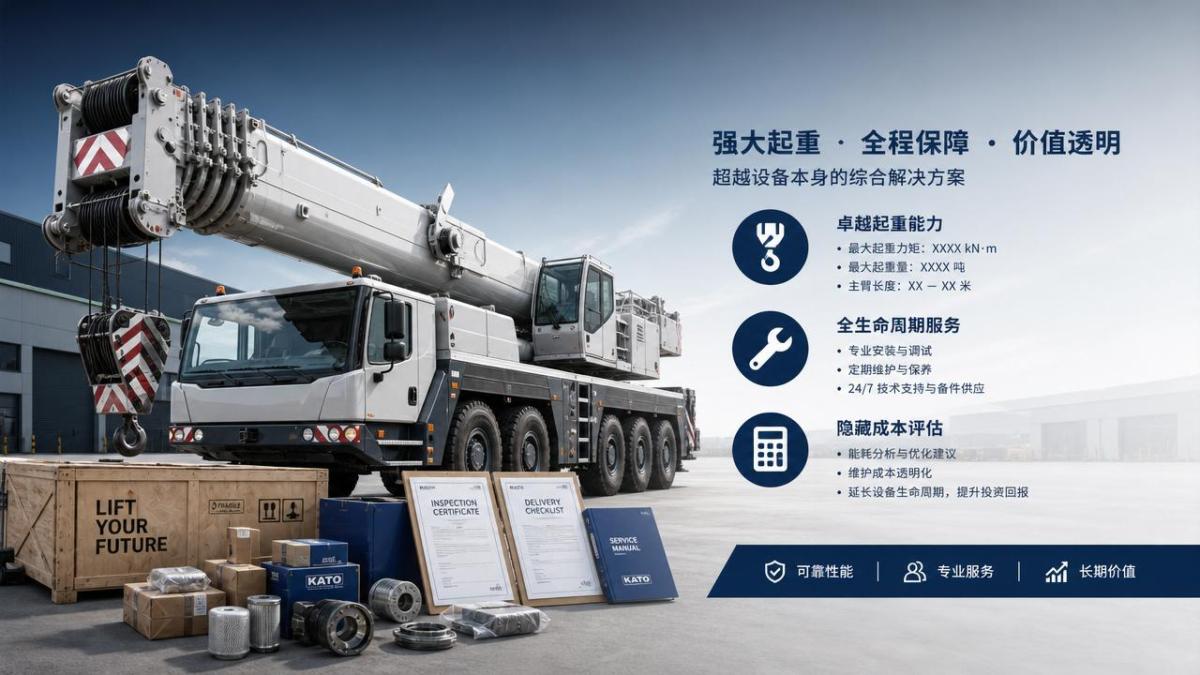
Most buyers assume crane procurement is mainly about matching lifting capacity to project requirements. In reality, finance teams carry a broader responsibility: avoiding underperformance, delays, compliance failures, and long-term cost leakage.
That is why the best cranes supplier is not always the one with the lowest quote. It is the one that can deliver predictable uptime, transparent support, and controllable total ownership cost.
For financial approvers, the core search intent behind this topic is clear. They want a practical framework to compare suppliers, justify spending, and avoid hidden costs that may not appear in the initial proposal.
They are less interested in generic product descriptions. They care more about how supplier choice affects cash flow, project delivery, maintenance budgeting, asset utilization, and risk exposure over several years.
Lifting Capacity Matters, but Only in the Context of Real Operational Demand
Lifting capacity is often the first specification discussed in crane procurement, but it should not be reviewed in isolation. A higher capacity machine may look safer on paper while creating unnecessary capital and operating burden.
Finance teams should ask whether the rated capacity matches actual lift profiles, site conditions, duty cycles, and future workload assumptions. Overbuying can increase purchase price, transport cost, fuel use, and maintenance complexity.
Underspecifying, however, creates a different risk. The crane may operate near its limits too often, reducing efficiency, increasing wear, and raising the chance of downtime or safety incidents.
A capable cranes supplier should help buyers evaluate working radius, load charts, terrain constraints, attachment requirements, and utilization patterns rather than simply promoting the largest available model.
For approval teams, a useful question is not “What is the maximum tonnage?” but “What capacity range supports our jobs with the best balance of safety, utilization, and lifecycle cost?”
Why After-Sales Service Often Has More Financial Impact Than the Purchase Price
One of the biggest mistakes in crane sourcing is treating after-sales service as secondary. In heavy equipment procurement, service quality often determines whether the asset performs like an investment or becomes a liability.
Crane downtime can delay project milestones, trigger penalties, disrupt subcontractor schedules, and reduce revenue generation. Even a modest service gap can quickly erase any savings gained from a lower upfront quote.
Financial decision-makers should examine service coverage in detail. Important points include technician response time, local spare parts availability, training support, warranty scope, remote diagnostics, and escalation procedures.
A reliable cranes supplier should provide written service commitments, not just verbal assurances. Service level expectations should be measurable, especially for critical fleets operating on time-sensitive infrastructure or industrial sites.
It is also wise to review the supplier’s service network footprint. A vendor with weak regional support may offer an attractive bid but create significant downtime risk once the crane enters operation.
Hidden Costs That Commonly Distort Crane Procurement Decisions
Hidden costs are usually the reason a “cheaper” supplier becomes more expensive over time. These costs are often fragmented across departments, making them harder for approval teams to see during procurement review.
Common hidden costs include freight, assembly, operator training, commissioning, extended warranty fees, software updates, inspections, compliance documentation, and accessories that were excluded from the base quotation.
There are also operational hidden costs. These may include higher fuel consumption, more frequent replacement of wear parts, longer repair lead times, and lower resale value due to weaker brand confidence or poor parts support.
Another overlooked issue is project delay cost. If a supplier misses the delivery window, the financial impact may include idle labor, delayed mobilization, postponed billing, or contractual penalties.
To compare offers accurately, financial teams should request a five-year total cost of ownership view. This should include acquisition, financing, transport, setup, maintenance, downtime assumptions, and residual value estimates.
How to Evaluate a Cranes Supplier Beyond the Sales Presentation
Supplier evaluation should move beyond brochures and product claims. A strong procurement process uses evidence from field performance, service history, customer references, and total support capability.
Start with reference checks from similar industries or project scales. Ask existing customers about uptime, parts lead times, warranty handling, technician quality, and whether promised support was delivered in practice.
Next, review financial and operational stability. A supplier may offer aggressive pricing because it lacks long-term capacity, inventory depth, or stable service infrastructure. Low price can sometimes signal elevated execution risk.
It is also helpful to assess application engineering support. A competent cranes supplier should understand not only the machine, but also the operational environment in which it will be used.
For finance stakeholders, credibility comes from consistency. Do technical specifications, lead times, service claims, and cost assumptions align across the proposal, contract, and implementation plan?
Questions Finance Teams Should Ask Before Approving a Crane Purchase
Approval teams can improve outcomes by asking sharper questions early. These questions reveal whether the supplier is offering a complete solution or simply competing on headline price.
First, ask what is included and excluded in the quote. Clarify transport, commissioning, attachments, operator training, preventive maintenance, and consumables. Ambiguity here often becomes post-purchase cost escalation.
Second, ask for expected annual maintenance cost under your actual usage model. Suppliers should provide assumptions clearly, including operating hours, site conditions, and scheduled service intervals.
Third, ask how downtime events are handled. What is the guaranteed response time? Are critical parts stocked locally? Is there a loaner policy or workaround process for urgent repairs?
Fourth, ask for evidence of resale demand. Residual value can materially influence total asset economics, especially for companies with fleet rotation strategies or capital discipline targets.
Finally, ask how the crane supports business continuity. Procurement should not only solve today’s lifting requirement, but also fit future workloads, compliance expectations, and technology upgrades.
Delivery Reliability and Lead Time Risk Deserve More Attention
For many projects, the delivery date matters nearly as much as crane performance. A supplier that delivers late can create cascading financial consequences across planning, labor scheduling, and client commitments.
Lead time risk has become more important due to supply chain volatility, component shortages, and logistics disruption. Financial approvers should not accept delivery promises without supporting evidence.
Ask whether the quoted crane is in stock, in production, or dependent on third-party sourcing. Request a milestone-based delivery schedule with accountability for factory completion, shipment, customs, and site readiness.
A trustworthy cranes supplier will discuss delivery risks openly and offer contingency planning. This may include substitute configurations, phased deployment, or spare equipment support during transition periods.
From a finance perspective, schedule certainty reduces exposure. It protects forecasted revenue, lowers the risk of contractual damages, and improves confidence in capital deployment timing.
When the Lowest Bid Is the Wrong Financial Choice
Low bids can be attractive in internal budget review, especially when capital controls are strict. However, the lowest initial quotation often wins attention by excluding support elements that later become unavoidable expenses.
In other cases, the supplier may meet the technical minimum while failing to meet practical requirements for uptime, compliance documentation, operator support, or parts access. The shortfall only appears after delivery.
Financial approvers should consider the cost of uncertainty itself. If one supplier provides stronger service guarantees, faster response, and more predictable operating costs, the premium may be financially rational.
This is especially true for mission-critical projects where crane failure affects the broader construction sequence. In such settings, reliability has direct economic value, not just operational convenience.
The right decision framework is therefore not lowest bid versus highest bid. It is lowest realistic cost at acceptable risk over the intended ownership period.
A Practical Supplier Selection Framework for Financial Decision-Makers
A useful evaluation model combines technical fit, support capability, commercial transparency, and lifecycle economics. This helps approval teams defend decisions with evidence rather than preference.
One practical approach is to score each supplier across six weighted areas: application fit, service network, delivery reliability, total cost of ownership, contractual clarity, and residual value outlook.
Technical teams can validate lifting suitability, while finance reviews five-year cost exposure and contract structure. Procurement then consolidates commercial comparability and negotiation leverage.
It is important to document assumptions. If one cranes supplier appears cheaper, confirm whether the comparison uses the same scope, support terms, warranty duration, and operating profile.
With this structure, decision-makers can explain why a higher purchase price may still deliver better ROI. That is often the key to obtaining internal alignment and reducing post-approval disputes.
Conclusion: Choose a Cranes Supplier Like an Asset Partner, Not a Vendor
For financial approvers, crane procurement should be viewed as an asset strategy decision, not just a sourcing exercise. Capacity matters, but service quality, lead time reliability, and hidden costs often determine the real outcome.
The most valuable cranes supplier is one that reduces operational uncertainty, supports predictable budgeting, and protects project continuity throughout the asset lifecycle.
If your team evaluates suppliers through total cost of ownership, measurable service commitments, and realistic delivery risk, you will make better approvals and avoid expensive surprises later.
In a market where procurement errors can ripple across schedules and margins, disciplined supplier selection is not administrative caution. It is a direct contribution to long-term project and capital performance.
Get weekly intelligence in your inbox.
No noise. No sponsored content. Pure intelligence.
News Recommendations
 Sep 19, 2026How an electronics application guide helps prevent component mismatchHow an electronics application guide helps prevent component mismatch
 Sep 18, 2026When a resource allocation platform improves project deliveryWhen a resource allocation platform improves project delivery
 Sep 17, 2026What to compare when evaluating mineral processing equipment manufacturersWhat to compare when evaluating mineral processing equipment manufacturers
 Sep 16, 2026How mineral separation optimization can reduce concentrate lossesHow mineral separation optimization can reduce concentrate losses
 Sep 15, 2026How to assess lifecycle costs in urban tech procurementHow to assess lifecycle costs in urban tech procurement
 Sep 14, 2026Heavy industry technology trends reshaping capital investment prioritiesHeavy industry technology trends reshaping capital investment priorities
 Sep 14, 2026Global Industrial Equipment Procurement: How Top OEMs Qualify Suppliers for Mining & Infrastructure ProjectsGlobal Industrial Equipment Procurement: How Top OEMs Qualify Suppliers for Mining & Infrastructure Projects
 Sep 14, 2026Industrial & Mining Equipment Procurement: Balancing Local Sourcing, Lead Time, and Certification RequirementsIndustrial & Mining Equipment Procurement: Balancing Local Sourcing, Lead Time, and Certification Requirements
 Sep 14, 2026Infrastructure & Equipment Upgrades: What Procurement Teams Must Verify Before Signing Off on New ContractsInfrastructure & Equipment Upgrades: What Procurement Teams Must Verify Before Signing Off on New Contracts
 Sep 14, 2026Why Infrastructure Equipment Buyers Are Shifting from Catalog-Based to Capability-Based Supplier SelectionWhy Infrastructure Equipment Buyers Are Shifting from Catalog-Based to Capability-Based Supplier Selection
 Sep 14, 2026Process Automation Project Execution: How to Align Supplier Capabilities with PLC Integration, Cybersecurity & Commissioning MilestonesProcess Automation Project Execution: How to Align Supplier Capabilities with PLC Integration, Cybersecurity & Commissioning Milestones
 Sep 14, 2026Are intelligent traffic systems worth the investment for small cities?Are intelligent traffic systems worth the investment for small cities?
 Sep 14, 2026How do intelligent traffic systems handle sensor failures?How do intelligent traffic systems handle sensor failures?
 Sep 14, 2026What should I check before accepting a smart building system?What should I check before accepting a smart building system?
 Sep 14, 2026Is a smart building system worth the maintenance cost?Is a smart building system worth the maintenance cost?
 Sep 14, 2026What data is needed for reliable resource allocation planning?What data is needed for reliable resource allocation planning?
 Sep 14, 2026How can resource allocation software reduce equipment idle time?How can resource allocation software reduce equipment idle time?
 Sep 14, 2026How should smart devices be maintained in harsh outdoor conditions?How should smart devices be maintained in harsh outdoor conditions?
 Sep 14, 2026Do smart devices improve worker safety on construction sites?Do smart devices improve worker safety on construction sites?
 Sep 14, 2026What environmental risks must be assessed before deep-sea mining?What environmental risks must be assessed before deep-sea mining?
 Sep 14, 2026Is deep-sea mining equipment commercially viable in 2026?Is deep-sea mining equipment commercially viable in 2026?
 Sep 14, 2026What Inspection Checks Should Procurement Teams Perform Before Ordering Dredging Equipment in 2026?What Inspection Checks Should Procurement Teams Perform Before Ordering Dredging Equipment in 2026?
 Sep 13, 2026How to verify an industrial product information source before specifying equipmentHow to verify an industrial product information source before specifying equipment
 Sep 12, 2026Which intelligent traffic systems hardware fits an urban intersection?Which intelligent traffic systems hardware fits an urban intersection?
 Sep 11, 2026How pump capacity affects response coverage for municipal fire fighting vehiclesHow pump capacity affects response coverage for municipal fire fighting vehicles
 Sep 10, 2026What to verify before choosing a heavy industry equipment supplierWhat to verify before choosing a heavy industry equipment supplier
 Sep 09, 2026When do adaptive urban traffic control systems reduce corridor delays?When do adaptive urban traffic control systems reduce corridor delays?