Crane Technology Upgrades That Improve Lift Precision
Modern crane technology is redefining lift accuracy across construction, logistics, mining, rail, and urban infrastructure projects. Precision is no longer a premium feature. It is becoming a baseline requirement.
As loads grow heavier and jobsites become denser, crane technology upgrades help operators control movement with greater confidence. Better sensing, smarter controls, and data visibility reduce swing, drift, delay, and avoidable risk.
For sectors covered by GIUT, lift precision now affects productivity, structural safety, project timing, and compliance. This shift is changing how heavy equipment is evaluated, deployed, and digitally integrated.
Lift precision is becoming a strategic benchmark in modern crane technology
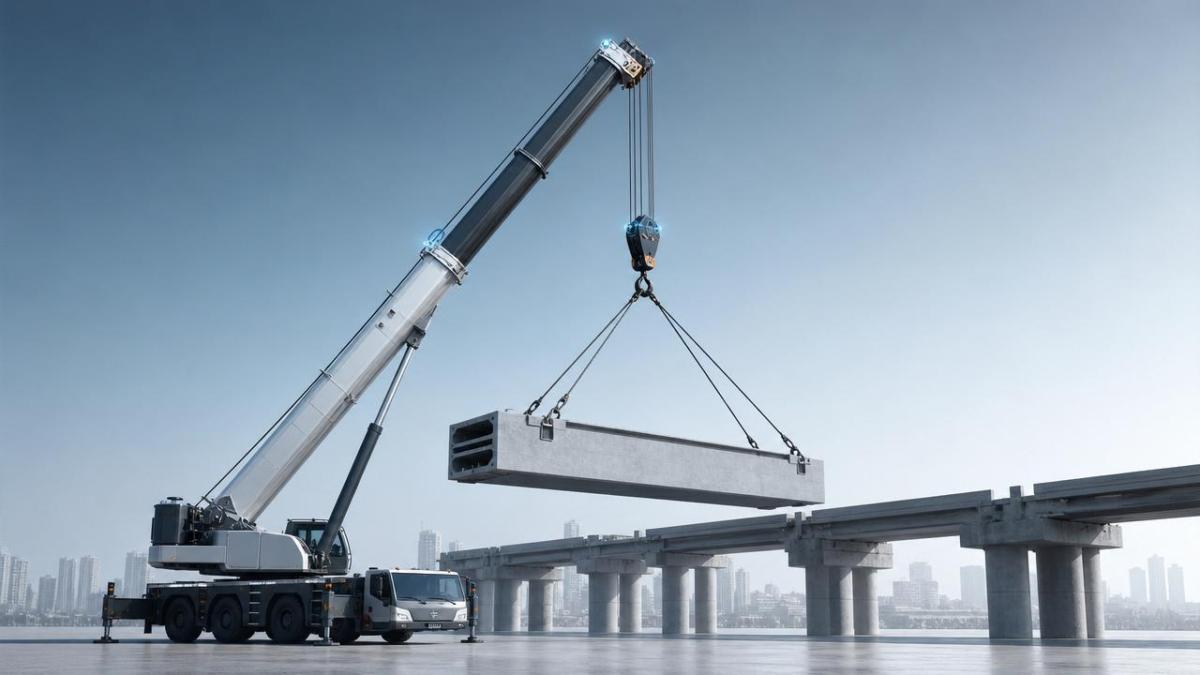
A few years ago, precision mainly depended on operator skill and site experience. Today, crane technology increasingly combines software, sensors, automation, and machine intelligence to stabilize every phase of a lift.
This matters because urban projects leave less room for correction. High-rise construction, modular assembly, rail maintenance, and equipment placement all demand exact load positioning.
At the same time, environmental conditions are less predictable. Wind gusts, uneven ground, blind spots, and congested work zones create variables that advanced crane technology can now monitor in real time.
The result is a broader industry move away from reactive lifting. Precision upgrades support a more controlled operating model, where decisions are informed by live data rather than guesswork.
Several trend signals show why crane technology upgrades are accelerating
The demand for better lift precision is not driven by one factor. It comes from intersecting pressures across safety, efficiency, labor, and digital infrastructure management.
These signals are visible across comprehensive industries, not only in tower cranes. Mobile cranes, loader cranes, overhead cranes, and specialized lifting equipment are all evolving toward assisted precision.
The most important crane technology upgrades improving lift precision
Not every upgrade delivers equal value. The strongest gains usually come from systems that improve load awareness, motion control, operator feedback, and environmental response.
1. Intelligent control systems
Modern control interfaces smooth acceleration, deceleration, and directional changes. That reduces abrupt operator inputs and makes the crane respond more predictably during delicate lifts.
2. Real-time load monitoring
Advanced crane technology now tracks load weight, boom angle, radius, and capacity continuously. Operators receive instant feedback before minor instability becomes a critical problem.
3. Anti-sway technology
Anti-sway functions use motion algorithms and control logic to minimize pendulum movement. This is especially valuable when placing steel, precast modules, rail components, or equipment near obstacles.
4. Positioning sensors and zone limitation
Sensors help define safe working envelopes and restricted areas. Precision improves because crane technology can guide movement within known boundaries instead of relying only on visual estimation.
5. Camera systems and visibility assistance
Blind lifts often create positioning errors. Camera feeds and visibility aids give a better view of hook approach, landing points, and nearby structures.
6. Telematics and lift data recording
Telematics turns crane technology into a measurable asset. Data from past lifts can reveal repeated overcorrection, harsh motion, or performance loss linked to maintenance issues.
Why these crane technology changes are happening now
- Prefabrication needs exact component placement on first attempt.
- Urban jobsites offer less operating space and more collision risk.
- Digital construction workflows reward machine-generated lift data.
- Safety culture now favors prevention through active monitoring.
- Equipment owners expect better utilization and fewer corrective delays.
- Electronics and sensor costs have become more practical to deploy.
In other words, crane technology upgrades are moving from optional enhancements to operational necessities. Precision is increasingly tied to cost control and site coordination, not just machine performance.
The impact of higher-precision crane technology across business operations
The effect of better crane technology extends beyond the lift itself. It influences planning, maintenance, digital reporting, and how multiple trades work together around the same schedule.
On infrastructure projects, precise lifting reduces rework when placing bridge segments, utility modules, or rail components. On smart construction sites, it improves synchronization with BIM-based sequencing.
In mining and industrial environments, precision helps position maintenance parts and heavy assemblies in confined spaces. In logistics yards, it supports faster load handling with fewer corrective movements.
- Fewer lift retries and less unnecessary equipment motion
- Lower chance of load contact with nearby assets
- Better documentation for safety audits and operations review
- More consistent results across changing crews and shifts
- Improved readiness for connected site management platforms
What deserves close attention when evaluating crane technology upgrades
Not every advanced feature will create equal value in every setting. The best assessment starts with lift conditions, risk points, and workflow integration needs.
- Check whether anti-sway performance matches typical load length and movement patterns.
- Confirm sensor accuracy under wind, dust, vibration, or low-visibility conditions.
- Review how control interfaces affect learning time and operational consistency.
- Evaluate compatibility with telematics, reporting tools, and digital planning systems.
- Assess service support, calibration requirements, and software update policies.
- Compare measurable outcomes such as placement time, swing reduction, and incident prevention.
This approach helps separate meaningful crane technology improvements from features that look advanced but offer limited site-level impact.
A practical response framework for the next phase of crane technology adoption
A phased rollout often works best. Start with the lifts where precision failures are most costly, then expand based on performance evidence.
The next move is to treat crane technology as a precision system, not only a lifting machine
The future of crane technology is shaped by intelligence, visibility, and controlled motion. Lift precision now influences safety outcomes, project speed, and how infrastructure teams coordinate complex work.
For organizations following the evolution of heavy equipment through GIUT, the key question is no longer whether crane technology is changing. The real question is which upgrades create measurable operational advantage first.
Review current lift challenges, compare upgrade paths, and align adoption with digital construction goals. The strongest results come from pairing smarter crane technology with clear performance targets and continuous learning.
Get weekly intelligence in your inbox.
No noise. No sponsored content. Pure intelligence.
News Recommendations
 Sep 19, 2026How an electronics application guide helps prevent component mismatchHow an electronics application guide helps prevent component mismatch
 Sep 18, 2026When a resource allocation platform improves project deliveryWhen a resource allocation platform improves project delivery
 Sep 17, 2026What to compare when evaluating mineral processing equipment manufacturersWhat to compare when evaluating mineral processing equipment manufacturers
 Sep 16, 2026How mineral separation optimization can reduce concentrate lossesHow mineral separation optimization can reduce concentrate losses
 Sep 15, 2026How to assess lifecycle costs in urban tech procurementHow to assess lifecycle costs in urban tech procurement
 Sep 14, 2026Heavy industry technology trends reshaping capital investment prioritiesHeavy industry technology trends reshaping capital investment priorities
 Sep 14, 2026Global Industrial Equipment Procurement: How Top OEMs Qualify Suppliers for Mining & Infrastructure ProjectsGlobal Industrial Equipment Procurement: How Top OEMs Qualify Suppliers for Mining & Infrastructure Projects
 Sep 14, 2026Industrial & Mining Equipment Procurement: Balancing Local Sourcing, Lead Time, and Certification RequirementsIndustrial & Mining Equipment Procurement: Balancing Local Sourcing, Lead Time, and Certification Requirements
 Sep 14, 2026Infrastructure & Equipment Upgrades: What Procurement Teams Must Verify Before Signing Off on New ContractsInfrastructure & Equipment Upgrades: What Procurement Teams Must Verify Before Signing Off on New Contracts
 Sep 14, 2026Why Infrastructure Equipment Buyers Are Shifting from Catalog-Based to Capability-Based Supplier SelectionWhy Infrastructure Equipment Buyers Are Shifting from Catalog-Based to Capability-Based Supplier Selection
 Sep 14, 2026Process Automation Project Execution: How to Align Supplier Capabilities with PLC Integration, Cybersecurity & Commissioning MilestonesProcess Automation Project Execution: How to Align Supplier Capabilities with PLC Integration, Cybersecurity & Commissioning Milestones
 Sep 14, 2026Are intelligent traffic systems worth the investment for small cities?Are intelligent traffic systems worth the investment for small cities?
 Sep 14, 2026How do intelligent traffic systems handle sensor failures?How do intelligent traffic systems handle sensor failures?
 Sep 14, 2026What should I check before accepting a smart building system?What should I check before accepting a smart building system?
 Sep 14, 2026Is a smart building system worth the maintenance cost?Is a smart building system worth the maintenance cost?
 Sep 14, 2026What data is needed for reliable resource allocation planning?What data is needed for reliable resource allocation planning?
 Sep 14, 2026How can resource allocation software reduce equipment idle time?How can resource allocation software reduce equipment idle time?
 Sep 14, 2026How should smart devices be maintained in harsh outdoor conditions?How should smart devices be maintained in harsh outdoor conditions?
 Sep 14, 2026Do smart devices improve worker safety on construction sites?Do smart devices improve worker safety on construction sites?
 Sep 14, 2026What environmental risks must be assessed before deep-sea mining?What environmental risks must be assessed before deep-sea mining?
 Sep 14, 2026Is deep-sea mining equipment commercially viable in 2026?Is deep-sea mining equipment commercially viable in 2026?
 Sep 14, 2026What Inspection Checks Should Procurement Teams Perform Before Ordering Dredging Equipment in 2026?What Inspection Checks Should Procurement Teams Perform Before Ordering Dredging Equipment in 2026?
 Sep 13, 2026How to verify an industrial product information source before specifying equipmentHow to verify an industrial product information source before specifying equipment
 Sep 12, 2026Which intelligent traffic systems hardware fits an urban intersection?Which intelligent traffic systems hardware fits an urban intersection?
 Sep 11, 2026How pump capacity affects response coverage for municipal fire fighting vehiclesHow pump capacity affects response coverage for municipal fire fighting vehicles
 Sep 10, 2026What to verify before choosing a heavy industry equipment supplierWhat to verify before choosing a heavy industry equipment supplier
 Sep 09, 2026When do adaptive urban traffic control systems reduce corridor delays?When do adaptive urban traffic control systems reduce corridor delays?