High-Speed Rail Technology Upgrades Changing Fleet Planning
As high-speed rail technology advances, fleet planning is shifting from routine procurement to a strategic decision shaped by speed, signaling, energy efficiency, and lifecycle performance. For business leaders across infrastructure and mobility sectors, understanding these upgrades is essential to balancing capacity, cost, resilience, and long-term investment value in an increasingly connected transport landscape.
Why high-speed rail technology now drives fleet strategy, not just rolling stock replacement
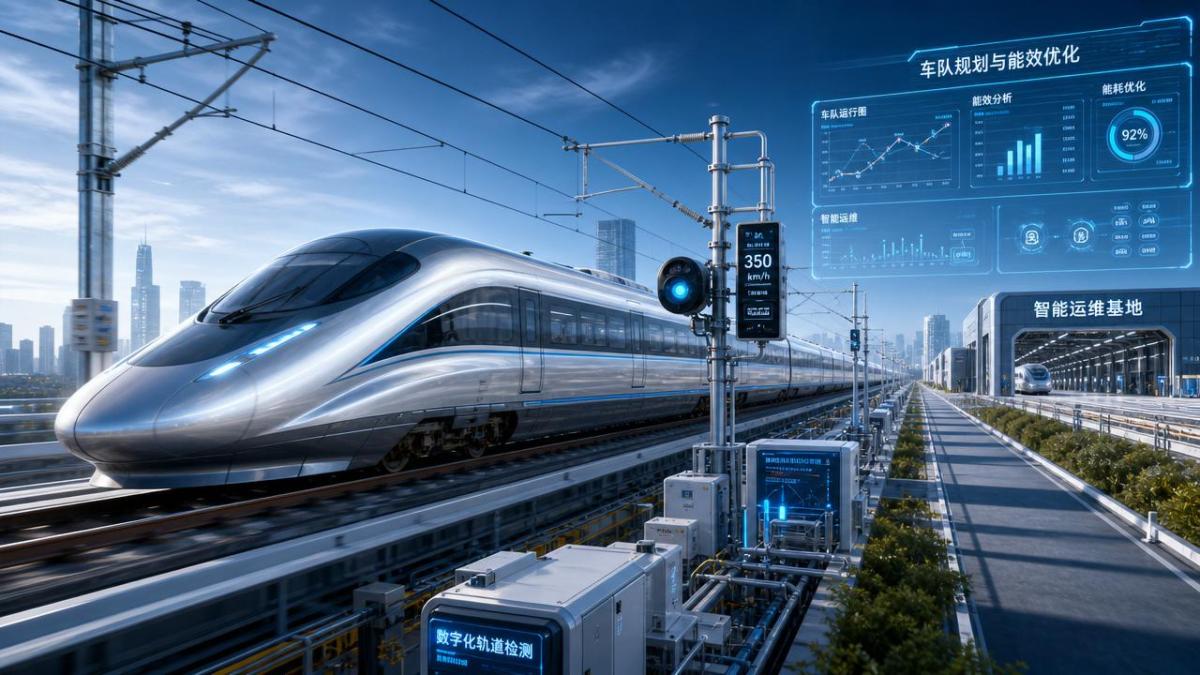
For enterprise decision-makers, high-speed rail technology is no longer a narrow engineering topic. It directly affects route economics, network flexibility, maintenance exposure, power consumption, passenger throughput, and the timing of future capital upgrades.
In practice, a trainset decision now sits inside a wider infrastructure equation. Signaling compatibility, platform design, depot capacity, digital diagnostics, and grid readiness can either unlock value or create years of operational friction.
This is especially important in cross-sector planning, where railway investment intersects with smart cities, construction programs, logistics corridors, and long-term urban governance. GIUT’s perspective is useful here because rail fleets should be assessed as part of the physical and intelligent systems shaping modern infrastructure.
- A faster platform is not automatically the better choice if signaling, catenary, and maintenance systems are not upgraded in parallel.
- A lower acquisition price can become expensive when energy draw, spare parts complexity, and depot modifications are added.
- A fleet with strong digital condition monitoring may reduce disruption risk and improve asset utilization over the full lifecycle.
What upgrades in high-speed rail technology are changing planning assumptions?
The most important shift is that new-generation fleets are being designed as software-enabled transport assets. Mechanical performance still matters, but value increasingly comes from interoperability, diagnostics, efficiency, and control integration.
Key technology areas influencing fleet decisions
- Advanced signaling integration, including compatibility with modern train control systems, allows shorter headways and better timetable recovery.
- Lighter materials and aerodynamic refinements support reduced energy use, especially on long intercity services with frequent high-speed operation.
- Predictive maintenance tools use onboard sensors and remote diagnostics to identify component wear before failures disrupt service.
- Modular interiors and trainset architecture improve flexibility for premium, commuter, mixed-demand, or cross-border service patterns.
- Energy management systems optimize traction, braking recovery, and auxiliary loads, which matters when electricity cost volatility is high.
These upgrades matter because they change the core assumptions behind fleet sizing. A smarter fleet can sometimes defer additional train procurement by improving availability, turnaround performance, and operating consistency.
The table below highlights how high-speed rail technology upgrades typically influence strategic planning variables rather than isolated technical features.
For decision-makers, the lesson is simple: evaluate high-speed rail technology as a system-level enabler. The most valuable upgrade is often the one that reduces future constraints across operations, power, depots, and digital control.
Which operating scenarios benefit most from upgraded fleets?
Not every corridor needs the same technology profile. Fleet planning improves when the trainset is matched to service pattern, station spacing, climate exposure, maintenance capability, and demand volatility.
Typical scenarios
- Dense intercity corridors benefit from signaling integration, rapid acceleration, and high dispatch reliability more than from headline top speed alone.
- Cross-border routes need interoperability, standards alignment, and robust certification pathways to avoid operational bottlenecks.
- Emerging networks often prioritize maintainability, energy efficiency, and phased scalability because depot maturity and budget control are decisive.
- Airport and metropolitan connectors need quick turnaround, passenger flow optimization, and integration with smart mobility systems.
This scenario-based view is where many procurement programs become more accurate. Instead of asking which train is most advanced, leaders should ask which high-speed rail technology package best supports the corridor business case.
The following application comparison helps map high-speed rail technology choices to real planning environments.
The comparison shows why broad infrastructure intelligence matters. Rolling stock selection only works when linked to stations, depots, energy supply, and digital governance across the wider transport ecosystem.
How should enterprise buyers compare speed, efficiency, and lifecycle cost?
Many organizations still overemphasize maximum speed. In reality, value often comes from average commercial speed, seat utilization, reliability, and maintainability. A train designed for extreme peak performance may not be the best financial fit for the actual route profile.
A more useful comparison framework
- Measure route-level travel time improvement, not just technical top speed.
- Estimate energy consumption under real service patterns, including stops, gradients, and climate loads.
- Review maintenance hours per operating kilometer and expected component replacement cycles.
- Quantify fleet availability targets and reserve ratio requirements.
- Check upgradeability for future signaling, passenger systems, and cybersecurity controls.
For boards and project sponsors, this approach reduces the risk of buying an impressive trainset that is poorly aligned with long-term economics. High-speed rail technology should support infrastructure resilience, not become a stranded premium asset.
What should procurement teams verify before selecting a high-speed rail technology platform?
Procurement teams need a disciplined filter because rail fleet decisions often lock in cost structures for decades. The best process combines engineering review, commercial modeling, and implementation planning from the start.
Core procurement checklist
- Interface fit: confirm compatibility with track geometry, power systems, signaling architecture, platform heights, and depot equipment.
- Lifecycle economics: evaluate energy, maintenance labor, spare parts strategy, software support, and refurbishment planning.
- Operational resilience: assess redundancy, climate suitability, fault isolation capability, and recovery time after service incidents.
- Delivery readiness: review manufacturing lead times, testing sequence, commissioning needs, and training obligations.
- Governance and data: clarify ownership of operational data, cybersecurity responsibilities, and software update procedures.
GIUT’s cross-sector lens is especially relevant during this stage. Fleet planning should be coordinated with civil works schedules, urban development timelines, depot construction, and digital infrastructure deployment so procurement does not outpace system readiness.
How do standards, certification, and system integration affect project risk?
Technical performance alone does not guarantee successful deployment. High-speed rail technology must fit the compliance environment of the target market, including safety rules, interoperability frameworks, testing requirements, and maintenance governance.
Risk points leaders often underestimate
- Certification timelines can affect project opening dates as much as vehicle manufacturing schedules.
- Digital systems require secure integration across signaling, onboard software, operations control, and maintenance platforms.
- Imported designs may need adaptation for local climate, axle load expectations, evacuation rules, and maintenance practices.
Where possible, buyers should align design review with common industry frameworks and established safety management practices. Early dialogue on verification, testing, and operational acceptance reduces expensive redesign later in the program.
Common misconceptions about high-speed rail technology upgrades
“Top speed is the main value driver”
Usually not. Corridor geometry, stop spacing, and traffic management often determine commercial benefit more than the headline maximum speed.
“The newest platform always lowers operating cost”
Not necessarily. New platforms can require depot retrofits, specialist tooling, software contracts, and new training burdens that change total cost.
“Fleet planning is mostly a railway department issue”
That view is too narrow. Fleet choices affect urban mobility integration, power demand, land use, station capacity, and long-term public investment sequencing.
FAQ: what decision-makers ask before committing to a fleet upgrade
How do we know whether a fleet upgrade is better than extending current assets?
Start with a corridor-level business case. Compare overhaul cost, residual reliability, energy use, spare parts availability, and signaling compatibility against the performance gain from newer high-speed rail technology. If old assets require major retrofit across multiple systems, replacement may become more rational.
What should be prioritized when budget is limited?
Prioritize upgrades that improve availability, safety integration, and energy efficiency before chasing top-end speed. These areas usually create stronger long-term returns and reduce operational disruption risk.
How early should depot and maintenance planning begin?
Immediately. Depot interfaces, lifting equipment, inspection routines, parts storage, and diagnostic workflows should be reviewed during fleet specification, not after supplier selection.
What is the biggest hidden risk in high-speed rail technology procurement?
A mismatch between train capability and system readiness. This includes signaling gaps, delayed civil works, weak digital integration, or insufficient maintenance preparation. These issues can erode the value of an otherwise capable fleet.
Why this matters for long-term infrastructure strategy
High-speed rail technology is increasingly part of a broader infrastructure intelligence model. It connects transport demand, urban growth, energy systems, digital operations, and sustainability targets. That is why fleet planning now requires more than rolling stock comparison sheets.
Organizations that evaluate fleets through a whole-system lens are better positioned to avoid underused assets, fragmented upgrades, and delayed returns. They can also align rail investment with smart governance goals and future mobility integration.
Why consult GIUT for fleet planning and technology evaluation
GIUT approaches high-speed rail technology from the engineering frontline and the infrastructure strategy level at the same time. That matters when decision-makers need more than product descriptions. They need guidance on interfaces, lifecycle trade-offs, implementation sequencing, and cross-sector impact.
You can consult GIUT on route-specific parameter review, fleet selection logic, delivery sequencing, depot readiness, standards alignment, digital integration priorities, and budget-sensitive upgrade pathways. For teams preparing procurement, modernization, or feasibility analysis, this kind of structured intelligence reduces uncertainty before capital is committed.
If your project involves high-speed rail technology upgrades, contact us to discuss technical parameter confirmation, solution comparison, implementation timelines, certification considerations, maintenance planning, and quotation-oriented scenario analysis tailored to your corridor and investment objectives.
Get weekly intelligence in your inbox.
No noise. No sponsored content. Pure intelligence.
News Recommendations
 Sep 19, 2026How an electronics application guide helps prevent component mismatchHow an electronics application guide helps prevent component mismatch
 Sep 18, 2026When a resource allocation platform improves project deliveryWhen a resource allocation platform improves project delivery
 Sep 17, 2026What to compare when evaluating mineral processing equipment manufacturersWhat to compare when evaluating mineral processing equipment manufacturers
 Sep 16, 2026How mineral separation optimization can reduce concentrate lossesHow mineral separation optimization can reduce concentrate losses
 Sep 15, 2026How to assess lifecycle costs in urban tech procurementHow to assess lifecycle costs in urban tech procurement
 Sep 14, 2026Heavy industry technology trends reshaping capital investment prioritiesHeavy industry technology trends reshaping capital investment priorities
 Sep 14, 2026Global Industrial Equipment Procurement: How Top OEMs Qualify Suppliers for Mining & Infrastructure ProjectsGlobal Industrial Equipment Procurement: How Top OEMs Qualify Suppliers for Mining & Infrastructure Projects
 Sep 14, 2026Industrial & Mining Equipment Procurement: Balancing Local Sourcing, Lead Time, and Certification RequirementsIndustrial & Mining Equipment Procurement: Balancing Local Sourcing, Lead Time, and Certification Requirements
 Sep 14, 2026Infrastructure & Equipment Upgrades: What Procurement Teams Must Verify Before Signing Off on New ContractsInfrastructure & Equipment Upgrades: What Procurement Teams Must Verify Before Signing Off on New Contracts
 Sep 14, 2026Why Infrastructure Equipment Buyers Are Shifting from Catalog-Based to Capability-Based Supplier SelectionWhy Infrastructure Equipment Buyers Are Shifting from Catalog-Based to Capability-Based Supplier Selection
 Sep 14, 2026Process Automation Project Execution: How to Align Supplier Capabilities with PLC Integration, Cybersecurity & Commissioning MilestonesProcess Automation Project Execution: How to Align Supplier Capabilities with PLC Integration, Cybersecurity & Commissioning Milestones
 Sep 14, 2026Are intelligent traffic systems worth the investment for small cities?Are intelligent traffic systems worth the investment for small cities?
 Sep 14, 2026How do intelligent traffic systems handle sensor failures?How do intelligent traffic systems handle sensor failures?
 Sep 14, 2026What should I check before accepting a smart building system?What should I check before accepting a smart building system?
 Sep 14, 2026Is a smart building system worth the maintenance cost?Is a smart building system worth the maintenance cost?
 Sep 14, 2026What data is needed for reliable resource allocation planning?What data is needed for reliable resource allocation planning?
 Sep 14, 2026How can resource allocation software reduce equipment idle time?How can resource allocation software reduce equipment idle time?
 Sep 14, 2026How should smart devices be maintained in harsh outdoor conditions?How should smart devices be maintained in harsh outdoor conditions?
 Sep 14, 2026Do smart devices improve worker safety on construction sites?Do smart devices improve worker safety on construction sites?
 Sep 14, 2026What environmental risks must be assessed before deep-sea mining?What environmental risks must be assessed before deep-sea mining?
 Sep 14, 2026Is deep-sea mining equipment commercially viable in 2026?Is deep-sea mining equipment commercially viable in 2026?
 Sep 14, 2026What Inspection Checks Should Procurement Teams Perform Before Ordering Dredging Equipment in 2026?What Inspection Checks Should Procurement Teams Perform Before Ordering Dredging Equipment in 2026?
 Sep 13, 2026How to verify an industrial product information source before specifying equipmentHow to verify an industrial product information source before specifying equipment
 Sep 12, 2026Which intelligent traffic systems hardware fits an urban intersection?Which intelligent traffic systems hardware fits an urban intersection?
 Sep 11, 2026How pump capacity affects response coverage for municipal fire fighting vehiclesHow pump capacity affects response coverage for municipal fire fighting vehicles
 Sep 10, 2026What to verify before choosing a heavy industry equipment supplierWhat to verify before choosing a heavy industry equipment supplier
 Sep 09, 2026When do adaptive urban traffic control systems reduce corridor delays?When do adaptive urban traffic control systems reduce corridor delays?