High-Speed Rail Capacity Gains: What New Lines Actually Deliver
As governments and operators invest billions in high-speed rail, one question matters most to enterprise decision-makers: what do new lines actually deliver? Beyond faster travel times, high-speed rail can reshape corridor capacity, asset utilization, regional connectivity, and long-term economic returns. This article examines the real operational, financial, and strategic gains new routes create—and where expectations often exceed measurable outcomes.
What does high-speed rail capacity really mean for a corridor?
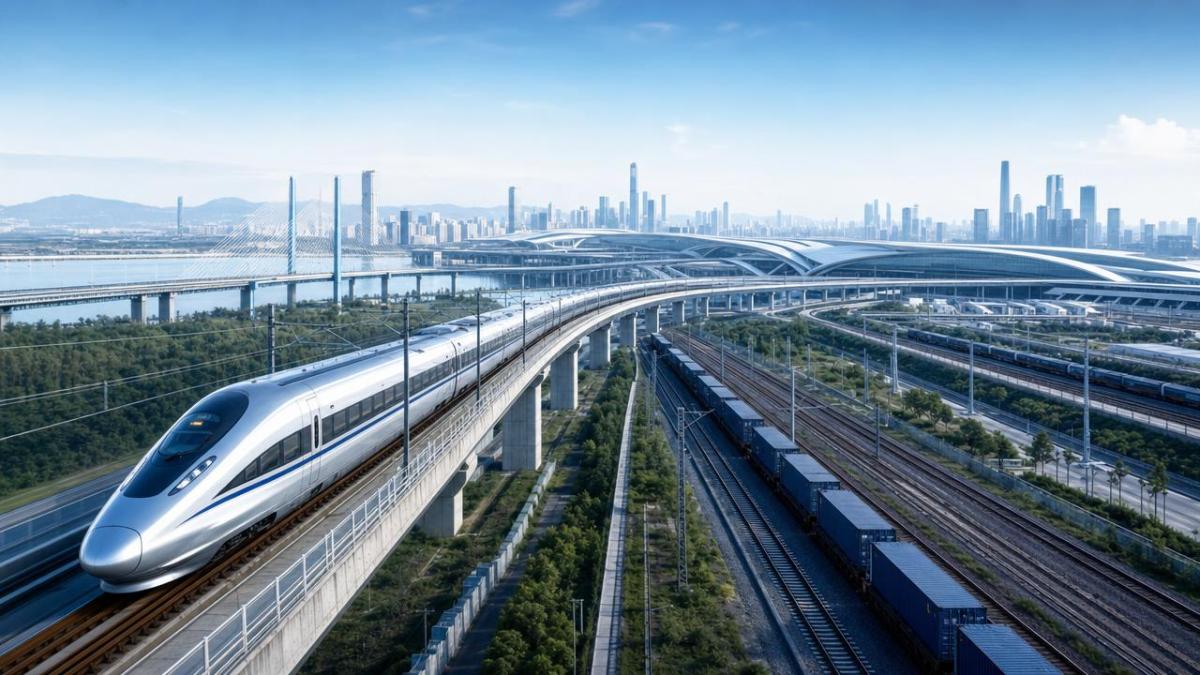
For decision-makers, high-speed rail capacity is not simply a count of extra trains. It is the combined ability of a corridor to move more passengers, free conventional tracks, stabilize schedules, and improve network productivity.
A new line can deliver value in two ways at once. First, it creates dedicated paths for fast intercity traffic. Second, it releases legacy infrastructure for commuter, regional, and freight services that were previously constrained.
This is why the strongest business case for high-speed rail often sits beyond headline speed. The real gain is separation of service patterns. When express, stopping, and freight trains no longer compete for the same slots, timetable conflicts decline.
- Dedicated train paths increase timetable resilience and reduce knock-on delays across the wider network.
- Released capacity on classic lines can support more regional trains, logistics services, or maintenance windows.
- Station throughput may improve if passenger flows are redistributed between long-distance and local functions.
- Rolling stock utilization can rise when faster turnarounds and more predictable operations reduce idle time.
In GIUT’s infrastructure perspective, capacity should be measured as a system outcome, not a line-item engineering claim. Civil works, signaling, depot access, power supply, and urban integration all affect whether a new route performs as intended.
Why mixed-traffic lines often underperform
Many corridors struggle because trains with very different speed profiles share the same infrastructure. A fast train catches a slower one, forcing buffer time into the timetable. That lowers practical capacity even when theoretical track capacity looks adequate.
New high-speed rail lines work best when they remove this mismatch. The result is not just faster journeys, but a cleaner operating plan with fewer conflicts and better resource allocation across the transport ecosystem.
What new high-speed rail lines actually deliver in operations
Enterprise planners need a practical view of what high-speed rail delivers after commissioning. The table below summarizes the most common operational gains and the conditions required to realize them.
The important lesson is that high-speed rail does not automatically create all these gains. Delivery depends on timetable recasting, last-mile access, maintenance strategy, and urban node design. Infrastructure alone is only the starting point.
Capacity gains are strongest when network redesign follows construction
Some projects underdeliver because decision-makers focus on civil completion instead of operating transformation. If legacy schedules remain mostly unchanged, released capacity may sit unused, and public expectations quickly outrun measurable performance.
The strongest outcomes appear where operators redesign service patterns, station roles, and freight windows in parallel. That is particularly relevant in mixed urban-regional corridors under pressure from population growth and modal shift targets.
Where do the financial and strategic returns come from?
For business leaders, the high-speed rail question is not whether trains can run faster. It is whether the corridor creates durable economic value. Returns usually come from a portfolio of direct and indirect effects, not a single revenue stream.
Direct value drivers
- Higher ridership from shorter journey times and more reliable departure patterns.
- Improved asset productivity when rolling stock, platforms, and depots are used more efficiently.
- Lower disruption costs across the wider network when service segregation reduces congestion effects.
- Potential premium pricing on business-heavy city pairs where schedule certainty matters.
Indirect strategic value drivers
- Expanded labor market reach, which improves access to skills across connected cities.
- Airport substitution on short-haul corridors, freeing aviation capacity for longer routes.
- Better land-use planning opportunities around stations, supporting transit-oriented development.
- Progress toward decarbonization targets when travelers shift from road or air to electrified rail.
GIUT’s cross-sector lens matters here. A high-speed rail project should be assessed alongside smart grid readiness, urban traffic management, station-area development, digital asset monitoring, and regional logistics strategy. Value compounds when systems are integrated.
High-speed rail vs upgrading existing lines: which option fits your corridor?
Not every corridor needs a brand-new high-speed rail line. In some cases, selective upgrades, signaling modernization, and junction removal deliver acceptable results at lower capital cost. The comparison below helps frame that decision.
The comparison shows why high-speed rail is most compelling in corridors with severe saturation, strong city-pair demand, and a strategic need to separate passenger segments. Where demand is lower, staged upgrading may be more rational.
A practical screening checklist
- Measure current corridor saturation, not just annual ridership. Peak-hour path scarcity is often the real trigger.
- Map service conflicts between express, regional, commuter, and freight operations.
- Test whether station access, depots, and traction power can support intensified operations.
- Model corridor benefits with and without full timetable redesign.
- Check urban development alignment, because isolated stations can dilute high-speed rail value.
What should enterprise decision-makers evaluate before committing capital?
For investors, contractors, industrial suppliers, and public-private stakeholders, the wrong question is “How fast will it run?” The better question is “What operating model, demand pattern, and risk structure support bankable outcomes?”
Procurement and planning priorities
- Demand quality: distinguish daily business demand from seasonal or politically assumed demand.
- Interface management: civil works, signaling, telecom, power, and rolling stock must be coordinated from the start.
- Maintainability: lifecycle access, spare parts strategy, and digital diagnostics matter as much as construction cost.
- Regulatory readiness: safety approvals, environmental review, and land acquisition can dominate delivery schedules.
- Station ecosystem planning: parking, metro links, bus interchange, and pedestrian access directly shape ridership conversion.
From a GIUT standpoint, high-speed rail should be treated as a corridor platform rather than a single asset. That means procurement teams should evaluate digital monitoring, predictive maintenance, energy interfaces, and city-level mobility integration early.
Standards and compliance questions worth asking
Exact standards vary by jurisdiction, but buyers should review signaling interoperability, electrical safety, fire performance, accessibility requirements, environmental permitting, and asset inspection protocols. Internationally recognized practices can reduce interface risk even in locally adapted systems.
Ignoring these questions can erase the apparent advantage of high-speed rail. Delayed acceptance, rework, and fragmented systems integration often cost more than the original equipment savings that seemed attractive during tendering.
What are the most common misconceptions about high-speed rail capacity gains?
Does a faster line automatically mean more capacity?
No. A faster line can still underperform if terminals are constrained, turnback times are long, or signaling headways remain conservative. Capacity depends on the full operating chain, from dispatching logic to platform management.
Will released capacity on old lines always be used effectively?
Not always. Some operators free up track but do not redesign the service plan. Without additional commuter, regional, or freight products, the network benefit remains partial. Released capacity only creates value when it is actively monetized or strategically deployed.
Is high-speed rail mainly a passenger convenience investment?
That view is too narrow. In saturated corridors, high-speed rail is often a network restructuring tool. It can improve freight windows, support airport strategy, reduce urban road pressure, and strengthen regional labor mobility.
Can every city pair justify a new line?
No. Some routes do better with selective upgrades, station modernization, and digital traffic control. A new high-speed rail line works best where congestion, demand density, and long-term territorial planning all support a dedicated corridor.
Trend and insight: where high-speed rail decisions are heading next
The next phase of high-speed rail decision-making is shifting from speed-centric narratives to system-value analytics. Investors and public authorities increasingly want corridor-wide models that link ridership, maintenance, carbon outcomes, land development, and digital operations.
This shift favors organizations that can interpret rail projects in a broader infrastructure context. GIUT’s strength lies in connecting railway engineering with urban governance, smart systems, resource planning, and heavy-industry delivery logic.
For enterprise decision-makers, that means better questions can be asked earlier: Will this line unlock metropolitan growth? Can it improve logistics resilience? How should station districts be phased? Which interfaces create the biggest lifecycle risk?
Why choose us for high-speed rail insight and project evaluation
GIUT supports enterprise decision-makers who need more than general commentary on high-speed rail. Our value is in structured analysis across infrastructure design, urban integration, equipment interfaces, and long-term operating logic.
You can contact us to discuss corridor capacity assessment, route option comparison, station-area integration, procurement screening, lifecycle maintenance considerations, delivery sequencing, and practical compliance questions relevant to rail and smart infrastructure programs.
- Parameter confirmation for corridor throughput, service mix, and network bottlenecks.
- Scheme selection between new high-speed rail construction, phased upgrades, or hybrid approaches.
- Delivery schedule review covering interfaces between civil works, signaling, energy, and station access.
- Customized advisory on operational readiness, maintainability, and urban-tech coordination.
- Budget and quotation dialogue for research support, comparative analysis, and strategic project framing.
If your organization is evaluating what a new high-speed rail line should truly deliver, the most useful starting point is a corridor-level discussion grounded in capacity, risk, and measurable return. That is where better infrastructure decisions begin.
Get weekly intelligence in your inbox.
No noise. No sponsored content. Pure intelligence.
News Recommendations
 Sep 19, 2026How an electronics application guide helps prevent component mismatchHow an electronics application guide helps prevent component mismatch
 Sep 18, 2026When a resource allocation platform improves project deliveryWhen a resource allocation platform improves project delivery
 Sep 17, 2026What to compare when evaluating mineral processing equipment manufacturersWhat to compare when evaluating mineral processing equipment manufacturers
 Sep 16, 2026How mineral separation optimization can reduce concentrate lossesHow mineral separation optimization can reduce concentrate losses
 Sep 15, 2026How to assess lifecycle costs in urban tech procurementHow to assess lifecycle costs in urban tech procurement
 Sep 14, 2026Heavy industry technology trends reshaping capital investment prioritiesHeavy industry technology trends reshaping capital investment priorities
 Sep 14, 2026Global Industrial Equipment Procurement: How Top OEMs Qualify Suppliers for Mining & Infrastructure ProjectsGlobal Industrial Equipment Procurement: How Top OEMs Qualify Suppliers for Mining & Infrastructure Projects
 Sep 14, 2026Industrial & Mining Equipment Procurement: Balancing Local Sourcing, Lead Time, and Certification RequirementsIndustrial & Mining Equipment Procurement: Balancing Local Sourcing, Lead Time, and Certification Requirements
 Sep 14, 2026Infrastructure & Equipment Upgrades: What Procurement Teams Must Verify Before Signing Off on New ContractsInfrastructure & Equipment Upgrades: What Procurement Teams Must Verify Before Signing Off on New Contracts
 Sep 14, 2026Why Infrastructure Equipment Buyers Are Shifting from Catalog-Based to Capability-Based Supplier SelectionWhy Infrastructure Equipment Buyers Are Shifting from Catalog-Based to Capability-Based Supplier Selection
 Sep 14, 2026Process Automation Project Execution: How to Align Supplier Capabilities with PLC Integration, Cybersecurity & Commissioning MilestonesProcess Automation Project Execution: How to Align Supplier Capabilities with PLC Integration, Cybersecurity & Commissioning Milestones
 Sep 14, 2026Are intelligent traffic systems worth the investment for small cities?Are intelligent traffic systems worth the investment for small cities?
 Sep 14, 2026How do intelligent traffic systems handle sensor failures?How do intelligent traffic systems handle sensor failures?
 Sep 14, 2026What should I check before accepting a smart building system?What should I check before accepting a smart building system?
 Sep 14, 2026Is a smart building system worth the maintenance cost?Is a smart building system worth the maintenance cost?
 Sep 14, 2026What data is needed for reliable resource allocation planning?What data is needed for reliable resource allocation planning?
 Sep 14, 2026How can resource allocation software reduce equipment idle time?How can resource allocation software reduce equipment idle time?
 Sep 14, 2026How should smart devices be maintained in harsh outdoor conditions?How should smart devices be maintained in harsh outdoor conditions?
 Sep 14, 2026Do smart devices improve worker safety on construction sites?Do smart devices improve worker safety on construction sites?
 Sep 14, 2026What environmental risks must be assessed before deep-sea mining?What environmental risks must be assessed before deep-sea mining?
 Sep 14, 2026Is deep-sea mining equipment commercially viable in 2026?Is deep-sea mining equipment commercially viable in 2026?
 Sep 14, 2026What Inspection Checks Should Procurement Teams Perform Before Ordering Dredging Equipment in 2026?What Inspection Checks Should Procurement Teams Perform Before Ordering Dredging Equipment in 2026?
 Sep 13, 2026How to verify an industrial product information source before specifying equipmentHow to verify an industrial product information source before specifying equipment
 Sep 12, 2026Which intelligent traffic systems hardware fits an urban intersection?Which intelligent traffic systems hardware fits an urban intersection?
 Sep 11, 2026How pump capacity affects response coverage for municipal fire fighting vehiclesHow pump capacity affects response coverage for municipal fire fighting vehicles
 Sep 10, 2026What to verify before choosing a heavy industry equipment supplierWhat to verify before choosing a heavy industry equipment supplier
 Sep 09, 2026When do adaptive urban traffic control systems reduce corridor delays?When do adaptive urban traffic control systems reduce corridor delays?