Concrete Mixers Supplier Comparison: Output, Wear Parts, and Downtime
Choosing among a concrete mixers supplier is no longer just about price. For technical evaluators, real value lies in output consistency, wear parts lifespan, maintenance access, and the cost of downtime across demanding jobsite conditions. This comparison highlights the factors that directly affect fleet efficiency, lifecycle cost, and equipment reliability, helping you identify suppliers that support long-term performance rather than short-term savings.
When technical teams compare suppliers, the core question is simple: which machine will keep delivering usable concrete with the least interruption, under real operating loads, for the longest practical service life.
That means supplier evaluation should move beyond brochures and rated capacity. The most useful comparison focuses on measurable output, wear component durability, service response, parts logistics, and maintenance design.
What Technical Evaluators Are Really Comparing
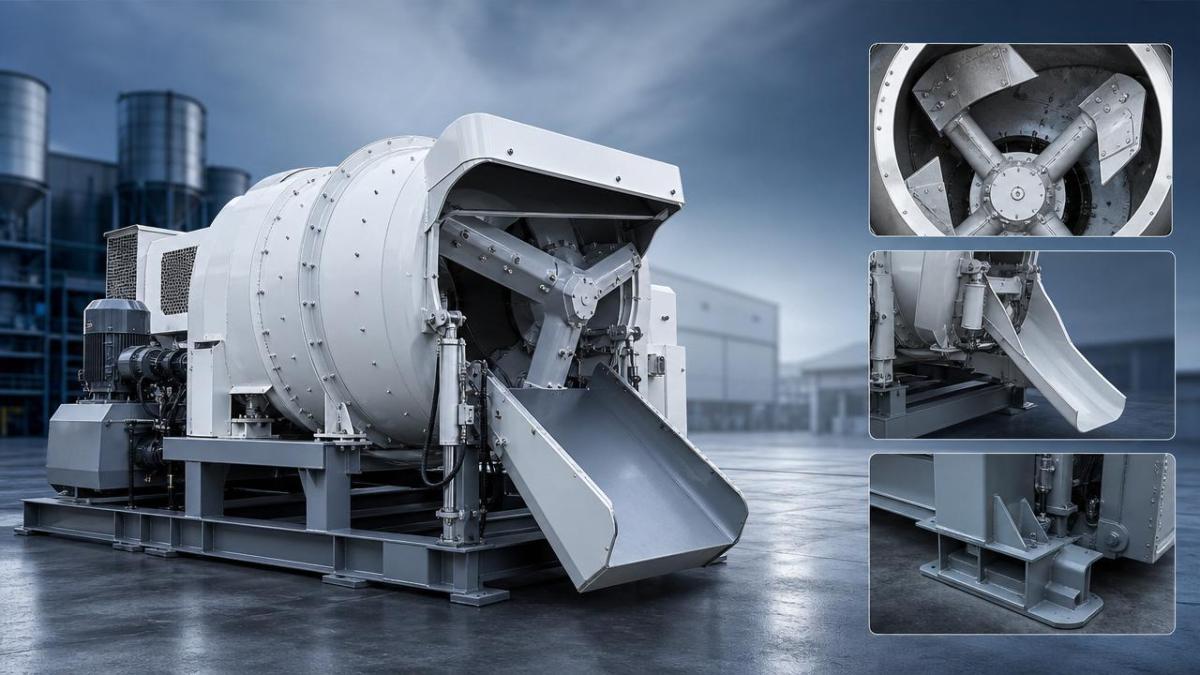
A serious concrete mixers supplier comparison is not a beauty contest between model sheets. It is a risk assessment of how each supplier will affect productivity, maintenance workload, and asset availability.
For technical evaluators, the search intent behind this topic is usually transactional but evidence-driven. They are narrowing options, validating claims, and building a defensible shortlist for procurement or fleet renewal.
The biggest concern is not whether a supplier can sell a mixer. It is whether the supplier can support stable production across varying slump targets, aggregate conditions, shift lengths, and operator skill levels.
This is why headline capacity should never be treated as the primary decision point. A supplier quoting higher drum volume may still underperform if discharge efficiency, mixing homogeneity, or uptime is weak.
Output Matters More Than Rated Capacity
Output is the first comparison factor because it directly affects truck turnaround, batching rhythm, site placement continuity, and fuel efficiency. However, technical buyers should distinguish nominal capacity from usable hourly output.
Nominal drum size tells only part of the story. What matters in practice is how much concrete the mixer can consistently produce and discharge without segregation, carryback, or excessive cycle time.
Ask each concrete mixers supplier for output data under comparable conditions. Useful figures include batch cycle time, actual discharge rate, residual material percentage, and consistency across full and partial loads.
Suppliers that perform well usually provide evidence from field applications, not just laboratory values. Production logs, fleet telematics, and customer references are far more useful than generic specification tables.
Also review the relationship between drum geometry, blade design, drive power, and loading pattern. A larger drum with inefficient blade configuration can produce lower effective output than a better-engineered smaller unit.
For transit mixers, route conditions also matter. Output quality depends on whether the drum maintains homogeneity during long-distance hauling, repeated stop-start traffic, high ambient temperatures, or delayed discharge windows.
How to Judge Output Consistency Instead of One-Time Performance
Many suppliers can demonstrate acceptable performance during a new-machine trial. Fewer can maintain that standard after months of abrasive aggregates, variable moisture content, and intensive daily dispatch cycles.
Technical evaluators should therefore compare output consistency over time. A machine that begins strong but loses mixing efficiency due to blade wear or hydraulic instability will create hidden cost quickly.
Request inspection records or maintenance intervals tied to output degradation. Ask when customers typically observe reduced mixing quality, longer discharge time, or increased carryback after blade and liner wear.
Another useful indicator is tolerance to variation. Stronger designs keep mix uniformity stable even when operators face difficult loading balance, wetter feedstock, or non-ideal washout discipline between shifts.
If the supplier cannot explain how the mixer performs under imperfect site reality, the evaluation is incomplete. Real jobsites reward robustness, not ideal-condition demonstrations.
Wear Parts Are Where Lifecycle Cost Becomes Visible
Wear parts often decide whether a lower purchase price remains attractive after the first year. For most mixer fleets, liners, blades, scrapers, seals, chutes, and hydraulic-related consumables drive recurring maintenance cost.
Comparing wear parts means looking at both lifespan and replacement complexity. A part that lasts moderately longer but takes too many labor hours to replace may still raise total ownership cost.
Ask each concrete mixers supplier for typical service life ranges by material type and application environment. Hard rock aggregates, coastal sand contamination, and high-volume batching all change wear behavior significantly.
Material specification is critical. Suppliers should be able to discuss liner steel grade, hardness range, wear-resistant treatment, fastening method, and whether replacement parts are standardized across multiple models.
Blade design also affects more than mixing quality. Poor blade geometry can create uneven wear, increase carryback, and force earlier replacement cycles. Over time, this drives higher labor and more unplanned stoppages.
Pay attention to chute components as well. Chute wear, locking failure, and poor cleanout access may look secondary during purchase, but these issues frequently reduce operator efficiency and create safety concerns.
Questions to Ask About Wear Parts Before You Shortlist a Supplier
The most useful supplier questions are precise. Ask for average liner replacement intervals, average blade replacement intervals, and the labor hours needed for each task under standard workshop conditions.
Ask whether wear parts are proprietary or interchangeable. A supplier using highly proprietary components may lock you into longer lead times and less pricing leverage when urgent replacement is needed.
Find out where critical parts are stocked. Global brand recognition means little if local warehouses cannot supply core consumables fast enough to prevent vehicles from waiting in the yard.
Also ask whether wear monitoring can be done visually, digitally, or through scheduled inspection criteria. Better predictability supports planned maintenance and reduces emergency failures during production peaks.
If possible, compare total wear cost per operating hour or per cubic meter delivered. This metric is far more revealing than purchase price alone and aligns better with technical evaluation goals.
Downtime Is Often the Most Expensive Line Item
For many operations, downtime costs more than parts. A disabled mixer interrupts dispatch planning, reduces delivered volume, stresses backup units, and can damage customer confidence when concrete arrives late or unusable.
That is why supplier comparison should include not only mean time between failures, but also mean time to repair. Fast recovery can be as valuable as high mechanical reliability.
Technical evaluators should investigate common failure points in the drum drive, hydraulic circuit, water system, sensors, gearbox, rollers, chute controls, and structural weld zones.
Ask suppliers for documented field failure patterns rather than marketing claims about robustness. Mature suppliers usually know which assemblies fail most often and can explain how later revisions improved them.
Maintenance access is a major contributor to downtime. If technicians struggle to reach service points, inspect wear surfaces, or remove components safely, even minor repairs consume too many hours.
Look for designs that simplify washout, lubrication, inspection, and parts exchange. Good serviceability directly reduces downtime, especially for fleets operating under high daily utilization.
How Supplier Support Determines Real Equipment Availability
A machine is only as available as the support network behind it. The best concrete mixers supplier is often the one that combines acceptable machine performance with fast technical response and reliable parts supply.
Service coverage should be evaluated geographically and contractually. Review dealer density, field technician access, response-time commitments, escalation paths, and availability of remote diagnostic support where applicable.
Training support matters too. Some downtime is caused by misuse, poor washout routines, delayed lubrication, or incorrect operation of hydraulic and water systems. Strong suppliers reduce these avoidable failures through training.
Check whether the supplier offers commissioning support, maintenance manuals with practical detail, spare parts kits, and recommended preventive maintenance intervals based on operating intensity rather than generic calendars.
If your sites are remote, ask how breakdown support is handled outside major urban centers. A supplier with premium branding but weak regional coverage may be a higher operational risk than a less famous competitor.
Build a Comparison Framework That Reflects Jobsite Reality
Technical evaluations become more defensible when scoring criteria match operating conditions. Instead of comparing all suppliers on broad marketing dimensions, build a weighted matrix tied to actual use cases.
For example, a ready-mix urban fleet may prioritize discharge efficiency, traffic-route mix stability, and fast local parts supply. A mining or infrastructure project may weigh structural durability and remote service access more heavily.
Useful score categories include effective output, output consistency over time, wear parts cost, wear parts replacement time, serviceability, downtime risk, support response, and total cost per cubic meter delivered.
It is also wise to separate commercial claims from verified evidence. Assign stronger scoring weight to field data, current customer references, and maintenance history from comparable environments.
This approach helps procurement teams and technical departments align. It converts subjective preference into a more transparent recommendation that can withstand internal review.
Red Flags That Should Lower a Supplier’s Score
Several warning signs appear repeatedly during supplier review. One is overreliance on rated capacity without corresponding evidence of real delivered output under normal operating conditions.
Another red flag is vague discussion of wear part life. If the supplier cannot provide realistic ranges, material details, or replacement procedures, lifecycle cost visibility is too weak.
Poor clarity on spare parts stocking is also a concern. Long lead times for common consumables usually signal future downtime exposure, especially for fleets that cannot afford workshop bottlenecks.
Be cautious if service commitments are handled loosely through third parties with unclear accountability. Support quality often matters more than incremental differences in headline machine specifications.
Finally, watch for designs that appear compact or attractive but limit technician access. Service-unfriendly equipment often looks acceptable during purchase review and becomes frustrating in operation.
What a Strong Supplier Usually Looks Like
The strongest suppliers are rarely defined by one standout specification. Instead, they show balanced competence across machine design, wear resistance, maintainability, parts logistics, and aftersales responsiveness.
They can explain output in operational terms, not just catalog numbers. They know which wear parts drive cost and can show how those parts were engineered for longer life or easier replacement.
They also speak openly about service intervals, common failure points, and operator practices that affect reliability. This transparency is usually a good sign of technical maturity.
Most importantly, they understand your application. A supplier that asks about aggregate type, dispatch frequency, route length, climate, washout habits, and maintenance staffing is more likely to recommend the right machine.
Conclusion: Compare Suppliers by Availability, Not Just Acquisition Cost
For technical evaluators, the best concrete mixers supplier is not automatically the lowest bidder or the one with the highest published capacity. The better choice is the supplier that protects availability.
That decision should be grounded in three realities: how much usable output the mixer delivers, how quickly wear parts consume budget and labor, and how severely downtime disrupts production.
If you compare suppliers through those lenses, short-term price differences become easier to interpret. Some low-cost machines are truly efficient. Others simply transfer cost into maintenance hours and lost operating time.
The most reliable selection process therefore combines field evidence, lifecycle cost analysis, and support capability review. When output, wear, and downtime are evaluated together, supplier value becomes much clearer.
In practical terms, choose the partner that can keep concrete moving consistently, keep parts flowing predictably, and keep your fleet working when the schedule leaves no margin for failure.
Get weekly intelligence in your inbox.
No noise. No sponsored content. Pure intelligence.
News Recommendations
 Sep 19, 2026How an electronics application guide helps prevent component mismatchHow an electronics application guide helps prevent component mismatch
 Sep 18, 2026When a resource allocation platform improves project deliveryWhen a resource allocation platform improves project delivery
 Sep 17, 2026What to compare when evaluating mineral processing equipment manufacturersWhat to compare when evaluating mineral processing equipment manufacturers
 Sep 16, 2026How mineral separation optimization can reduce concentrate lossesHow mineral separation optimization can reduce concentrate losses
 Sep 15, 2026How to assess lifecycle costs in urban tech procurementHow to assess lifecycle costs in urban tech procurement
 Sep 14, 2026Heavy industry technology trends reshaping capital investment prioritiesHeavy industry technology trends reshaping capital investment priorities
 Sep 14, 2026Global Industrial Equipment Procurement: How Top OEMs Qualify Suppliers for Mining & Infrastructure ProjectsGlobal Industrial Equipment Procurement: How Top OEMs Qualify Suppliers for Mining & Infrastructure Projects
 Sep 14, 2026Industrial & Mining Equipment Procurement: Balancing Local Sourcing, Lead Time, and Certification RequirementsIndustrial & Mining Equipment Procurement: Balancing Local Sourcing, Lead Time, and Certification Requirements
 Sep 14, 2026Infrastructure & Equipment Upgrades: What Procurement Teams Must Verify Before Signing Off on New ContractsInfrastructure & Equipment Upgrades: What Procurement Teams Must Verify Before Signing Off on New Contracts
 Sep 14, 2026Why Infrastructure Equipment Buyers Are Shifting from Catalog-Based to Capability-Based Supplier SelectionWhy Infrastructure Equipment Buyers Are Shifting from Catalog-Based to Capability-Based Supplier Selection
 Sep 14, 2026Process Automation Project Execution: How to Align Supplier Capabilities with PLC Integration, Cybersecurity & Commissioning MilestonesProcess Automation Project Execution: How to Align Supplier Capabilities with PLC Integration, Cybersecurity & Commissioning Milestones
 Sep 14, 2026Are intelligent traffic systems worth the investment for small cities?Are intelligent traffic systems worth the investment for small cities?
 Sep 14, 2026How do intelligent traffic systems handle sensor failures?How do intelligent traffic systems handle sensor failures?
 Sep 14, 2026What should I check before accepting a smart building system?What should I check before accepting a smart building system?
 Sep 14, 2026Is a smart building system worth the maintenance cost?Is a smart building system worth the maintenance cost?
 Sep 14, 2026What data is needed for reliable resource allocation planning?What data is needed for reliable resource allocation planning?
 Sep 14, 2026How can resource allocation software reduce equipment idle time?How can resource allocation software reduce equipment idle time?
 Sep 14, 2026How should smart devices be maintained in harsh outdoor conditions?How should smart devices be maintained in harsh outdoor conditions?
 Sep 14, 2026Do smart devices improve worker safety on construction sites?Do smart devices improve worker safety on construction sites?
 Sep 14, 2026What environmental risks must be assessed before deep-sea mining?What environmental risks must be assessed before deep-sea mining?
 Sep 14, 2026Is deep-sea mining equipment commercially viable in 2026?Is deep-sea mining equipment commercially viable in 2026?
 Sep 14, 2026What Inspection Checks Should Procurement Teams Perform Before Ordering Dredging Equipment in 2026?What Inspection Checks Should Procurement Teams Perform Before Ordering Dredging Equipment in 2026?
 Sep 13, 2026How to verify an industrial product information source before specifying equipmentHow to verify an industrial product information source before specifying equipment
 Sep 12, 2026Which intelligent traffic systems hardware fits an urban intersection?Which intelligent traffic systems hardware fits an urban intersection?
 Sep 11, 2026How pump capacity affects response coverage for municipal fire fighting vehiclesHow pump capacity affects response coverage for municipal fire fighting vehicles
 Sep 10, 2026What to verify before choosing a heavy industry equipment supplierWhat to verify before choosing a heavy industry equipment supplier
 Sep 09, 2026When do adaptive urban traffic control systems reduce corridor delays?When do adaptive urban traffic control systems reduce corridor delays?