Deep-Sea Mining: What Shapes Project Viability?
Deep-sea mining is gaining strategic attention, but project viability depends on far more than resource potential alone. For business decision-makers, success is shaped by a complex mix of geology, extraction technology, regulatory uncertainty, environmental risk, capital intensity, and supply chain economics. This article explores the key factors that determine whether deep-sea mining can move from ambitious concept to commercially and socially sustainable reality.
For executives evaluating future mineral supply, the appeal is obvious. Polymetallic nodules, seafloor massive sulfides, and cobalt-rich crusts may support batteries, grid equipment, advanced alloys, and digital infrastructure. Yet a viable deep-sea mining project is not defined by tonnage alone. It must align geology, engineering readiness, permitting pathways, ESG exposure, and off-take economics over a development cycle that can easily extend 7 to 15 years.
That makes deep-sea mining a board-level strategy question rather than a narrow technical experiment. Companies in mining, infrastructure, transport, energy systems, and industrial equipment all need a practical framework for judging whether a project can survive cost inflation, stakeholder scrutiny, and commodity volatility. The most bankable opportunities are usually those that treat resource development as part of a larger industrial system.
The First Test of Viability: Resource Quality, Deposit Geometry, and Recovery Potential
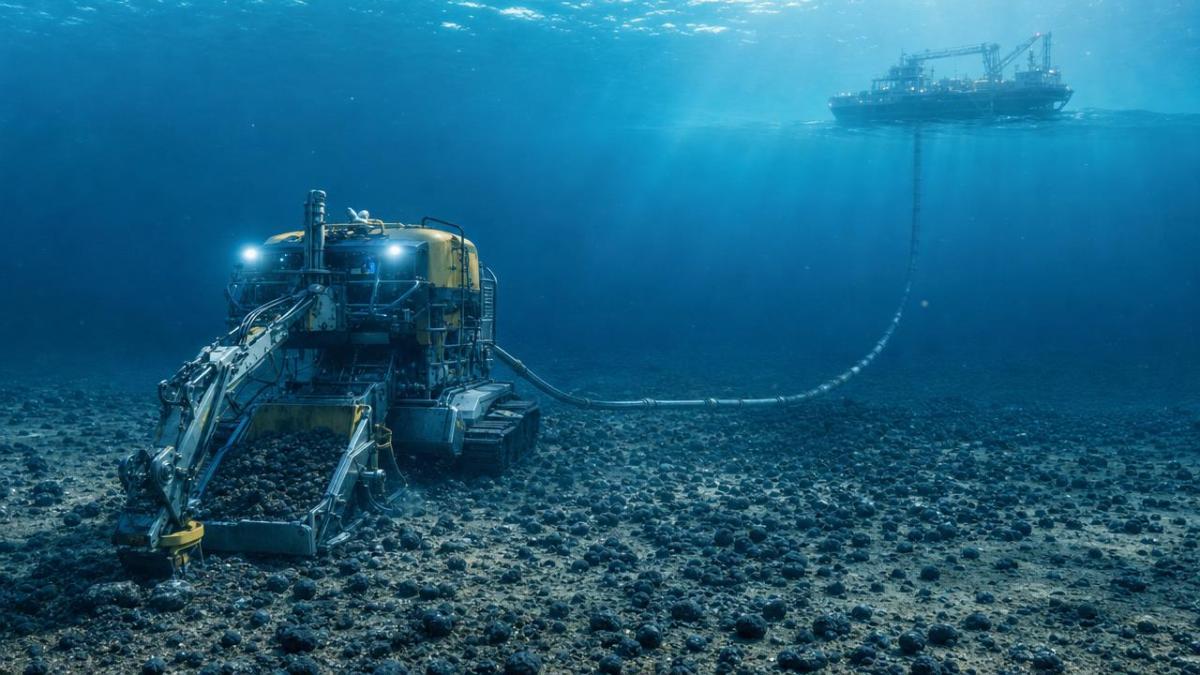
In deep-sea mining, the first screening question is not simply whether a deposit exists, but whether it can be characterized with enough certainty to support capital allocation. Compared with many land-based projects, subsea deposits face wider confidence gaps because sampling density, geotechnical understanding, and spatial variability are harder to resolve at water depths of 1,000 to 6,000 meters.
Decision-makers should therefore focus on three linked variables: grade, continuity, and recoverability. A deposit with attractive headline metal content can still fail commercially if nodules are sparsely distributed, if sulfide bodies are discontinuous, or if the ore matrix complicates lifting and processing. In practice, the difference between a concept and a financeable project often lies in how much uncertainty remains after the first 2 to 4 resource campaigns.
Why seabed geology matters more than headline resource estimates
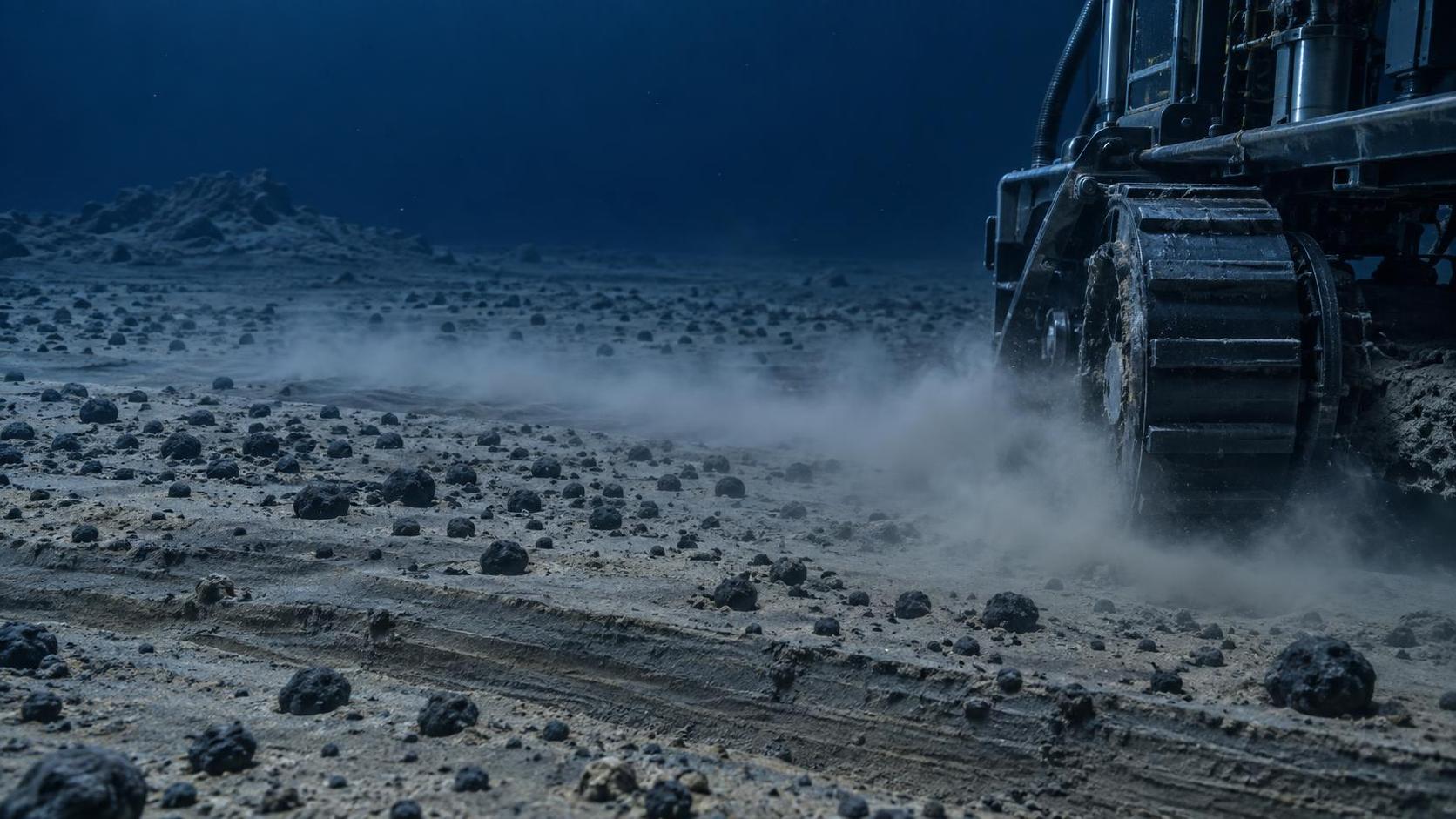
For polymetallic nodule fields, project economics are highly sensitive to nodule abundance per square meter, metal distribution across the license area, and sediment interaction during collection. For massive sulfides, geometry and rock hardness can sharply influence cutter wear, pump requirements, and downtime. Even a 10% to 15% difference in effective recovery can materially shift project NPV when offshore operating days are expensive.
Geological viability also includes dilution risk. If collection systems gather more sediment than expected, the project may face higher lifting volumes, lower processing efficiency, and larger tailings management questions. A technically impressive resource model is not enough unless it is matched by realistic assumptions on selective mining and metallurgical behavior.
Core due diligence questions for investors and operators
- How many sampling campaigns have been completed across different seasons and seabed zones?
- What is the expected recovery range at pilot scale: 60%–75%, 75%–85%, or above 85%?
- How sensitive is the ore model to spacing between sample points and bathymetric resolution?
- What percentage of total recovered mass is non-ore sediment or unwanted material?
The table below shows how project teams typically compare deposit types when assessing the technical and commercial fit of deep-sea mining opportunities.
The takeaway is straightforward: not all seabed resources are equally developable. A project becomes more credible when the resource model is linked to realistic collection assumptions, pilot recovery data, and a clear view of how ore characteristics affect downstream processing costs.
Engineering Readiness: Can the System Operate Reliably at Industrial Scale?
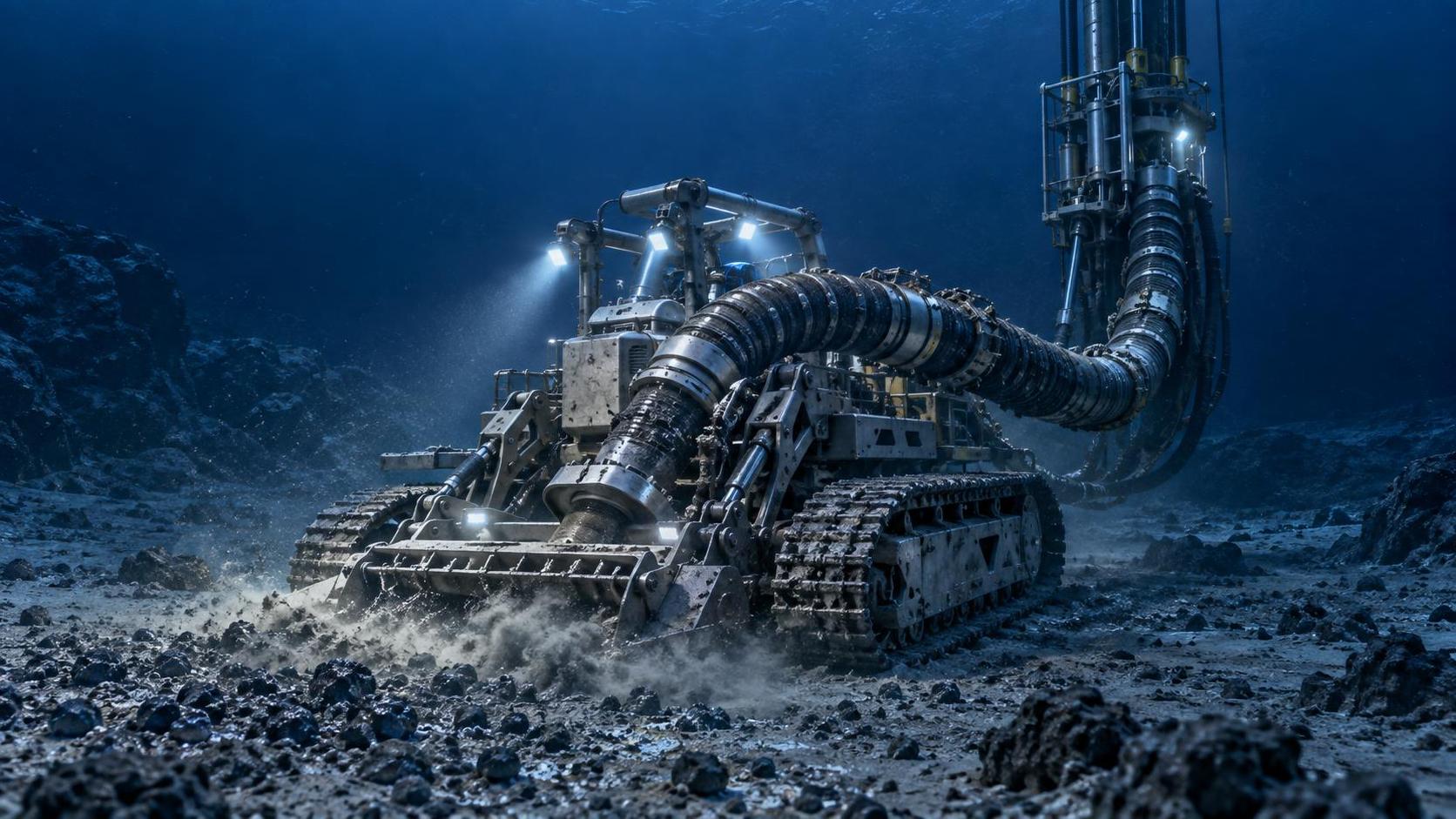
A deep-sea mining project only becomes viable when multiple subsystems work together under continuous offshore conditions. The collection vehicle, riser and lift system, dynamic positioning vessel, dewatering circuit, and onshore processing route must function as one integrated chain. A weakness in any link can reduce annual utilization below the level needed for economic operation.
This is where many projects face a credibility gap. Pilot demonstrations may validate one component for several days, but investors need confidence that the whole system can operate for 250 to 320 offshore days per year, with maintenance intervals, spare-part logistics, and weather downtime already built into the model. Engineering maturity is therefore measured in system reliability, not just prototype capability.
The critical subsystems that shape deep-sea mining performance
At water depth, pressure, corrosion, fatigue, and communications latency create challenges that differ sharply from land mines. Hydraulic and electric systems must tolerate prolonged subsea deployment. Lift systems must manage slurry flow consistency over long vertical distances. Surface vessels must maintain stable operations despite wave conditions that can stop transfer or reduce equipment safety margins.
For corporate planners, the most useful benchmark is not maximum throughput on a single test day. It is sustained throughput after accounting for 5 major variables: weather losses, mechanical failures, scheduled maintenance, seabed navigation accuracy, and dewatering efficiency. If any of these variables remains weakly defined, the production profile may be overstated by 15% to 30%.
Signs of stronger technical bankability
- Integrated pilot testing across collection, lifting, and surface handling.
- Documented maintenance strategy for subsea modules and wear parts.
- Redundancy planning for pumps, control systems, and critical vessel support.
- Scenario-based modeling for throughput under normal and adverse sea states.
An equipment-led view is especially relevant for GIUT readers because deep-sea mining sits at the intersection of resource extraction, heavy machinery, marine logistics, and infrastructure systems. The project that wins is rarely the one with the boldest concept; it is the one with the most disciplined engineering integration.
Regulation, Environmental Risk, and Social License
No discussion of deep-sea mining viability is complete without governance risk. Even if the resource is strong and the equipment works, a project can stall if the legal framework is incomplete, if environmental baseline data are insufficient, or if downstream buyers reject the material. For boardrooms, this is no longer a secondary issue. It is one of the top 3 viability filters.
Regulatory complexity arises at several levels. Operators may need to navigate international seabed rules, flag-state vessel requirements, export controls, marine environmental standards, and host-country processing obligations. The timeline for approvals can shift from 12 months to 36 months or more depending on jurisdiction, public consultation intensity, and the maturity of environmental impact assessments.
Why environmental baseline data are now a commercial asset
Environmental science is not just a compliance item. It shapes financing, insurance, customer acceptance, and the probability of legal challenge. Baseline studies must often cover biodiversity, sediment plume behavior, water-column conditions, and ecological recovery indicators over multiple seasons. In many cases, 2 to 5 years of data collection may be needed before a project can credibly defend its operating plan.
This matters because uncertainty has a cost. If plume dispersion is poorly understood, the operator may need larger exclusion zones, lower collection intensity, or additional monitoring systems. Each of these measures can affect output, vessel time, and operating cost. Environmental unknowns therefore convert directly into commercial risk premiums.
The following table highlights how business leaders can frame non-technical risk when comparing deep-sea mining opportunities.
The table shows that regulatory and environmental issues cannot be separated from commercialization. In deep-sea mining, a project with slower development but better baseline science may be more viable than a faster project that cannot withstand stakeholder scrutiny or procurement due diligence.
Common governance mistakes
- Treating environmental studies as a late-stage permitting task rather than a design input.
- Assuming future regulations will automatically favor supply security over ecosystem protection.
- Overlooking customer procurement standards for traceability, emissions, and responsible sourcing.
Capital Intensity, Processing Pathways, and Supply Chain Economics
Even technically successful deep-sea mining projects can become uneconomic if capital structure and downstream processing are not aligned. Offshore vessels, subsea systems, pilot programs, environmental studies, and metallurgical development can create a front-loaded cost base long before steady revenue begins. That is why commercial viability depends on both cost discipline and a realistic route from seafloor material to saleable product.
In many cases, the total development sequence spans 4 broad phases: exploration, pilot testing, permitting and engineering, then commercial ramp-up. Each phase carries distinct funding needs and risk transfer points. A company that expects standard mining finance too early may struggle, because lenders typically look for stronger evidence of regulatory clarity, recoverability, and customer demand before offering lower-cost capital.
From raw seabed material to marketable product
The economic case for deep-sea mining is heavily affected by the chosen processing route. Selling intermediate concentrate may reduce onshore complexity but can limit margins and buyer options. Building a more advanced refining chain may improve value capture, yet it also raises capex, utility demand, chemical handling requirements, and execution risk. The trade-off must be tested under different commodity price scenarios, not a single optimistic case.
Supply chain design matters as well. Offshore logistics, port readiness, storage systems, water treatment, and downstream refinery access can each become bottlenecks. If transport lead times extend by 10 to 20 days or if port handling capacity is constrained, working capital needs and shipment variability rise. For infrastructure-focused decision-makers, this is a reminder that project viability is shaped as much by industrial connectivity as by mining itself.
A practical viability checklist for corporate decision-makers
- Stress-test project economics at multiple commodity price bands, not just base case.
- Model uptime at conservative, expected, and upside operating assumptions.
- Evaluate at least 3 processing pathways: concentrate sale, partial refining, full refining.
- Map port, vessel, spare parts, and refinery dependencies across a 12- to 24-month horizon.
- Use staged partnerships to reduce risk in equipment, logistics, and downstream marketing.
Who is most likely to create value in this market?
The strongest position may belong not to standalone miners, but to consortia that combine subsea engineering, marine operations, metallurgical processing, and long-term industrial demand. Battery materials firms, smelters, shipping operators, robotics suppliers, and infrastructure investors can each reduce specific project risks. Shared capability often matters more than individual ambition in a sector where one weak interface can derail the schedule.
This is especially relevant for companies active in resource technology, heavy equipment, smart logistics, and industrial digitalization. Remote monitoring, predictive maintenance, digital twins, and integrated operations control can improve utilization, shorten fault diagnosis cycles, and support more disciplined offshore campaigns. In other words, the future of deep-sea mining may depend as much on systems intelligence as on mineral abundance.
How to Judge Deep-Sea Mining Projects Before Committing Capital
For business leaders, the key question is not whether deep-sea mining will remain in headlines. It is whether a specific project can move through technical validation, regulatory acceptance, and market integration with an acceptable risk-adjusted return. The answer usually depends on 6 filters: deposit confidence, recovery performance, engineering reliability, permitting visibility, processing strategy, and buyer acceptance.
Projects that perform well across all 6 filters are still rare. That should not be viewed only as a warning. It also means disciplined companies have room to build strategic advantage by entering selectively, partnering early, and refusing to shortcut science or systems engineering. In a market shaped by critical minerals and infrastructure transformation, deep-sea mining may become viable where technical realism and long-cycle planning come first.
GIUT tracks these intersections across mining and resource technology, heavy equipment, logistics systems, and sustainable infrastructure strategy. If your team is evaluating deep-sea mining, offshore extraction systems, or related supply chain investments, now is the right time to benchmark project assumptions, clarify risk exposure, and build a more resilient decision framework. Contact us to discuss your priorities, request a tailored analysis, or explore broader infrastructure and resource development solutions.
Get weekly intelligence in your inbox.
No noise. No sponsored content. Pure intelligence.
News Recommendations
 Sep 19, 2026How an electronics application guide helps prevent component mismatchHow an electronics application guide helps prevent component mismatch
 Sep 18, 2026When a resource allocation platform improves project deliveryWhen a resource allocation platform improves project delivery
 Sep 17, 2026What to compare when evaluating mineral processing equipment manufacturersWhat to compare when evaluating mineral processing equipment manufacturers
 Sep 16, 2026How mineral separation optimization can reduce concentrate lossesHow mineral separation optimization can reduce concentrate losses
 Sep 15, 2026How to assess lifecycle costs in urban tech procurementHow to assess lifecycle costs in urban tech procurement
 Sep 14, 2026Heavy industry technology trends reshaping capital investment prioritiesHeavy industry technology trends reshaping capital investment priorities
 Sep 14, 2026Global Industrial Equipment Procurement: How Top OEMs Qualify Suppliers for Mining & Infrastructure ProjectsGlobal Industrial Equipment Procurement: How Top OEMs Qualify Suppliers for Mining & Infrastructure Projects
 Sep 14, 2026Industrial & Mining Equipment Procurement: Balancing Local Sourcing, Lead Time, and Certification RequirementsIndustrial & Mining Equipment Procurement: Balancing Local Sourcing, Lead Time, and Certification Requirements
 Sep 14, 2026Infrastructure & Equipment Upgrades: What Procurement Teams Must Verify Before Signing Off on New ContractsInfrastructure & Equipment Upgrades: What Procurement Teams Must Verify Before Signing Off on New Contracts
 Sep 14, 2026Why Infrastructure Equipment Buyers Are Shifting from Catalog-Based to Capability-Based Supplier SelectionWhy Infrastructure Equipment Buyers Are Shifting from Catalog-Based to Capability-Based Supplier Selection
 Sep 14, 2026Process Automation Project Execution: How to Align Supplier Capabilities with PLC Integration, Cybersecurity & Commissioning MilestonesProcess Automation Project Execution: How to Align Supplier Capabilities with PLC Integration, Cybersecurity & Commissioning Milestones
 Sep 14, 2026Are intelligent traffic systems worth the investment for small cities?Are intelligent traffic systems worth the investment for small cities?
 Sep 14, 2026How do intelligent traffic systems handle sensor failures?How do intelligent traffic systems handle sensor failures?
 Sep 14, 2026What should I check before accepting a smart building system?What should I check before accepting a smart building system?
 Sep 14, 2026Is a smart building system worth the maintenance cost?Is a smart building system worth the maintenance cost?
 Sep 14, 2026What data is needed for reliable resource allocation planning?What data is needed for reliable resource allocation planning?
 Sep 14, 2026How can resource allocation software reduce equipment idle time?How can resource allocation software reduce equipment idle time?
 Sep 14, 2026How should smart devices be maintained in harsh outdoor conditions?How should smart devices be maintained in harsh outdoor conditions?
 Sep 14, 2026Do smart devices improve worker safety on construction sites?Do smart devices improve worker safety on construction sites?
 Sep 14, 2026What environmental risks must be assessed before deep-sea mining?What environmental risks must be assessed before deep-sea mining?
 Sep 14, 2026Is deep-sea mining equipment commercially viable in 2026?Is deep-sea mining equipment commercially viable in 2026?
 Sep 14, 2026What Inspection Checks Should Procurement Teams Perform Before Ordering Dredging Equipment in 2026?What Inspection Checks Should Procurement Teams Perform Before Ordering Dredging Equipment in 2026?
 Sep 13, 2026How to verify an industrial product information source before specifying equipmentHow to verify an industrial product information source before specifying equipment
 Sep 12, 2026Which intelligent traffic systems hardware fits an urban intersection?Which intelligent traffic systems hardware fits an urban intersection?
 Sep 11, 2026How pump capacity affects response coverage for municipal fire fighting vehiclesHow pump capacity affects response coverage for municipal fire fighting vehicles
 Sep 10, 2026What to verify before choosing a heavy industry equipment supplierWhat to verify before choosing a heavy industry equipment supplier
 Sep 09, 2026When do adaptive urban traffic control systems reduce corridor delays?When do adaptive urban traffic control systems reduce corridor delays?