Railway Signaling Systems: Upgrade Risks and Compatibility Checks
Upgrading railway signaling systems is now central to safer, denser, and more intelligent rail operations. Yet every upgrade affects live assets, operating rules, and maintenance routines.
In complex infrastructure networks, hidden interface faults can appear long after commissioning. That is why compatibility checks must begin early and continue through design, testing, migration, and post-launch monitoring.
For infrastructure programs, signaling is not an isolated subsystem. It connects rolling stock, interlockings, communications, control centers, field equipment, and safety procedures across the wider transport ecosystem.
What Railway Signaling Systems Upgrades Usually Involve

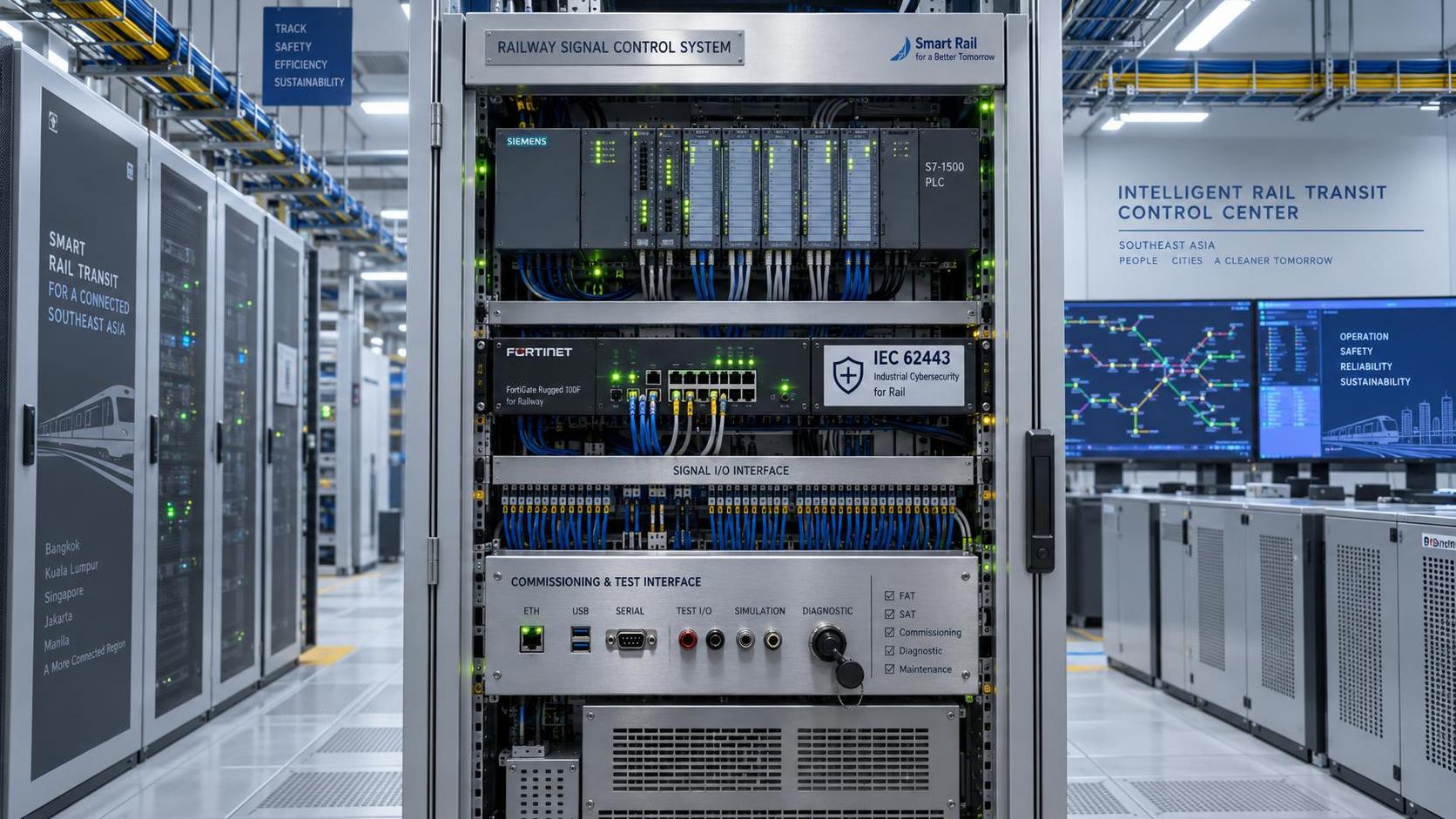
Modern railway signaling systems coordinate train movement authority, route protection, speed supervision, and traffic management. Upgrades may replace aging relay logic, modernize communications, or introduce digital control layers.
Typical projects include electronic interlocking deployment, axle counter replacement, track circuit migration, centralized traffic control refresh, and interface updates for ETCS, CBTC, ATP, or ATS environments.
Many networks also pursue data integration. They want signaling outputs linked with maintenance platforms, digital twins, condition monitoring tools, and urban mobility dashboards.
However, old and new technologies often coexist for years. This mixed-state architecture creates the main source of upgrade risk in railway signaling systems.
Core compatibility dimensions
- Functional compatibility between control logic and route setting rules
- Electrical compatibility across power supply, relays, and field interfaces
- Protocol compatibility for data exchange and message timing
- Physical compatibility with cabinets, wiring, sensors, and trackside assets
- Operational compatibility with timetables, degraded modes, and maintenance workflows
Current Industry Concerns in Railway Signaling Systems Modernization
Across rail infrastructure, investment is increasing in automation, capacity expansion, and lifecycle extension. At the same time, legacy estates remain large, fragmented, and difficult to standardize.
This creates a practical challenge. New railway signaling systems may meet current standards, but still fail when connected to older field devices or inherited operational assumptions.
In urban tech and intercity corridors alike, these concerns affect not only project cost, but also public safety, service reliability, and long-term asset performance.
Key Upgrade Risks That Require Early Compatibility Checks
The biggest risks in railway signaling systems upgrades are rarely limited to hardware failure. Most emerge at interfaces where assumptions differ between generations of equipment.
1. Interface instability
Message timing mismatches, voltage tolerance issues, and ambiguous signal states can trigger nuisance alarms or unsafe behavior. Interface simulation should verify both normal and degraded conditions.
2. Legacy documentation gaps
Drawings may be outdated. Site modifications may never have been fully recorded. Without field surveys and configuration audits, upgrade assumptions become unreliable.
3. Mixed-vendor interoperability
Different suppliers may comply with standards differently. Even when protocols match on paper, implementation details can affect fail-safe behavior, event logging, and recovery processes.
4. Operational continuity risk
Traffic disruption during cutover can ripple across the logistics chain. Temporary operating procedures must be validated alongside the technical migration plan.
5. Human-machine transition
A new control interface may be technically correct, yet still increase operator error if alarm priorities, screen flows, or fallback actions differ from established practice.
Practical Validation Points for Railway Signaling Systems
Effective compatibility checks should move from paper review to field proof. Each validation stage must confirm that the upgraded railway signaling systems behave predictably under real operating constraints.
- Baseline asset survey covering equipment type, software version, wiring condition, and undocumented modifications
- Interface control document review for ports, data mapping, timing, fail states, and ownership boundaries
- Factory testing for logic integrity, interlocking tables, route conflicts, and alarm behavior
- Lab integration testing with representative legacy devices and simulated traffic patterns
- Site acceptance testing under actual power, grounding, noise, and communication conditions
- Shadow-mode observation before full cutover, where feasible, to compare live outputs safely
- Post-commissioning monitoring focused on intermittent faults, reset cycles, and event sequence anomalies
These checks support not only safety assurance, but also better lifecycle cost control. Early detection prevents expensive redesign, repeated possessions, and prolonged service restrictions.
Typical Upgrade Contexts and Their Compatibility Priorities
These examples show why no single checklist fits every project. Compatibility checks must reflect the operational profile, asset age, and safety case of each line.
Implementation Recommendations for Safer Modernization
Successful railway signaling systems modernization depends on disciplined engineering governance. Technical upgrades should be managed as whole-network change, not as isolated equipment replacement.
Build a phased migration strategy
Separate design freeze, interface proof, site readiness, cutover rehearsal, and stabilization review. Clear stage gates reduce hidden assumptions and improve change control.
Treat data quality as a safety issue
Configuration records, asset tags, and software baselines should be consistent across engineering, operations, and maintenance teams. Poor data can undermine even compliant designs.
Test degraded and recovery modes
Many failures happen after resets, power dips, communication loss, or manual override. Validation must cover recovery sequencing, not only steady-state operation.
Align maintenance from day one
Diagnostic tools, spare parts plans, training materials, and fault codes should be available before commissioning. Maintainability is a compatibility issue, not an afterthought.
Next-Step Focus for Infrastructure Decision and Evaluation
When evaluating railway signaling systems upgrades, start with a structured compatibility matrix. Map every interface, asset dependency, operating rule, and maintenance impact before final design approval.
Then prioritize field verification where legacy uncertainty is highest. Brownfield rail projects succeed when assumptions are tested early, documented clearly, and monitored after changeover.
For the broader infrastructure sector, this approach supports resilient transport networks, smarter urban mobility, and safer lifecycle modernization. In railway signaling systems, compatibility checks are not a formality. They are the foundation of upgrade confidence.
Get weekly intelligence in your inbox.
No noise. No sponsored content. Pure intelligence.
News Recommendations
 Sep 19, 2026How an electronics application guide helps prevent component mismatchHow an electronics application guide helps prevent component mismatch
 Sep 18, 2026When a resource allocation platform improves project deliveryWhen a resource allocation platform improves project delivery
 Sep 17, 2026What to compare when evaluating mineral processing equipment manufacturersWhat to compare when evaluating mineral processing equipment manufacturers
 Sep 16, 2026How mineral separation optimization can reduce concentrate lossesHow mineral separation optimization can reduce concentrate losses
 Sep 15, 2026How to assess lifecycle costs in urban tech procurementHow to assess lifecycle costs in urban tech procurement
 Sep 14, 2026Heavy industry technology trends reshaping capital investment prioritiesHeavy industry technology trends reshaping capital investment priorities
 Sep 14, 2026Why Infrastructure Equipment Buyers Are Shifting from Catalog-Based to Capability-Based Supplier SelectionWhy Infrastructure Equipment Buyers Are Shifting from Catalog-Based to Capability-Based Supplier Selection
 Sep 14, 2026Process Automation Project Execution: How to Align Supplier Capabilities with PLC Integration, Cybersecurity & Commissioning MilestonesProcess Automation Project Execution: How to Align Supplier Capabilities with PLC Integration, Cybersecurity & Commissioning Milestones
 Sep 14, 2026Are intelligent traffic systems worth the investment for small cities?Are intelligent traffic systems worth the investment for small cities?
 Sep 14, 2026How do intelligent traffic systems handle sensor failures?How do intelligent traffic systems handle sensor failures?
 Sep 14, 2026What should I check before accepting a smart building system?What should I check before accepting a smart building system?
 Sep 14, 2026Is a smart building system worth the maintenance cost?Is a smart building system worth the maintenance cost?
 Sep 14, 2026What data is needed for reliable resource allocation planning?What data is needed for reliable resource allocation planning?
 Sep 14, 2026How can resource allocation software reduce equipment idle time?How can resource allocation software reduce equipment idle time?
 Sep 14, 2026How should smart devices be maintained in harsh outdoor conditions?How should smart devices be maintained in harsh outdoor conditions?
 Sep 14, 2026Do smart devices improve worker safety on construction sites?Do smart devices improve worker safety on construction sites?
 Sep 14, 2026What environmental risks must be assessed before deep-sea mining?What environmental risks must be assessed before deep-sea mining?
 Sep 14, 2026Is deep-sea mining equipment commercially viable in 2026?Is deep-sea mining equipment commercially viable in 2026?
 Sep 14, 2026What Inspection Checks Should Procurement Teams Perform Before Ordering Dredging Equipment in 2026?What Inspection Checks Should Procurement Teams Perform Before Ordering Dredging Equipment in 2026?
 Sep 13, 2026How to verify an industrial product information source before specifying equipmentHow to verify an industrial product information source before specifying equipment
 Sep 12, 2026Which intelligent traffic systems hardware fits an urban intersection?Which intelligent traffic systems hardware fits an urban intersection?
 Sep 11, 2026How pump capacity affects response coverage for municipal fire fighting vehiclesHow pump capacity affects response coverage for municipal fire fighting vehicles
 Sep 10, 2026What to verify before choosing a heavy industry equipment supplierWhat to verify before choosing a heavy industry equipment supplier
 Sep 09, 2026When do adaptive urban traffic control systems reduce corridor delays?When do adaptive urban traffic control systems reduce corridor delays?
 Sep 08, 2026When logistics technology solutions in North America reduce delivery delaysWhen logistics technology solutions in North America reduce delivery delays
 Sep 07, 2026How reliable are wireless mining safety systems in underground mines?How reliable are wireless mining safety systems in underground mines?
 Sep 07, 2026How to assess a smart lighting technology platform for interoperabilityHow to assess a smart lighting technology platform for interoperability