Smart Jobsites: 7 Setup Mistakes to Avoid
Smart jobsites promise better visibility, safer workflows, and tighter cost control across modern construction. Yet many implementations fail early because the setup phase is rushed, fragmented, or disconnected from field realities.
In infrastructure, building, rail, utilities, and heavy equipment environments, the first decisions shape adoption speed and long-term return. Avoiding the wrong setup often matters more than buying the newest platform.
This article explains seven setup mistakes that weaken smart jobsites, slow collaboration, and reduce ROI. It also outlines practical fixes that align digital tools with real site operations.
What smart jobsites mean in practical terms
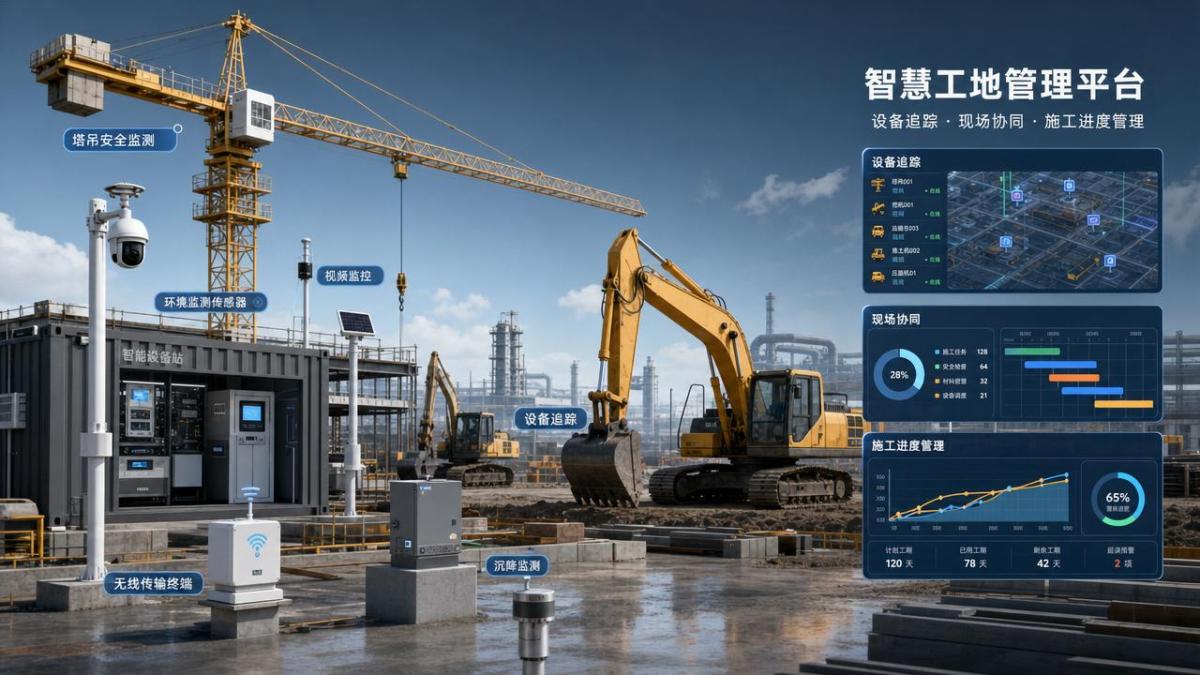
Smart jobsites combine connected devices, digital workflows, site data, and coordination tools into one operating environment. The goal is not technology for its own sake. The goal is better decisions on the ground.
A functional smart jobsite usually connects scheduling, safety reporting, equipment tracking, material flow, quality inspection, and progress verification. In stronger setups, these systems also support BIM, digital twins, and predictive maintenance.
Across the broader infrastructure sector, smart jobsites matter because projects are larger, risk exposure is higher, and coordination chains are more complex. Small setup mistakes can create major execution friction later.
Why setup quality has become a major industry concern
Construction and urban infrastructure now face parallel pressures. Projects must move faster, comply with stricter safety demands, control emissions, and document every key activity with stronger accuracy.
That pressure has pushed smart jobsites from pilot programs into mainstream planning. However, adoption often stalls because field teams inherit systems that were chosen without operational design.
- More subcontractor layers create coordination risk.
- Labor shortages increase the need for productivity visibility.
- Safety regulations require faster, cleaner reporting.
- Owners expect real-time progress evidence.
- Equipment downtime has become too expensive to ignore.
In this context, smart jobsites are no longer optional symbols of innovation. They are becoming operating systems for complex projects, especially in civil works, transport corridors, utilities, and smart city development.
The seven setup mistakes that undermine smart jobsites
1. Starting with tools instead of workflow problems
A common mistake is choosing platforms first and defining needs later. This reverses the logic of smart jobsites and often leads to low usage, duplicate work, and unnecessary features.
A better starting point is mapping daily pain points. Focus on bottlenecks such as delayed approvals, missing site data, poor handoffs, or weak equipment visibility.
2. Ignoring site connectivity and hardware conditions
Smart jobsites depend on reliable connectivity, power access, device durability, and sensor placement. Many projects underestimate remote coverage gaps, interference zones, and harsh weather exposure.
When the physical layer fails, digital workflows fail with it. Offline capability, battery planning, rugged devices, and network redundancy should be part of setup, not emergency fixes.
3. Failing to define data ownership and reporting rules
Smart jobsites generate large volumes of data. Without clear ownership, naming standards, access rights, and reporting cadence, teams quickly lose trust in dashboards and field records.
Unclear governance also creates legal and contractual risk. This is especially important on projects involving public infrastructure, multiple contractors, or long asset life cycles.
4. Overloading the first deployment scope
Trying to digitize everything at once is one of the fastest ways to weaken smart jobsites. Too many modules can confuse teams and bury the few workflows that really matter.
A phased rollout works better. Start with high-impact functions such as attendance, safety incidents, equipment logs, progress capture, and issue tracking.
5. Treating training as a one-time event
Smart jobsites only work when field use becomes routine. A single kickoff session rarely changes habits, especially when crews rotate, subcontractors change, or workflows evolve.
Effective setup includes short repeatable training, visual guidance, field champions, and feedback loops. Adoption improves when learning happens inside the job, not outside it.
6. Skipping integration with existing systems
Many smart jobsites suffer because scheduling, procurement, maintenance, and document systems remain isolated. This forces manual re-entry and creates conflicting versions of project truth.
Integration does not need to be perfect on day one. But critical links should be identified early, especially those affecting cost tracking, asset management, and compliance records.
7. Measuring activity instead of operational outcomes
Some deployments celebrate login counts or uploaded forms while missing business impact. Smart jobsites should be judged by fewer delays, safer work, cleaner data, and better resource use.
If outcome metrics are not defined at setup, stakeholders may see the platform as overhead. Clear KPIs protect long-term support and investment confidence.
Business value created by well-planned smart jobsites
When setup is disciplined, smart jobsites produce value far beyond digital paperwork. They improve operational rhythm, reduce uncertainty, and strengthen control across dispersed work fronts.
For heavy civil and smart city programs, these gains are cumulative. Better data from smart jobsites can also feed portfolio planning, sustainability reporting, and future asset optimization.
Typical smart jobsite scenarios across the physical world
Different project types use smart jobsites in different ways. Setup should reflect project duration, risk profile, equipment intensity, and reporting demands.
- Commercial building sites: daily coordination, trade sequencing, safety observations, and quality inspections.
- Transport infrastructure: corridor progress tracking, geospatial verification, fleet visibility, and remote supervision.
- Utilities and energy works: permit control, incident logging, asset tagging, and outage coordination.
- Mining and resource facilities: environmental monitoring, equipment health alerts, and shift-based reporting.
- Municipal smart city projects: multi-agency documentation, public accountability, and lifecycle data continuity.
This cross-sector relevance explains why smart jobsites are becoming central within broader infrastructure intelligence strategies, not just isolated construction experiments.
Practical setup recommendations for stronger adoption
A strong setup plan translates strategy into field behavior. The most reliable smart jobsites are built through disciplined sequencing and realistic governance.
- Document the top five workflow failures before selecting tools.
- Assess network coverage, device conditions, and power reliability on site.
- Define data standards, approval paths, and reporting frequency early.
- Launch with a limited use-case set and expand by evidence.
- Build recurring training into shift routines and onboarding.
- Prioritize integrations that remove manual duplication.
- Track outcomes such as delay reduction, rework rates, and safety response time.
It is also useful to review setup decisions at major project milestones. Smart jobsites should evolve with project complexity, not remain frozen after initial deployment.
A measured next step for smart jobsites
Smart jobsites deliver the most value when they are treated as operational infrastructure. The right setup links digital capability to safer execution, clearer accountability, and more resilient project delivery.
Before expanding any platform, review the seven setup mistakes in your current environment. Identify one workflow, one data gap, and one coordination problem that can be improved within the next phase.
That disciplined approach helps smart jobsites move from isolated software deployments to durable systems that support construction, urban technology, and the wider backbone of modern infrastructure.
Get weekly intelligence in your inbox.
No noise. No sponsored content. Pure intelligence.
News Recommendations
 Sep 19, 2026How an electronics application guide helps prevent component mismatchHow an electronics application guide helps prevent component mismatch
 Sep 18, 2026When a resource allocation platform improves project deliveryWhen a resource allocation platform improves project delivery
 Sep 17, 2026What to compare when evaluating mineral processing equipment manufacturersWhat to compare when evaluating mineral processing equipment manufacturers
 Sep 16, 2026How mineral separation optimization can reduce concentrate lossesHow mineral separation optimization can reduce concentrate losses
 Sep 15, 2026How to assess lifecycle costs in urban tech procurementHow to assess lifecycle costs in urban tech procurement
 Sep 14, 2026Heavy industry technology trends reshaping capital investment prioritiesHeavy industry technology trends reshaping capital investment priorities
 Sep 14, 2026Global Industrial Equipment Procurement: How Top OEMs Qualify Suppliers for Mining & Infrastructure ProjectsGlobal Industrial Equipment Procurement: How Top OEMs Qualify Suppliers for Mining & Infrastructure Projects
 Sep 14, 2026Industrial & Mining Equipment Procurement: Balancing Local Sourcing, Lead Time, and Certification RequirementsIndustrial & Mining Equipment Procurement: Balancing Local Sourcing, Lead Time, and Certification Requirements
 Sep 14, 2026Infrastructure & Equipment Upgrades: What Procurement Teams Must Verify Before Signing Off on New ContractsInfrastructure & Equipment Upgrades: What Procurement Teams Must Verify Before Signing Off on New Contracts
 Sep 14, 2026Why Infrastructure Equipment Buyers Are Shifting from Catalog-Based to Capability-Based Supplier SelectionWhy Infrastructure Equipment Buyers Are Shifting from Catalog-Based to Capability-Based Supplier Selection
 Sep 14, 2026Process Automation Project Execution: How to Align Supplier Capabilities with PLC Integration, Cybersecurity & Commissioning MilestonesProcess Automation Project Execution: How to Align Supplier Capabilities with PLC Integration, Cybersecurity & Commissioning Milestones
 Sep 14, 2026Are intelligent traffic systems worth the investment for small cities?Are intelligent traffic systems worth the investment for small cities?
 Sep 14, 2026How do intelligent traffic systems handle sensor failures?How do intelligent traffic systems handle sensor failures?
 Sep 14, 2026What should I check before accepting a smart building system?What should I check before accepting a smart building system?
 Sep 14, 2026Is a smart building system worth the maintenance cost?Is a smart building system worth the maintenance cost?
 Sep 14, 2026What data is needed for reliable resource allocation planning?What data is needed for reliable resource allocation planning?
 Sep 14, 2026How can resource allocation software reduce equipment idle time?How can resource allocation software reduce equipment idle time?
 Sep 14, 2026How should smart devices be maintained in harsh outdoor conditions?How should smart devices be maintained in harsh outdoor conditions?
 Sep 14, 2026Do smart devices improve worker safety on construction sites?Do smart devices improve worker safety on construction sites?
 Sep 14, 2026What environmental risks must be assessed before deep-sea mining?What environmental risks must be assessed before deep-sea mining?
 Sep 14, 2026Is deep-sea mining equipment commercially viable in 2026?Is deep-sea mining equipment commercially viable in 2026?
 Sep 14, 2026What Inspection Checks Should Procurement Teams Perform Before Ordering Dredging Equipment in 2026?What Inspection Checks Should Procurement Teams Perform Before Ordering Dredging Equipment in 2026?
 Sep 13, 2026How to verify an industrial product information source before specifying equipmentHow to verify an industrial product information source before specifying equipment
 Sep 12, 2026Which intelligent traffic systems hardware fits an urban intersection?Which intelligent traffic systems hardware fits an urban intersection?
 Sep 11, 2026How pump capacity affects response coverage for municipal fire fighting vehiclesHow pump capacity affects response coverage for municipal fire fighting vehicles
 Sep 10, 2026What to verify before choosing a heavy industry equipment supplierWhat to verify before choosing a heavy industry equipment supplier
 Sep 09, 2026When do adaptive urban traffic control systems reduce corridor delays?When do adaptive urban traffic control systems reduce corridor delays?