Prefabricated Construction Quality Control Checklist
In prefabricated construction, quality control determines whether speed becomes an advantage or a liability. A structured checklist reduces rework, protects site safety, and improves consistency from factory output to final handover.
As modular delivery expands across infrastructure, buildings, and public projects, prefabricated construction quality control has become a core management task. Every stage must connect design intent, manufacturing precision, transport protection, and installation accuracy.
Quality Control Basics in Prefabricated Construction
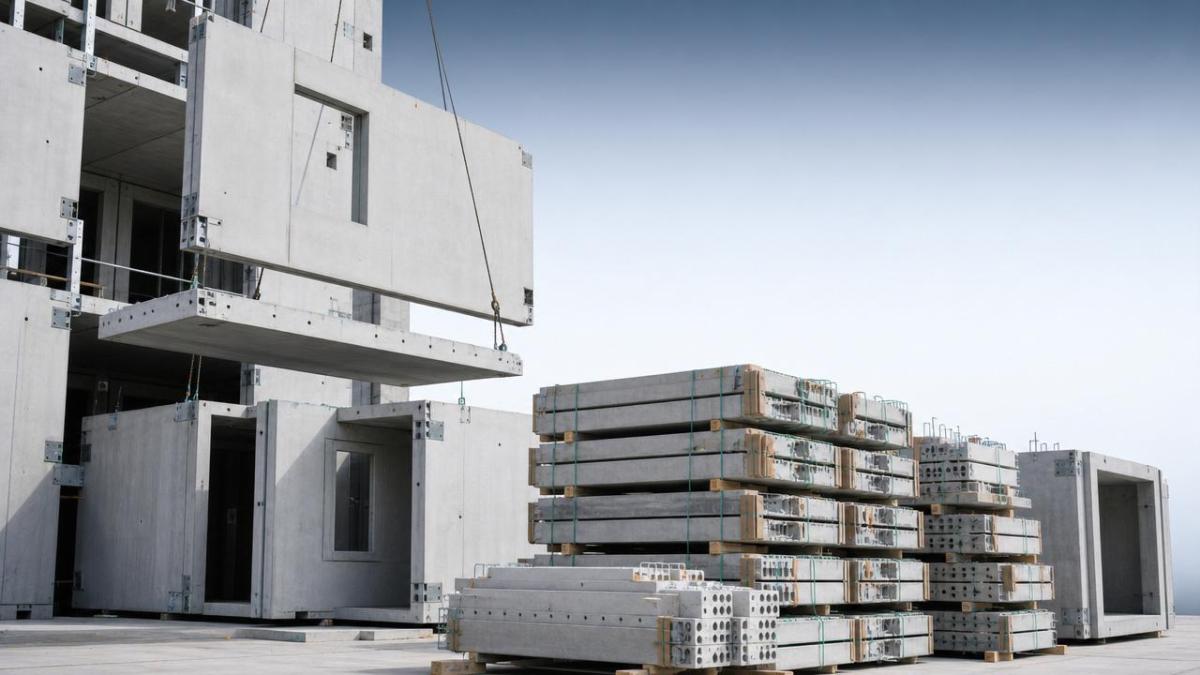
Prefabricated construction uses factory-made elements that are assembled on site. These may include wall panels, slabs, beams, columns, bathroom pods, MEP modules, or volumetric units.
The quality challenge is different from traditional construction. Errors can start in digital models, continue during production, and become expensive once modules reach the project location.
A reliable prefabricated construction checklist focuses on four linked control zones: component fabrication, logistics handling, site preparation, and final assembly performance.
Control points should verify dimensions, tolerances, reinforcement placement, embedded parts, lifting points, surface condition, moisture protection, connection details, and inspection records.
Core documentation to review
- Approved shop drawings and BIM coordination models
- Material certificates and batch traceability records
- Factory inspection reports and curing logs
- Transport plans, lifting studies, and storage instructions
- Site installation method statements and inspection forms
Industry Context and Current Control Priorities
Across the integrated infrastructure sector, prefabricated construction supports faster schedules, labor efficiency, and carbon reduction goals. Yet scale increases quality risk if interfaces are poorly managed.
Current market attention is centered on measurable quality assurance, digital traceability, and standardized acceptance criteria. Project teams want fewer hidden defects and stronger lifecycle reliability.
This shift is visible in smart buildings, rail stations, utility structures, mining facilities, logistics hubs, and special equipment foundations. Quality data now influences both construction and operations.
Prefabricated Construction Quality Control Checklist by Stage
The most effective prefabricated construction quality control checklist follows the actual workflow. Each stage should have hold points, sign-off criteria, and documented corrective action.
1. Design and pre-production checks
- Confirm approved drawings match the latest structural and MEP coordination model.
- Verify tolerances are defined for interfaces, connections, openings, and finishes.
- Review lifting anchor locations and temporary support requirements.
- Check embedded items, sleeves, inserts, and cast-in plates for clash risks.
- Ensure inspection test plans define acceptance criteria before production starts.
2. Factory production checks
- Inspect molds, jigs, and formwork condition before casting or assembly.
- Verify reinforcement size, spacing, cover, and fixing against approved details.
- Confirm concrete mix, curing method, and strength development records.
- Check dimensional accuracy, squareness, flatness, and edge condition.
- Inspect embedded plates, inserts, conduits, and lifting anchors for exact placement.
- Mark each component with a unique ID for traceability.
3. Storage and transport checks
- Store units on stable supports that prevent twisting or point loading.
- Protect surfaces, corners, and waterproof layers from impact and weather.
- Confirm lifting gear matches weight, center of gravity, and approved rigging plans.
- Inspect restraints, bracing, and packing before dispatch.
- Record any visible damage at loading, arrival, and unloading.
4. Site preparation and assembly checks
- Verify foundations, supports, and bearing surfaces are level and within tolerance.
- Check crane capacity, lifting sequence, and exclusion zones.
- Confirm component identity before installation.
- Inspect alignment, plumb, joint width, and temporary bracing during erection.
- Review weld quality, bolt torque, grout placement, and sealant application.
- Remove temporary supports only after required strength or stability is achieved.
5. Final inspection and handover checks
- Check visible defects such as cracks, honeycombing, chips, and coating damage.
- Verify fire stopping, waterproofing, acoustic seals, and thermal continuity where required.
- Confirm as-built records match installed conditions.
- Close all nonconformance reports with evidence of repair and reinspection.
- Compile test results, sign-offs, and maintenance guidance for handover.
Operational Value Across Infrastructure and Building Projects
A disciplined prefabricated construction checklist delivers value beyond compliance. It protects schedule certainty, cost control, structural performance, and public safety across many asset types.
For smart building programs, accurate module installation improves envelope performance and MEP integration. For infrastructure works, reliable joints and alignment support durability under heavy operational loads.
In urban projects, quality control also supports sustainability goals. Fewer defects mean less material waste, fewer return trips, and lower embodied carbon from rework and replacement.
- Reduces rework, delay claims, and hidden lifecycle defects
- Improves worker safety during lifting and installation
- Strengthens compliance with structural and fire requirements
- Supports digital quality records for future maintenance
- Creates repeatable standards for multi-site delivery programs
Typical Applications and Control Focus by Component Type
Not every prefabricated construction element carries the same risk profile. Inspection focus should match the component’s function, connection method, transport sensitivity, and service environment.
Practical Recommendations for Stronger Quality Outcomes
Strong prefabricated construction quality control depends on timing, not just paperwork. Inspections should happen before defects become locked into transport, installation, or finishing work.
Recommended practices
- Use a hold-point system for mold setup, reinforcement, dispatch, first-piece install, and connection closure.
- Adopt digital inspection forms with photos, timestamps, and component IDs.
- Set measurable tolerance bands and rejection criteria early.
- Run mock-up installation for high-risk assemblies.
- Link quality findings with safety observations during lifting and erection.
- Review recurring defects monthly and update work instructions.
Where multiple suppliers are involved, common checklists and acceptance standards are essential. Consistency across factories and sites prevents disputes and improves commissioning readiness.
For organizations building digital infrastructure knowledge, this checklist can also serve as a data layer. Repeated findings reveal design weaknesses, logistics bottlenecks, and training gaps.
Implementation Direction for the Next Project Phase
A useful prefabricated construction quality control checklist should be project-specific, brief enough for field use, and strict enough to prevent avoidable defects.
Start by mapping the full component journey, from design release to handover. Then assign inspection owners, tolerance limits, hold points, and evidence requirements for each milestone.
When prefabricated construction is managed through traceable checkpoints, teams gain faster installation, safer operations, and more dependable asset performance. That is the practical foundation for resilient, future-ready infrastructure.
Get weekly intelligence in your inbox.
No noise. No sponsored content. Pure intelligence.
News Recommendations
 Sep 19, 2026How an electronics application guide helps prevent component mismatchHow an electronics application guide helps prevent component mismatch
 Sep 18, 2026When a resource allocation platform improves project deliveryWhen a resource allocation platform improves project delivery
 Sep 17, 2026What to compare when evaluating mineral processing equipment manufacturersWhat to compare when evaluating mineral processing equipment manufacturers
 Sep 16, 2026How mineral separation optimization can reduce concentrate lossesHow mineral separation optimization can reduce concentrate losses
 Sep 15, 2026How to assess lifecycle costs in urban tech procurementHow to assess lifecycle costs in urban tech procurement
 Sep 14, 2026Heavy industry technology trends reshaping capital investment prioritiesHeavy industry technology trends reshaping capital investment priorities
 Sep 14, 2026Global Industrial Equipment Procurement: How Top OEMs Qualify Suppliers for Mining & Infrastructure ProjectsGlobal Industrial Equipment Procurement: How Top OEMs Qualify Suppliers for Mining & Infrastructure Projects
 Sep 14, 2026Industrial & Mining Equipment Procurement: Balancing Local Sourcing, Lead Time, and Certification RequirementsIndustrial & Mining Equipment Procurement: Balancing Local Sourcing, Lead Time, and Certification Requirements
 Sep 14, 2026Infrastructure & Equipment Upgrades: What Procurement Teams Must Verify Before Signing Off on New ContractsInfrastructure & Equipment Upgrades: What Procurement Teams Must Verify Before Signing Off on New Contracts
 Sep 14, 2026Why Infrastructure Equipment Buyers Are Shifting from Catalog-Based to Capability-Based Supplier SelectionWhy Infrastructure Equipment Buyers Are Shifting from Catalog-Based to Capability-Based Supplier Selection
 Sep 14, 2026Process Automation Project Execution: How to Align Supplier Capabilities with PLC Integration, Cybersecurity & Commissioning MilestonesProcess Automation Project Execution: How to Align Supplier Capabilities with PLC Integration, Cybersecurity & Commissioning Milestones
 Sep 14, 2026Are intelligent traffic systems worth the investment for small cities?Are intelligent traffic systems worth the investment for small cities?
 Sep 14, 2026How do intelligent traffic systems handle sensor failures?How do intelligent traffic systems handle sensor failures?
 Sep 14, 2026What should I check before accepting a smart building system?What should I check before accepting a smart building system?
 Sep 14, 2026Is a smart building system worth the maintenance cost?Is a smart building system worth the maintenance cost?
 Sep 14, 2026What data is needed for reliable resource allocation planning?What data is needed for reliable resource allocation planning?
 Sep 14, 2026How can resource allocation software reduce equipment idle time?How can resource allocation software reduce equipment idle time?
 Sep 14, 2026How should smart devices be maintained in harsh outdoor conditions?How should smart devices be maintained in harsh outdoor conditions?
 Sep 14, 2026Do smart devices improve worker safety on construction sites?Do smart devices improve worker safety on construction sites?
 Sep 14, 2026What environmental risks must be assessed before deep-sea mining?What environmental risks must be assessed before deep-sea mining?
 Sep 14, 2026Is deep-sea mining equipment commercially viable in 2026?Is deep-sea mining equipment commercially viable in 2026?
 Sep 14, 2026What Inspection Checks Should Procurement Teams Perform Before Ordering Dredging Equipment in 2026?What Inspection Checks Should Procurement Teams Perform Before Ordering Dredging Equipment in 2026?
 Sep 13, 2026How to verify an industrial product information source before specifying equipmentHow to verify an industrial product information source before specifying equipment
 Sep 12, 2026Which intelligent traffic systems hardware fits an urban intersection?Which intelligent traffic systems hardware fits an urban intersection?
 Sep 11, 2026How pump capacity affects response coverage for municipal fire fighting vehiclesHow pump capacity affects response coverage for municipal fire fighting vehicles
 Sep 10, 2026What to verify before choosing a heavy industry equipment supplierWhat to verify before choosing a heavy industry equipment supplier
 Sep 09, 2026When do adaptive urban traffic control systems reduce corridor delays?When do adaptive urban traffic control systems reduce corridor delays?