Resource Development: Permit Delays and Cost Impact
In resource development, permit delays often damage value before any extraction, transport, or processing begins. A delayed approval can freeze contractor schedules, distort procurement timing, raise financing pressure, and weaken project economics.
Across mining, infrastructure, energy-linked logistics, and urban-adjacent industrial projects, permit risk is rarely isolated. It affects land access, equipment mobilization, environmental compliance, community trust, and the sequencing of capital commitments.
For resource development, the smartest response is not guesswork. It is a structured review process that connects approvals, suppliers, schedule logic, and cost exposure early enough to protect optionality.
Why a structured review matters in resource development
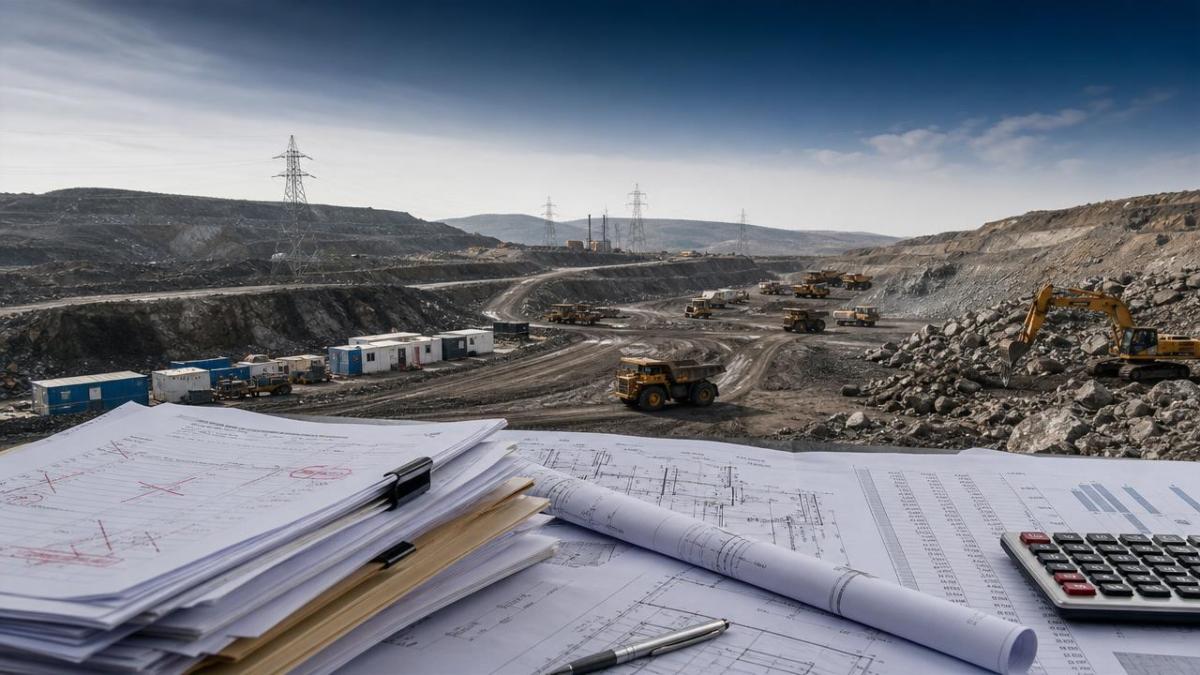
Permit delays rarely appear as one visible line item. They emerge through standby costs, redesign, bid validity extensions, inflation, seasonal access loss, and contract renegotiation across the wider delivery chain.
In resource development, each approval milestone shapes when roads, camps, substations, crushers, tailings systems, rail links, and fleet packages can move from planning to execution.
A structured review helps compare scenarios. It clarifies which purchases should wait, which long-lead items need conditional commitment, and which packages require alternate sequencing to avoid trapped capital.
Core checks before permit delays escalate cost impact
- Map every permit, amendment, and agency dependency against the master schedule, including environmental, land, water, transport, blasting, power connection, and construction approvals.
- Separate critical approvals from administrative approvals so teams know which documents directly control mobilization, site access, equipment installation, and first construction activity.
- Review long-lead equipment exposure, especially items with imported content, custom fabrication, limited supplier capacity, or commissioning windows tied to weather or logistics corridors.
- Test contractor availability under shifted start dates, because delayed permits can move work into peak seasons when civil, electrical, and heavy equipment crews become scarce.
- Quantify holding costs for land options, engineering teams, temporary facilities, debt commitments, insurance, and owner’s teams during periods when field progress cannot begin.
- Check escalation clauses in supply and construction contracts to understand how commodity prices, labor indexes, fuel costs, and freight rates may change total capital cost.
- Confirm whether permit conditions could trigger redesign of drainage, waste handling, emissions control, haul roads, water treatment, or biodiversity offsets after procurement has started.
- Assess logistics timing for ports, rail slots, oversized cargo permits, and seasonal roads, because a late approval can collapse carefully aligned delivery windows.
- Review stakeholder commitments with communities, utilities, and regulators to identify unresolved concerns that could extend review cycles or impose additional mitigation measures.
- Build scenario-based cash flow models that compare on-time approval, moderate delay, and severe delay to show the true cost impact on resource development returns.
Where permit delays hit hardest across project scenarios
Greenfield mining and extraction sites
Greenfield resource development carries the highest exposure because basic enabling works often depend on multiple approvals arriving in sequence. Access roads, water management, camps, and power supply cannot drift independently.
When permitting slips, earthworks may miss dry-season windows. That can push bulk civil packages into wetter months, increasing dewatering needs, haul inefficiency, and damage risk to unfinished infrastructure.
Expansion of operating assets
Brownfield resource development usually appears safer, but permit changes can still create serious cost effects. Operating constraints, shutdown windows, and interface risks make late approvals especially expensive.
A delayed expansion permit may compress work into a narrow outage period. That often increases overtime, temporary works, safety controls, and productivity losses around active operations.
Infrastructure-linked resource corridors
Some resource development projects depend on rail spurs, port access, processing hubs, or utility interconnections. Here, permit timing affects not only one asset, but the performance of an interconnected system.
If corridor approvals slip, stockpiling plans, fleet sizing, and export commitments may all need revision. The result is often a chain reaction of demurrage, underutilized equipment, and lower commercial flexibility.
Commonly overlooked cost drivers in resource development
Bid validity and repricing risk
Suppliers rarely hold pricing forever. If permit delays extend beyond bid validity, resource development budgets can absorb fresh steel, power systems, transport, and labor rates at a higher baseline.
Loss of preferred contractor windows
Delayed approvals can force a project out of the original construction slot. Once preferred contractors commit elsewhere, replacement crews may cost more and deliver lower productivity.
Engineering rework after permit conditions
Permit authorities may require extra monitoring, layout changes, or revised control systems. In resource development, those late changes can invalidate completed design packages and purchased materials.
Idle capital and deferred revenue
The cost impact is not limited to spending more. Delays also postpone cash generation. For resource development, deferred production can outweigh many visible line-item overruns.
Compliance drift during long review periods
When reviews stretch, technical assumptions may become outdated. Baseline studies, traffic data, hydrology inputs, or emissions models may need refreshes, adding further time and consulting costs.
Practical execution steps to reduce permit delay exposure
- Create a permit-linked procurement matrix that shows which packages can proceed, which need conditional release, and which must remain unfunded until approvals are secure.
- Use alternate package sequencing, moving early effort toward surveys, modular fabrication, or off-site preparation that does not breach approval boundaries.
- Negotiate flexible commercial terms, including option pricing, reservation agreements, staged notices to proceed, and indexed escalation formulas with transparent triggers.
- Maintain live communication between permitting, engineering, logistics, and commercial teams so one approval shift immediately updates sourcing and schedule assumptions.
- Track external signals such as regulator workload, seasonal consultation periods, policy changes, and local stakeholder concerns that may slow review progress.
A simple cost-impact view for decision support
FAQ on resource development and permit delays
How early should permit risk be priced?
It should be priced before final package release. Resource development decisions become harder and more expensive once supply commitments outrun approval certainty.
Which costs are easiest to underestimate?
The most underestimated costs are often indirect ones: lost construction windows, contractor remobilization, deferred output, and redesign after permit conditions change.
Can permit delays ever justify slower procurement?
Yes, but selectively. In resource development, some packages should pause, while critical long-lead items may still need controlled reservation strategies to protect delivery options.
Conclusion and next actions
Permit delays are not only a legal or administrative issue. In resource development, they directly shape cost, schedule, supplier access, and long-term asset performance.
The most effective approach is disciplined coordination. Link every approval to procurement timing, construction readiness, logistics exposure, and cash flow scenarios before capital becomes trapped.
For stronger resource development outcomes, start with a permit dependency map, a package-by-package commitment review, and a delay-cost model that updates as approvals evolve.
That process supports better decisions across infrastructure, mining, transport, and industrial delivery networks while protecting value from hidden permit-driven erosion.
Get weekly intelligence in your inbox.
No noise. No sponsored content. Pure intelligence.
News Recommendations
 Sep 19, 2026How an electronics application guide helps prevent component mismatchHow an electronics application guide helps prevent component mismatch
 Sep 18, 2026When a resource allocation platform improves project deliveryWhen a resource allocation platform improves project delivery
 Sep 17, 2026What to compare when evaluating mineral processing equipment manufacturersWhat to compare when evaluating mineral processing equipment manufacturers
 Sep 16, 2026How mineral separation optimization can reduce concentrate lossesHow mineral separation optimization can reduce concentrate losses
 Sep 15, 2026How to assess lifecycle costs in urban tech procurementHow to assess lifecycle costs in urban tech procurement
 Sep 14, 2026Heavy industry technology trends reshaping capital investment prioritiesHeavy industry technology trends reshaping capital investment priorities
 Sep 14, 2026Global Industrial Equipment Procurement: How Top OEMs Qualify Suppliers for Mining & Infrastructure ProjectsGlobal Industrial Equipment Procurement: How Top OEMs Qualify Suppliers for Mining & Infrastructure Projects
 Sep 14, 2026Industrial & Mining Equipment Procurement: Balancing Local Sourcing, Lead Time, and Certification RequirementsIndustrial & Mining Equipment Procurement: Balancing Local Sourcing, Lead Time, and Certification Requirements
 Sep 14, 2026Infrastructure & Equipment Upgrades: What Procurement Teams Must Verify Before Signing Off on New ContractsInfrastructure & Equipment Upgrades: What Procurement Teams Must Verify Before Signing Off on New Contracts
 Sep 14, 2026Why Infrastructure Equipment Buyers Are Shifting from Catalog-Based to Capability-Based Supplier SelectionWhy Infrastructure Equipment Buyers Are Shifting from Catalog-Based to Capability-Based Supplier Selection
 Sep 14, 2026Process Automation Project Execution: How to Align Supplier Capabilities with PLC Integration, Cybersecurity & Commissioning MilestonesProcess Automation Project Execution: How to Align Supplier Capabilities with PLC Integration, Cybersecurity & Commissioning Milestones
 Sep 14, 2026Are intelligent traffic systems worth the investment for small cities?Are intelligent traffic systems worth the investment for small cities?
 Sep 14, 2026How do intelligent traffic systems handle sensor failures?How do intelligent traffic systems handle sensor failures?
 Sep 14, 2026What should I check before accepting a smart building system?What should I check before accepting a smart building system?
 Sep 14, 2026Is a smart building system worth the maintenance cost?Is a smart building system worth the maintenance cost?
 Sep 14, 2026What data is needed for reliable resource allocation planning?What data is needed for reliable resource allocation planning?
 Sep 14, 2026How can resource allocation software reduce equipment idle time?How can resource allocation software reduce equipment idle time?
 Sep 14, 2026How should smart devices be maintained in harsh outdoor conditions?How should smart devices be maintained in harsh outdoor conditions?
 Sep 14, 2026Do smart devices improve worker safety on construction sites?Do smart devices improve worker safety on construction sites?
 Sep 14, 2026What environmental risks must be assessed before deep-sea mining?What environmental risks must be assessed before deep-sea mining?
 Sep 14, 2026Is deep-sea mining equipment commercially viable in 2026?Is deep-sea mining equipment commercially viable in 2026?
 Sep 14, 2026What Inspection Checks Should Procurement Teams Perform Before Ordering Dredging Equipment in 2026?What Inspection Checks Should Procurement Teams Perform Before Ordering Dredging Equipment in 2026?
 Sep 13, 2026How to verify an industrial product information source before specifying equipmentHow to verify an industrial product information source before specifying equipment
 Sep 12, 2026Which intelligent traffic systems hardware fits an urban intersection?Which intelligent traffic systems hardware fits an urban intersection?
 Sep 11, 2026How pump capacity affects response coverage for municipal fire fighting vehiclesHow pump capacity affects response coverage for municipal fire fighting vehicles
 Sep 10, 2026What to verify before choosing a heavy industry equipment supplierWhat to verify before choosing a heavy industry equipment supplier
 Sep 09, 2026When do adaptive urban traffic control systems reduce corridor delays?When do adaptive urban traffic control systems reduce corridor delays?