Mining Technology Upgrades That Cut Downtime Underground
Underground operations can lose hours—or entire shifts—when equipment failures go undetected. For after-sales maintenance teams, mining technology now matters as much in service as in production. The most effective upgrades shorten diagnosis time, reduce unplanned stoppages, and help critical assets survive heat, dust, vibration, water ingress, and limited visibility. This guide outlines the mining technology upgrades that most directly cut underground downtime and shows how to evaluate them in a practical, checklist-based way.
Why a Checklist Approach Works for Mining Technology Upgrades
In underground mining, small delays compound quickly. A failed pump can idle a heading. A weak wireless signal can delay troubleshooting. A missing spare can turn a one-hour repair into a twelve-hour stoppage.
A checklist helps compare mining technology upgrades by impact, serviceability, and compatibility. It also prevents investment in systems that look advanced on paper but fail under real underground constraints.
For GIUT readers across mining, infrastructure, logistics, and heavy equipment, this matters because uptime is now a systems issue. Mechanical reliability, digital visibility, and field support must work together.
Core Checklist: Mining Technology Upgrades That Reduce Underground Downtime
Use the following checklist to assess whether a mining technology upgrade will deliver measurable maintenance value, not just headline innovation.
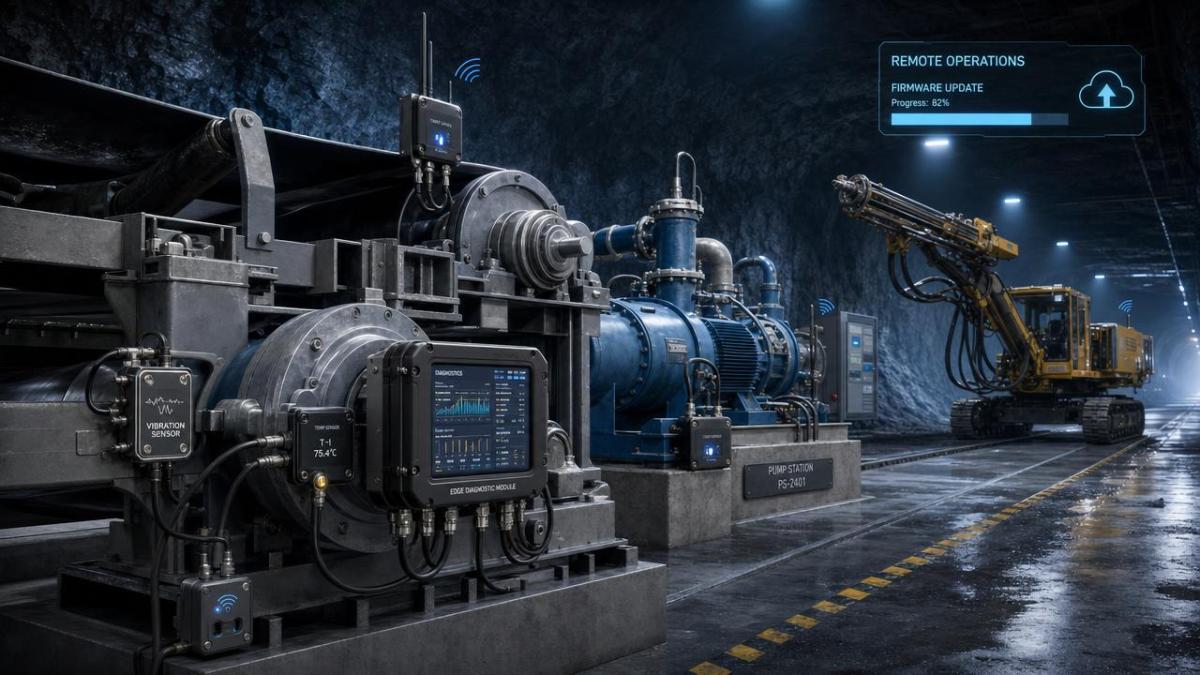
- Deploy condition monitoring on high-failure assets such as pumps, fans, loaders, drills, and conveyors, focusing on vibration, temperature, pressure, and fluid contamination trends.
- Prioritize predictive analytics that identify failure patterns early enough to schedule repairs between shifts rather than during active production windows.
- Upgrade underground connectivity with leaky feeder, Wi-Fi mesh, or private LTE so diagnostic data can reach maintenance teams without manual collection delays.
- Integrate equipment health data with maintenance management software to trigger work orders, parts allocation, and technician dispatch from one workflow.
- Install smart onboard diagnostics that provide plain-language fault codes, event histories, and guided troubleshooting instead of generic alarm notifications.
- Standardize sensor kits and interfaces across mixed fleets to reduce integration complexity, training time, and spare inventory fragmentation.
- Adopt remote expert support tools that let field crews share live machine data, images, and service logs with off-site specialists during breakdown response.
- Use digital twins or simulation models for critical systems to test load changes, ventilation interactions, and maintenance timing before interventions begin.
- Improve parts traceability with barcode or RFID tracking so seals, hoses, bearings, and electrical components are visible before failures create urgent shortages.
- Select ruggedized hardware rated for dust, shock, moisture, and temperature swings, because weak devices can become another source of downtime.
- Train technicians on data interpretation, not only hardware replacement, so mining technology investments translate into faster root-cause diagnosis underground.
- Measure results with mean time to repair, mean time between failures, alarm accuracy, and planned-versus-unplanned maintenance ratios.
Where These Mining Technology Upgrades Deliver the Fastest Results
Mobile equipment fleets
Load-haul-dump machines, underground trucks, and drilling rigs benefit quickly from onboard diagnostics and predictive monitoring. These assets operate under severe shock loads and often fail far from workshops.
The best mining technology upgrades here combine engine data, hydraulic pressure trends, brake system alerts, and operator event records. Service teams can then distinguish true component wear from misuse, fuel contamination, or heat-related stress.
Fixed plant and infrastructure systems
Conveyors, crushers, ventilation fans, dewatering pumps, and substations often create high-cost bottlenecks. A single failure can halt multiple work areas at once.
For these systems, mining technology should focus on early warning. Bearing vibration growth, motor current imbalance, belt misalignment, and airflow deviation usually appear before catastrophic shutdowns.
Deep or remote underground zones
In deep mines, access time alone can consume much of a repair window. Remote diagnostics become essential because every unnecessary trip underground adds delay and safety exposure.
Mining technology upgrades in these zones should emphasize connectivity resilience, low-power sensors, and clear escalation logic. Data must remain usable even when bandwidth is limited or conditions are unstable.
Commonly Missed Factors That Undermine Mining Technology Performance
Ignoring maintainability during technology selection
Some systems are powerful but difficult to service underground. If sensors require complex calibration or fragile connectors, the mining technology may increase support burden instead of reducing downtime.
Collecting data without clear response rules
Dashboards alone do not improve uptime. If no threshold triggers inspection, shutdown, or parts staging, alerts become background noise and real failures still arrive unplanned.
Overlooking interoperability across vendors
Mixed fleets are common in mining. When one OEM platform cannot exchange usable data with another, maintenance teams lose the unified view needed for rapid troubleshooting.
Underestimating underground communication limits
A mining technology solution that works well on surface can struggle underground. Signal shadowing, water ingress, and electrical noise can interrupt data flow and create blind spots during critical faults.
Failing to align spares strategy with predictive maintenance
Prediction only helps if parts are available. When bearings, hoses, filters, drives, or control modules are not staged in time, the value of early warning disappears.
Practical Execution Steps for Maintenance-Focused Deployment
Start with a downtime map. Identify the assets causing the highest production loss, the longest repair duration, and the most frequent emergency callouts.
- Rank assets by downtime cost, safety impact, and repeat failure mode.
- Select one mining technology upgrade for a focused pilot, not a mine-wide rollout.
- Define alarm thresholds, escalation paths, and work-order ownership before go-live.
- Validate connectivity underground under actual operating conditions and interference levels.
- Train technicians with real fault cases and service logs from the pilot assets.
- Track repair time, false alarms, avoided failures, and parts readiness for ninety days.
- Expand only after the upgrade proves reliability, usability, and measurable uptime gains.
This phased method reduces risk and fits GIUT’s engineering-led approach. It treats mining technology as operational infrastructure, not as an isolated digital experiment.
Conclusion: Turn Mining Technology Into a Downtime Reduction System
The strongest mining technology upgrades underground are not necessarily the most complex. They are the ones that help teams detect faults earlier, diagnose them faster, and repair them with fewer surprises.
For mines facing rising depth, tighter labor availability, and stricter safety expectations, maintenance-centered digitalization is becoming essential. Predictive monitoring, resilient connectivity, smart diagnostics, and integrated service workflows now define competitive uptime.
The next step is straightforward: audit the top downtime drivers, match them to the checklist above, and pilot one mining technology upgrade where failure visibility is weakest. Real progress starts with one asset, one workflow, and one measurable reduction in underground delay.
Get weekly intelligence in your inbox.
No noise. No sponsored content. Pure intelligence.
News Recommendations
 Sep 19, 2026How an electronics application guide helps prevent component mismatchHow an electronics application guide helps prevent component mismatch
 Sep 18, 2026When a resource allocation platform improves project deliveryWhen a resource allocation platform improves project delivery
 Sep 17, 2026What to compare when evaluating mineral processing equipment manufacturersWhat to compare when evaluating mineral processing equipment manufacturers
 Sep 16, 2026How mineral separation optimization can reduce concentrate lossesHow mineral separation optimization can reduce concentrate losses
 Sep 15, 2026How to assess lifecycle costs in urban tech procurementHow to assess lifecycle costs in urban tech procurement
 Sep 14, 2026Heavy industry technology trends reshaping capital investment prioritiesHeavy industry technology trends reshaping capital investment priorities
 Sep 14, 2026Global Industrial Equipment Procurement: How Top OEMs Qualify Suppliers for Mining & Infrastructure ProjectsGlobal Industrial Equipment Procurement: How Top OEMs Qualify Suppliers for Mining & Infrastructure Projects
 Sep 14, 2026Industrial & Mining Equipment Procurement: Balancing Local Sourcing, Lead Time, and Certification RequirementsIndustrial & Mining Equipment Procurement: Balancing Local Sourcing, Lead Time, and Certification Requirements
 Sep 14, 2026Infrastructure & Equipment Upgrades: What Procurement Teams Must Verify Before Signing Off on New ContractsInfrastructure & Equipment Upgrades: What Procurement Teams Must Verify Before Signing Off on New Contracts
 Sep 14, 2026Why Infrastructure Equipment Buyers Are Shifting from Catalog-Based to Capability-Based Supplier SelectionWhy Infrastructure Equipment Buyers Are Shifting from Catalog-Based to Capability-Based Supplier Selection
 Sep 14, 2026Process Automation Project Execution: How to Align Supplier Capabilities with PLC Integration, Cybersecurity & Commissioning MilestonesProcess Automation Project Execution: How to Align Supplier Capabilities with PLC Integration, Cybersecurity & Commissioning Milestones
 Sep 14, 2026Are intelligent traffic systems worth the investment for small cities?Are intelligent traffic systems worth the investment for small cities?
 Sep 14, 2026How do intelligent traffic systems handle sensor failures?How do intelligent traffic systems handle sensor failures?
 Sep 14, 2026What should I check before accepting a smart building system?What should I check before accepting a smart building system?
 Sep 14, 2026Is a smart building system worth the maintenance cost?Is a smart building system worth the maintenance cost?
 Sep 14, 2026What data is needed for reliable resource allocation planning?What data is needed for reliable resource allocation planning?
 Sep 14, 2026How can resource allocation software reduce equipment idle time?How can resource allocation software reduce equipment idle time?
 Sep 14, 2026How should smart devices be maintained in harsh outdoor conditions?How should smart devices be maintained in harsh outdoor conditions?
 Sep 14, 2026Do smart devices improve worker safety on construction sites?Do smart devices improve worker safety on construction sites?
 Sep 14, 2026What environmental risks must be assessed before deep-sea mining?What environmental risks must be assessed before deep-sea mining?
 Sep 14, 2026Is deep-sea mining equipment commercially viable in 2026?Is deep-sea mining equipment commercially viable in 2026?
 Sep 14, 2026What Inspection Checks Should Procurement Teams Perform Before Ordering Dredging Equipment in 2026?What Inspection Checks Should Procurement Teams Perform Before Ordering Dredging Equipment in 2026?
 Sep 13, 2026How to verify an industrial product information source before specifying equipmentHow to verify an industrial product information source before specifying equipment
 Sep 12, 2026Which intelligent traffic systems hardware fits an urban intersection?Which intelligent traffic systems hardware fits an urban intersection?
 Sep 11, 2026How pump capacity affects response coverage for municipal fire fighting vehiclesHow pump capacity affects response coverage for municipal fire fighting vehicles
 Sep 10, 2026What to verify before choosing a heavy industry equipment supplierWhat to verify before choosing a heavy industry equipment supplier
 Sep 09, 2026When do adaptive urban traffic control systems reduce corridor delays?When do adaptive urban traffic control systems reduce corridor delays?