What to check before buying special purpose vehicles for mining?
Before investing in special purpose vehicles for mining, buyers should evaluate safety, lifecycle cost, site compatibility, and compliance alongside emerging heavy industry technology trends. From underground haulage to mining technology for deep sea operations, the right choice supports productivity, risk control, and long-term value. This guide outlines the critical checks procurement teams, technical evaluators, and project leaders should make before making a purchase.
What should you define first before comparing mining special purpose vehicles?
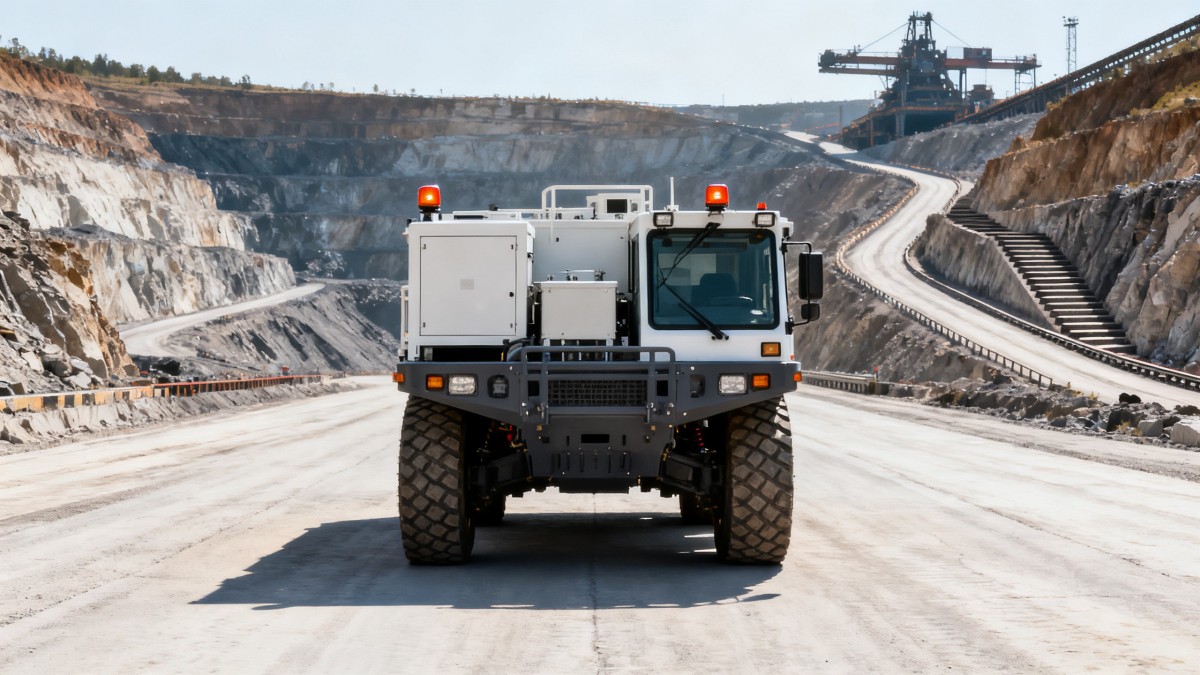
The first mistake many buyers make is comparing specifications before defining the operating mission. In mining, special purpose vehicles can include underground service trucks, explosive charging units, water sprinklers, fuel and lube trucks, scissor lifts, rescue units, personnel carriers, crane trucks, and deep-sea resource support vehicles. A sound evaluation starts with the job to be done, not with engine size or price alone.
For most procurement teams, the initial review should cover 5 core variables: mine type, duty cycle, payload requirement, road or tunnel constraints, and safety regime. A vehicle that performs well in an open-pit site with 8–10 hour daily shifts may not suit underground mines operating in 2 or 3 rotations over 24 hours. The same applies to coastal or offshore mineral projects where corrosion exposure, remote support, and transport constraints can reshape the final choice.
Technical evaluators should also separate “must-have” requirements from “upgrade” requirements. For example, fire suppression systems, braking integrity, visibility, and certified lifting points are often non-negotiable. In contrast, advanced telemetry, remote diagnostics, and semi-automated functions may be phased in depending on budget, site digital maturity, and fleet management capability.
At GIUT, mining and heavy equipment analysis is approached from an infrastructure intelligence perspective. That means vehicle selection is not treated as a standalone purchase. It is linked to road geometry, ventilation systems, maintenance workflows, operator training, and long-term mine development plans. This broader frame helps decision-makers avoid buying a machine that fits today’s task but disrupts tomorrow’s expansion.
A practical definition checklist for early-stage procurement
- Identify the operating environment: underground hard rock, surface mine, quarry, tailings area, port interface, or deep-sea support logistics.
- Confirm duty intensity: intermittent use, one shift, two shifts, or near-continuous operation over 20–24 hours.
- Map physical restrictions: tunnel width and height, turning radius, gradient, axle loading limits, and transport access to site.
- Define support expectations: spare parts lead time, field service response, local dealer coverage, and planned maintenance intervals.
This first-stage definition usually takes 3–7 working days in a straightforward replacement purchase, but it can extend to 2–4 weeks when multiple departments need to align around a new mine development or a fleet standardization plan.
Which technical checks matter most in real mining conditions?
A mining special purpose vehicle should be assessed as a system rather than a chassis with attachments. Buyers need to examine engine or powertrain suitability, braking performance, hydraulic reliability, suspension durability, electrical protection, frame reinforcement, and operator protection. The correct technical package depends heavily on dust level, moisture exposure, thermal load, terrain roughness, and cycle frequency.
In underground operations, dimensions are often as critical as payload. A vehicle that exceeds tunnel clearance by even a small margin can create recurring delays, safety risks, and ventilation inefficiencies. In surface mines, the issue may shift toward climbing ability, tire selection, fluid cooling capacity, and service access. For deep-sea mining technology support, marine-adjacent corrosion resistance, sealed electrical systems, and modular transportability become more relevant.
Procurement teams should ask for duty-rated technical documentation rather than brochure claims. Useful documents include axle load distribution, brake system configuration, hydraulic pressure range, turning envelope, gradeability range under load, maintenance point accessibility, and compatibility with site fueling or charging systems. If the vehicle includes cranes, booms, lifts, or tanks, attachment integration quality must be reviewed as carefully as the base carrier.
Another overlooked factor is maintainability within the mine’s actual workshop capability. A highly advanced special purpose vehicle may look attractive, but if diagnostics depend on proprietary tools unavailable within 7–15 days locally, downtime risk increases. Technical selection must therefore balance innovation with service realism.
Key technical parameters to verify before purchase
The table below helps technical evaluators and project managers compare mining special purpose vehicles using field-relevant criteria rather than generic sales language.
A good reading of these parameters often reveals whether a vehicle is genuinely mining-oriented or merely adapted from a general industrial platform. For B2B buyers, that distinction affects total operating stability far more than headline purchase price.
Questions for engineering and safety teams
- Can the vehicle sustain site gradients and haul roads without brake fade during repeated cycles?
- Are all service points reachable within normal workshop conditions in less than 30–45 minutes for routine inspections?
- Does the installed equipment remain stable under full load and on uneven terrain typical of the mine?
These questions are especially important for service trucks and safety vehicles, where an equipment failure can interrupt not just production but emergency response readiness.
How do you evaluate safety, compliance, and operational risk?
Safety review should begin before the commercial discussion is finalized. Mining special purpose vehicles often operate around blasting zones, confined spaces, high dust concentration, unstable ground, and mixed traffic involving pedestrians, loaders, and haul trucks. A buyer should therefore assess vehicle risk in 3 layers: operator protection, functional safety, and site compliance.
Operator protection includes cab integrity, visibility, emergency exits, seat restraints, access steps, guard rails, lighting, and noise or vibration exposure controls. Functional safety covers overspeed protection, interlocks, emergency stop logic, hydraulic holding reliability, fire suppression integration, and fail-safe braking. Site compliance includes documentation, inspection records, and conformity with the mine’s own safety management system.
Because regulations differ by country and by application, buyers should avoid assuming that “road legal” equals “mine ready.” In many cases, internal mine standards are stricter than public-road rules. If the vehicle includes lifting equipment, pressure systems, fuel delivery systems, or personnel access platforms, the review must expand to those sub-systems. A 6-point acceptance plan is often more useful than a generic certificate list.
GIUT’s advantage in this stage is cross-sector understanding. Mining fleets increasingly intersect with smart governance, digital monitoring, and infrastructure planning. A compliant purchase today should also be compatible with future telemetry, workshop software, and incident reporting workflows. That reduces friction during audits and supports safer scaling across multiple project sites.
Compliance checks procurement teams should request
The following comparison table can help purchasing, quality control, and safety managers organize document review before order confirmation.
When comparing suppliers, the stronger option is usually the one that can explain inspection logic step by step, not simply the one that submits the longest file package. Clarity reduces risk. It also helps distributors and regional agents support local customers more effectively after delivery.
Common compliance blind spots
- Assuming standard lighting and mirrors are enough for underground or night-shift operations where 360-degree visibility aids may be needed.
- Overlooking corrosion and enclosure protection for vehicles used near saline water, processing plants, or deep-sea support bases.
- Ignoring operator access ergonomics, even though repetitive mounting and dismounting can become a major safety issue over 12-hour shifts.
A disciplined compliance review usually saves more time than it costs. In many industrial projects, rework after delivery can extend implementation by several weeks and consume budget that was never planned in the original capital request.
What should buyers compare beyond the purchase price?
Purchase price is only one part of mining vehicle economics. A better commercial model compares total lifecycle cost across 5 dimensions: acquisition, transport and commissioning, energy or fuel use, maintenance and parts, and downtime exposure. This is especially important when procurement teams are comparing a low-entry-price option with a more robust unit designed for harsh duty.
Downtime has a different meaning depending on the vehicle type. For a water truck or service truck, one day of downtime may be manageable if a backup unit exists. For an emergency response vehicle, explosive support unit, or underground personnel carrier in a constrained operation, downtime can affect safety and shift continuity immediately. That is why lifecycle evaluation should be tied to fleet criticality rather than handled as a generic finance exercise.
Commercial evaluators should also check whether the quoted configuration is complete. In mining procurement, the base quotation may exclude cameras, suppression systems, spare wheels, corrosion protection packages, cold-weather kits, operator training, start-up spares, or digital monitoring devices. A quote that looks 8%–15% cheaper on paper may become more expensive after realistic operational additions are included.
Lead time matters as much as unit cost in fast-moving projects. Typical delivery windows can range from 8–12 weeks for some standardized builds to 16–28 weeks for customized special purpose vehicles, depending on chassis availability, attachment integration, and inspection requirements. Buyers should verify these windows early, especially when mine commissioning milestones are fixed.
A practical buyer comparison model
Use the table below to compare proposals in a way that supports procurement, finance, engineering, and project teams at the same time.
This model is particularly useful for enterprise decision-makers who need to justify procurement choices across technical, commercial, and risk-control departments. It also gives agents and distributors a clearer framework for solution selling rather than price-only competition.
When alternatives may be worth considering
If utilization is expected to remain low for the first 6–12 months, some buyers may evaluate rental, phased procurement, or multi-function vehicle platforms. However, this only works when duty profiles are compatible. In high-risk mining tasks, a dedicated special purpose vehicle is usually safer and more efficient than an improvised general-purpose substitute.
A low-cost alternative also becomes less attractive when it creates compatibility problems with mine roads, maintenance systems, or operator training. What appears flexible at purchasing stage can become fragmented and expensive during fleet operation.
How should the procurement and acceptance process be organized?
Even a well-specified mining special purpose vehicle can fail commercially if the procurement workflow is loose. The most reliable process uses 4 stages: requirement definition, technical-commercial comparison, factory and documentation review, and site acceptance with operator handover. This structure creates traceability and reduces disputes between procurement, engineering, and supplier teams.
During requirement definition, buyers should issue a document covering operating conditions, duty cycle, mandatory safety items, maintenance expectations, training scope, and desired delivery timeline. During technical-commercial comparison, teams should score proposals against weighted criteria. In many industrial tenders, using 60% technical and 40% commercial weighting can be more balanced than choosing on price first, although the exact ratio depends on project risk.
Before shipment, a pre-delivery review should confirm key dimensions, installed options, test results where applicable, paint and corrosion condition, documentation completeness, and spare parts packing. At site acceptance, buyers should check functionality under realistic operating conditions rather than static inspection alone. For example, steering response, alarm logic, brake feel, hydraulic operation, and visibility performance should all be observed during practical testing.
A disciplined acceptance workflow is especially valuable when the buyer, end user, and distributor are different parties. It prevents confusion over what was ordered, what was delivered, and what still needs rectification before final sign-off.
Suggested 4-step implementation flow
- Requirement briefing: define application, constraints, quantity, support expectations, and target delivery window within 5–10 working days.
- Technical review: compare 3–5 shortlisted configurations, review drawings and options, and identify compliance gaps.
- Pre-delivery control: conduct document check, factory inspection if needed, and confirm commissioning materials and start-up spares.
- Site handover: complete installation verification, operator training, functional testing, and a punch-list closure process.
For higher-value units or custom builds, many project teams also benefit from a formal risk register covering logistics delays, approval milestones, spare parts exposure, and training readiness before the vehicle enters service.
FAQ: what do buyers most often overlook when purchasing mining special purpose vehicles?
Search behavior in this sector shows that many questions are not about the vehicle alone. Buyers also want clarity on integration, lead times, safety upgrades, and support after delivery. The following answers address the most common gaps seen in mining fleet planning.
How do I know whether a vehicle is truly suitable for underground mining?
Check more than overall size. Review turning radius, cab protection, heat rejection, lighting layout, braking system behavior on gradients, service access, and compatibility with tunnel ventilation and traffic plans. Underground suitability usually depends on a package of features, not one dimensional figure. Buyers should also confirm whether the equipment can be maintained safely in the mine’s workshop environment.
What delivery timeline should procurement teams expect?
For standardized special purpose vehicles, buyers may see lead times around 8–12 weeks. For custom mining builds with integrated booms, tanks, lifting systems, or extra compliance requirements, 16–28 weeks is a more realistic planning range. Transport to remote sites, inspection hold points, and documentation approval can extend this further, so timeline review should begin at RFQ stage.
Is lower price usually a sign of lower value?
Not always, but lower quoted price often reflects missing scope. Compare what is included in safety systems, corrosion protection, training, commissioning, spare parts, and diagnostics access. In mining, a lower purchase price can quickly lose its advantage if the vehicle requires frequent stoppages or delayed parts support.
What are the most common buyer mistakes?
The top errors are using generic specifications, ignoring maintainability, underestimating compliance needs, and failing to test the vehicle against actual site conditions. Another common mistake is allowing procurement, safety, and operations teams to review the purchase sequentially rather than together. Parallel review usually produces faster and stronger decisions.
Why work with an infrastructure intelligence partner before finalizing your mining vehicle purchase?
Mining special purpose vehicle procurement is no longer a simple equipment transaction. It connects to mine design, road infrastructure, safety systems, service capability, and digital operations. GIUT approaches this challenge as an integrated heavy industry intelligence platform, combining perspectives from mining and resource technology, special purpose equipment analysis, and broader infrastructure planning.
This cross-disciplinary view helps buyers ask better questions before placing an order. It is particularly useful for information researchers building shortlist criteria, technical evaluators validating field suitability, procurement managers comparing lifecycle risk, and business decision-makers aligning capital spending with long-term operational resilience. In fast-changing projects, a better question at the start can prevent months of inefficiency later.
If you are reviewing mining special purpose vehicles, you can contact us for practical support on parameter confirmation, application matching, configuration comparison, expected delivery windows, customization routes, compliance checkpoints, and quotation discussion priorities. We can also help structure an evaluation framework for underground, surface, or deep-sea resource support scenarios where standard product comparisons are not enough.
For procurement teams under time pressure, it is often most efficient to begin with 3 inputs: your operating scenario, key technical constraints, and target schedule. From there, the discussion can quickly narrow toward suitable configurations, risk items, and the most relevant supplier questions before formal sourcing begins.
Get weekly intelligence in your inbox.
No noise. No sponsored content. Pure intelligence.
News Recommendations
 May 26, 2026Smart Grids for Urban Areas: Upgrade Costs and Payback OutlookSmart Grids for Urban Areas: Upgrade Costs and Payback Outlook
 May 26, 2026Smart Building Solutions That Cut Energy Waste in 2026Smart Building Solutions That Cut Energy Waste in 2026
 May 26, 2026Cranes for Construction: How to Choose the Right Lifting CapacityCranes for Construction: How to Choose the Right Lifting Capacity
 May 26, 2026Heavy Equipment Exporter Checklist: Cost, Compliance, and Lead TimeHeavy Equipment Exporter Checklist: Cost, Compliance, and Lead Time
 May 26, 20262026 Deep-Sea Mining Technology: Key Environmental Risks to Watch2026 Deep-Sea Mining Technology: Key Environmental Risks to Watch
 May 25, 2026Choosing a Cranes Manufacturer in 2026: Safety Records vs Lifecycle ValueChoosing a Cranes Manufacturer in 2026: Safety Records vs Lifecycle Value
![]() May 25, 2026Concrete Mixers Price in 2026: What Changes Total Ownership CostConcrete Mixers Price in 2026: What Changes Total Ownership Cost
May 25, 2026Concrete Mixers Price in 2026: What Changes Total Ownership CostConcrete Mixers Price in 2026: What Changes Total Ownership Cost![]() May 25, 2026High-Speed Rail Construction Risks in 2026: Delays, Ground Issues, and Cost DriftHigh-Speed Rail Construction Risks in 2026: Delays, Ground Issues, and Cost Drift
May 25, 2026High-Speed Rail Construction Risks in 2026: Delays, Ground Issues, and Cost DriftHigh-Speed Rail Construction Risks in 2026: Delays, Ground Issues, and Cost Drift![]() May 25, 2026Digital Twin Technology in 2026: What Delivers Measurable Site GainsDigital Twin Technology in 2026: What Delivers Measurable Site Gains
May 25, 2026Digital Twin Technology in 2026: What Delivers Measurable Site GainsDigital Twin Technology in 2026: What Delivers Measurable Site Gains![]() May 25, 20262026 Fire Trucks Supplier Checklist: Specs, Lead Times, and Service Gaps2026 Fire Trucks Supplier Checklist: Specs, Lead Times, and Service Gaps
May 25, 20262026 Fire Trucks Supplier Checklist: Specs, Lead Times, and Service Gaps2026 Fire Trucks Supplier Checklist: Specs, Lead Times, and Service Gaps May 24, 2026Steel and Concrete: How to Balance Strength and CostSteel and Concrete: How to Balance Strength and Cost
 May 24, 2026Carbon Reduction Standards in 2026: What Projects Must ProveCarbon Reduction Standards in 2026: What Projects Must Prove
 May 24, 2026Railway Signaling Systems: Key Failure Risks and FixesRailway Signaling Systems: Key Failure Risks and Fixes
 May 24, 2026Smart City Solutions in 2026: What Delivers Measurable Value?Smart City Solutions in 2026: What Delivers Measurable Value?
 May 24, 20262026 Civil Engineering Solutions: Cost Risks to Check Early2026 Civil Engineering Solutions: Cost Risks to Check Early
 May 23, 2026Infrastructure Encyclopedia: A Practical Planning GuideInfrastructure Encyclopedia: A Practical Planning Guide
 May 23, 2026Technological Iterations: When Upgrades Pay OffTechnological Iterations: When Upgrades Pay Off
 May 23, 2026Green Engineering Solutions That Lower Lifecycle CostGreen Engineering Solutions That Lower Lifecycle Cost
 May 23, 2026Deep-Sea Mining Tech: What to Evaluate FirstDeep-Sea Mining Tech: What to Evaluate First
 May 23, 2026Physical World Transformation: Key 2026 SignalsPhysical World Transformation: Key 2026 Signals
 May 23, 2026Digital Cities: 2026 Infrastructure PrioritiesDigital Cities: 2026 Infrastructure Priorities
 May 23, 2026Carbon Reduction Technologies: Cost vs ImpactCarbon Reduction Technologies: Cost vs Impact
 May 23, 2026Land Minerals: Supply Risks to Watch in 2026Land Minerals: Supply Risks to Watch in 2026
 May 23, 2026Smart Building Maintenance Tech: What Cuts DowntimeSmart Building Maintenance Tech: What Cuts Downtime
 May 23, 20262026 Market Shares: Where Growth Is Shifting2026 Market Shares: Where Growth Is Shifting
 May 22, 2026Prefabricated Construction Techniques That Save TimePrefabricated Construction Techniques That Save Time
 May 22, 2026Resource Development Gaps in Smart City PlansResource Development Gaps in Smart City Plans