Carbon Reduction Standards in 2026: What Projects Must Prove
As 2026 approaches, carbon reduction standards are shifting from broad policy goals to hard project requirements. For infrastructure, urban technology, logistics, mining, and equipment programs, approval now depends on proof, not promises.
Across the GIUT landscape, project teams must show measurable carbon baselines, credible reduction pathways, material traceability, and operational performance data. Strong evidence supports permits, financing, tenders, insurance reviews, and community confidence.
This article explains how carbon reduction standards will apply in different project scenarios, what each project must prove, where teams often misjudge requirements, and which next steps create audit-ready results.
Why 2026 changes the proof burden for carbon reduction standards

The biggest shift is accountability. In 2026, many markets will expect project-level carbon evidence before construction starts, not only annual corporate disclosures after delivery.
That matters because carbon reduction standards now influence multiple decisions at once. A project may face one standard in planning, another in procurement, and another in operation.
This creates a scenario-based challenge. A rail corridor, a smart building, a mine expansion, and a heavy equipment fleet upgrade all need different proof packages.
Still, most carbon reduction standards ask for the same foundation:
- A defined carbon boundary
- A baseline using accepted methodology
- A reduction target tied to design choices
- Verifiable data from suppliers and operations
- A monitoring plan for post-delivery performance
Projects that treat carbon reduction standards as a documentation exercise often fail. The stronger approach is to embed proof requirements into design reviews, procurement gates, and commissioning plans.
Scenario one: New construction projects must prove embodied carbon decisions
Construction projects face the earliest pressure because embodied emissions appear before the asset even opens. Concrete, steel, glass, insulation, and transport now receive sharper scrutiny.
Under stricter carbon reduction standards, teams must show that material choices were compared, quantified, and optimized. A general claim of “green design” is no longer enough.
What this scenario must prove
- Whole-life carbon assessment at concept and detailed design stages
- Environmental product declarations for key materials
- Design alternatives showing lower-carbon structural options
- Construction logistics plans that reduce fuel use and waste
- A clear carbon budget linked to procurement packages
For bridges, towers, depots, and public buildings, carbon reduction standards increasingly reward early redesign. Smaller spans, modular methods, recycled inputs, and optimized foundations often outperform late offsets.
Scenario two: Smart city and urban tech projects must prove operational efficiency
Urban technology programs often look low-carbon on paper. Yet sensors, control systems, data centers, lighting, mobility platforms, and network upgrades can create hidden energy loads.
In this scenario, carbon reduction standards focus less on cement volumes and more on operational performance over time. The key question becomes whether digital systems actually cut energy and emissions.
What this scenario must prove
- Baseline energy and emissions before deployment
- Modeled savings from traffic control, smart grids, or waste automation
- Metering architecture for real-time verification
- Cyber and uptime plans that protect energy performance
- Rules for data quality, retention, and third-party review
A smart lighting upgrade, for example, must show actual load reduction, control logic, maintenance intervals, and rebound risk. Carbon reduction standards increasingly examine whether efficiency gains persist after commissioning.
Scenario three: Mining and resource projects must prove both process and power transition
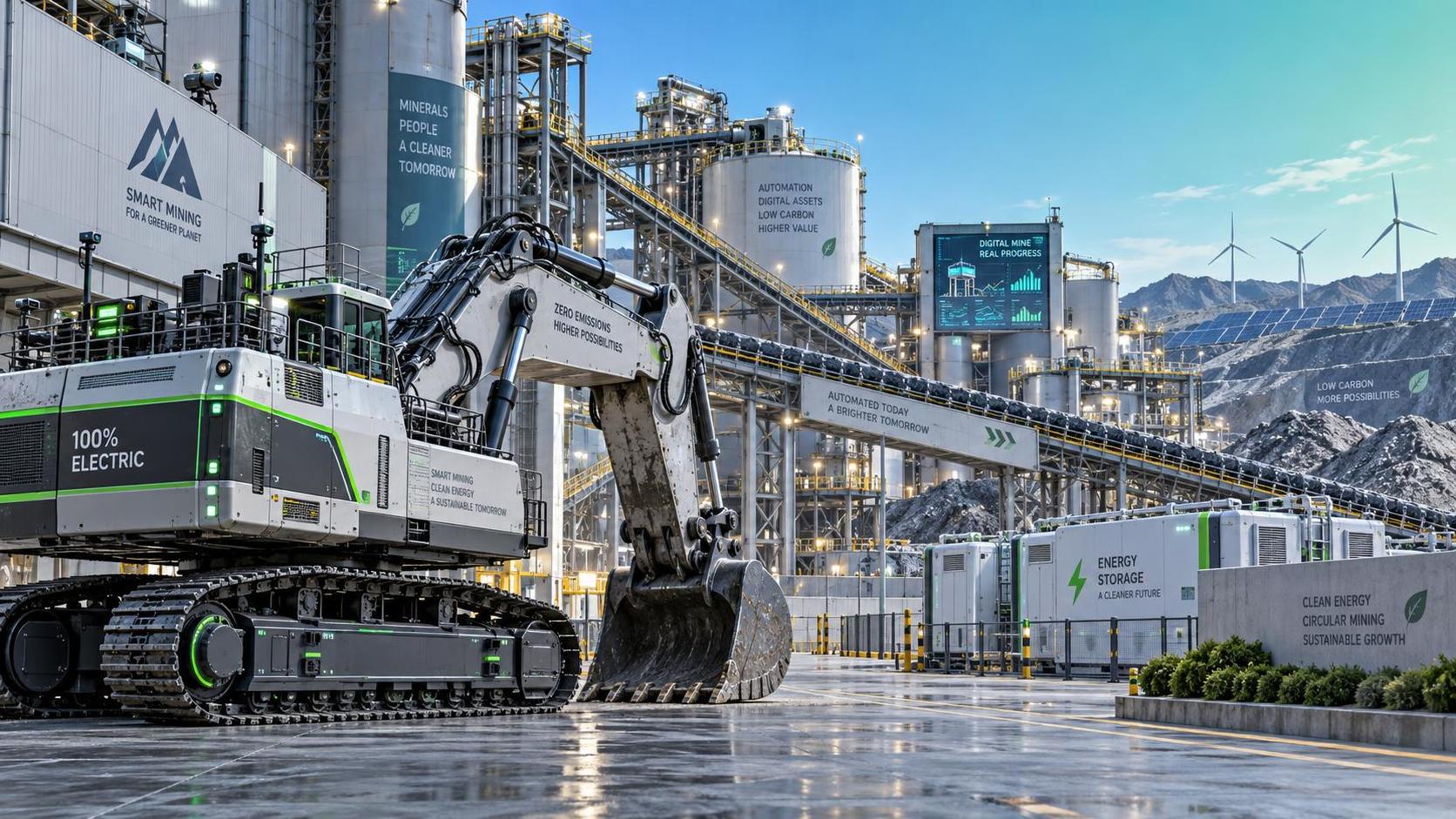
Mining projects face complex scrutiny because they combine extraction, processing, hauling, dewatering, ventilation, and often remote power systems. Their carbon profile is operationally intense and highly visible.
Here, carbon reduction standards ask whether the project can decarbonize production while preserving safety, output stability, and site resilience. Evidence must cover both energy source and process efficiency.
What this scenario must prove
- Energy mix scenarios for diesel, grid power, and renewables
- Electrification plans for fleets, conveyors, or site systems
- Intensity metrics per ton mined or processed
- Methane, fugitive, or process emission controls where relevant
- A roadmap for supplier and transport emissions disclosure
For resource technology projects, carbon reduction standards also affect capital access. Lenders increasingly compare mine plans by emissions intensity, not only reserve quality or production volume.
Scenario four: Railway, logistics, and fleet programs must prove system-wide carbon gains
Rail and logistics programs often create strong carbon benefits, but only if system boundaries are defined correctly. Infrastructure, rolling stock, signaling, depots, and route performance must be assessed together.
Carbon reduction standards in this setting test whether a project shifts freight or passengers in a measurable way. If modal shift remains assumed rather than evidenced, the case weakens.
What this scenario must prove
- Expected modal shift with transparent assumptions
- Energy performance of traction, signaling, and maintenance assets
- Embodied carbon of track, structures, and stations
- Freight or passenger throughput linked to emissions intensity
- Lifecycle comparison against road-based alternatives
The same logic applies to heavy vehicle fleets and special-purpose equipment. Upgrading cranes, mixers, fire vehicles, or service fleets must show duty-cycle fit, charging readiness, and real utilization patterns.
How proof requirements differ across project scenarios
This comparison shows why carbon reduction standards cannot be copied from one asset type to another. The proof must match the scenario, the operating model, and the funding context.
Practical adaptation steps for meeting carbon reduction standards
Projects that prepare early can reduce both compliance risk and redesign cost. The most useful approach is to treat carbon proof as an engineering workstream with named owners.
- Define the project carbon boundary before concept freeze.
- Select the standards, protocols, and reporting assumptions to be used.
- Create a baseline using current design, energy, and procurement data.
- Identify the largest emissions drivers by package or process.
- Require supplier evidence, not marketing claims, in tender documents.
- Install metering and data governance before handover.
- Plan third-party verification for critical calculations and disclosures.
These steps help carbon reduction standards become manageable. They also support better capital planning, because design teams can rank reduction actions by cost, impact, and implementation risk.
Common misjudgments that weaken compliance in 2026
Several recurring errors appear across industries. Each one can delay approvals, distort savings claims, or create audit findings after delivery.
- Using corporate averages instead of project-specific baselines
- Ignoring Scope 3 exposure in materials, transport, or suppliers
- Assuming offsets can replace direct reduction measures
- Modeling savings without post-installation verification plans
- Collecting data too late to influence design decisions
- Failing to align finance, engineering, and procurement assumptions
The strongest response is simple. Build one shared evidence chain from concept to operation. Carbon reduction standards become easier to satisfy when every design choice can be traced to data.
What to do next if your project will face carbon reduction standards
Start with a scenario review. Determine whether embodied carbon, operating carbon, process intensity, or system-wide transport outcomes carry the highest proof burden for your project.
Then map the evidence needed for approvals, investors, clients, and operators. In 2026, carbon reduction standards will increasingly decide which projects move faster and which face costly revisions.
For organizations shaping infrastructure, urban systems, resource assets, and industrial equipment, the advantage lies in turning carbon compliance into design intelligence. The projects that can prove performance will define the next wave of sustainable delivery.
Get weekly intelligence in your inbox.
No noise. No sponsored content. Pure intelligence.
News Recommendations
 Sep 19, 2026How an electronics application guide helps prevent component mismatchHow an electronics application guide helps prevent component mismatch
 Sep 18, 2026When a resource allocation platform improves project deliveryWhen a resource allocation platform improves project delivery
 Sep 17, 2026What to compare when evaluating mineral processing equipment manufacturersWhat to compare when evaluating mineral processing equipment manufacturers
 Sep 16, 2026How mineral separation optimization can reduce concentrate lossesHow mineral separation optimization can reduce concentrate losses
 Sep 15, 2026How to assess lifecycle costs in urban tech procurementHow to assess lifecycle costs in urban tech procurement
 Sep 14, 2026Heavy industry technology trends reshaping capital investment prioritiesHeavy industry technology trends reshaping capital investment priorities
 Sep 14, 2026Global Industrial Equipment Procurement: How Top OEMs Qualify Suppliers for Mining & Infrastructure ProjectsGlobal Industrial Equipment Procurement: How Top OEMs Qualify Suppliers for Mining & Infrastructure Projects
 Sep 14, 2026Industrial & Mining Equipment Procurement: Balancing Local Sourcing, Lead Time, and Certification RequirementsIndustrial & Mining Equipment Procurement: Balancing Local Sourcing, Lead Time, and Certification Requirements
 Sep 14, 2026Infrastructure & Equipment Upgrades: What Procurement Teams Must Verify Before Signing Off on New ContractsInfrastructure & Equipment Upgrades: What Procurement Teams Must Verify Before Signing Off on New Contracts
 Sep 14, 2026Why Infrastructure Equipment Buyers Are Shifting from Catalog-Based to Capability-Based Supplier SelectionWhy Infrastructure Equipment Buyers Are Shifting from Catalog-Based to Capability-Based Supplier Selection
 Sep 14, 2026Process Automation Project Execution: How to Align Supplier Capabilities with PLC Integration, Cybersecurity & Commissioning MilestonesProcess Automation Project Execution: How to Align Supplier Capabilities with PLC Integration, Cybersecurity & Commissioning Milestones
 Sep 14, 2026Are intelligent traffic systems worth the investment for small cities?Are intelligent traffic systems worth the investment for small cities?
 Sep 14, 2026How do intelligent traffic systems handle sensor failures?How do intelligent traffic systems handle sensor failures?
 Sep 14, 2026What should I check before accepting a smart building system?What should I check before accepting a smart building system?
 Sep 14, 2026Is a smart building system worth the maintenance cost?Is a smart building system worth the maintenance cost?
 Sep 14, 2026What data is needed for reliable resource allocation planning?What data is needed for reliable resource allocation planning?
 Sep 14, 2026How can resource allocation software reduce equipment idle time?How can resource allocation software reduce equipment idle time?
 Sep 14, 2026How should smart devices be maintained in harsh outdoor conditions?How should smart devices be maintained in harsh outdoor conditions?
 Sep 14, 2026Do smart devices improve worker safety on construction sites?Do smart devices improve worker safety on construction sites?
 Sep 14, 2026What environmental risks must be assessed before deep-sea mining?What environmental risks must be assessed before deep-sea mining?
 Sep 14, 2026Is deep-sea mining equipment commercially viable in 2026?Is deep-sea mining equipment commercially viable in 2026?
 Sep 14, 2026What Inspection Checks Should Procurement Teams Perform Before Ordering Dredging Equipment in 2026?What Inspection Checks Should Procurement Teams Perform Before Ordering Dredging Equipment in 2026?
 Sep 13, 2026How to verify an industrial product information source before specifying equipmentHow to verify an industrial product information source before specifying equipment
 Sep 12, 2026Which intelligent traffic systems hardware fits an urban intersection?Which intelligent traffic systems hardware fits an urban intersection?
 Sep 11, 2026How pump capacity affects response coverage for municipal fire fighting vehiclesHow pump capacity affects response coverage for municipal fire fighting vehicles
 Sep 10, 2026What to verify before choosing a heavy industry equipment supplierWhat to verify before choosing a heavy industry equipment supplier
 Sep 09, 2026When do adaptive urban traffic control systems reduce corridor delays?When do adaptive urban traffic control systems reduce corridor delays?