How to avoid failures in smart building maintenance upgrades?
Smart building upgrades often fail when maintenance planning lags behind digital ambitions. For infrastructure construction companies and project leaders navigating the physical world transformation, success depends on combining maintenance technologies for smart buildings with carbon reduction technologies and practical green engineering solutions. This introduction explores how to reduce risk, improve lifecycle performance, and make upgrade decisions that align with safety, efficiency, and long-term urban value.
For technical evaluators, procurement teams, safety managers, distributors, and decision-makers, the biggest challenge is rarely the software dashboard itself. Failure usually starts earlier: fragmented asset data, incompatible building systems, unrealistic retrofit schedules, and maintenance models that still rely on reactive repair instead of predictive control.
In infrastructure-linked smart building projects, even a well-funded upgrade can underperform within 6 to 18 months if field commissioning, lifecycle servicing, and operating responsibilities are not aligned. Avoiding those failures requires a practical framework that connects engineering readiness, serviceability, carbon targets, cybersecurity, and measurable maintenance outcomes.
Why Smart Building Maintenance Upgrades Fail in Real Projects
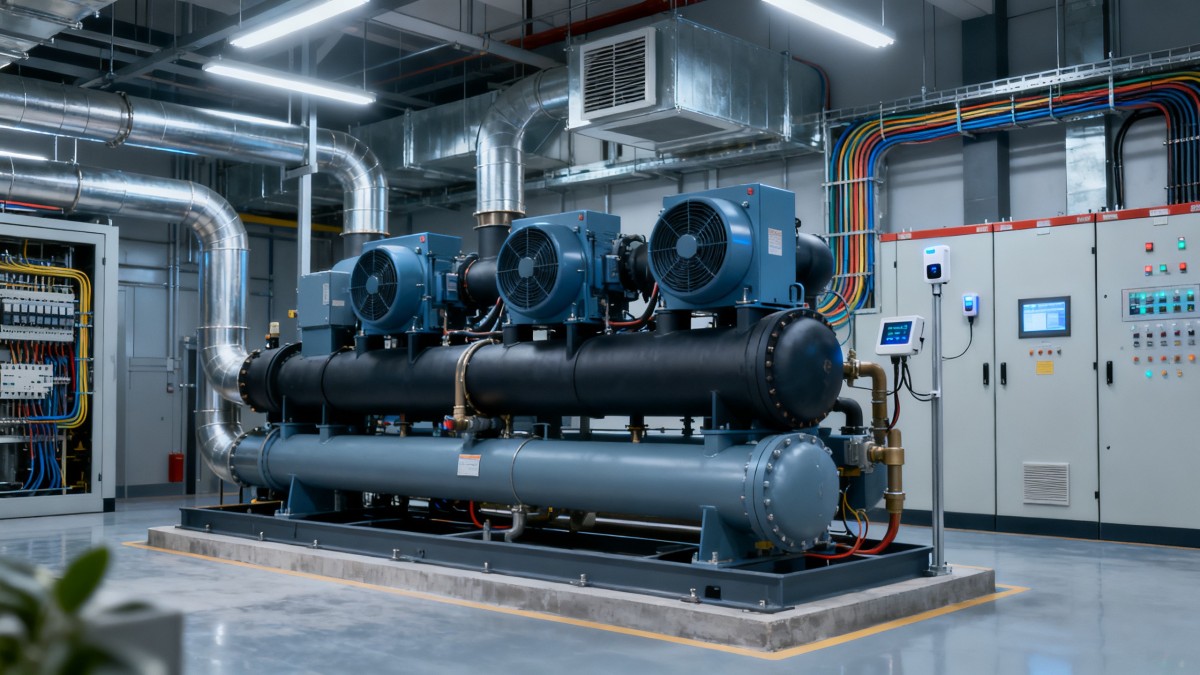
Most smart building maintenance upgrades fail not because the concept is wrong, but because the execution model is incomplete. In mixed-use towers, transport hubs, industrial campuses, and public infrastructure buildings, operators often add sensors, BMS integrations, or energy analytics without first checking equipment age, network stability, and maintainability of existing HVAC, fire safety, lighting, and access systems.
A common risk appears when 3 separate teams manage civil retrofit work, digital controls, and ongoing maintenance under different contracts. That creates handover gaps. In practice, alarms may be configured, but response logic, spare parts lists, and escalation procedures remain undefined. The result is more data, but slower fault resolution and higher operational risk.
Another failure point is unrealistic savings expectations. Many owners expect immediate reductions in energy use of 15% to 30%, but without recalibrating equipment sequences, occupancy schedules, and ventilation loads, digital tools alone cannot deliver those gains. Maintenance must support the upgrade through tuning cycles, routine inspections, and exception management over the first 90 to 180 days.
Safety and compliance also get underestimated. A smart building retrofit that touches fire systems, elevators, power distribution, or air quality controls can affect code compliance, insurance conditions, and business continuity. For project leaders, the issue is not only whether the system works on commissioning day, but whether it remains serviceable, auditable, and safe over a 5- to 10-year lifecycle.
Four recurring root causes
- Legacy assets are connected to a smart platform without verifying condition, protocol compatibility, or expected remaining life of 3 to 7 years.
- Maintenance contracts focus on emergency callouts rather than preventive tasks, response SLAs, remote diagnostics, and parts availability.
- Procurement decisions prioritize upfront CAPEX and ignore OPEX indicators such as calibration frequency, software update burden, and technician training hours.
- Carbon reduction targets are defined at board level, but there is no asset-level monitoring strategy for chillers, pumps, lighting zones, or IAQ equipment.
Failure pattern by upgrade stage
The table below shows where maintenance-related failures commonly emerge during planning, deployment, and operation. This helps technical and commercial teams identify where due diligence should be strengthened before signing off on an upgrade program.
The key lesson is simple: a smart building maintenance upgrade is not a one-time installation. It is an operating model change. If the maintenance strategy is not redesigned with the technology stack, the upgrade will remain technically impressive but commercially fragile.
Pre-Upgrade Assessment: What to Audit Before Investing
Before selecting platforms, gateways, or managed service providers, organizations should complete a structured pre-upgrade assessment. In most building portfolios, 20% to 40% of later upgrade problems can be traced to poor baseline visibility. A proper audit should cover assets, controls, energy behavior, maintenance history, and operational criticality.
For infrastructure-related buildings such as terminals, depots, hospitals, campuses, and government facilities, the audit must also distinguish critical and non-critical loads. Not every subsystem should be digitized at the same speed. Chilled water plants, switchgear rooms, smoke control systems, and access control nodes generally require tighter maintenance planning than decorative lighting or low-priority occupancy analytics.
A practical approach is to score each asset group on five dimensions: condition, connectivity, redundancy, compliance sensitivity, and carbon impact. This helps procurement and engineering teams determine which components should be replaced, which can be retrofitted, and which should remain isolated until a later phase.
Minimum audit checklist
- Asset age and expected remaining service life, typically grouped into under 3 years, 3 to 7 years, and over 7 years.
- Protocol compatibility, including BACnet, Modbus, KNX, OPC, or proprietary interfaces that may require middleware.
- Maintenance history over the previous 12 to 24 months, including recurring alarms, mean time to repair, and spare parts consumption.
- Energy and carbon baseline by system, such as HVAC, lighting, lifts, and data rooms, measured monthly or weekly.
- Cyber and access governance, including password policy, remote login rules, patch windows, and vendor support responsibilities.
Asset prioritization model
The following matrix can be used to prioritize smart building maintenance upgrades across a portfolio. It is especially useful when budget is phased over 2 to 3 fiscal cycles and not every building can be upgraded at once.
This kind of prioritization prevents a common mistake: spending heavily on visible front-end applications while core building systems still suffer from weak maintenance discipline, obsolete controllers, or unreliable field devices. For most B2B operators, resilience of core assets should come before user-facing convenience layers.
It also gives commercial teams a clearer basis for phased procurement. Instead of one large package, buyers can split the project into audit, pilot, integration, and managed service stages. That reduces budget risk and improves accountability across the supply chain.
How to Design a Maintenance Upgrade Strategy That Actually Works
A successful strategy combines field reliability, digital visibility, and service governance. In practical terms, the maintenance upgrade should define who monitors what, how often inspections happen, what triggers intervention, and how performance is reviewed every month or quarter. Without those rules, even advanced analytics become background noise.
For most smart building environments, the strongest model is a layered maintenance approach. Level 1 covers daily remote monitoring and alarm triage. Level 2 handles preventive site work such as filter checks, sensor calibration, and valve testing. Level 3 addresses specialist intervention for controls logic, cybersecurity patches, and major equipment diagnostics. This structure supports uptime while controlling labor cost.
Carbon reduction technologies should also be integrated into the maintenance plan. If the building uses variable speed drives, energy recovery, smart metering, demand response, or occupancy-based ventilation, those functions require regular validation. A carbon-saving feature that drifts out of calibration can increase energy use silently for months before anyone notices.
Five design rules for durable upgrades
- Set response and restoration targets separately. For example, acknowledge high-priority alarms within 15 minutes and restore core function within 4 hours where site conditions allow.
- Define a maintenance data model early, including asset naming, alarm categories, device hierarchy, and work order linkage.
- Use pilot zones of 1 floor, 1 plantroom, or 1 subsystem before full rollout to validate interoperability and service workflow.
- Plan calibration and recommissioning windows at 30, 90, and 180 days after go-live for high-impact systems.
- Link energy KPIs to maintenance tasks, such as fan power drift, chilled water delta-T loss, or abnormal night load.
Recommended operating metrics
Technical teams need measurable targets, not broad promises. The metrics below provide a practical framework for evaluating whether a smart building maintenance upgrade is delivering operational value after commissioning.
These metrics should be reviewed alongside comfort, indoor air quality, and safety indicators. A building that saves energy but creates poor ventilation or unstable temperature control is not a successful upgrade. Balanced performance is the objective, especially in regulated or high-occupancy facilities.
For distributors, facility service providers, and project integrators, this strategy approach also strengthens commercial positioning. Clients increasingly prefer service partners who can explain lifecycle governance, not just product features.
Procurement and Vendor Selection: What Buyers Should Compare
Procurement failure is one of the fastest ways to undermine a smart building maintenance upgrade. Buyers often compare platforms on interface design or license cost while overlooking support model, device openness, service coverage, and long-term maintainability. In a B2B environment, total value depends on the interaction between hardware, software, people, and service terms.
Technical evaluators should request more than a product brochure. A useful bid package should include integration architecture, maintenance scope, remote support conditions, parts strategy, training plan, update policy, and commissioning responsibilities. Where multiple contractors are involved, the responsibility matrix must be unambiguous down to point-level integration and post-handover support.
Commercial teams should also test whether the supplier can support a phased roadmap. Many building owners now begin with 1 pilot site, then expand to 3, 5, or 10 properties. Vendors that can standardize templates, reporting logic, and service procedures across sites reduce scaling friction and make portfolio governance easier.
Key evaluation dimensions
- Interoperability: number of supported protocols, gateway flexibility, and ability to integrate legacy equipment without excessive custom code.
- Service depth: availability of remote diagnostics, preventive maintenance scheduling, on-site response bands, and specialist escalation.
- Cyber hygiene: user access control, patch management windows, backup policy, and incident response process.
- Commercial transparency: clear pricing for licenses, renewals, spare parts, travel, retraining, and software updates over 3 to 5 years.
- Performance reporting: monthly KPI reports, exception summaries, carbon-related metrics, and recommended action logs.
Buyer comparison table
The comparison table below can help procurement managers and project leaders structure supplier reviews beyond headline price. It is especially relevant for multi-building portfolios and critical infrastructure-linked sites.
The strongest procurement decisions usually come from cross-functional review. Engineering teams validate feasibility, safety managers review critical system risk, procurement checks cost clarity, and business leaders assess long-term operating value. A low initial quote can become expensive if it depends on proprietary lock-in or weak field support.
For agents and channel partners, presenting these criteria to end users also builds trust. It shifts the conversation from selling devices to guiding infrastructure clients through sustainable, service-ready upgrade planning.
Implementation, Risk Control, and Post-Upgrade Maintenance
Execution quality determines whether the maintenance upgrade delivers stable results after handover. The safest approach is to break delivery into defined stages: survey, pilot, retrofit, integration, commissioning, optimization, and service transition. In medium to large projects, this often spans 8 to 24 weeks depending on building complexity, access constraints, and live operations.
During implementation, risk control should focus on three issues: operational continuity, compliance integrity, and maintenance readiness. For occupied assets, contractors should define work windows, fallback logic, temporary controls, and emergency communication routes before touching core systems. This is especially important when upgrading power monitoring, life safety interfaces, or central plant controls.
Post-upgrade support is where many projects lose momentum. Teams celebrate commissioning, but skip the 30-day defect review, 90-day optimization cycle, or quarterly KPI meeting. As a result, unresolved nuisance alarms, unstable data points, and training gaps slowly erode confidence in the system. Smart buildings require continuous governance, not one-off acceptance testing.
Recommended delivery sequence
- Baseline survey and critical asset mapping, including field verification of tags, controllers, and network paths.
- Pilot deployment on a limited zone or subsystem to validate compatibility and maintenance workflow.
- Phased retrofit with documented work permits, backup logic, and commissioning checklists.
- Integrated testing across HVAC, lighting, power, fire-related interfaces, and remote monitoring.
- Stabilization period of 4 to 12 weeks with KPI review, defect closure, retraining, and tuning.
FAQ: Practical questions from buyers and project teams
Below are frequent questions that arise during smart building maintenance upgrades. They reflect real decision pressure across technical, operational, and commercial teams.
How long does a typical upgrade take?
A limited retrofit for monitoring, metering, and selected controls may take 4 to 8 weeks. A multi-system upgrade involving HVAC optimization, BMS integration, and service transition often takes 12 to 24 weeks. Live buildings with restricted access windows usually require longer contingency planning.
Which sites benefit most from predictive maintenance?
Buildings with high uptime sensitivity, repeated service calls, central plant complexity, or large occupancy variation see the most benefit. Common examples include transport facilities, commercial towers, hospitals, campuses, and mixed-use urban assets where HVAC and energy performance have direct cost and comfort impact.
What are the most common procurement mistakes?
Three mistakes appear repeatedly: buying software without a maintenance workflow, ignoring long-term service cost over 3 to 5 years, and failing to verify compatibility with existing controllers and field devices. Another frequent issue is omitting training and post-handover optimization from the contract scope.
How should success be measured after go-live?
Use a balanced scorecard: alarm response time, preventive maintenance completion, energy deviation from baseline, occupant comfort trends, and defect closure rate within agreed periods such as 7, 30, or 90 days. Measuring only energy savings creates a narrow and sometimes misleading picture.
Avoiding failure in smart building maintenance upgrades depends on disciplined planning before procurement, realistic delivery sequencing, and a service model that supports performance long after installation. For infrastructure and urban technology stakeholders, the winning approach is to treat smart upgrades as lifecycle programs that unite maintenance technologies, carbon reduction goals, and practical engineering controls.
GIUT’s industry perspective is built for organizations that need more than surface-level digitization. Whether you are evaluating retrofit feasibility, comparing vendors, managing risk, or building a phased modernization roadmap, a structured upgrade framework can reduce avoidable downtime, improve asset value, and support safer, more sustainable operations. Contact us to discuss your project context, get a tailored solution path, or learn more about smart building and infrastructure upgrade strategies.
Get weekly intelligence in your inbox.
No noise. No sponsored content. Pure intelligence.
News Recommendations
 Sep 19, 2026How an electronics application guide helps prevent component mismatchHow an electronics application guide helps prevent component mismatch
 Sep 18, 2026When a resource allocation platform improves project deliveryWhen a resource allocation platform improves project delivery
 Sep 17, 2026What to compare when evaluating mineral processing equipment manufacturersWhat to compare when evaluating mineral processing equipment manufacturers
 Sep 16, 2026How mineral separation optimization can reduce concentrate lossesHow mineral separation optimization can reduce concentrate losses
 Sep 15, 2026How to assess lifecycle costs in urban tech procurementHow to assess lifecycle costs in urban tech procurement
 Sep 14, 2026Heavy industry technology trends reshaping capital investment prioritiesHeavy industry technology trends reshaping capital investment priorities
 Sep 14, 2026Global Industrial Equipment Procurement: How Top OEMs Qualify Suppliers for Mining & Infrastructure ProjectsGlobal Industrial Equipment Procurement: How Top OEMs Qualify Suppliers for Mining & Infrastructure Projects
 Sep 14, 2026Industrial & Mining Equipment Procurement: Balancing Local Sourcing, Lead Time, and Certification RequirementsIndustrial & Mining Equipment Procurement: Balancing Local Sourcing, Lead Time, and Certification Requirements
 Sep 14, 2026Infrastructure & Equipment Upgrades: What Procurement Teams Must Verify Before Signing Off on New ContractsInfrastructure & Equipment Upgrades: What Procurement Teams Must Verify Before Signing Off on New Contracts
 Sep 14, 2026Why Infrastructure Equipment Buyers Are Shifting from Catalog-Based to Capability-Based Supplier SelectionWhy Infrastructure Equipment Buyers Are Shifting from Catalog-Based to Capability-Based Supplier Selection
 Sep 14, 2026Process Automation Project Execution: How to Align Supplier Capabilities with PLC Integration, Cybersecurity & Commissioning MilestonesProcess Automation Project Execution: How to Align Supplier Capabilities with PLC Integration, Cybersecurity & Commissioning Milestones
 Sep 14, 2026Are intelligent traffic systems worth the investment for small cities?Are intelligent traffic systems worth the investment for small cities?
 Sep 14, 2026How do intelligent traffic systems handle sensor failures?How do intelligent traffic systems handle sensor failures?
 Sep 14, 2026What should I check before accepting a smart building system?What should I check before accepting a smart building system?
 Sep 14, 2026Is a smart building system worth the maintenance cost?Is a smart building system worth the maintenance cost?
 Sep 14, 2026What data is needed for reliable resource allocation planning?What data is needed for reliable resource allocation planning?
 Sep 14, 2026How can resource allocation software reduce equipment idle time?How can resource allocation software reduce equipment idle time?
 Sep 14, 2026How should smart devices be maintained in harsh outdoor conditions?How should smart devices be maintained in harsh outdoor conditions?
 Sep 14, 2026Do smart devices improve worker safety on construction sites?Do smart devices improve worker safety on construction sites?
 Sep 14, 2026What environmental risks must be assessed before deep-sea mining?What environmental risks must be assessed before deep-sea mining?
 Sep 14, 2026Is deep-sea mining equipment commercially viable in 2026?Is deep-sea mining equipment commercially viable in 2026?
 Sep 14, 2026What Inspection Checks Should Procurement Teams Perform Before Ordering Dredging Equipment in 2026?What Inspection Checks Should Procurement Teams Perform Before Ordering Dredging Equipment in 2026?
 Sep 13, 2026How to verify an industrial product information source before specifying equipmentHow to verify an industrial product information source before specifying equipment
 Sep 12, 2026Which intelligent traffic systems hardware fits an urban intersection?Which intelligent traffic systems hardware fits an urban intersection?
 Sep 11, 2026How pump capacity affects response coverage for municipal fire fighting vehiclesHow pump capacity affects response coverage for municipal fire fighting vehicles
 Sep 10, 2026What to verify before choosing a heavy industry equipment supplierWhat to verify before choosing a heavy industry equipment supplier
 Sep 09, 2026When do adaptive urban traffic control systems reduce corridor delays?When do adaptive urban traffic control systems reduce corridor delays?