Who benefits most from prefabricated construction techniques?
Prefabricated construction techniques benefit most organizations that need faster delivery, tighter quality control, and measurable sustainability gains. For infrastructure construction companies, project leaders, and decision-makers navigating physical world transformation, these methods support green engineering solutions, carbon reduction technologies, and more efficient maintenance technologies for smart buildings. This article explores where prefabrication creates the strongest value across modern infrastructure and urban development.
Which organizations gain the most from prefabricated construction?
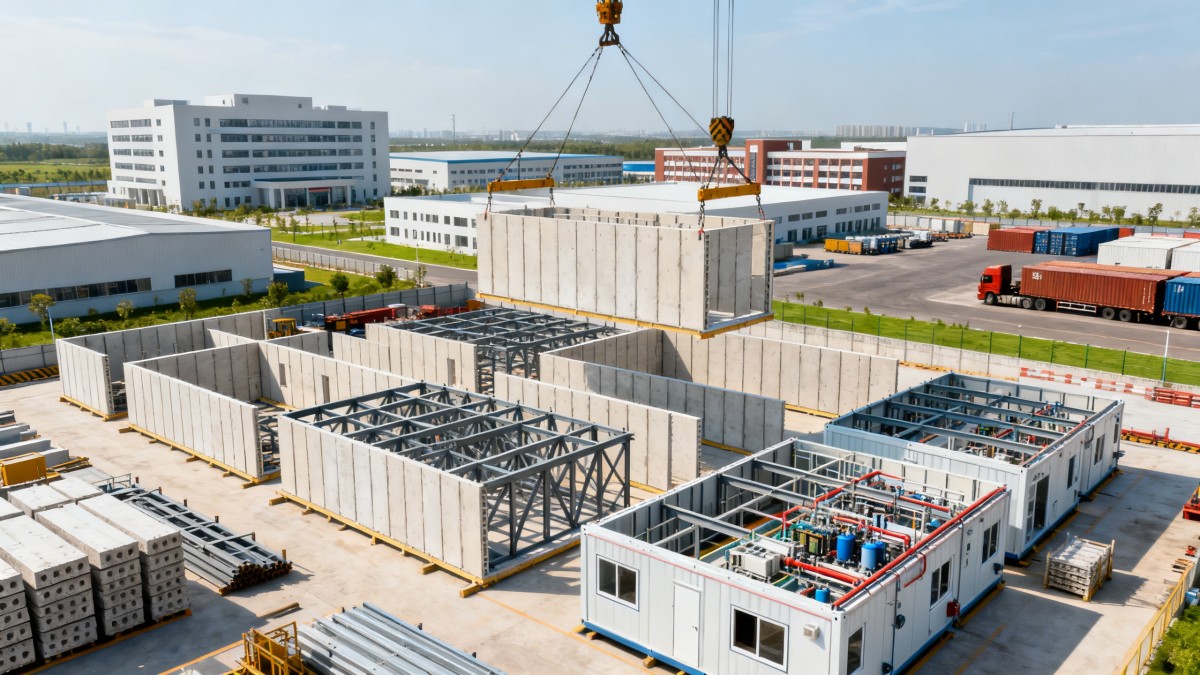
Prefabricated construction creates the highest value where time certainty, repeatable quality, and site safety are business-critical. In practical terms, that includes developers delivering multi-building programs, EPC contractors managing compressed schedules, public infrastructure teams under phased commissioning pressure, and industrial clients that cannot tolerate long on-site disruption. In many projects, the key advantage is not a single cost line but a combined improvement across 3 core targets: schedule, quality, and operational predictability.
For project managers and engineering leads, prefabrication reduces weather-sensitive work and shifts more activity into controlled factory conditions. That can simplify inspection planning, improve dimensional consistency, and reduce rework loops during the installation stage. Typical modules or components may include wall panels, bathroom pods, MEP racks, facade units, steel assemblies, and precast structural elements, depending on the building type and logistics envelope.
For procurement teams, the strongest benefit often appears in supply chain visibility. Instead of coordinating a wide spread of short-cycle site trades, buyers can evaluate fewer integrated packages with clearer lead times, factory QA records, and transport plans. This is especially useful when the expected delivery window falls within 8–20 weeks and when site access, labor availability, or urban traffic restrictions make conventional sequencing difficult.
For safety and quality managers, prefabricated construction can reduce some high-risk site activities such as repeated wet trades, elevated manual handling, and uncontrolled material storage. It does not remove project risk, but it changes the risk profile. The focus shifts toward lifting plans, interface tolerance control, transport protection, connection detailing, and pre-installation verification across 4–6 acceptance checkpoints.
High-fit buyer and user groups
- Enterprise decision-makers seeking scalable delivery across housing, education, healthcare, logistics, or smart city assets.
- Technical evaluators comparing structural systems, module interfaces, MEP integration depth, and long-term maintenance implications.
- Procurement and commercial teams balancing unit price, transport cost, installation speed, and lifecycle value rather than headline material cost alone.
- Distributors and channel partners looking for standardized, repeatable solutions with documented specifications and predictable handover requirements.
Where prefabrication is less compelling
Not every project benefits equally. Highly customized one-off buildings, very constrained transport routes, or small jobs with low repetition may see limited gain. When module dimensions exceed transport allowances, lifting access is poor, or the design freezes too late, some of the expected schedule benefit can erode. That is why early feasibility work during the first 2–4 weeks matters more than many buyers initially expect.
Which project scenarios are best suited to prefabricated construction?
The best-fit scenarios are those with repeatability, phased handover requirements, or high pressure on labor and quality control. In the GIUT perspective, this is especially relevant where infrastructure, smart building systems, and urban service continuity intersect. Schools, hospitals, transit-support buildings, worker accommodation, modular substations, logistics facilities, and municipal utility buildings often show strong alignment because they combine functional standardization with tight operational deadlines.
In smart city deployment, prefabricated plant rooms, equipment enclosures, and service modules can support faster rollout of digital infrastructure. When integrated with maintenance technologies and digital asset records, prefabrication also helps urban operators plan inspections, replacement cycles, and spare-part strategies. This is valuable when city authorities need 3-stage delivery: civil completion, systems installation, and live service commissioning.
Industrial and mining support facilities also benefit when remote locations make labor mobilization expensive. Factory-completed units can reduce the number of trades needed on site and compress installation windows during harsh weather or restricted work seasons. In remote projects, even a reduction of 2–6 site weeks can materially improve camp logistics, supervision loads, and shutdown planning.
Railway and logistics applications are another high-value area. Trackside rooms, operations buildings, maintenance support spaces, and modular service structures often require dependable quality and a disciplined installation sequence. Prefabrication is attractive when rail possessions are limited, nearby works must remain active, or site disturbance needs strict control.
Scenario comparison by operational need
The table below helps information researchers, project owners, and procurement specialists identify where prefabricated construction usually performs best compared with conventional site-built methods.
A clear pattern emerges: prefabricated construction is strongest where repetition, control, and schedule certainty matter more than unrestricted design freedom. Buyers should not ask only, “Is modular or prefab cheaper?” but rather, “Does prefab reduce total project friction across design, delivery, installation, and operation?” That question usually leads to a more accurate decision.
Three signs your project is a good candidate
- The program includes repeated room layouts, repeated service zones, or repeated structural bays across 20 units or more.
- The site has access, labor, safety, or environmental constraints that make traditional construction less predictable.
- The owner values earlier commissioning, lower rework exposure, and more controllable quality records over purely conventional trade packaging.
How should buyers compare prefabricated and conventional construction?
Comparison should be built around total delivery performance, not only first-pass procurement cost. Many buyers make the mistake of comparing a factory-made component package directly with raw on-site material rates. That misses labor productivity, weather disruption, interface risk, temporary works, rework exposure, and time-to-revenue. For commercial evaluators, the better framework is a 5-dimension review: capex structure, schedule, quality assurance, site disruption, and lifecycle maintenance.
Schedule is often the easiest advantage to see. Prefabrication allows parallel workstreams: foundations and site prep can proceed while modules or components are manufactured off site. In suitable projects, this can remove several sequential activities from the critical path. The gain may be a few weeks or a few months depending on scale, but the key point is improved predictability rather than a guaranteed percentage saving.
Quality comparison should look beyond appearance and focus on tolerances, repeatability, inspection records, and installed performance. Controlled production environments can support tighter process discipline, but only if design coordination is mature and factory QA is documented. Poorly resolved interfaces can still create field corrections, especially around MEP penetrations, waterproofing zones, facade junctions, and structural connections.
Operational comparison matters as well. Building owners increasingly care about maintenance access, component replacement logic, and digital records for asset management. Prefabricated construction is attractive when it aligns with smart building monitoring, standardized spare strategies, and planned maintenance intervals such as quarterly inspections or annual systems review.
Direct comparison for decision-making teams
The following table provides a structured side-by-side view for procurement teams, technical reviewers, and executives comparing prefabricated construction with conventional site-built delivery.
This comparison shows why prefabrication appeals strongly to B2B buyers with schedule obligations and quality accountability. The trade-off is clear: success depends on earlier design freeze, stronger coordination discipline, and better front-end planning. If those conditions are weak, the theoretical advantages may not convert into practical project value.
A practical comparison checklist
- Confirm the level of repetition in structure, room layouts, and service distribution.
- Check whether design decisions can be frozen before factory production starts, often 6–10 weeks before delivery.
- Evaluate haul route, crane strategy, storage space, and installation sequence before award.
- Review lifecycle implications, including access for maintenance, replacement parts, and digital asset documentation.
What should procurement and technical teams check before selecting a prefab solution?
Selection should begin with scope clarity. Buyers need to define whether they are sourcing volumetric modules, panelized systems, precast components, structural steel assemblies, or integrated MEP racks. These categories behave differently in transport, lifting, interfaces, and factory completion level. A good procurement package states at least 5 basics: scope boundaries, design responsibilities, inspection points, logistics assumptions, and installation exclusions.
Technical teams should then examine interface risk. The most common performance problems in prefabricated construction appear not inside the module itself but at the connection points between systems. Tolerance stacking, waterproofing continuity, movement joints, acoustic separation, and fire stopping all need early review. For complex projects, a 3-step verification process is useful: model review, factory sample review, and site mock-up review.
Commercial teams should avoid focusing only on unit rate comparisons. They should ask how transport distance, cranage, protection packaging, storage duration, installation crew capability, and defect rectification are priced. In some markets, the lowest factory price becomes the highest installed cost because unloading methods, road permits, or sequencing delays were not priced correctly from the start.
Quality and safety teams should request documented controls for production, transport, and installation. That includes inspection and test plans, material traceability where relevant, dimensional records, lifting point verification, and handover checklists. Depending on project type, procurement may also need to align with local building code, fire performance requirements, structural design review procedures, and occupational safety obligations.
Selection guide for different buyer priorities
Use the matrix below when comparing suppliers or solution routes for prefabricated construction. It is especially helpful when project stakeholders value different outcomes such as speed, compliance, capital control, or future maintainability.
This table highlights a recurring procurement truth: the best prefabricated construction supplier is rarely the one with the shortest quotation sheet. It is the one whose scope, evidence, and interface discipline reduce downstream uncertainty. That is especially important for distributors, public buyers, and multi-stakeholder infrastructure projects.
Five common selection mistakes
- Treating prefabrication as a simple product purchase rather than an integrated design-manufacture-install delivery model.
- Freezing logistics too late, then discovering road, lifting, or storage constraints after award.
- Ignoring site interfaces such as foundations, utility stubs, tolerance zones, and sealing details.
- Comparing prices without normalizing scope, completion level, testing boundaries, and handover content.
- Assuming faster installation always means lower total cost, even when design change risk remains high.
What risks, compliance issues, and misconceptions should decision-makers watch?
One common misconception is that prefabricated construction automatically guarantees lower cost. In reality, it often improves cost certainty rather than universally lowering total spend. Savings may come from less rework, shorter site programs, and lower disruption, but additional costs can arise from transport, cranage, packaging, or early design effort. The commercial outcome depends on project type, scale, and execution discipline.
Another misconception is that quality is solved once production moves to a factory. Factory work supports better control, but project quality still depends on design completeness, supplier competence, inspection rigor, and site installation practices. A module with excellent internal workmanship can still fail at weatherproofing or service performance if interfaces are not coordinated and verified.
Compliance review is also essential. Depending on jurisdiction and asset type, prefabricated construction may need to satisfy structural design provisions, fire safety requirements, acoustic criteria, energy performance rules, transport permits, lifting regulations, and occupational safety controls. Procurement teams should confirm the governing code path before tender issue, not after production release. A late compliance correction can create 4–8 weeks of avoidable delay.
For sustainability-focused organizations, prefabrication can support green engineering and carbon reduction strategies, but claims should be assessed carefully. Buyers should ask for transparent scope definitions: whether the discussion covers waste reduction, material optimization, operational efficiency, or transport impacts. Sustainability value is real, but it must be evaluated across the full delivery chain rather than assumed from the word “prefab” alone.
FAQ for researchers, evaluators, and procurement teams
How long does prefabricated construction delivery usually take?
It depends on scope and completion level. Early design coordination may take 2–6 weeks, factory production often takes 6–16 weeks, and site installation may range from several days to several weeks. The main advantage is that factory work can run in parallel with site preparation, which can shorten the overall project path even when component production itself is not very short.
Is prefabricated construction suitable for infrastructure and smart city projects?
Yes, especially for repeatable buildings, equipment rooms, utility modules, transport-support structures, and service facilities that require quality consistency and phased deployment. It is particularly useful where urban disruption must be limited, commissioning milestones are fixed, or long-term maintenance technologies need standardized asset data.
What should technical evaluators focus on first?
Start with interfaces and tolerances. Review structural connection logic, MEP entry points, waterproofing transitions, acoustic performance, fire stopping, and maintenance access. These areas determine whether factory precision can translate into site performance. If possible, require a mock-up or representative sample before full production release.
What should distributors and channel partners ask suppliers?
They should ask about configurable scope, standard documentation sets, lead-time bands, transport limitations, spare support, and after-sales coordination. A distributable prefabricated solution works best when the supplier can support repeated deployments with stable specifications and clear handover packages.
Why work with GIUT when evaluating prefabricated construction options?
GIUT approaches prefabricated construction as part of a larger infrastructure and urban technology system, not as an isolated building method. That matters for buyers managing smart buildings, transport-linked assets, municipal facilities, or industrial support projects. The right decision often sits at the intersection of engineering feasibility, digital governance, sustainability goals, and heavy-industry execution reality.
Our perspective is built around frontline engineering logic. Through expertise spanning construction and smart building, urban tech, mining and resource technology, railway and logistics systems, and special-purpose equipment, GIUT helps stakeholders understand how prefabrication affects not only installation speed but also long-term maintenance, asset standardization, and city-scale deployment efficiency.
For procurement personnel and business evaluators, this means practical support in 6 critical areas: solution comparison, technical scope clarification, supplier screening logic, delivery-cycle judgment, compliance pathway review, and lifecycle value assessment. For project leaders and safety teams, it means a clearer understanding of interface risks, execution sequencing, and inspection priorities before commitments are locked in.
If you are assessing who benefits most from prefabricated construction techniques, the best next step is a structured conversation based on your project conditions. You can consult GIUT on parameter confirmation, system selection, expected delivery windows, transport and lifting constraints, compliance concerns, smart building integration, carbon reduction considerations, sample review strategy, and quotation communication priorities. That kind of early alignment usually saves far more time than trying to correct scope gaps after tender or production release.
What you can discuss with us next
- Which prefabricated construction route fits your project: modular, panelized, precast, steel assembly, or hybrid delivery.
- How to compare suppliers based on scope maturity, QA evidence, logistics practicality, and lifecycle maintainability.
- Whether your target delivery window, such as 8–12 weeks or 12–20 weeks, is realistic for the current project definition.
- What to include in RFQ or tender packages to reduce variation claims, interface disputes, and compliance surprises.
- infrastructure construction
- prefabricated construction
- maintenance technologies
- green engineering
- smart building
- physical world
- carbon reduction
- carbon reduction strategies
- prefabricated construction techniques
- infrastructure construction companies
- green engineering solutions
- physical world transformation
- maintenance technologies for smart buildings
- carbon reduction technologies
Get weekly intelligence in your inbox.
No noise. No sponsored content. Pure intelligence.
News Recommendations
 Sep 19, 2026How an electronics application guide helps prevent component mismatchHow an electronics application guide helps prevent component mismatch
 Sep 18, 2026When a resource allocation platform improves project deliveryWhen a resource allocation platform improves project delivery
 Sep 17, 2026What to compare when evaluating mineral processing equipment manufacturersWhat to compare when evaluating mineral processing equipment manufacturers
 Sep 16, 2026How mineral separation optimization can reduce concentrate lossesHow mineral separation optimization can reduce concentrate losses
 Sep 15, 2026How to assess lifecycle costs in urban tech procurementHow to assess lifecycle costs in urban tech procurement
 Sep 14, 2026Heavy industry technology trends reshaping capital investment prioritiesHeavy industry technology trends reshaping capital investment priorities
 Sep 14, 2026Global Industrial Equipment Procurement: How Top OEMs Qualify Suppliers for Mining & Infrastructure ProjectsGlobal Industrial Equipment Procurement: How Top OEMs Qualify Suppliers for Mining & Infrastructure Projects
 Sep 14, 2026Industrial & Mining Equipment Procurement: Balancing Local Sourcing, Lead Time, and Certification RequirementsIndustrial & Mining Equipment Procurement: Balancing Local Sourcing, Lead Time, and Certification Requirements
 Sep 14, 2026Infrastructure & Equipment Upgrades: What Procurement Teams Must Verify Before Signing Off on New ContractsInfrastructure & Equipment Upgrades: What Procurement Teams Must Verify Before Signing Off on New Contracts
 Sep 14, 2026Why Infrastructure Equipment Buyers Are Shifting from Catalog-Based to Capability-Based Supplier SelectionWhy Infrastructure Equipment Buyers Are Shifting from Catalog-Based to Capability-Based Supplier Selection
 Sep 14, 2026Process Automation Project Execution: How to Align Supplier Capabilities with PLC Integration, Cybersecurity & Commissioning MilestonesProcess Automation Project Execution: How to Align Supplier Capabilities with PLC Integration, Cybersecurity & Commissioning Milestones
 Sep 14, 2026Are intelligent traffic systems worth the investment for small cities?Are intelligent traffic systems worth the investment for small cities?
 Sep 14, 2026How do intelligent traffic systems handle sensor failures?How do intelligent traffic systems handle sensor failures?
 Sep 14, 2026What should I check before accepting a smart building system?What should I check before accepting a smart building system?
 Sep 14, 2026Is a smart building system worth the maintenance cost?Is a smart building system worth the maintenance cost?
 Sep 14, 2026What data is needed for reliable resource allocation planning?What data is needed for reliable resource allocation planning?
 Sep 14, 2026How can resource allocation software reduce equipment idle time?How can resource allocation software reduce equipment idle time?
 Sep 14, 2026How should smart devices be maintained in harsh outdoor conditions?How should smart devices be maintained in harsh outdoor conditions?
 Sep 14, 2026Do smart devices improve worker safety on construction sites?Do smart devices improve worker safety on construction sites?
 Sep 14, 2026What environmental risks must be assessed before deep-sea mining?What environmental risks must be assessed before deep-sea mining?
 Sep 14, 2026Is deep-sea mining equipment commercially viable in 2026?Is deep-sea mining equipment commercially viable in 2026?
 Sep 14, 2026What Inspection Checks Should Procurement Teams Perform Before Ordering Dredging Equipment in 2026?What Inspection Checks Should Procurement Teams Perform Before Ordering Dredging Equipment in 2026?
 Sep 13, 2026How to verify an industrial product information source before specifying equipmentHow to verify an industrial product information source before specifying equipment
 Sep 12, 2026Which intelligent traffic systems hardware fits an urban intersection?Which intelligent traffic systems hardware fits an urban intersection?
 Sep 11, 2026How pump capacity affects response coverage for municipal fire fighting vehiclesHow pump capacity affects response coverage for municipal fire fighting vehicles
 Sep 10, 2026What to verify before choosing a heavy industry equipment supplierWhat to verify before choosing a heavy industry equipment supplier
 Sep 09, 2026When do adaptive urban traffic control systems reduce corridor delays?When do adaptive urban traffic control systems reduce corridor delays?