
How to prioritize renewals in global infrastructure asset management
An aging bridge, a flood-exposed substation, and a deteriorating rail corridor all need investment. Each has an operational team ready to explain why it cannot wait. Yet the renewal budget covers only part of the work. For project managers, the challenge is not simply identifying defects; it is deciding which intervention protects the most essential service, at the right time, with the resources available.
In global infrastructure asset management, that decision becomes harder when portfolios span different climates, currencies, regulations, and operating standards. A defensible renewal plan must connect engineering evidence to service consequences, compare realistic intervention options, and acknowledge uncertainty. The objective is not a perfect ranking spreadsheet. It is a funded, deliverable program that makes the consequences of acting—or waiting—clear.
Separate non-negotiable work from investment choices
Before scoring assets, establish which decisions are genuinely discretionary. An asset subject to an enforceable safety requirement or regulatory deadline should not compete against an efficiency upgrade through an ordinary weighted score. Mandatory obligations need their own decision pathway, supported by documented engineering and legal interpretation.
This does not mean every mandatory project automatically receives its preferred scope. Teams should still compare compliant alternatives, confirm deadlines, and identify temporary controls. However, an attractive financial return elsewhere cannot cancel an obligation to maintain safe operation.
Divide the initial pipeline into three groups:
- Immediate controls: conditions requiring restrictions, isolation, emergency repair, or other prompt protective measures.
- Mandatory interventions: work needed to meet applicable safety, environmental, or statutory requirements within defined dates.
- Discretionary renewals: competing investments intended to reduce risk, sustain service, or improve lifecycle performance.
Where mandatory requirements exceed available funding, escalate the shortfall explicitly. Quietly reducing their scores to fit the budget creates an apparently balanced program while leaving the underlying obligation unresolved.
Build a comparable evidence base—not an exhaustive database
Renewal planning often stalls because asset information is incomplete. Waiting for a fully populated digital twin is rarely practical. Start with a minimum decision record for each candidate and improve the information most likely to change the investment choice.
Across countries, standardize definitions rather than forcing every operator to use identical inspection methods. A “poor” rating from one region may not mean the same thing elsewhere. Map local assessments to common functional descriptions, such as reduced capacity, active deterioration, or inability to meet a required service level.
Keep condition and criticality separate. Condition describes the asset’s physical state; criticality describes the importance of its function. Combining them too early hides why a candidate ranks highly and makes later challenges harder to resolve.
Prioritize failure scenarios, then evaluate interventions
The useful question is not “How old is this asset?” but “What credible failure could occur, over what period, and what would happen next?” Age can inform deterioration models, but it is not a substitute for evidence about loading, environment, maintenance history, and actual performance.
For each significant failure scenario, assess likelihood over a defined planning horizon and consequences across relevant dimensions. A bridge bearing failure, a transformer fire, and a signaling outage need different technical models, but their service implications can be compared through a shared decision framework.
Where credible probability and loss estimates exist, expected annual loss can be expressed as annual failure probability multiplied by consequence cost. Do not present ordinal risk-matrix scores as monetary losses, or assume that multiplying two subjective ratings produces a precise risk estimate. Safety and irreversible environmental consequences may require separate tolerability thresholds rather than financial conversion.
Network effects matter. A modest pumping station may deserve attention before a visibly deteriorated building if its failure interrupts a hospital’s water supply. Similarly, a substation with operational redundancy may pose less service risk than its condition suggests—unless the alternative supply is vulnerable to the same flood.
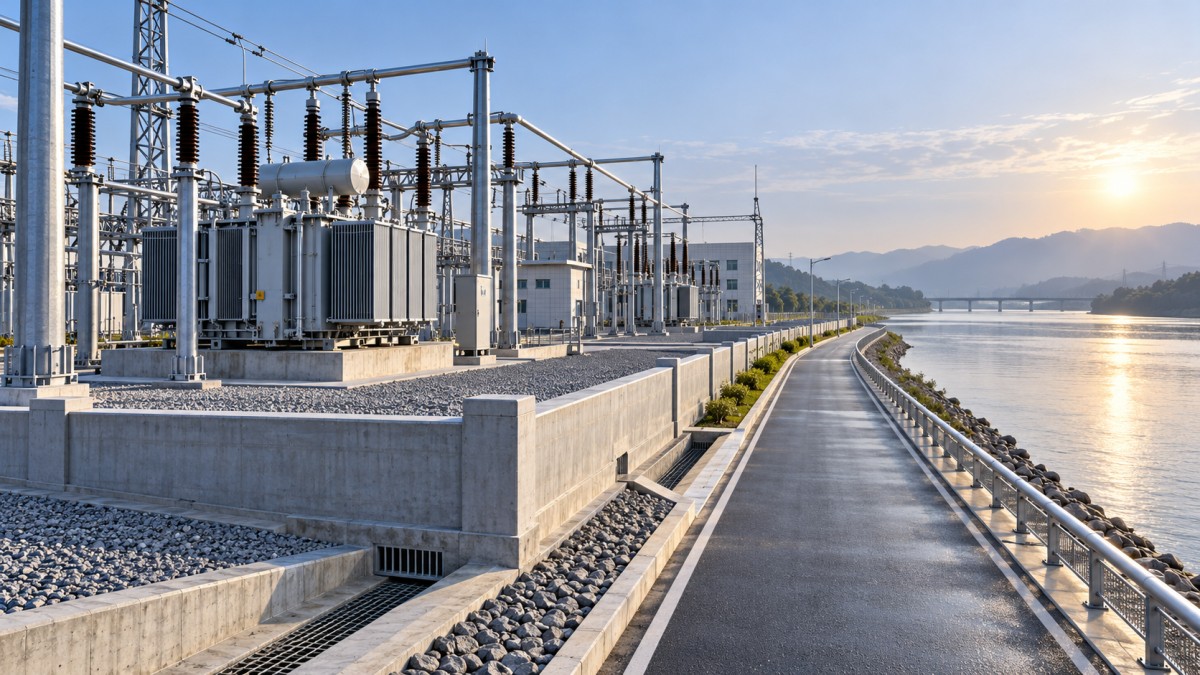
For renewal prioritization, compare the risk reduction delivered by each intervention, not only the untreated asset’s risk. A high-risk asset with an ineffective proposed scope should not outrank a well-targeted project simply because its starting risk is higher.
Use weighted scores as decision aids, not automatic approvals
A practical screening model can combine service criticality, deterioration urgency, climate exposure, and strategic alignment. Agree on definitions and scoring anchors before reviewing named projects. Otherwise, teams may unconsciously tune the criteria to favor their preferred schemes.
Avoid double counting. If flood exposure already influences failure likelihood, adding a separate climate score may reward the same risk twice. Likewise, passenger disruption and lost fare revenue may overlap, depending on the valuation method.
Test whether reasonable changes in weights alter the shortlist. Projects that remain priorities under several plausible assumptions are easier to defend. Where rankings reverse, show the trade-off to decision-makers rather than concealing it behind decimal places.
Choose the intervention before committing to replacement
Renewal does not always mean replacing an asset in full. Rehabilitation, targeted component replacement, protective works, demand management, or controlled retirement may provide a better outcome. Sometimes monitoring is appropriate—but only where deterioration can be detected early enough to support a safe response.
Compare options against a clearly defined baseline: continued operation with necessary maintenance and any required temporary controls. A “do nothing” baseline that ignores foreseeable emergency expenditure can make almost any replacement look artificially attractive.
Whole-life appraisal should include:
- Design, construction, commissioning, and enabling works.
- Future maintenance, inspections, energy use, and operating requirements.
- Service disruption during construction and subsequent operation.
- Residual risk, expected emergency response costs, and end-of-life obligations.
- Embodied and operational carbon, using consistent assessment boundaries.
Use consistent analysis periods and discounting assumptions, with appropriate residual values where asset lives differ. For international portfolios, state the currency basis and inflation treatment. Keep local affordability visible alongside normalized portfolio comparisons: an economically justified project can still create an unmanageable near-term cash requirement.
Carbon should inform option selection without obscuring safety. Retaining a serviceable structure may avoid substantial embodied emissions, while replacing inefficient equipment may reduce operational emissions. Neither conclusion should be assumed without examining the specific asset and its expected use.
What a defensible renewal decision looks like
Consider a hypothetical portfolio with three candidates. The bridge has visible deterioration but remains serviceable under restrictions. The substation is in acceptable physical condition, yet floodwater could disable both primary and backup equipment. The rail corridor experiences recurring component failures, although temporary repairs maintain service at increasing cost.
There is no universal winner. If the bridge cannot meet safety requirements, immediate controls take precedence. If it can operate safely under restrictions, substation resilience might offer greater service protection. The rail work may warrant advancement when a scarce possession window materially reduces disruption and delivery cost.
The lesson is that condition identifies a problem; consequence, intervention effectiveness, and timing determine the response.
Turn the shortlist into a deliverable global program
A ranked list is not yet a renewal program. Projects compete for more than money: specialist contractors, rail possessions, grid outages, imported equipment, permits, and management capacity can all become limiting factors.
Develop a multi-year program that tests these constraints alongside annual budgets. Model dependencies explicitly. Renewing a road surface immediately before replacing the utilities beneath it is an avoidable sequencing failure; installing new control equipment without the supporting communications upgrade can leave benefits unrealized.
For global infrastructure asset management, use a common governance framework with local engineering ownership. Central teams should set decision principles, evidence requirements, and escalation rules. Local teams must validate site conditions, regulatory obligations, construction methods, and operating constraints.
Climate assumptions also need local resolution. Coastal inundation, extreme heat, wildfire, and changing rainfall affect assets differently. Test future exposure over the proposed intervention’s service life, not just against historical conditions. Where projections remain uncertain, compare adaptable options and identify thresholds for further action.
Do not promote an easy-to-deliver project merely because a more important one lacks readiness. Maintain a separate development pipeline to resolve surveys, permits, designs, and procurement issues for high-priority work. Readiness should influence scheduling, not erase underlying need.
Make the decision reviewable after approval
Every approved renewal should have a concise investment record: the service problem, baseline risk, alternatives considered, selected scope, cost range, residual risk, dependencies, and reasons for its position in the program. Record who owns any risk retained through deferral.
Refresh priorities at an established planning cycle and when material events occur. New inspection findings, an extreme-weather event, a major price change, or loss of redundancy can justify reassessment. Routine operational pressure alone should not continuously reorder the portfolio.
Track results beyond expenditure and project completion. Useful measures include service interruptions, emergency maintenance, asset availability, verified risk reduction, and changes in the renewal backlog. Compare predicted benefits with observed outcomes so that future appraisals become better calibrated.
The strongest renewal plans make difficult choices visible. They distinguish urgent protection from long-term improvement, acknowledge uncertain evidence, and explain what happens when work is deferred. For project managers, that clarity is the foundation of a program that can withstand scrutiny—and keep essential services working while the next generation of infrastructure is built.
Questions about this sector or your project? Contact Sector Deep Dive for expert insights.
We respect your privacy. Your information is strictly confidential.
Get weekly intelligence in your inbox.
No noise. No sponsored content. Pure intelligence.
News Recommendations
 Oct 25, 2026How to prioritize renewals in global infrastructure asset managementHow to prioritize renewals in global infrastructure asset management
 Oct 20, 2026Why do inductors overheat in electronic power supply circuits?Why do inductors overheat in electronic power supply circuits?
 Oct 12, 2026How heavy equipment failure analysis traces recurring pump failuresHow heavy equipment failure analysis traces recurring pump failures
 Oct 12, 2026Using heavy machinery failure analysis to identify fatigue cracksUsing heavy machinery failure analysis to identify fatigue cracks
 Oct 08, 2026Which automated equipment monitoring sensors suit harsh sitesWhich automated equipment monitoring sensors suit harsh sites
 Oct 08, 2026How automation lifecycle planning prevents costly retrofit gapsHow automation lifecycle planning prevents costly retrofit gaps
 Sep 14, 2026When Should You Update Supplier Capability Data? Triggers, Frequency & Audit RequirementsWhen Should You Update Supplier Capability Data? Triggers, Frequency & Audit Requirements
 Sep 14, 2026How should smart devices be maintained in harsh outdoor conditions?How should smart devices be maintained in harsh outdoor conditions?
 Aug 25, 2026Common Wine Tank Cleaning and Corrosion Issues in Fermentation SystemsCommon Wine Tank Cleaning and Corrosion Issues in Fermentation Systems
 Aug 08, 2026How Maintenance Technologies for Railways Reduce Downtime and Track Failure RiskHow Maintenance Technologies for Railways Reduce Downtime and Track Failure Risk
 Jul 14, 2026Predictive Heavy Machinery Analysis: 5 Signals of Early FailurePredictive Heavy Machinery Analysis: 5 Signals of Early Failure
 Jul 10, 2026When Industrial Technology Services Reduce Downtime MostWhen Industrial Technology Services Reduce Downtime Most
 Jul 10, 2026How to Compare Automation Equipment Sensors for Uptime and AccuracyHow to Compare Automation Equipment Sensors for Uptime and Accuracy
 Jul 09, 2026Rail Maintenance Asset Monitoring: Key Failure SignalsRail Maintenance Asset Monitoring: Key Failure Signals
![]() Jul 07, 2026Automation Equipment Supplier Checklist for Stable After-Sales SupportAutomation Equipment Supplier Checklist for Stable After-Sales Support
 Jul 02, 2026Railway Maintenance Systems Equipment: Key Features That Reduce DowntimeRailway Maintenance Systems Equipment: Key Features That Reduce Downtime
 Jun 29, 2026Railway Maintenance Systems: Key Features That Reduce DowntimeRailway Maintenance Systems: Key Features That Reduce Downtime
 Jun 28, 2026Industrial Accessories Checklist for Reducing DowntimeIndustrial Accessories Checklist for Reducing Downtime
 Jun 27, 2026Special Purpose Vehicles and Equipment: Key Maintenance ChecksSpecial Purpose Vehicles and Equipment: Key Maintenance Checks
 Jun 20, 2026Maintenance Technologies for Railways That Reduce Downtime and Repair RiskMaintenance Technologies for Railways That Reduce Downtime and Repair Risk
 Jun 16, 2026Maintenance Technologies for Smart Buildings That Reduce DowntimeMaintenance Technologies for Smart Buildings That Reduce Downtime
 Jun 10, 2026Railway Maintenance Costs: Key Factors That Impact Lifecycle BudgetsRailway Maintenance Costs: Key Factors That Impact Lifecycle Budgets
 Jun 07, 2026Heavy Machinery Maintenance Costs: What Impacts Downtime Most in 2026Heavy Machinery Maintenance Costs: What Impacts Downtime Most in 2026
 Jun 06, 2026Maintenance Technologies for Heavy Equipment That Reduce DowntimeMaintenance Technologies for Heavy Equipment That Reduce Downtime
![]() Jun 04, 20262026 Maintenance Technologies: Which Upgrades Cut Downtime Fastest?2026 Maintenance Technologies: Which Upgrades Cut Downtime Fastest?
 Jun 03, 2026Maintenance Technologies for Heavy Equipment That Cut Downtime in 2026Maintenance Technologies for Heavy Equipment That Cut Downtime in 2026
 Jun 02, 2026Maintenance Technologies That Cut Fleet DowntimeMaintenance Technologies That Cut Fleet Downtime





