When Industrial Technology Services Reduce Downtime Most
When Industrial Technology Services Reduce Downtime Most
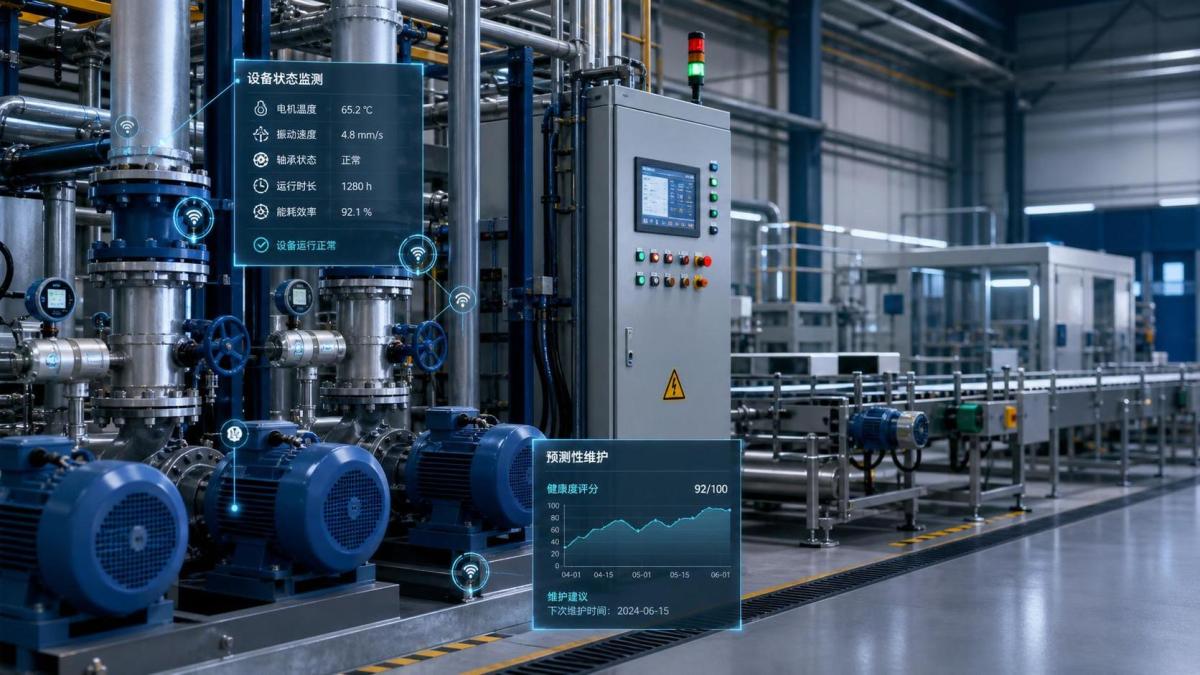
For project teams, downtime is rarely just a maintenance issue. It quickly becomes a cost issue, a schedule issue, and sometimes a reputation issue.
That is why industrial technology services matter most at the exact moments when assets, systems, and field operations become vulnerable to disruption.
In construction, mining, rail, logistics, utilities, and smart infrastructure, downtime often starts with small warning signs that go unnoticed or unaddressed.
The best industrial technology services reduce downtime before failures spread. They turn fragmented operational data into decisions that protect productivity and safety.
More importantly, they help teams intervene at the right time. Timing is what separates planned maintenance from emergency response.
From recent market shifts, the strongest value appears where systems are more connected, more automated, and less tolerant of unplanned stoppages.
This article looks at the situations where industrial technology services reduce downtime most, and how to apply them in a practical way.
1. During Early Warning Stages of Equipment Degradation
The biggest downtime savings usually happen before a machine stops. That sounds obvious, but many operations still react only after output drops or alarms escalate.
Industrial technology services are especially effective when vibration, temperature, pressure, load, or energy patterns begin to drift from normal operating baselines.
At this point, predictive maintenance tools, remote diagnostics, and condition monitoring can identify problems while intervention windows are still flexible.
This matters in crane systems, conveyor lines, pumps, compressors, signaling equipment, and high-duty mobile machinery where hidden wear grows quickly.
Key signs that industrial technology services should be activated early include:
- Frequent minor alarms that operators reset without root-cause analysis
- Inconsistent cycle times on similar assets
- Higher energy use without output gains
- Rising maintenance labor on the same subsystem
- Component replacement intervals shortening unexpectedly
In real operations, the value is not only in detecting a fault. It is in deciding whether to monitor, adjust, repair, or replace without creating a larger outage.
When industrial technology services are connected to maintenance planning, downtime can often be shifted from surprise stoppage to scheduled intervention.
2. During Commissioning, Expansion, and System Integration
Another critical moment comes when new systems are being introduced. Downtime risk often rises during upgrades, retrofits, and digital integration projects.
This is especially true when legacy assets must interact with new controls, sensors, software layers, or automated workflows.
Industrial technology services reduce downtime here by validating compatibility, sequencing startup steps, and exposing hidden failure points before full deployment.
In smart buildings, rail systems, water infrastructure, and heavy equipment fleets, integration errors can shut down multiple connected assets at once.
That is why engineering support, simulation, and digital twin analysis are valuable before go-live, not after users begin reporting failures.
The most practical service actions at this stage include:
- Mapping dependencies between control systems, power supply, and field devices
- Testing failover logic before production loads begin
- Reviewing spare parts and firmware readiness
- Training operators on exception handling, not only normal procedures
- Creating rollback paths if startup performance falls below threshold
More visible progress does not always mean lower risk. In fact, the first weeks after commissioning are often where industrial technology services deliver outsized downtime reduction.
That is the period when small integration issues can still be fixed before they become chronic reliability problems.
3. When Operations Depend on High-Value Continuous Output
Industrial technology services reduce downtime most where every lost hour has a multiplier effect across labor, logistics, and downstream delivery.
Think of tunneling projects, concrete production, urban transit control, mine ventilation, or automated materials handling. These are not isolated machines.
They are operational chains. When one part stops, teams, subcontractors, and schedules around it begin to slip.
In these environments, industrial technology services should focus on continuity, redundancy, and real-time visibility rather than simple repair response.
A stronger signal is when operations have narrow recovery windows. Once the stoppage starts, restarting safely may take longer than fixing the original fault.
This changes the decision model. The goal becomes reducing operational fragility, not just reducing breakdown frequency.
Useful industrial technology services in high-output environments often include:
- Remote health monitoring across critical assets
- Alarm rationalization to reduce operator overload
- Downtime root-cause dashboards by asset and shift
- Response playbooks linked to asset criticality
- Reliability reviews tied to production milestones
Where output continuity is non-negotiable, industrial technology services deliver the most value when they support faster decisions under pressure.
4. After Safety Incidents, Near Misses, or Environmental Stress
Downtime risk often rises after events that appear operationally unrelated. A near miss, flood exposure, dust surge, heat stress, or unstable power event can leave hidden damage.
That is where industrial technology services help teams avoid the second incident, which is often the more expensive one.
Post-event inspections supported by sensor data, diagnostics, and engineering review can reveal misalignment, contamination, control drift, or structural fatigue.
This matters across smart infrastructure and heavy industry because stress events travel. A power anomaly may affect drives, controls, communications, and data quality together.
In actual practice, the strongest response is not broad shutdown by default. It is targeted verification based on asset exposure and operational consequence.
Industrial technology services reduce downtime here by helping teams inspect the right systems first and restore confidence faster.
5. When Data Exists but Decisions Are Still Slow
Many sites already have sensors, logs, CMMS records, SCADA screens, and operator reports. Yet downtime remains stubbornly high.
The problem is usually not missing data. It is fragmented context, delayed interpretation, or unclear ownership.
This is one of the clearest cases where industrial technology services reduce downtime. They connect technical signals to operational decisions.
For example, a temperature trend may look minor in isolation. Combined with maintenance history and load conditions, it may indicate an approaching bearing failure.
A good service model does not flood teams with dashboards. It prioritizes action, timing, and business impact.
To improve decision speed, industrial technology services should answer five questions clearly:
How to Apply Industrial Technology Services More Effectively
The strongest results rarely come from treating every asset the same way. Downtime reduction improves when support is tied to criticality and operational consequence.
A practical approach usually looks like this:
- Rank assets by downtime cost, safety exposure, and restart complexity.
- Match industrial technology services to the highest-risk points first.
- Define trigger thresholds for inspection, maintenance, and escalation.
- Track mean time to detect, diagnose, and recover.
- Review service outcomes after each major disruption or upgrade cycle.
This also means service providers should be evaluated on measurable operational outcomes, not only on technical scope or software features.
For organizations managing infrastructure, urban systems, mobile fleets, or industrial facilities, timing and context matter more than volume of tools.
Industrial technology services reduce downtime most when they support early action, smoother integration, operational continuity, and faster post-event recovery.
That is the real shift underway across modern infrastructure. Teams no longer need more noise. They need clearer signals and better intervention timing.
The next step is straightforward: identify the assets where one hour of failure hurts most, then align industrial technology services around those moments first.
Get weekly intelligence in your inbox.
No noise. No sponsored content. Pure intelligence.
News Recommendations
 Sep 19, 2026How an electronics application guide helps prevent component mismatchHow an electronics application guide helps prevent component mismatch
 Sep 18, 2026When a resource allocation platform improves project deliveryWhen a resource allocation platform improves project delivery
 Sep 17, 2026What to compare when evaluating mineral processing equipment manufacturersWhat to compare when evaluating mineral processing equipment manufacturers
 Sep 16, 2026How mineral separation optimization can reduce concentrate lossesHow mineral separation optimization can reduce concentrate losses
 Sep 15, 2026How to assess lifecycle costs in urban tech procurementHow to assess lifecycle costs in urban tech procurement
 Sep 14, 2026Heavy industry technology trends reshaping capital investment prioritiesHeavy industry technology trends reshaping capital investment priorities
 Sep 14, 2026Why Infrastructure Equipment Buyers Are Shifting from Catalog-Based to Capability-Based Supplier SelectionWhy Infrastructure Equipment Buyers Are Shifting from Catalog-Based to Capability-Based Supplier Selection
 Sep 14, 2026Process Automation Project Execution: How to Align Supplier Capabilities with PLC Integration, Cybersecurity & Commissioning MilestonesProcess Automation Project Execution: How to Align Supplier Capabilities with PLC Integration, Cybersecurity & Commissioning Milestones
 Sep 14, 2026Are intelligent traffic systems worth the investment for small cities?Are intelligent traffic systems worth the investment for small cities?
 Sep 14, 2026How do intelligent traffic systems handle sensor failures?How do intelligent traffic systems handle sensor failures?
 Sep 14, 2026What should I check before accepting a smart building system?What should I check before accepting a smart building system?
 Sep 14, 2026Is a smart building system worth the maintenance cost?Is a smart building system worth the maintenance cost?
 Sep 14, 2026What data is needed for reliable resource allocation planning?What data is needed for reliable resource allocation planning?
 Sep 14, 2026How can resource allocation software reduce equipment idle time?How can resource allocation software reduce equipment idle time?
 Sep 14, 2026How should smart devices be maintained in harsh outdoor conditions?How should smart devices be maintained in harsh outdoor conditions?
 Sep 14, 2026Do smart devices improve worker safety on construction sites?Do smart devices improve worker safety on construction sites?
 Sep 14, 2026What environmental risks must be assessed before deep-sea mining?What environmental risks must be assessed before deep-sea mining?
 Sep 14, 2026Is deep-sea mining equipment commercially viable in 2026?Is deep-sea mining equipment commercially viable in 2026?
 Sep 14, 2026What Inspection Checks Should Procurement Teams Perform Before Ordering Dredging Equipment in 2026?What Inspection Checks Should Procurement Teams Perform Before Ordering Dredging Equipment in 2026?
 Sep 13, 2026How to verify an industrial product information source before specifying equipmentHow to verify an industrial product information source before specifying equipment
 Sep 12, 2026Which intelligent traffic systems hardware fits an urban intersection?Which intelligent traffic systems hardware fits an urban intersection?
 Sep 11, 2026How pump capacity affects response coverage for municipal fire fighting vehiclesHow pump capacity affects response coverage for municipal fire fighting vehicles
 Sep 10, 2026What to verify before choosing a heavy industry equipment supplierWhat to verify before choosing a heavy industry equipment supplier
 Sep 09, 2026When do adaptive urban traffic control systems reduce corridor delays?When do adaptive urban traffic control systems reduce corridor delays?
 Sep 08, 2026When logistics technology solutions in North America reduce delivery delaysWhen logistics technology solutions in North America reduce delivery delays
 Sep 07, 2026How reliable are wireless mining safety systems in underground mines?How reliable are wireless mining safety systems in underground mines?
 Sep 07, 2026How to assess a smart lighting technology platform for interoperabilityHow to assess a smart lighting technology platform for interoperability