Maintenance Technologies for Railways That Reduce Downtime and Repair Risk
Why downtime pressure changes the maintenance decision
Rail networks rarely fail in the same way twice. A metro corridor, a freight branch, and a high-speed line carry different operational penalties when service stops.
That is why maintenance technologies for railways cannot be judged only by technical sophistication. The better question is how each tool reduces outage duration and repair uncertainty in a specific environment.
In practice, after-sales maintenance work sits at the intersection of safety, asset life, labor availability, and timetable stability. A delayed fault response quickly becomes a business continuity issue.
GIUT often frames this through a broader infrastructure lens. Rail assets are not isolated machines. They are part of the physical backbone that supports urban mobility, logistics flow, and smart governance.
For that reason, modern maintenance technologies for railways now focus less on reactive repair and more on earlier visibility, cleaner diagnosis, and better intervention planning.
Actual field conditions shape what matters most
The same fault can carry very different consequences depending on traffic density, access time, and system interdependence. This is where many maintenance programs become mismatched.
A heavily used commuter line usually values fast detection and short possession windows. A long-haul freight route may care more about remote visibility and component life forecasting.
Weather also changes the maintenance logic. Moisture, dust, heat, and freeze-thaw cycles affect track circuits, rolling stock components, wayside cabinets, and power systems in different ways.
More importantly, digital maturity matters. Maintenance technologies for railways deliver the best result when data from sensors, inspections, work orders, and spare parts planning can be linked.
Without that link, predictive tools may generate alerts, yet teams still lose time deciding whether a defect is real, urgent, and accessible during the next maintenance window.
Busy passenger corridors need earlier warning, not just faster repair
On high-frequency passenger lines, unplanned stoppage spreads quickly across signaling, platform management, and rolling stock rotation. The first priority is often fault anticipation rather than repair speed alone.
Here, condition monitoring systems earn value when they watch vibration, temperature, wheel condition, switch performance, and power quality continuously instead of during isolated inspections.
Predictive diagnostics also help separate nuisance alarms from emerging failure modes. That distinction reduces unnecessary dispatches and preserves scarce track access time for real risks.
A common mistake is to deploy sensors widely but keep decision thresholds generic. Dense passenger operations need thresholds tuned to service criticality, not just equipment specification sheets.
In these environments, maintenance technologies for railways work best when they support three outcomes: earlier detection, ranked intervention priority, and confidence that the first repair action is the right one.
Freight and remote routes usually reward visibility across distance
Remote freight lines create a different problem. Failures may be less frequent than in urban systems, but access delays, heavy axle loads, and long asset stretches raise the cost of every missed warning.
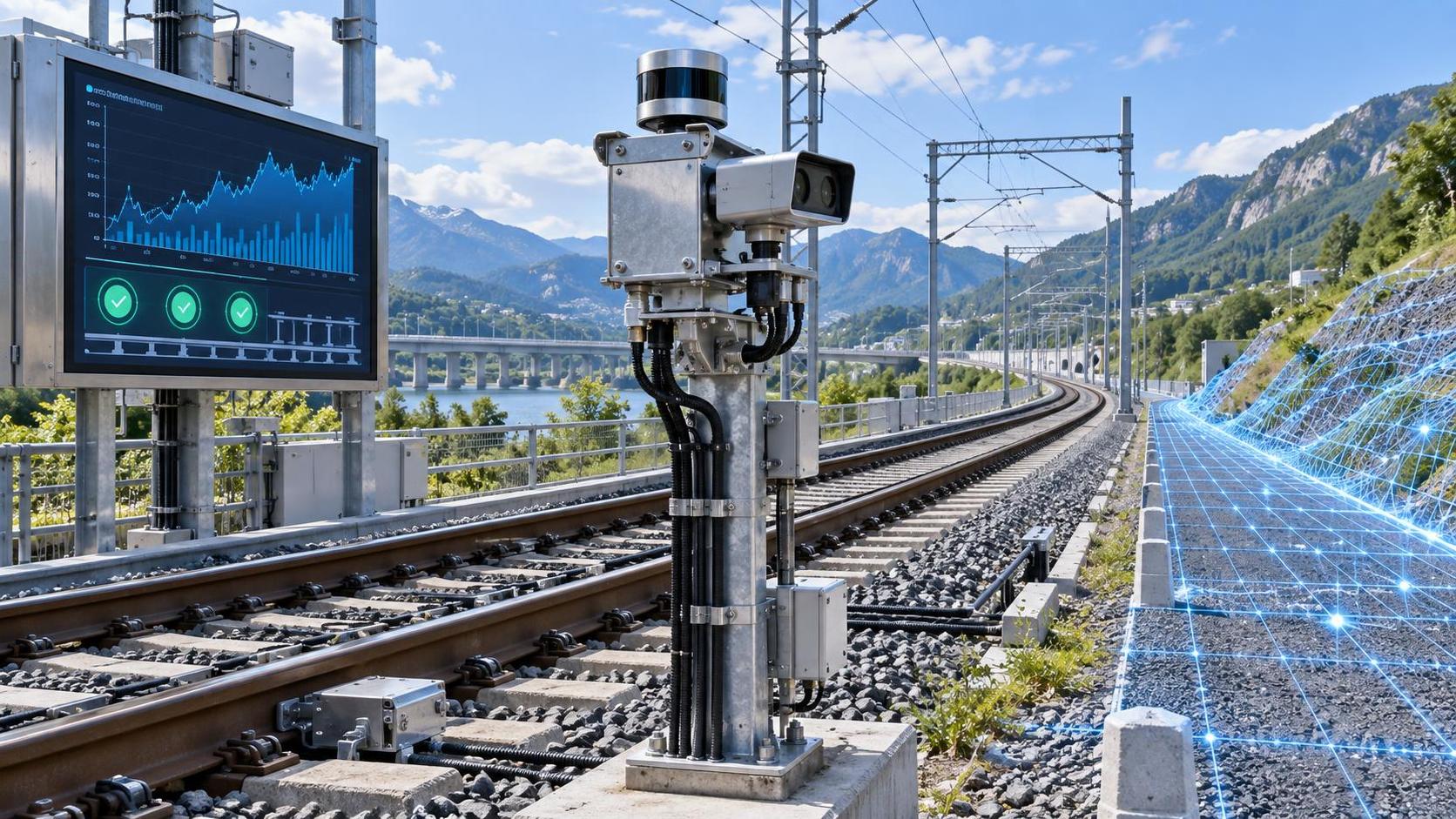
In this setting, maintenance technologies for railways should emphasize distributed sensing, wayside monitoring, and asset health dashboards that can be reviewed before crews are mobilized.
Hot bearing detectors, acoustic monitoring, geometry measurement, and drone-assisted visual inspection are often more valuable here than highly manual inspection routines.
The key judgment is whether the technology reduces truck rolls, emergency callouts, and repeat visits. A remote line rarely benefits from tools that generate more data but no clearer maintenance decision.
Another overlooked point is communications resilience. If field connectivity is unstable, onboard storage, edge analytics, and delayed synchronization become important parts of system design.
Switches, signaling, and power assets fail differently
Not all critical assets deserve the same monitoring strategy. Turnouts, interlockings, traction power components, and braking systems each produce different warning patterns before failure.
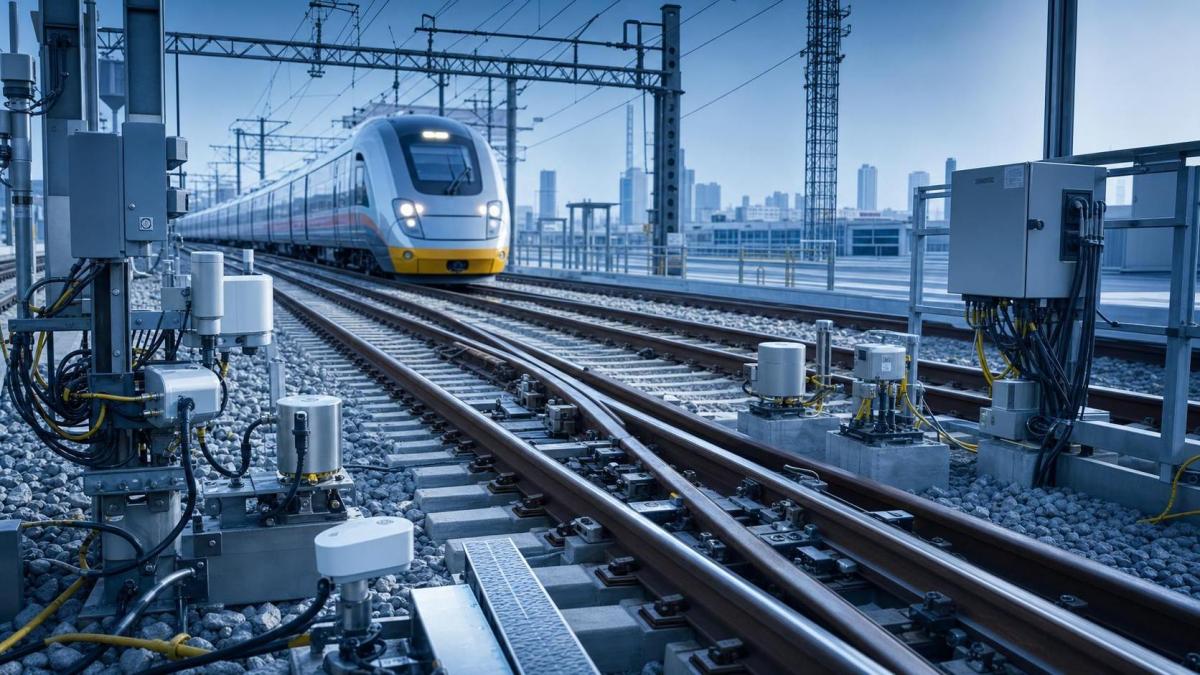
For switches and crossings, motor current, throw time, vibration, and temperature often reveal degradation early. Small deviations matter because service disruption escalates fast when a turnout jams.
For signaling equipment, the risk is often hidden in intermittent faults, cable issues, and environmental ingress. Diagnostics need event correlation, not just simple pass-fail inspection records.
For traction power, thermal imaging, insulation monitoring, and load trend analysis usually provide better repair planning than routine interval replacement alone.
This is where maintenance technologies for railways should be chosen by failure behavior. Similar capital value does not mean similar maintenance logic.
Different operating contexts do not ask the same questions
A practical comparison helps before selecting a monitoring or diagnostics stack.
The table matters because rail maintenance decisions are rarely about technology in isolation. They are about fit between operational risk and available intervention time.
Where repair risk usually hides before rollout
Many rail operators assume that more sensors automatically mean lower downtime. In reality, poor integration can increase uncertainty by flooding teams with unverified exceptions.
Another frequent misread is treating similar lines as identical. A coastal route with corrosion exposure and a dry inland route should not share the same inspection rhythm.
There is also a cost illusion. Low acquisition cost may look attractive, yet weak analytics, difficult calibration, or incompatible data formats can raise life-cycle maintenance effort.
Some teams focus heavily on failure detection but underinvest in repair execution. If spare parts visibility, technician instructions, and isolation procedures remain fragmented, downtime still remains high.
The stronger approach is to assess maintenance technologies for railways across the full loop: detect, validate, prioritize, repair, document, and learn.
A practical way to match technology with the line you run
A useful starting point is to map assets by service consequence rather than by engineering category alone. The assets that stop traffic fastest deserve the clearest diagnostic pathway.
- Define which failures create immediate service loss, safety restriction, or speed reduction.
- Check whether current inspection intervals miss early warning signs between maintenance windows.
- Review if data from rolling stock, wayside equipment, and maintenance logs can be correlated.
- Test whether alerts lead to one clear work order instead of several duplicate checks.
- Confirm that technicians can act on the output without long retraining or extra software steps.
In more mature networks, digital twins and asset models add another layer of value. They help teams simulate degradation trends and choose the least disruptive repair window.
That aligns with GIUT’s wider perspective on infrastructure intelligence. The goal is not just better maintenance data, but better operational judgment across the physical network.
The next step is to build a clearer maintenance fit standard
The most effective maintenance technologies for railways are usually the ones that match line conditions, asset behavior, and response capability at the same time.
Before expanding any program, it helps to document outage patterns, compare high-risk assets, and define which faults truly justify predictive monitoring.
Then review implementation limits: data quality, communications coverage, access windows, technician workflow, and spare part readiness. These points often decide success more than feature lists.
A practical roadmap starts small, validates repair-risk reduction, and scales only when the technology proves that it shortens diagnosis time and avoids repeat interventions.
For rail systems under pressure to stay reliable, sustainable, and intelligent, that kind of scenario-based judgment is what turns maintenance investment into measurable resilience.
Get weekly intelligence in your inbox.
No noise. No sponsored content. Pure intelligence.
News Recommendations
 Sep 19, 2026How an electronics application guide helps prevent component mismatchHow an electronics application guide helps prevent component mismatch
 Sep 18, 2026When a resource allocation platform improves project deliveryWhen a resource allocation platform improves project delivery
 Sep 17, 2026What to compare when evaluating mineral processing equipment manufacturersWhat to compare when evaluating mineral processing equipment manufacturers
 Sep 16, 2026How mineral separation optimization can reduce concentrate lossesHow mineral separation optimization can reduce concentrate losses
 Sep 15, 2026How to assess lifecycle costs in urban tech procurementHow to assess lifecycle costs in urban tech procurement
 Sep 14, 2026Heavy industry technology trends reshaping capital investment prioritiesHeavy industry technology trends reshaping capital investment priorities
 Sep 14, 2026Global Industrial Equipment Procurement: How Top OEMs Qualify Suppliers for Mining & Infrastructure ProjectsGlobal Industrial Equipment Procurement: How Top OEMs Qualify Suppliers for Mining & Infrastructure Projects
 Sep 14, 2026Industrial & Mining Equipment Procurement: Balancing Local Sourcing, Lead Time, and Certification RequirementsIndustrial & Mining Equipment Procurement: Balancing Local Sourcing, Lead Time, and Certification Requirements
 Sep 14, 2026Infrastructure & Equipment Upgrades: What Procurement Teams Must Verify Before Signing Off on New ContractsInfrastructure & Equipment Upgrades: What Procurement Teams Must Verify Before Signing Off on New Contracts
 Sep 14, 2026Why Infrastructure Equipment Buyers Are Shifting from Catalog-Based to Capability-Based Supplier SelectionWhy Infrastructure Equipment Buyers Are Shifting from Catalog-Based to Capability-Based Supplier Selection
 Sep 14, 2026Process Automation Project Execution: How to Align Supplier Capabilities with PLC Integration, Cybersecurity & Commissioning MilestonesProcess Automation Project Execution: How to Align Supplier Capabilities with PLC Integration, Cybersecurity & Commissioning Milestones
 Sep 14, 2026Are intelligent traffic systems worth the investment for small cities?Are intelligent traffic systems worth the investment for small cities?
 Sep 14, 2026How do intelligent traffic systems handle sensor failures?How do intelligent traffic systems handle sensor failures?
 Sep 14, 2026What should I check before accepting a smart building system?What should I check before accepting a smart building system?
 Sep 14, 2026Is a smart building system worth the maintenance cost?Is a smart building system worth the maintenance cost?
 Sep 14, 2026What data is needed for reliable resource allocation planning?What data is needed for reliable resource allocation planning?
 Sep 14, 2026How can resource allocation software reduce equipment idle time?How can resource allocation software reduce equipment idle time?
 Sep 14, 2026How should smart devices be maintained in harsh outdoor conditions?How should smart devices be maintained in harsh outdoor conditions?
 Sep 14, 2026Do smart devices improve worker safety on construction sites?Do smart devices improve worker safety on construction sites?
 Sep 14, 2026What environmental risks must be assessed before deep-sea mining?What environmental risks must be assessed before deep-sea mining?
 Sep 14, 2026Is deep-sea mining equipment commercially viable in 2026?Is deep-sea mining equipment commercially viable in 2026?
 Sep 14, 2026What Inspection Checks Should Procurement Teams Perform Before Ordering Dredging Equipment in 2026?What Inspection Checks Should Procurement Teams Perform Before Ordering Dredging Equipment in 2026?
 Sep 13, 2026How to verify an industrial product information source before specifying equipmentHow to verify an industrial product information source before specifying equipment
 Sep 12, 2026Which intelligent traffic systems hardware fits an urban intersection?Which intelligent traffic systems hardware fits an urban intersection?
 Sep 11, 2026How pump capacity affects response coverage for municipal fire fighting vehiclesHow pump capacity affects response coverage for municipal fire fighting vehicles
 Sep 10, 2026What to verify before choosing a heavy industry equipment supplierWhat to verify before choosing a heavy industry equipment supplier
 Sep 09, 2026When do adaptive urban traffic control systems reduce corridor delays?When do adaptive urban traffic control systems reduce corridor delays?