Heavy Machinery Maintenance Costs: What Impacts Downtime Most in 2026
Why downtime costs in heavy machinery look different in 2026
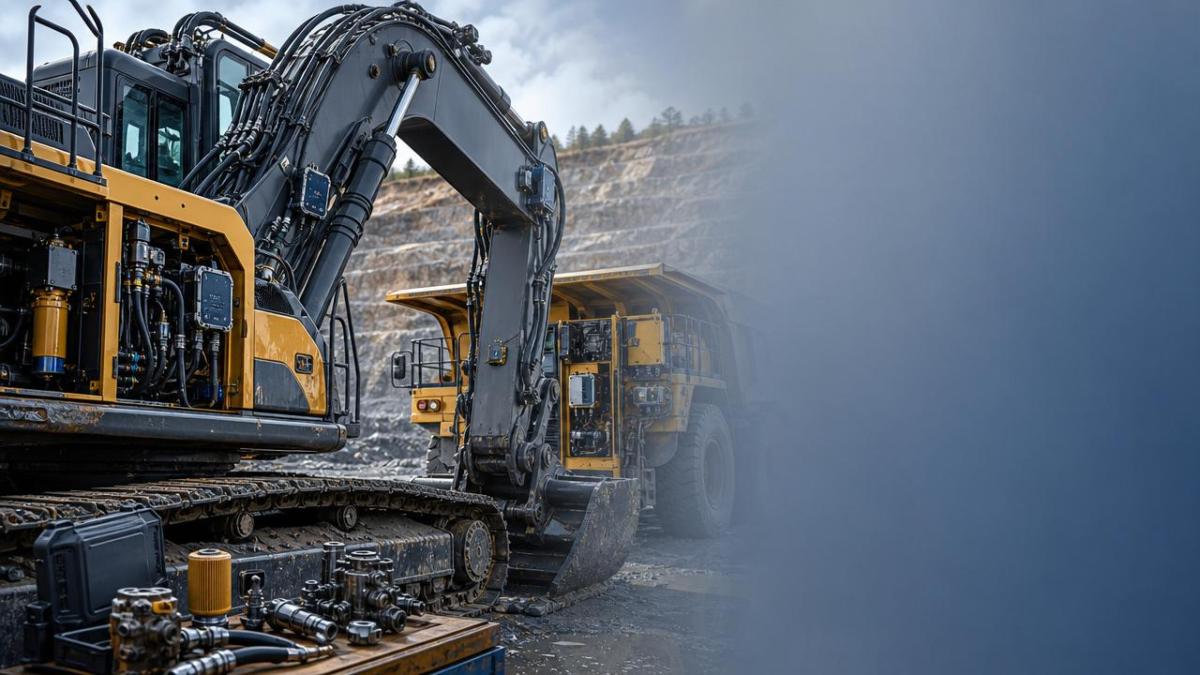
In 2026, heavy machinery downtime is no longer measured only by a failed engine or a broken hydraulic line.
The bigger cost now comes from delayed decisions, stretched parts networks, and machines that operate inside tighter digital and environmental expectations.
Across construction, mining, rail maintenance, logistics yards, and municipal equipment fleets, the same pattern is becoming clearer.
When heavy machinery stops, the repair itself is often only one piece of the bill.
Idle crews, missed delivery windows, safety exposure, and data blind spots now amplify every service event.
That shift matters because infrastructure operators are under pressure to keep physical assets productive while moving toward smarter, lower-emission operations.
Seen through GIUT’s cross-sector lens, heavy machinery maintenance has become a strategic operating issue, not a back-end workshop problem.
The maintenance question in 2026 is simple but more demanding: what actually drives downtime most, and where should attention go first?
The strongest signal is that service delays now outweigh many repair costs
A few years ago, many teams focused on component failure rates.
That still matters, but the current burden is increasingly shaped by what happens around the failure.
Heavy machinery has become more connected, more specialized, and more dependent on software-supported diagnostics.
As a result, downtime often grows when the support chain is fragmented.
One delayed part, one incorrect fault code, or one technician without the right digital tool can extend stoppage far beyond the original defect.
This is especially visible in mixed fleets, where older heavy machinery runs beside newer intelligent equipment.
The newer unit may diagnose itself but require software authorization.
The older unit may be mechanically simpler but harder to support because parts are scarce.
In both cases, time is lost before tools ever touch the machine.
Where downtime pressure is rising fastest
Five forces are shaping heavy machinery maintenance costs
The market is not moving because of one dramatic change.
It is moving because several cost drivers are now interacting at the same time.
Parts availability is now a planning issue, not only a supply issue
Heavy machinery parts supply has improved in some categories, yet unpredictability remains high for specialized components.
Sensors, control modules, emission-related components, and hydraulic assemblies still create bottlenecks.
The real problem is not just waiting for a part.
It is uncertainty over whether the right part was identified early enough.
Response speed depends on information quality
A fast dispatch means little if the service team arrives without the needed tools, firmware access, or failure history.
In practice, heavy machinery downtime often begins with incomplete machine data passed from site to service desk.
This creates repeat visits, slower approvals, and longer idle periods.
Predictive diagnostics are useful, but only when connected to action
Condition monitoring has matured, especially in fleets tied to smart jobsite or urban infrastructure systems.
Still, alerts alone do not reduce downtime.
If a vibration warning does not trigger inspection slots, parts staging, or remote triage, the data stays descriptive rather than preventive.
Operator habits remain a hidden multiplier
More digital equipment does not eliminate human impact.
Cold starts under load, poor idle management, missed walkarounds, and alarm overrides still shorten service intervals.
In heavy machinery fleets, recurring misuse can look like random breakdowns until usage data is reviewed over time.
Aging equipment is becoming harder to integrate into modern service models
Older heavy machinery is often kept in service because replacement costs remain high.
Yet these machines may not fit modern diagnostic workflows, telematics platforms, or emissions documentation.
That mismatch adds manual effort and raises downtime risk during even routine maintenance events.
The impact spreads beyond the workshop floor
One reason heavy machinery downtime matters more in 2026 is that equipment is now tied to broader operating systems.
A stopped asset can interrupt schedules, compliance records, fuel targets, and contractor coordination at the same time.
This is visible across GIUT’s sectors, where physical infrastructure increasingly depends on digital continuity.
- In smart building projects, heavy machinery delays disrupt just-in-time material sequencing.
- In urban service fleets, downtime affects public reliability and sustainability reporting.
- In mines, every additional stoppage can compound ventilation, haulage, and safety management constraints.
- In railway maintenance, equipment downtime can shrink already limited track access windows.
The result is a broader maintenance cost picture.
Heavy machinery service is now judged by continuity outcomes, not only by repair completion.
What deserves closer attention over the next planning cycle
From recent field patterns, the most resilient operations are not those with the largest inventories.
They are the ones that shorten the path from symptom to decision.
That usually means building a tighter link between machine data, service triage, and on-site execution.
Priority signals worth tracking
- First-time fix rate by machine category, not just by site.
- Time lost before diagnosis, not only time spent repairing.
- Repeat failures linked to operation patterns or shift changes.
- Parts orders triggered after arrival, which usually indicates weak pre-dispatch visibility.
- Downtime concentration in legacy heavy machinery that lacks digital service history.
These indicators reveal where maintenance costs are structurally rising, rather than where isolated failures happened.
A practical response is becoming more selective, not simply more intensive
The natural reaction to rising heavy machinery downtime is to add more inspections, more stock, and more emergency coverage.
That can help, but it is often too blunt.
A better response is selective reinforcement in the areas that slow recovery the most.
This more selective model reflects a wider industry reality.
Heavy machinery maintenance now sits between physical reliability and digital coordination.
The next advantage comes from seeing downtime as a systems issue
The most important shift in 2026 is not that heavy machinery fails in new ways.
It is that the cost of failure travels further through the operation than before.
That is why the strongest maintenance strategies are becoming more integrated, data-aware, and context-specific.
The useful next step is to review where downtime really accumulates.
Is it in diagnosis, dispatch, parts confirmation, access approval, or repeated misuse?
Once that map is clear, heavy machinery maintenance costs become easier to control without relying on broad cost cutting.
Over the next planning cycle, compare service records across machine age, site type, and failure response speed.
That approach offers a more realistic basis for reducing downtime than simply increasing maintenance activity.
In a market where infrastructure performance is increasingly judged as a living system, heavy machinery uptime becomes part of a much larger operational promise.
Get weekly intelligence in your inbox.
No noise. No sponsored content. Pure intelligence.
News Recommendations
 Sep 19, 2026How an electronics application guide helps prevent component mismatchHow an electronics application guide helps prevent component mismatch
 Sep 18, 2026When a resource allocation platform improves project deliveryWhen a resource allocation platform improves project delivery
 Sep 17, 2026What to compare when evaluating mineral processing equipment manufacturersWhat to compare when evaluating mineral processing equipment manufacturers
 Sep 16, 2026How mineral separation optimization can reduce concentrate lossesHow mineral separation optimization can reduce concentrate losses
 Sep 15, 2026How to assess lifecycle costs in urban tech procurementHow to assess lifecycle costs in urban tech procurement
 Sep 14, 2026Heavy industry technology trends reshaping capital investment prioritiesHeavy industry technology trends reshaping capital investment priorities
 Sep 14, 2026Global Industrial Equipment Procurement: How Top OEMs Qualify Suppliers for Mining & Infrastructure ProjectsGlobal Industrial Equipment Procurement: How Top OEMs Qualify Suppliers for Mining & Infrastructure Projects
 Sep 14, 2026Industrial & Mining Equipment Procurement: Balancing Local Sourcing, Lead Time, and Certification RequirementsIndustrial & Mining Equipment Procurement: Balancing Local Sourcing, Lead Time, and Certification Requirements
 Sep 14, 2026Infrastructure & Equipment Upgrades: What Procurement Teams Must Verify Before Signing Off on New ContractsInfrastructure & Equipment Upgrades: What Procurement Teams Must Verify Before Signing Off on New Contracts
 Sep 14, 2026Why Infrastructure Equipment Buyers Are Shifting from Catalog-Based to Capability-Based Supplier SelectionWhy Infrastructure Equipment Buyers Are Shifting from Catalog-Based to Capability-Based Supplier Selection
 Sep 14, 2026Process Automation Project Execution: How to Align Supplier Capabilities with PLC Integration, Cybersecurity & Commissioning MilestonesProcess Automation Project Execution: How to Align Supplier Capabilities with PLC Integration, Cybersecurity & Commissioning Milestones
 Sep 14, 2026Are intelligent traffic systems worth the investment for small cities?Are intelligent traffic systems worth the investment for small cities?
 Sep 14, 2026How do intelligent traffic systems handle sensor failures?How do intelligent traffic systems handle sensor failures?
 Sep 14, 2026What should I check before accepting a smart building system?What should I check before accepting a smart building system?
 Sep 14, 2026Is a smart building system worth the maintenance cost?Is a smart building system worth the maintenance cost?
 Sep 14, 2026What data is needed for reliable resource allocation planning?What data is needed for reliable resource allocation planning?
 Sep 14, 2026How can resource allocation software reduce equipment idle time?How can resource allocation software reduce equipment idle time?
 Sep 14, 2026How should smart devices be maintained in harsh outdoor conditions?How should smart devices be maintained in harsh outdoor conditions?
 Sep 14, 2026Do smart devices improve worker safety on construction sites?Do smart devices improve worker safety on construction sites?
 Sep 14, 2026What environmental risks must be assessed before deep-sea mining?What environmental risks must be assessed before deep-sea mining?
 Sep 14, 2026Is deep-sea mining equipment commercially viable in 2026?Is deep-sea mining equipment commercially viable in 2026?
 Sep 14, 2026What Inspection Checks Should Procurement Teams Perform Before Ordering Dredging Equipment in 2026?What Inspection Checks Should Procurement Teams Perform Before Ordering Dredging Equipment in 2026?
 Sep 13, 2026How to verify an industrial product information source before specifying equipmentHow to verify an industrial product information source before specifying equipment
 Sep 12, 2026Which intelligent traffic systems hardware fits an urban intersection?Which intelligent traffic systems hardware fits an urban intersection?
 Sep 11, 2026How pump capacity affects response coverage for municipal fire fighting vehiclesHow pump capacity affects response coverage for municipal fire fighting vehicles
 Sep 10, 2026What to verify before choosing a heavy industry equipment supplierWhat to verify before choosing a heavy industry equipment supplier
 Sep 09, 2026When do adaptive urban traffic control systems reduce corridor delays?When do adaptive urban traffic control systems reduce corridor delays?