Railway Maintenance Systems: Key Features That Reduce Downtime
Railway maintenance systems now sit much closer to operational continuity than many teams assumed a few years ago. They are not simple back-office tools. They shape how quickly faults are found, how clearly work is prioritized, and how reliably rolling stock, track assets, and support equipment return to service.
That matters across the wider infrastructure economy. Rail networks connect urban mobility, logistics corridors, industrial sites, and smart city programs. In that setting, downtime is not only a maintenance issue. It affects service availability, safety margins, labor efficiency, energy use, and public confidence.
For organizations working with complex fleets and distributed assets, the strongest railway maintenance systems reduce friction between data, diagnosis, field execution, and spare parts control. The result is not just faster repair. It is a more disciplined way to protect availability over the full asset life cycle.
Why downtime is a strategic issue in rail operations
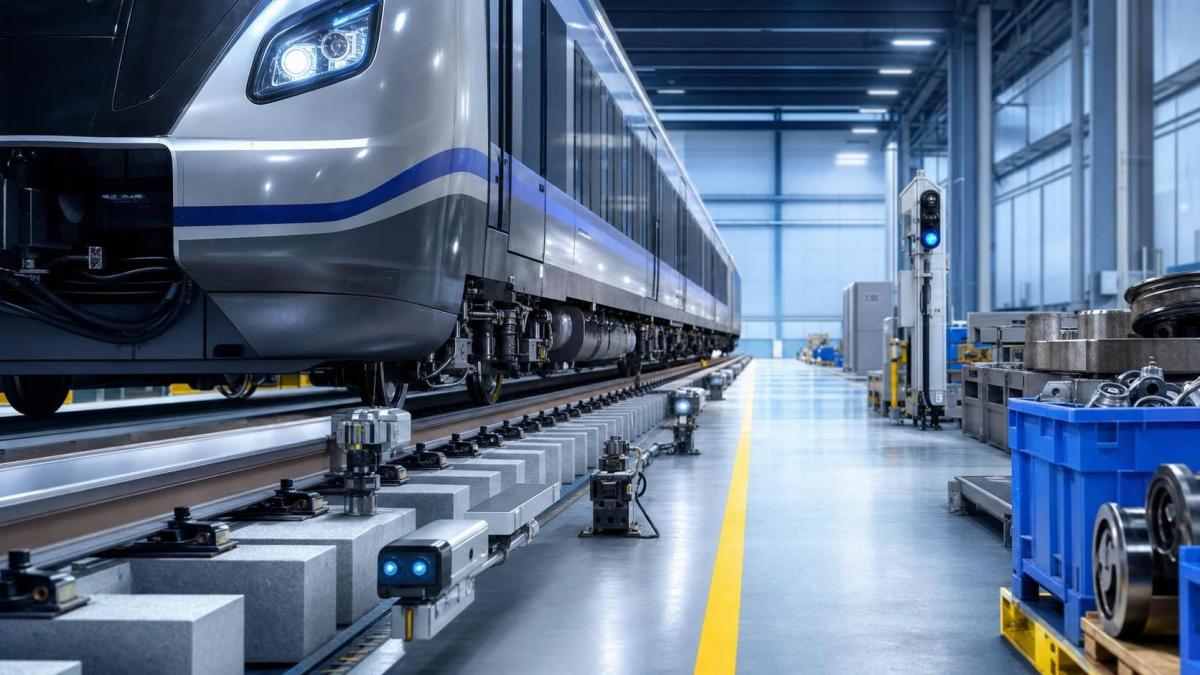
In rail, one failure often creates secondary losses. A delayed train can disrupt crew rotation, depot planning, platform allocation, and customer schedules. A trackside defect can trigger speed restrictions that stretch far beyond the original fault location.
This is why railway maintenance systems are increasingly evaluated as part of infrastructure intelligence. GIUT often frames this shift through a digital twin lens: physical assets and operational decisions are becoming tightly linked through live data, engineering logic, and coordinated response.
In practice, downtime reduction depends on three questions. Can the system detect emerging issues early? Can it turn signals into usable maintenance actions? Can it support execution without losing traceability?
What railway maintenance systems actually manage
The term covers more than maintenance software in the narrow sense. Most railway maintenance systems combine asset records, inspection history, fault reporting, work order workflows, inventory links, and performance analytics in one operating environment.
Depending on the network, the managed scope may include:
- Rolling stock components such as brakes, doors, HVAC units, traction systems, and bogies
- Track, turnouts, signaling interfaces, and wayside electrical equipment
- Depot tools, lifting systems, diagnostic benches, and service vehicles
- Consumables, spare parts, warranties, and vendor service records
A capable platform does not just store these items. It maintains relationships between failure modes, maintenance intervals, labor steps, and asset criticality. That relationship mapping is where downtime reduction usually begins.
Features that make the biggest difference
Not every feature contributes equally. Some functions look impressive in a demonstration but add little operational value. The most useful railway maintenance systems improve response quality at the exact points where delays usually grow.
Condition monitoring tied to maintenance rules
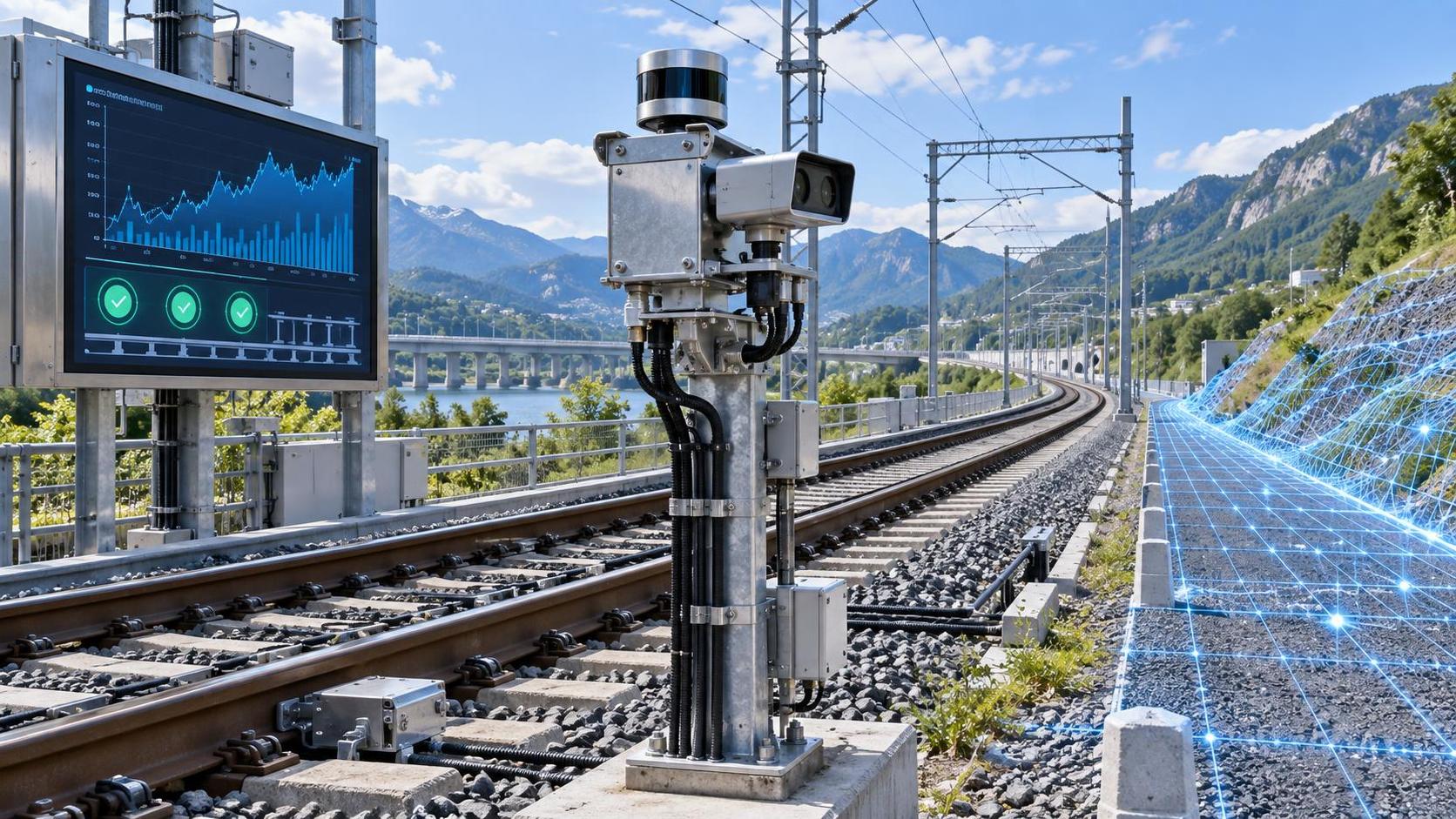
Sensor feeds are only valuable when thresholds, trends, and engineering rules are connected. Temperature drift, vibration patterns, wheel wear, or power anomalies should trigger context-specific actions, not just raw alerts.
The best systems distinguish between watch conditions, planned intervention, and immediate shutdown risk. That reduces unnecessary callouts while keeping serious faults from being buried in noise.
Predictive diagnostics with failure history
Predictive functions are useful when they learn from actual fault records, maintenance cycles, and asset behavior under local conditions. Rail assets rarely fail in identical ways across climates, routes, loading patterns, or depot practices.
A mature system highlights probable causes, repeat defects, and components nearing performance limits. That gives maintenance teams a narrower search field and shorter troubleshooting time.
Work order control that reflects field reality
Many delays happen after the fault is known. Jobs stall because information is incomplete, approvals are unclear, or instructions do not match the asset configuration in front of the technician.
Effective railway maintenance systems provide structured work orders with fault codes, safety steps, parts lists, labor estimates, inspection checklists, and closure requirements. Mobile access matters here because execution rarely happens at a desk.
Spare parts visibility across depots
A correct diagnosis still leads to downtime if the part cannot be found or transferred quickly. Inventory functions should show stock position, reserved quantities, lead times, interchangeability, and supplier status in real time.
This becomes more important for high-value components with long replenishment cycles. Coordinated parts planning can prevent an avoidable asset hold far more effectively than reactive expediting.
Root cause analytics, not just event logs
Repeated failures often survive because records remain descriptive rather than analytical. Good railway maintenance systems connect incidents to patterns: recurring component batches, environmental triggers, route conditions, or procedural gaps.
That is especially valuable for mixed fleets or expanding networks, where lessons from one operating segment should inform another before the same problem spreads.
How these features translate into business value
The impact is broader than maintenance efficiency. Railway maintenance systems support the wider physical infrastructure stack that GIUT focuses on, where transport reliability affects city movement, industrial throughput, and resource allocation.
Several value areas usually appear together:
In other words, the return does not come from digitization alone. It comes from better timing, better choices, and fewer repeated disruptions.
Typical environments where selection criteria change
Railway maintenance systems are not evaluated the same way in every setting. The required depth depends on asset type, network maturity, and operating pressure.
Passenger networks with dense schedules
Urban and intercity systems usually prioritize rapid fault isolation, short turnaround windows, and close coordination with control centers. Here, response speed and data accuracy are often more valuable than broad feature counts.
Freight corridors and heavy-haul operations
These environments often emphasize component durability, track stress, wheel condition, and asset utilization under heavier loads. Predictive maintenance and root cause analysis tend to carry more weight.
Mixed infrastructure programs
Where rail intersects with smart city investment, energy systems, and logistics development, integration becomes critical. Data exchange with enterprise platforms, GIS layers, and operational dashboards can be as important as maintenance workflows themselves.
What to look at before choosing a system
A practical evaluation should focus less on generic claims and more on operating fit. Several checkpoints usually reveal whether railway maintenance systems will perform well after deployment:
- Can asset hierarchies reflect the real fleet, route, depot, and component structure?
- Can the platform manage both planned maintenance and fault-driven intervention without duplicate work?
- Are diagnostic alerts linked to actionable maintenance rules and escalation paths?
- Does mobile access support offline use in tunnels, yards, and remote sections?
- Can inventory logic handle repairable parts, serialized assets, and warranty traceability?
- Are reports useful for engineering decisions, not just compliance filing?
It is also worth checking implementation depth. A system with strong functions can still fail if failure codes, maintenance libraries, and asset master data are weak at the start.
The next step is building a sharper comparison frame
Railway maintenance systems should be judged by how well they shorten the path from signal to action to verified recovery. That is the practical core of downtime reduction.
A useful next move is to map the most frequent delay points in current operations, then compare systems against those exact bottlenecks. For some networks, the issue is diagnosis. For others, it is work order discipline, parts coordination, or poor failure feedback.
When that comparison is grounded in real asset behavior and service pressure, selection becomes clearer. The strongest choice is rarely the system with the longest feature list. It is the one that helps the rail operation recover faster, learn faster, and repeat fewer failures over time.
Get weekly intelligence in your inbox.
No noise. No sponsored content. Pure intelligence.
News Recommendations
 Sep 19, 2026How an electronics application guide helps prevent component mismatchHow an electronics application guide helps prevent component mismatch
 Sep 18, 2026When a resource allocation platform improves project deliveryWhen a resource allocation platform improves project delivery
 Sep 17, 2026What to compare when evaluating mineral processing equipment manufacturersWhat to compare when evaluating mineral processing equipment manufacturers
 Sep 16, 2026How mineral separation optimization can reduce concentrate lossesHow mineral separation optimization can reduce concentrate losses
 Sep 15, 2026How to assess lifecycle costs in urban tech procurementHow to assess lifecycle costs in urban tech procurement
 Sep 14, 2026Heavy industry technology trends reshaping capital investment prioritiesHeavy industry technology trends reshaping capital investment priorities
 Sep 14, 2026Global Industrial Equipment Procurement: How Top OEMs Qualify Suppliers for Mining & Infrastructure ProjectsGlobal Industrial Equipment Procurement: How Top OEMs Qualify Suppliers for Mining & Infrastructure Projects
 Sep 14, 2026Industrial & Mining Equipment Procurement: Balancing Local Sourcing, Lead Time, and Certification RequirementsIndustrial & Mining Equipment Procurement: Balancing Local Sourcing, Lead Time, and Certification Requirements
 Sep 14, 2026Infrastructure & Equipment Upgrades: What Procurement Teams Must Verify Before Signing Off on New ContractsInfrastructure & Equipment Upgrades: What Procurement Teams Must Verify Before Signing Off on New Contracts
 Sep 14, 2026Why Infrastructure Equipment Buyers Are Shifting from Catalog-Based to Capability-Based Supplier SelectionWhy Infrastructure Equipment Buyers Are Shifting from Catalog-Based to Capability-Based Supplier Selection
 Sep 14, 2026Process Automation Project Execution: How to Align Supplier Capabilities with PLC Integration, Cybersecurity & Commissioning MilestonesProcess Automation Project Execution: How to Align Supplier Capabilities with PLC Integration, Cybersecurity & Commissioning Milestones
 Sep 14, 2026Are intelligent traffic systems worth the investment for small cities?Are intelligent traffic systems worth the investment for small cities?
 Sep 14, 2026How do intelligent traffic systems handle sensor failures?How do intelligent traffic systems handle sensor failures?
 Sep 14, 2026What should I check before accepting a smart building system?What should I check before accepting a smart building system?
 Sep 14, 2026Is a smart building system worth the maintenance cost?Is a smart building system worth the maintenance cost?
 Sep 14, 2026What data is needed for reliable resource allocation planning?What data is needed for reliable resource allocation planning?
 Sep 14, 2026How can resource allocation software reduce equipment idle time?How can resource allocation software reduce equipment idle time?
 Sep 14, 2026How should smart devices be maintained in harsh outdoor conditions?How should smart devices be maintained in harsh outdoor conditions?
 Sep 14, 2026Do smart devices improve worker safety on construction sites?Do smart devices improve worker safety on construction sites?
 Sep 14, 2026What environmental risks must be assessed before deep-sea mining?What environmental risks must be assessed before deep-sea mining?
 Sep 14, 2026Is deep-sea mining equipment commercially viable in 2026?Is deep-sea mining equipment commercially viable in 2026?
 Sep 14, 2026What Inspection Checks Should Procurement Teams Perform Before Ordering Dredging Equipment in 2026?What Inspection Checks Should Procurement Teams Perform Before Ordering Dredging Equipment in 2026?
 Sep 13, 2026How to verify an industrial product information source before specifying equipmentHow to verify an industrial product information source before specifying equipment
 Sep 12, 2026Which intelligent traffic systems hardware fits an urban intersection?Which intelligent traffic systems hardware fits an urban intersection?
 Sep 11, 2026How pump capacity affects response coverage for municipal fire fighting vehiclesHow pump capacity affects response coverage for municipal fire fighting vehicles
 Sep 10, 2026What to verify before choosing a heavy industry equipment supplierWhat to verify before choosing a heavy industry equipment supplier
 Sep 09, 2026When do adaptive urban traffic control systems reduce corridor delays?When do adaptive urban traffic control systems reduce corridor delays?