Predictive Heavy Machinery Analysis: 5 Signals of Early Failure
Predictive Heavy Machinery Analysis: 5 Signals of Early Failure
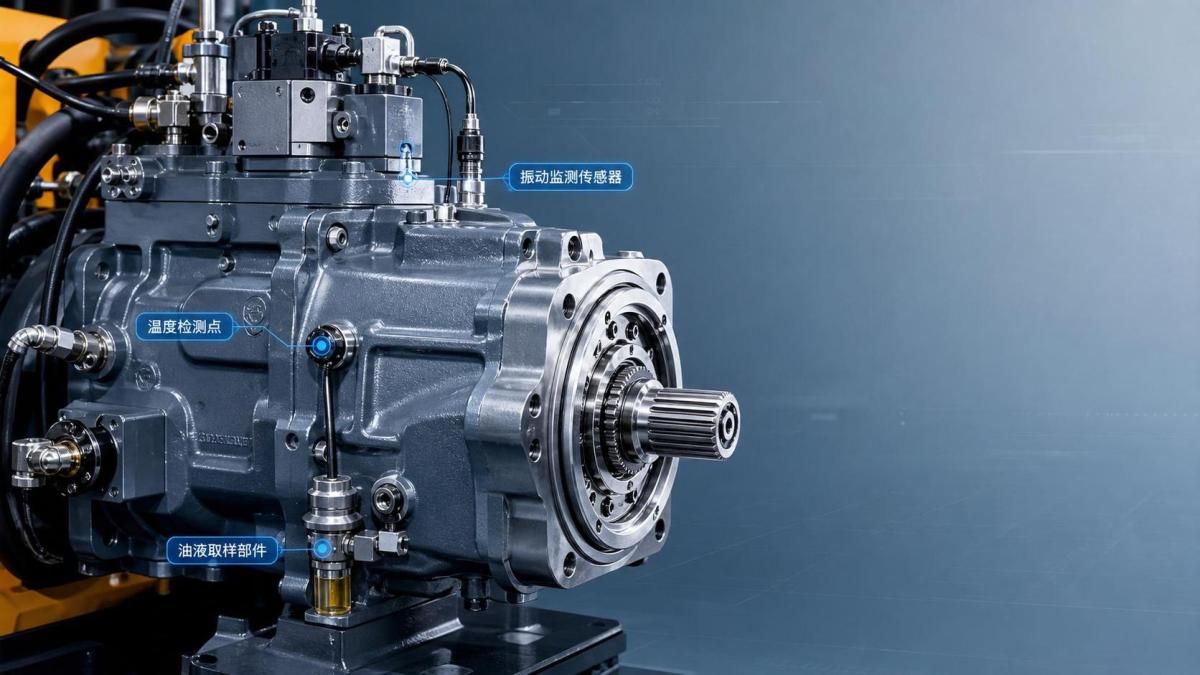
For after-sales maintenance work, breakdowns almost never appear without warning. Small changes usually show up first, then develop into repair events that cost time, parts, and customer trust.
That is where predictive heavy machinery analysis becomes useful. It turns scattered service observations into practical decisions before a machine stops in the field.
In real operating environments, the earliest clues are rarely dramatic. A pump sounds slightly rougher, a bearing runs warmer, or cycle times become less stable under the same load.
When those signs are tracked consistently, predictive heavy machinery analysis supports faster fault isolation, fewer emergency callouts, and better equipment life planning across construction, mining, rail, and special vehicles.
The five signals below are especially useful because they are visible early, practical to verify, and relevant across mixed fleets with different brands and duty cycles.
1. Abnormal Vibration That Was Not There Before
Vibration is often the first clear indicator in predictive heavy machinery analysis. It usually appears before visible damage, especially in rotating assemblies and hydraulic drive systems.
A crane swing motor, concrete mixer gearbox, rail maintenance machine, or mining conveyor drive may still operate normally while vibration levels quietly move outside baseline values.
The cause can vary. Common sources include shaft misalignment, imbalance, coupling wear, loosened mounts, bearing fatigue, and contamination inside rotating parts.
More importantly, vibration trends tell a story. A steady increase usually points to progressive wear, while sharp spikes may suggest impact loading or a newly loosened component.
To make predictive heavy machinery analysis actionable, compare readings by location, load condition, and operating hour range. One isolated number means less than a clear trend line.
- Check whether vibration changes with speed, load, or direction.
- Verify mount tightness before replacing major components.
- Match the vibration point to service history and recent part changes.
This reduces guesswork and helps distinguish normal wear from an early failure pattern that requires immediate scheduling.
2. Temperature Drift in Bearings, Pumps, and Hydraulic Circuits
Heat is another strong signal in predictive heavy machinery analysis because friction, restriction, and overload all create thermal changes before full failure occurs.
A bearing that runs five to ten degrees hotter than its previous average may already be entering a risk zone, even if the machine has not triggered alarms yet.
The same applies to hydraulic return lines, pumps, valve blocks, and travel motors. Temperature drift often points to internal leakage, rising friction, or blocked flow.
From recent service cases, one of the most overlooked issues is uneven heat distribution. Two similar components under the same duty should not show a large temperature gap.
Infrared tools, onboard sensors, and manual inspection logs all support predictive heavy machinery analysis when readings are captured at repeatable operating conditions.
- Record ambient temperature during inspection.
- Measure after similar warm-up and load periods.
- Compare left-right or primary-secondary components.
That process gives context. Without context, a hot reading may be normal. With trend data, it becomes a decision point.
3. Fluid Condition Changes That Signal Internal Wear
Fluid condition is one of the most cost-effective parts of predictive heavy machinery analysis. Oil, coolant, and hydraulic fluid often reveal internal problems earlier than teardown inspection.
A darker color alone is not enough. What matters more is the combination of metal particles, viscosity change, water presence, fuel dilution, and contamination level.
For example, increased copper may suggest bushing wear. Silicon can indicate dirt entry. Water in hydraulic oil may point to seal failure or poor storage practice.
In demanding jobsites, fluid condition also reflects maintenance discipline. A recurring contamination pattern may reveal problems with filters, breathers, hoses, transfer containers, or refill routines.
This is why predictive heavy machinery analysis should connect laboratory reports to machine behavior, not treat oil analysis as a standalone checklist item.
When repeated over time, those patterns turn fluid sampling into a reliable decision tool for early intervention.
4. Slower Cycle Times and Small Performance Losses
Not every early failure appears as noise or heat. Sometimes the clearest signal in predictive heavy machinery analysis is reduced performance under normal working conditions.
A boom lifts more slowly. A travel function hesitates. A compactor needs longer to complete its cycle. Fuel use increases while output stays flat.
These changes are easy to miss because the machine still completes the task. Yet gradual performance loss often signals hydraulic inefficiency, control drift, leakage, or rising mechanical resistance.
In practical service operations, operators may describe this as the machine feeling weak, lazy, or inconsistent. Those comments should be logged, not dismissed as subjective impressions.
Predictive heavy machinery analysis works best when performance data is paired with known reference tasks. Repeating the same test route, lifting cycle, or pressure check makes changes visible.
- Track cycle time by machine hour band.
- Compare pressure and flow against service benchmarks.
- Review whether recent software, valve, or hose changes affected behavior.
A machine does not need to stop completely to justify maintenance. Small losses often appear weeks before a serious repair event.
5. Repeated Alarms, Intermittent Fault Codes, or Unusual Sound Patterns
Intermittent warnings are often treated as minor annoyances. In predictive heavy machinery analysis, they deserve closer attention because unstable faults usually become stable faults later.
A code that appears once per shift, then clears, may indicate wiring fatigue, sensor drift, connector corrosion, voltage fluctuation, or an early control module problem.
Unusual sounds also matter. Whining pumps, knocking joints, cavitation noise, or clicking relays often provide earlier clues than dashboard alarms.
The key is pattern recognition. If the same warning appears during cold start, full load, uphill travel, or wet weather, the context narrows the probable cause quickly.
This makes predictive heavy machinery analysis especially valuable for mixed fleets, where recurring symptoms across several units may reveal a systemic issue rather than isolated wear.
Good records help here. Capture fault frequency, operating state, sound description, and recent environmental conditions. That gives technicians something usable, not just a vague complaint.
How to Turn These Signals Into a Practical Service Routine
The real value of predictive heavy machinery analysis comes from routine execution. Spotting one clue is helpful. Building a repeatable inspection method is what reduces downtime.
A simple structure works well across most fleets. Use baseline readings, consistent inspection intervals, and a clear trigger for escalation when trends move outside normal bands.
- Set baseline values after a confirmed healthy service condition.
- Capture vibration, heat, fluid, and performance data at fixed intervals.
- Log operator comments alongside technical measurements.
- Escalate when two or more signals change together.
- Review closed repair cases to improve future diagnosis.
That last step matters more than it seems. Closed-loop learning turns predictive heavy machinery analysis from a reporting exercise into a stronger maintenance decision system.
For organizations working across infrastructure, mining, logistics, and smart equipment, this approach aligns well with GIUT’s broader view of intelligent physical systems.
Machines already generate clues. The practical advantage comes from reading them early, acting before failure, and turning field data into better service timing, lower repair risk, and longer asset life.
Get weekly intelligence in your inbox.
No noise. No sponsored content. Pure intelligence.
News Recommendations
 Sep 19, 2026How an electronics application guide helps prevent component mismatchHow an electronics application guide helps prevent component mismatch
 Sep 18, 2026When a resource allocation platform improves project deliveryWhen a resource allocation platform improves project delivery
 Sep 17, 2026What to compare when evaluating mineral processing equipment manufacturersWhat to compare when evaluating mineral processing equipment manufacturers
 Sep 16, 2026How mineral separation optimization can reduce concentrate lossesHow mineral separation optimization can reduce concentrate losses
 Sep 15, 2026How to assess lifecycle costs in urban tech procurementHow to assess lifecycle costs in urban tech procurement
 Sep 14, 2026Heavy industry technology trends reshaping capital investment prioritiesHeavy industry technology trends reshaping capital investment priorities
 Sep 14, 2026Why Infrastructure Equipment Buyers Are Shifting from Catalog-Based to Capability-Based Supplier SelectionWhy Infrastructure Equipment Buyers Are Shifting from Catalog-Based to Capability-Based Supplier Selection
 Sep 14, 2026Process Automation Project Execution: How to Align Supplier Capabilities with PLC Integration, Cybersecurity & Commissioning MilestonesProcess Automation Project Execution: How to Align Supplier Capabilities with PLC Integration, Cybersecurity & Commissioning Milestones
 Sep 14, 2026Are intelligent traffic systems worth the investment for small cities?Are intelligent traffic systems worth the investment for small cities?
 Sep 14, 2026How do intelligent traffic systems handle sensor failures?How do intelligent traffic systems handle sensor failures?
 Sep 14, 2026What should I check before accepting a smart building system?What should I check before accepting a smart building system?
 Sep 14, 2026Is a smart building system worth the maintenance cost?Is a smart building system worth the maintenance cost?
 Sep 14, 2026What data is needed for reliable resource allocation planning?What data is needed for reliable resource allocation planning?
 Sep 14, 2026How can resource allocation software reduce equipment idle time?How can resource allocation software reduce equipment idle time?
 Sep 14, 2026How should smart devices be maintained in harsh outdoor conditions?How should smart devices be maintained in harsh outdoor conditions?
 Sep 14, 2026Do smart devices improve worker safety on construction sites?Do smart devices improve worker safety on construction sites?
 Sep 14, 2026What environmental risks must be assessed before deep-sea mining?What environmental risks must be assessed before deep-sea mining?
 Sep 14, 2026Is deep-sea mining equipment commercially viable in 2026?Is deep-sea mining equipment commercially viable in 2026?
 Sep 14, 2026What Inspection Checks Should Procurement Teams Perform Before Ordering Dredging Equipment in 2026?What Inspection Checks Should Procurement Teams Perform Before Ordering Dredging Equipment in 2026?
 Sep 13, 2026How to verify an industrial product information source before specifying equipmentHow to verify an industrial product information source before specifying equipment
 Sep 12, 2026Which intelligent traffic systems hardware fits an urban intersection?Which intelligent traffic systems hardware fits an urban intersection?
 Sep 11, 2026How pump capacity affects response coverage for municipal fire fighting vehiclesHow pump capacity affects response coverage for municipal fire fighting vehicles
 Sep 10, 2026What to verify before choosing a heavy industry equipment supplierWhat to verify before choosing a heavy industry equipment supplier
 Sep 09, 2026When do adaptive urban traffic control systems reduce corridor delays?When do adaptive urban traffic control systems reduce corridor delays?
 Sep 08, 2026When logistics technology solutions in North America reduce delivery delaysWhen logistics technology solutions in North America reduce delivery delays
 Sep 07, 2026How reliable are wireless mining safety systems in underground mines?How reliable are wireless mining safety systems in underground mines?
 Sep 07, 2026How to assess a smart lighting technology platform for interoperabilityHow to assess a smart lighting technology platform for interoperability