Technical Sourcing Support: How to Compare Supplier Capabilities
Technical Sourcing Support: How to Compare Supplier Capabilities
For procurement teams, technical sourcing support matters most when price stops telling the full story.
A low quote can hide weak engineering control, unstable lead times, or poor post-delivery service.
That is why technical sourcing support should sit at the center of supplier comparison, especially in industrial buying.
In sectors tied to infrastructure, equipment, logistics, and smart systems, failures are rarely isolated.
A weak supplier can affect safety, project schedules, maintenance costs, and customer confidence for years.
Good technical sourcing support gives buyers a structured way to compare capabilities, not just promises.
It helps separate polished sales presentations from suppliers that can actually deliver under pressure.
This guide breaks down the criteria that support smarter sourcing decisions across complex supply chains.
Why Technical Sourcing Support Matters More Than Ever
Recent market shifts have made supplier evaluation more demanding and less forgiving.
Raw material volatility, regional compliance changes, and tighter project deadlines are all raising sourcing risk.
At the same time, products are becoming more integrated with software, sensors, automation, and data systems.
That means technical sourcing support now needs to cover both physical manufacturing and system-level performance.
A supplier may look strong on paper, yet still struggle with validation, traceability, or field support.
More importantly, the cost of discovering those gaps after award is usually far higher than the original savings.
Start With a Capability Map, Not a Price Sheet
Effective technical sourcing support begins by defining what capability actually means for the category.
For some items, that means design engineering depth.
For others, it means process repeatability, testing discipline, or installation support.
A capability map keeps comparison focused on business-critical factors rather than broad supplier marketing claims.
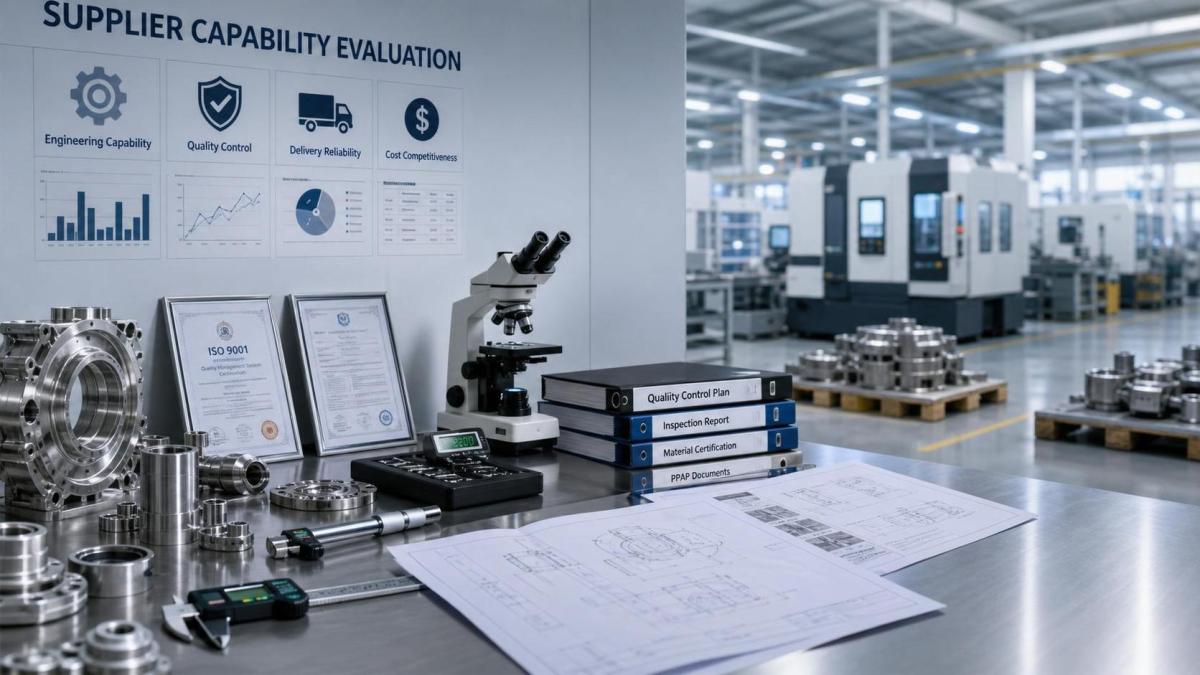
A practical capability map should cover:
- Engineering and design resources
- Manufacturing capacity and process maturity
- Quality systems and defect prevention
- Regulatory and standards compliance
- Supply chain resilience and lead-time control
- Service response, spare parts, and lifecycle support
With that structure in place, technical sourcing support becomes a decision tool instead of a checklist exercise.
How to Compare Core Supplier Capabilities
1. Engineering strength
Strong technical sourcing support looks closely at the people behind the product.
Ask how many engineers support the category, what tools they use, and how design changes are controlled.
A capable supplier can explain tolerances, failure modes, validation methods, and design tradeoffs clearly.
If answers stay vague, the risk usually shows up later in rework and delays.
2. Production consistency
One successful sample does not prove stable mass production.
Technical sourcing support should test whether the supplier can hold quality across batches, shifts, and sites.
Look for documented work instructions, process controls, calibration records, and operator training routines.
Repeatability matters more than presentation quality when the order scale increases.
3. Compliance readiness
Compliance should never be treated as paperwork added at the end.
Good technical sourcing support verifies standards knowledge early, including ISO, CE, UL, RoHS, REACH, or local project rules.
Check whether certificates are current and whether test reports match the exact product configuration offered.
A supplier with partial compliance can create customs, legal, and commissioning problems later.
4. Delivery reliability
Lead time is not just a quoted number.
Technical sourcing support should examine material sourcing, subcontractor exposure, buffer stock, and production planning discipline.
Ask for on-time delivery data over several quarters, not just recent highlights.
In project-based industries, schedule reliability can be worth more than a lower unit cost.
5. After-sales support
Post-award performance often reveals the real quality of technical sourcing support.
Review response time, spare parts policy, warranty terms, field service coverage, and root-cause reporting.
A supplier that solves problems fast can protect uptime and reduce total ownership cost.
Questions That Expose Real Capability
Technical sourcing support works best when it uses evidence-driven questions.
During supplier review, ask questions like these:
- What process steps are most critical, and how are they monitored?
- What defect trends appeared in the last year, and what actions followed?
- Which components depend on single-source materials or vendors?
- How are engineering changes approved and communicated to production?
- What service metrics are tracked after shipment or commissioning?
These questions move the discussion away from general claims and toward operational proof.
That is where technical sourcing support creates real decision value.
Use a Weighted Evaluation Model
Not every purchase needs the same weighting.
For engineered products, technical sourcing support should usually give more weight to performance and delivery risk than price.
A simple model may look like this:
This approach keeps technical sourcing support transparent and easier to defend internally.
Common Red Flags During Supplier Comparison
Several warning signs should lower confidence quickly:
- Test reports that do not match the quoted model
- Inconsistent answers from sales, engineering, and quality teams
- No clear ownership for technical issues after shipment
- Heavy dependence on undocumented subcontracting
- Unrealistically short lead times with no capacity evidence
- Quality claims without defect history or corrective action records
Technical sourcing support is especially useful here because it turns instinct into verifiable risk assessment.
When multiple red flags appear together, the lowest-price option often becomes the most expensive one.
A Practical Decision Process for Better Outcomes
In real buying situations, technical sourcing support should follow a repeatable sequence.
- Define the technical, operational, and compliance requirements before RFQ release.
- Build a weighted comparison matrix based on business risk.
- Collect evidence through documents, interviews, audits, and sample reviews.
- Score gaps honestly, then separate correctable gaps from structural weaknesses.
- Validate service support and delivery assumptions before final award.
This process makes technical sourcing support actionable rather than theoretical.
It also helps teams explain why a higher-priced supplier may still be the stronger commercial choice.
For infrastructure and industrial categories, that discipline can protect project continuity and long-term asset value.
The best sourcing decisions rarely come from price comparison alone.
They come from technical sourcing support that connects engineering evidence, supply risk, and lifecycle performance into one clear decision path.
Get weekly intelligence in your inbox.
No noise. No sponsored content. Pure intelligence.
News Recommendations
 Sep 19, 2026How an electronics application guide helps prevent component mismatchHow an electronics application guide helps prevent component mismatch
 Sep 18, 2026When a resource allocation platform improves project deliveryWhen a resource allocation platform improves project delivery
 Sep 17, 2026What to compare when evaluating mineral processing equipment manufacturersWhat to compare when evaluating mineral processing equipment manufacturers
 Sep 16, 2026How mineral separation optimization can reduce concentrate lossesHow mineral separation optimization can reduce concentrate losses
 Sep 15, 2026How to assess lifecycle costs in urban tech procurementHow to assess lifecycle costs in urban tech procurement
 Sep 14, 2026Heavy industry technology trends reshaping capital investment prioritiesHeavy industry technology trends reshaping capital investment priorities
 Sep 14, 2026Global Industrial Equipment Procurement: How Top OEMs Qualify Suppliers for Mining & Infrastructure ProjectsGlobal Industrial Equipment Procurement: How Top OEMs Qualify Suppliers for Mining & Infrastructure Projects
 Sep 14, 2026Industrial & Mining Equipment Procurement: Balancing Local Sourcing, Lead Time, and Certification RequirementsIndustrial & Mining Equipment Procurement: Balancing Local Sourcing, Lead Time, and Certification Requirements
 Sep 14, 2026Infrastructure & Equipment Upgrades: What Procurement Teams Must Verify Before Signing Off on New ContractsInfrastructure & Equipment Upgrades: What Procurement Teams Must Verify Before Signing Off on New Contracts
 Sep 14, 2026Why Infrastructure Equipment Buyers Are Shifting from Catalog-Based to Capability-Based Supplier SelectionWhy Infrastructure Equipment Buyers Are Shifting from Catalog-Based to Capability-Based Supplier Selection
 Sep 14, 2026Process Automation Project Execution: How to Align Supplier Capabilities with PLC Integration, Cybersecurity & Commissioning MilestonesProcess Automation Project Execution: How to Align Supplier Capabilities with PLC Integration, Cybersecurity & Commissioning Milestones
 Sep 14, 2026Are intelligent traffic systems worth the investment for small cities?Are intelligent traffic systems worth the investment for small cities?
 Sep 14, 2026How do intelligent traffic systems handle sensor failures?How do intelligent traffic systems handle sensor failures?
 Sep 14, 2026What should I check before accepting a smart building system?What should I check before accepting a smart building system?
 Sep 14, 2026Is a smart building system worth the maintenance cost?Is a smart building system worth the maintenance cost?
 Sep 14, 2026What data is needed for reliable resource allocation planning?What data is needed for reliable resource allocation planning?
 Sep 14, 2026How can resource allocation software reduce equipment idle time?How can resource allocation software reduce equipment idle time?
 Sep 14, 2026How should smart devices be maintained in harsh outdoor conditions?How should smart devices be maintained in harsh outdoor conditions?
 Sep 14, 2026Do smart devices improve worker safety on construction sites?Do smart devices improve worker safety on construction sites?
 Sep 14, 2026What environmental risks must be assessed before deep-sea mining?What environmental risks must be assessed before deep-sea mining?
 Sep 14, 2026Is deep-sea mining equipment commercially viable in 2026?Is deep-sea mining equipment commercially viable in 2026?
 Sep 14, 2026What Inspection Checks Should Procurement Teams Perform Before Ordering Dredging Equipment in 2026?What Inspection Checks Should Procurement Teams Perform Before Ordering Dredging Equipment in 2026?
 Sep 13, 2026How to verify an industrial product information source before specifying equipmentHow to verify an industrial product information source before specifying equipment
 Sep 12, 2026Which intelligent traffic systems hardware fits an urban intersection?Which intelligent traffic systems hardware fits an urban intersection?
 Sep 11, 2026How pump capacity affects response coverage for municipal fire fighting vehiclesHow pump capacity affects response coverage for municipal fire fighting vehicles
 Sep 10, 2026What to verify before choosing a heavy industry equipment supplierWhat to verify before choosing a heavy industry equipment supplier
 Sep 09, 2026When do adaptive urban traffic control systems reduce corridor delays?When do adaptive urban traffic control systems reduce corridor delays?