OEM Cooperation Models That Reduce Supply Chain Risk
OEM Cooperation Models That Reduce Supply Chain Risk
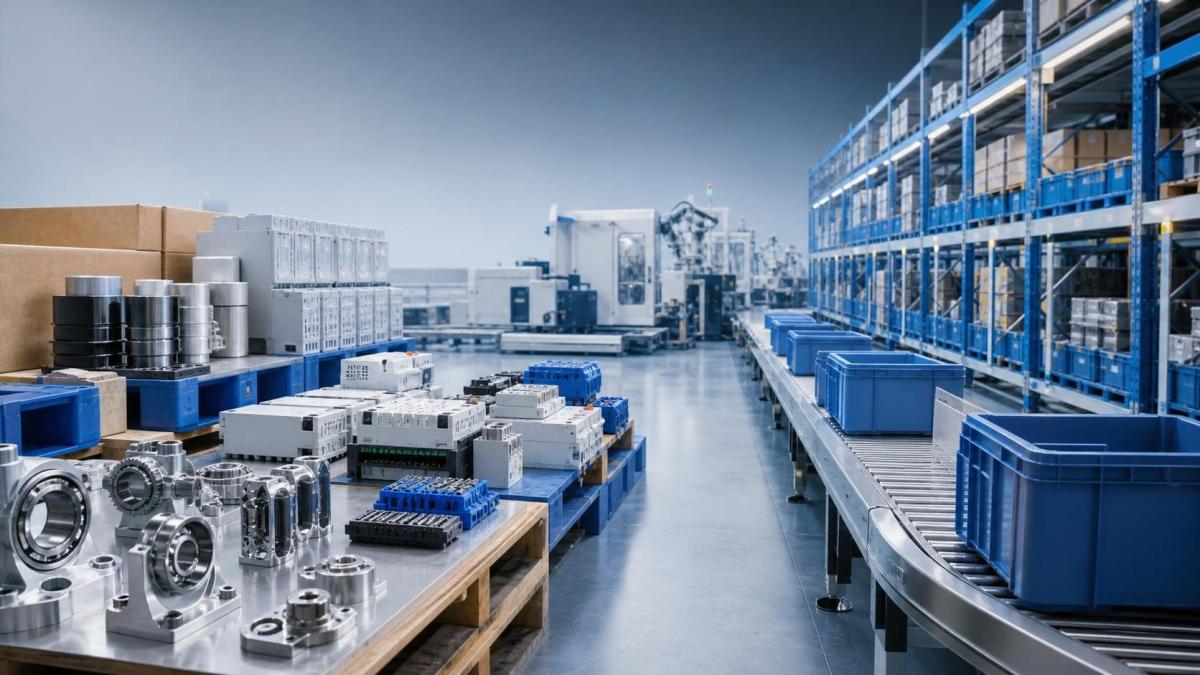
In an era of volatile demand, geopolitical shifts, and tighter compliance requirements, OEM cooperation is becoming a strategic tool for reducing supply chain risk.
For infrastructure and industrial businesses, the right model improves resilience, protects quality, and supports long-term competitiveness.
That matters even more in sectors linked to construction, rail, mining, logistics, and special-purpose equipment.
In practice, OEM cooperation is no longer just a sourcing tactic.
It is a way to balance cost, control, continuity, and speed.
This is especially true when projects depend on long lead times, regulated components, and stable field performance.
From recent market changes, the clearest signal is simple.
Companies that treat OEM cooperation as a strategic partnership usually recover faster from disruption.
Those relying only on price often face hidden risks later.
Why OEM Cooperation Matters More in Today’s Supply Chains
Supply chain risk now comes from several directions at once.
Raw material swings, port delays, policy changes, and supplier concentration can all hit delivery performance.
For heavy industry, one delayed subsystem can slow an entire project schedule.
That also affects financing, customer trust, and service obligations.
OEM cooperation helps because it creates a more structured relationship than transactional buying.
It can align planning cycles, engineering standards, inventory rules, and escalation paths.
This also means fewer surprises when demand changes or regulations tighten.
A strong OEM cooperation framework usually supports five risk goals:
- Lower dependence on a single supplier or region
- Better control over quality and specification changes
- More reliable lead times and replenishment visibility
- Stronger compliance support and traceability
- Clearer total cost over the product life cycle
These benefits are not automatic.
They depend on choosing the right OEM cooperation model for the category, region, and operating risk.
Four OEM Cooperation Models That Reduce Supply Chain Risk
1. Dual-Source OEM Cooperation
This model uses two qualified OEM partners for the same product family or critical component.
It is one of the most practical ways to reduce concentration risk.
If one supplier faces disruption, the second source supports continuity.
This OEM cooperation model works well for standardized assemblies, electrical systems, and repeat-order equipment.
The trade-off is higher qualification cost at the beginning.
Still, the extra effort often pays back when lead times become unstable.
2. Regionalized OEM Cooperation
Regionalized OEM cooperation places production closer to demand centers or project markets.
It reduces exposure to cross-border delays, tariff shifts, and freight volatility.
For urban infrastructure projects, this can improve service response and spare parts availability.
It is also useful when public procurement rules favor local content.
The key is to keep engineering standards consistent across regions.
3. Co-Development OEM Cooperation
Here, the buyer and OEM partner jointly develop products, modules, or custom features.
This model is common in smart equipment, signaling systems, and advanced vehicle platforms.
Good OEM cooperation at this level reduces risk by locking in technical alignment early.
Potential issues in material selection, compliance, or maintainability surface sooner.
That lowers the chance of costly redesign later.
4. Managed Inventory OEM Cooperation
In this model, the OEM partner supports inventory planning, safety stock, or vendor-managed replenishment.
This is valuable for maintenance-heavy sectors where downtime is expensive.
The main advantage is visibility.
Forecast changes, consumption trends, and stock alerts become easier to manage together.
As a result, OEM cooperation supports both service continuity and better working capital control.
How to Choose the Right OEM Cooperation Model
Not every category needs the same level of partnership.
A practical decision starts with business impact, not supplier preference.
In actual operations, four questions usually clarify the best OEM cooperation path.
- How critical is the item to uptime, safety, or project delivery?
- How difficult is it to switch suppliers without requalification?
- How exposed is the current source to geography, compliance, or logistics risk?
- How much demand visibility can both sides realistically share?
If the part is highly critical and hard to replace, deeper OEM cooperation usually makes sense.
If the part is standardized and available widely, a flexible dual-source model may be enough.
This is where procurement teams should avoid a common mistake.
The lowest unit price does not always mean the lowest total cost.
Delays, rework, warranty claims, and emergency freight can erase savings quickly.
Key Criteria to Evaluate OEM Cooperation Partners
A reliable OEM cooperation strategy depends on partner quality, not just model design.
Before signing long-term agreements, review capability in a structured way.
This kind of review is especially important for sectors supported by GIUT insights.
Construction equipment, rail systems, and smart urban infrastructure all depend on component reliability.
A weak partner can create downstream risk far beyond procurement.
Practical Steps to Make OEM Cooperation Work
A strong contract alone is not enough.
Effective OEM cooperation needs routines, metrics, and shared response rules.
A practical rollout often includes these actions:
- Segment parts by criticality, supply risk, and switching difficulty
- Match each segment to the right OEM cooperation structure
- Define lead time alerts, quality triggers, and escalation owners
- Agree on forecast windows and minimum data-sharing standards
- Review total cost, not just quoted unit price
- Run quarterly risk checks covering capacity, compliance, and logistics
More importantly, teams should define what success looks like from the start.
Typical indicators include on-time delivery, defect rate, recovery speed, engineering response, and inventory health.
When these metrics are visible to both sides, OEM cooperation becomes easier to improve over time.
Final Takeaway
Supply chain risk will remain part of industrial growth for the foreseeable future.
The better response is not simply buying more inventory or pushing harder on price.
It is building the right OEM cooperation model for the real risk profile of each category.
For many businesses, the best approach combines dual sourcing, regional flexibility, shared engineering, and better planning visibility.
That combination supports cost control without sacrificing resilience.
If the next procurement cycle includes critical equipment, components, or infrastructure systems, now is the right time to review current OEM cooperation structures.
A sharper model today can prevent a much bigger disruption tomorrow.
Get weekly intelligence in your inbox.
No noise. No sponsored content. Pure intelligence.
News Recommendations
 Sep 19, 2026How an electronics application guide helps prevent component mismatchHow an electronics application guide helps prevent component mismatch
 Sep 18, 2026When a resource allocation platform improves project deliveryWhen a resource allocation platform improves project delivery
 Sep 17, 2026What to compare when evaluating mineral processing equipment manufacturersWhat to compare when evaluating mineral processing equipment manufacturers
 Sep 16, 2026How mineral separation optimization can reduce concentrate lossesHow mineral separation optimization can reduce concentrate losses
 Sep 15, 2026How to assess lifecycle costs in urban tech procurementHow to assess lifecycle costs in urban tech procurement
 Sep 14, 2026Heavy industry technology trends reshaping capital investment prioritiesHeavy industry technology trends reshaping capital investment priorities
 Sep 14, 2026Global Industrial Equipment Procurement: How Top OEMs Qualify Suppliers for Mining & Infrastructure ProjectsGlobal Industrial Equipment Procurement: How Top OEMs Qualify Suppliers for Mining & Infrastructure Projects
 Sep 14, 2026Industrial & Mining Equipment Procurement: Balancing Local Sourcing, Lead Time, and Certification RequirementsIndustrial & Mining Equipment Procurement: Balancing Local Sourcing, Lead Time, and Certification Requirements
 Sep 14, 2026Infrastructure & Equipment Upgrades: What Procurement Teams Must Verify Before Signing Off on New ContractsInfrastructure & Equipment Upgrades: What Procurement Teams Must Verify Before Signing Off on New Contracts
 Sep 14, 2026Why Infrastructure Equipment Buyers Are Shifting from Catalog-Based to Capability-Based Supplier SelectionWhy Infrastructure Equipment Buyers Are Shifting from Catalog-Based to Capability-Based Supplier Selection
 Sep 14, 2026Process Automation Project Execution: How to Align Supplier Capabilities with PLC Integration, Cybersecurity & Commissioning MilestonesProcess Automation Project Execution: How to Align Supplier Capabilities with PLC Integration, Cybersecurity & Commissioning Milestones
 Sep 14, 2026Are intelligent traffic systems worth the investment for small cities?Are intelligent traffic systems worth the investment for small cities?
 Sep 14, 2026How do intelligent traffic systems handle sensor failures?How do intelligent traffic systems handle sensor failures?
 Sep 14, 2026What should I check before accepting a smart building system?What should I check before accepting a smart building system?
 Sep 14, 2026Is a smart building system worth the maintenance cost?Is a smart building system worth the maintenance cost?
 Sep 14, 2026What data is needed for reliable resource allocation planning?What data is needed for reliable resource allocation planning?
 Sep 14, 2026How can resource allocation software reduce equipment idle time?How can resource allocation software reduce equipment idle time?
 Sep 14, 2026How should smart devices be maintained in harsh outdoor conditions?How should smart devices be maintained in harsh outdoor conditions?
 Sep 14, 2026Do smart devices improve worker safety on construction sites?Do smart devices improve worker safety on construction sites?
 Sep 14, 2026What environmental risks must be assessed before deep-sea mining?What environmental risks must be assessed before deep-sea mining?
 Sep 14, 2026Is deep-sea mining equipment commercially viable in 2026?Is deep-sea mining equipment commercially viable in 2026?
 Sep 14, 2026What Inspection Checks Should Procurement Teams Perform Before Ordering Dredging Equipment in 2026?What Inspection Checks Should Procurement Teams Perform Before Ordering Dredging Equipment in 2026?
 Sep 13, 2026How to verify an industrial product information source before specifying equipmentHow to verify an industrial product information source before specifying equipment
 Sep 12, 2026Which intelligent traffic systems hardware fits an urban intersection?Which intelligent traffic systems hardware fits an urban intersection?
 Sep 11, 2026How pump capacity affects response coverage for municipal fire fighting vehiclesHow pump capacity affects response coverage for municipal fire fighting vehicles
 Sep 10, 2026What to verify before choosing a heavy industry equipment supplierWhat to verify before choosing a heavy industry equipment supplier
 Sep 09, 2026When do adaptive urban traffic control systems reduce corridor delays?When do adaptive urban traffic control systems reduce corridor delays?