Fire Trucks: Key Features That Improve Response Safety
Fire Trucks: Key Features That Improve Response Safety
For quality and safety teams, fire trucks are not just transport platforms. They are tightly integrated response systems built to perform under pressure.
Every design choice matters. A weak pump, unstable chassis, or poor visibility can slow deployment and increase exposure during critical minutes.
That is why evaluating fire trucks through a safety lens is essential. The right configuration supports faster action, better control, and fewer avoidable failures.
In urban, industrial, and infrastructure settings, modern fire trucks must balance mechanical durability, crew protection, and intelligent operational support.
Why Fire Trucks Must Be Assessed as Safety Systems
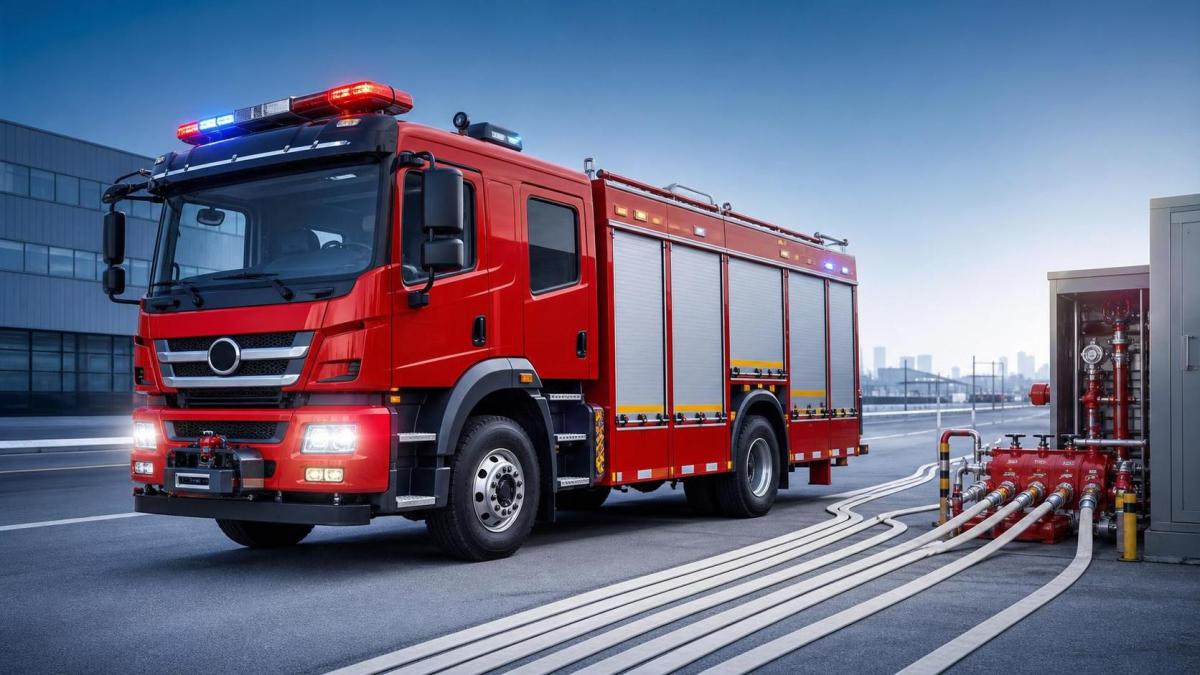
From a technical and standards perspective, fire trucks should be reviewed as complete response assets, not as isolated vehicle bodies with added equipment.
This shift matters because emergency performance depends on how the chassis, braking, pump, power supply, cab, and controls work together.
In real operations, failures often happen at system interfaces. Hose deployment may be fine, but poor compartment access delays setup.
A truck may also meet basic output targets while still creating crew risk through blind spots, overload, or unstable weight distribution.
For that reason, the most effective fire trucks are designed around predictable response safety, not just maximum specification numbers.
1. Chassis Stability and Load Management
The foundation of safe fire trucks starts with the chassis. It carries water, foam, rescue gear, crew, and pumping equipment across variable terrain.
If the platform is under-specified, handling degrades quickly. That raises rollover risk, increases stopping distance, and affects driver confidence.
A strong safety review should look at:
- Gross vehicle weight rating versus actual operating load
- Center of gravity after water tank filling and equipment loading
- Axle load balance during travel and pumping operations
- Suspension performance under full emergency payload
- Frame durability in repeated stop-start duty cycles
This is especially important in special purpose vehicles operating in ports, tunnels, refineries, warehouses, and dense urban streets.
Well-designed fire trucks keep loads controlled even when tanks are partially full, which is when liquid movement can destabilize the vehicle most.
2. Pump Capacity, Water Delivery, and System Reliability
Pump performance is often the first specification buyers compare. Still, response safety depends on steady output, not peak numbers alone.
Reliable fire trucks need pumps that sustain pressure during long operations, fluctuating demand, and imperfect water supply conditions.
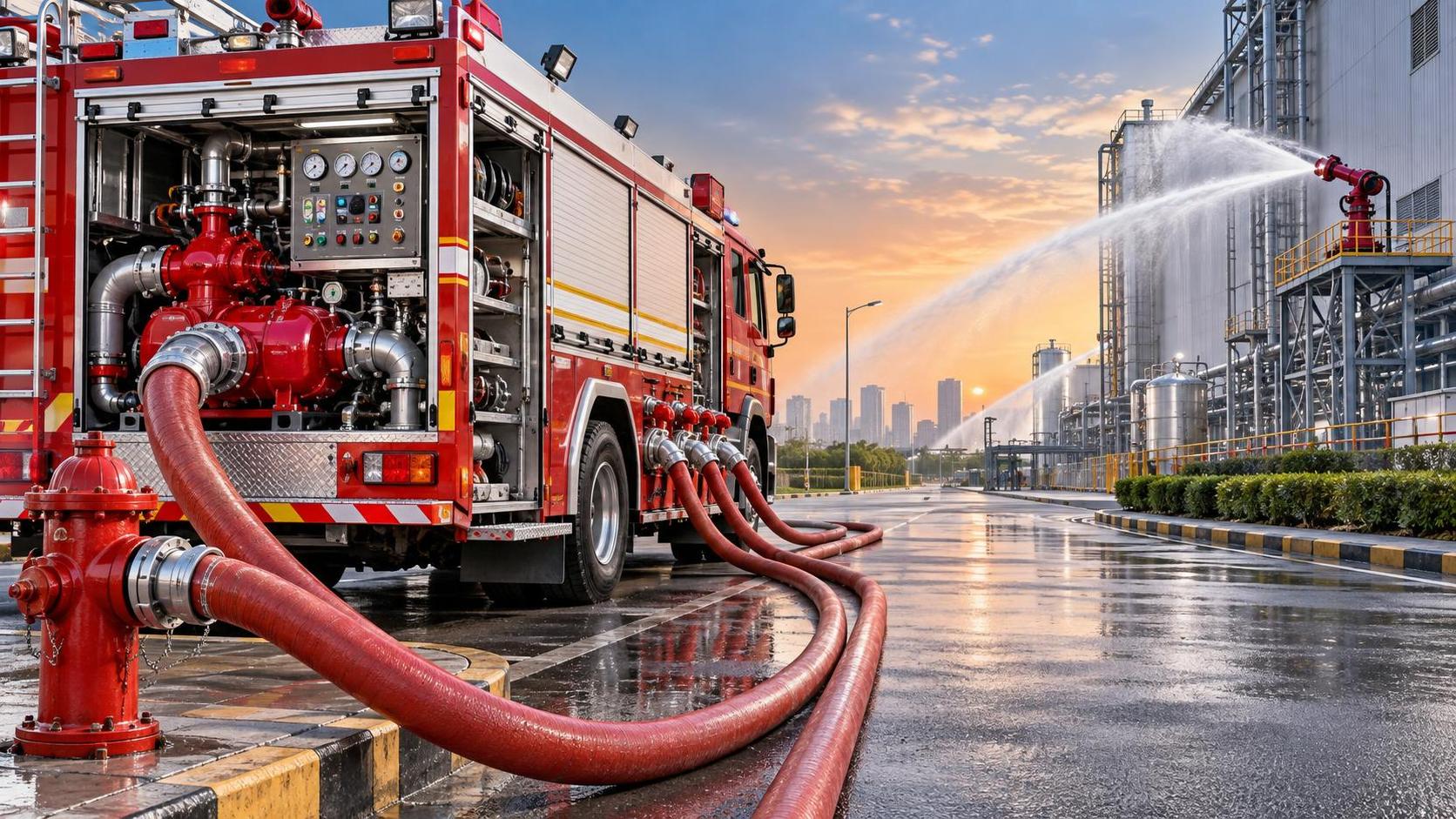
Key checkpoints include pump efficiency, cavitation resistance, priming speed, seal durability, and compatibility with foam proportioning systems.
A practical review also covers suction layout, valve labeling, drain access, and maintenance reach. These details decide how fast crews can act.
In industrial settings, fire trucks may face long hose lines, corrosive environments, or mixed suppression agents. Reliability becomes even more critical.
Recent procurement trends show stronger attention to repeatable pump testing, flow verification, and lifecycle maintenance planning before acceptance.
3. Braking, Steering, and Road Control Under Emergency Conditions
Fast response only helps when control remains stable. Fire trucks carry high mass, and that changes how they brake, turn, and recover from sudden inputs.
Anti-lock braking, electronic stability support, traction control, and retarder integration all improve predictable road behavior.
The real question is how these systems perform under full load, wet roads, debris, uneven pavement, and sharp urban intersections.
Steering geometry also matters. Large fire trucks must remain maneuverable without creating excessive body roll or tire scrub.
For safety managers, test data should include stopping distance, lane recovery behavior, turning radius, and braking consistency after repeated cycles.
4. Crew Protection Inside and Outside the Cab
A fire truck protects responders before they ever touch a hose. Cab structure, seating design, restraint systems, and impact protection all matter.
The best fire trucks reduce fatigue and lower injury risk during transit, equipment retrieval, and scene deployment.
Look closely at these features:
- Seat restraint design that works with protective gear
- Step height and anti-slip surfaces at every access point
- Handhold placement for fast and stable movement
- Compartment doors that do not obstruct work zones
- Thermal and noise control inside the cab
These are not comfort extras. They are direct contributors to injury prevention and cleaner execution during high-pressure response events.
5. Visibility, Lighting, and Scene Awareness
Visibility problems remain a common risk factor for fire trucks, especially in crowded roads, night operations, and mixed industrial traffic.
A safe design improves what the driver sees and what surrounding road users understand during approach and positioning.
That includes optimized mirror coverage, camera systems, blind-spot support, warning lights, and work lighting around access areas.
Better scene awareness also helps once the truck stops. Clear lighting reduces slips, hose misrouting, and errors in equipment selection.
More fleet operators now prioritize LED reliability, low-glare setups, and visibility layouts matched to urban and industrial use cases.
6. Smart Controls and Diagnostic Integration
One of the clearest upgrades in modern fire trucks is control integration. Operators need fast information without dealing with scattered interfaces.
Digital pump panels, tank level sensors, pressure alarms, thermal alerts, and maintenance diagnostics can reduce avoidable mistakes.
Still, more technology does not always mean safer outcomes. Poor interface design can distract crews and slow response decisions.
Useful fire trucks present essential data clearly, allow glove-friendly operation, and retain manual control when digital modules fail.
This aligns with broader smart equipment trends across infrastructure fleets, where digital support must strengthen, not complicate, frontline safety.
What to Check During Technical Review and Acceptance
When comparing fire trucks, acceptance should combine specification review with scenario-based verification. Paper compliance is only the starting point.
A practical checklist helps teams connect standards to field performance:
This process gives buyers a clearer basis for comparing fire trucks beyond brochures and isolated product claims.
How to Make Better Fire Truck Decisions
The safest fire trucks are usually not the ones with the longest option list. They are the ones with balanced engineering and proven field usability.
Start with the response environment. Urban intersections, industrial plants, logistics parks, and tunnels create very different safety demands.
Then match each truck’s core features to those risks. Focus on stability, pump reliability, crew access, visibility, and control simplicity.
It also helps to review maintenance readiness early. Fire trucks that are hard to inspect or service often become harder to trust.
As infrastructure fleets become smarter and more specialized, response safety will depend even more on disciplined technical evaluation.
In practice, better fire trucks are chosen when teams ask a simple question: which features reduce risk before, during, and after response?
Get weekly intelligence in your inbox.
No noise. No sponsored content. Pure intelligence.
News Recommendations
 Sep 19, 2026How an electronics application guide helps prevent component mismatchHow an electronics application guide helps prevent component mismatch
 Sep 18, 2026When a resource allocation platform improves project deliveryWhen a resource allocation platform improves project delivery
 Sep 17, 2026What to compare when evaluating mineral processing equipment manufacturersWhat to compare when evaluating mineral processing equipment manufacturers
 Sep 16, 2026How mineral separation optimization can reduce concentrate lossesHow mineral separation optimization can reduce concentrate losses
 Sep 15, 2026How to assess lifecycle costs in urban tech procurementHow to assess lifecycle costs in urban tech procurement
 Sep 14, 2026Heavy industry technology trends reshaping capital investment prioritiesHeavy industry technology trends reshaping capital investment priorities
 Sep 14, 2026Why Infrastructure Equipment Buyers Are Shifting from Catalog-Based to Capability-Based Supplier SelectionWhy Infrastructure Equipment Buyers Are Shifting from Catalog-Based to Capability-Based Supplier Selection
 Sep 14, 2026Process Automation Project Execution: How to Align Supplier Capabilities with PLC Integration, Cybersecurity & Commissioning MilestonesProcess Automation Project Execution: How to Align Supplier Capabilities with PLC Integration, Cybersecurity & Commissioning Milestones
 Sep 14, 2026Are intelligent traffic systems worth the investment for small cities?Are intelligent traffic systems worth the investment for small cities?
 Sep 14, 2026How do intelligent traffic systems handle sensor failures?How do intelligent traffic systems handle sensor failures?
 Sep 14, 2026What should I check before accepting a smart building system?What should I check before accepting a smart building system?
 Sep 14, 2026Is a smart building system worth the maintenance cost?Is a smart building system worth the maintenance cost?
 Sep 14, 2026What data is needed for reliable resource allocation planning?What data is needed for reliable resource allocation planning?
 Sep 14, 2026How can resource allocation software reduce equipment idle time?How can resource allocation software reduce equipment idle time?
 Sep 14, 2026How should smart devices be maintained in harsh outdoor conditions?How should smart devices be maintained in harsh outdoor conditions?
 Sep 14, 2026Do smart devices improve worker safety on construction sites?Do smart devices improve worker safety on construction sites?
 Sep 14, 2026What environmental risks must be assessed before deep-sea mining?What environmental risks must be assessed before deep-sea mining?
 Sep 14, 2026Is deep-sea mining equipment commercially viable in 2026?Is deep-sea mining equipment commercially viable in 2026?
 Sep 14, 2026What Inspection Checks Should Procurement Teams Perform Before Ordering Dredging Equipment in 2026?What Inspection Checks Should Procurement Teams Perform Before Ordering Dredging Equipment in 2026?
 Sep 13, 2026How to verify an industrial product information source before specifying equipmentHow to verify an industrial product information source before specifying equipment
 Sep 12, 2026Which intelligent traffic systems hardware fits an urban intersection?Which intelligent traffic systems hardware fits an urban intersection?
 Sep 11, 2026How pump capacity affects response coverage for municipal fire fighting vehiclesHow pump capacity affects response coverage for municipal fire fighting vehicles
 Sep 10, 2026What to verify before choosing a heavy industry equipment supplierWhat to verify before choosing a heavy industry equipment supplier
 Sep 09, 2026When do adaptive urban traffic control systems reduce corridor delays?When do adaptive urban traffic control systems reduce corridor delays?
 Sep 08, 2026When logistics technology solutions in North America reduce delivery delaysWhen logistics technology solutions in North America reduce delivery delays
 Sep 07, 2026How reliable are wireless mining safety systems in underground mines?How reliable are wireless mining safety systems in underground mines?
 Sep 07, 2026How to assess a smart lighting technology platform for interoperabilityHow to assess a smart lighting technology platform for interoperability