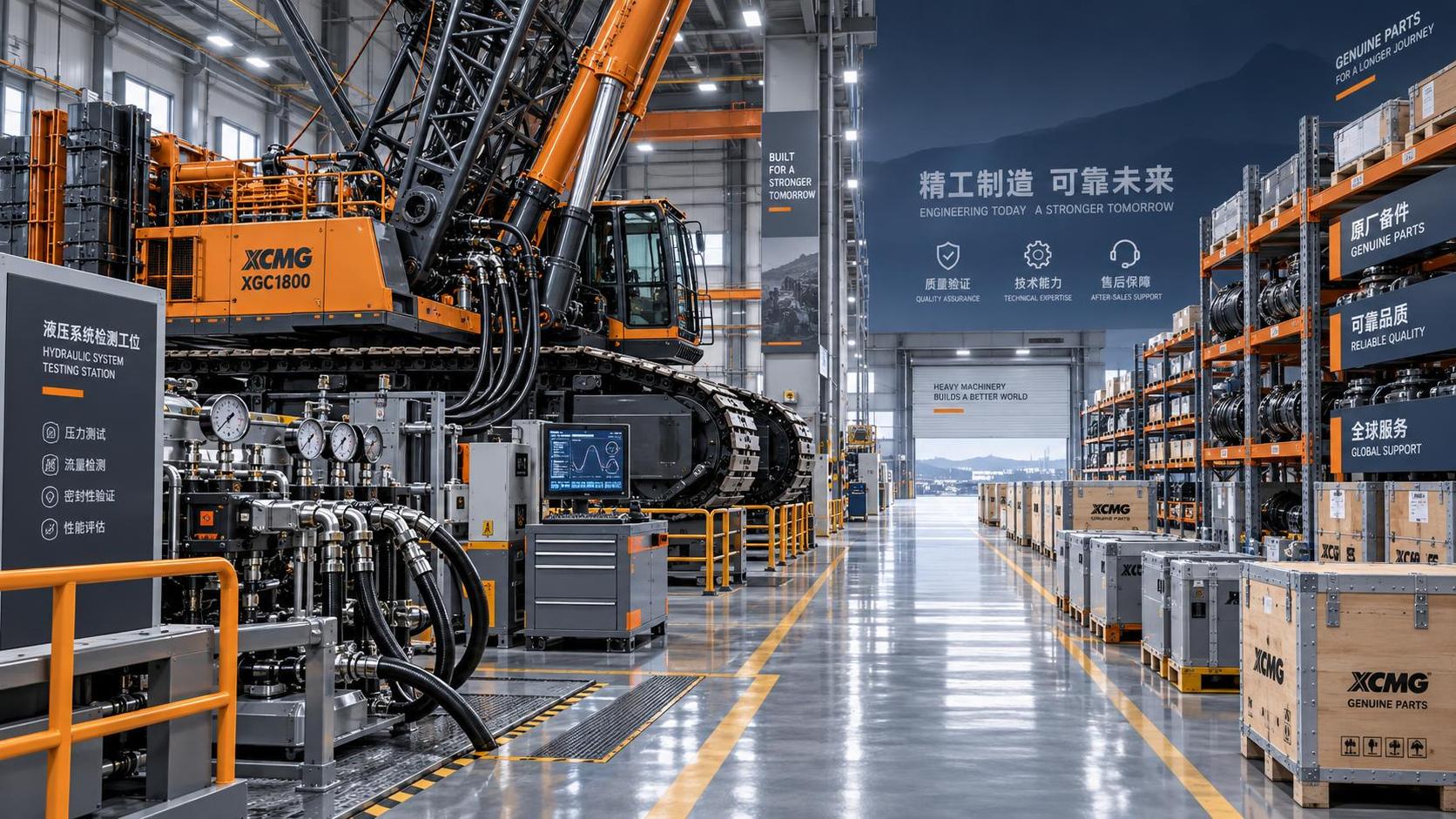
Mining Technology Equipment Cost Risks Before Approval
Mining Technology Equipment Cost Risks Before Approval
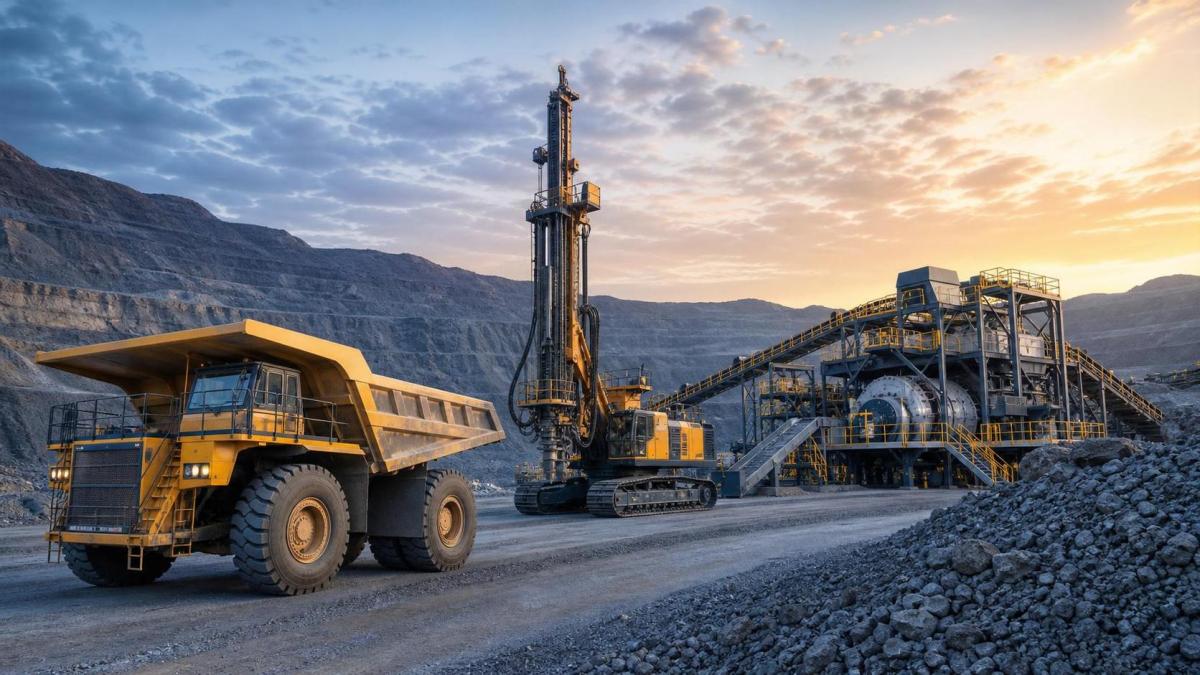
Before capital is committed, enterprise decision-makers need a clear view of how mining technology equipment can create hidden cost risks across procurement, maintenance, safety, and long-term productivity.
This article examines the financial uncertainties behind equipment approval, helping leaders balance innovation, operational resilience, and return on investment with greater confidence.
In mining, the purchase price rarely tells the full story.
A drill rig, haul truck, autonomous loader, or ore sorting system may look efficient on paper, yet still produce long-tail costs after deployment.
That gap matters because mining technology equipment usually sits inside a larger production chain.
If one asset underperforms, delays often spread into labor scheduling, fuel use, maintenance windows, and contract obligations.
From recent market shifts, the stronger signal is clear.
Mining companies are not only asking which equipment is more advanced.
They are asking which mining technology equipment can hold its cost profile under real operating pressure.
Why approval-stage cost analysis often fails
Most approval processes still rely on vendor quotations, benchmark case studies, and expected throughput assumptions.
Those inputs matter, but they often miss site-specific cost drivers.
For example, mining technology equipment used in remote sites can trigger logistics costs far above initial projections.
A machine may be competitively priced, yet spare parts lead times can stretch downtime into weeks.
In practical operations, approval teams also tend to underestimate integration complexity.
A new fleet management platform may require network upgrades, operator retraining, software licenses, and cybersecurity reviews.
These are not side issues.
They directly affect the total cost of ownership for mining technology equipment.
Another common weakness is timeline optimism.
If commissioning takes longer than planned, the asset starts generating depreciation before it creates reliable output.
The main hidden cost risks behind mining technology equipment
A useful review starts by separating visible costs from hidden risks.
The list below covers the cost areas that most often distort approval decisions.
1. Maintenance volatility
Advanced mining technology equipment often reduces manual intervention, but maintenance demands may become more specialized.
That means higher dependence on trained technicians, diagnostic software, and OEM-approved components.
If the service ecosystem is thin, even routine failures can become expensive events.
2. Energy and fuel exposure
Some mining technology equipment improves throughput while increasing peak power demand, ventilation load, or fuel burn under certain duty cycles.
Without site simulation, the operating cost model may stay misleadingly low.
3. Safety compliance costs
New mining technology equipment can support safety targets, yet compliance upgrades often carry extra cost.
Guarding systems, emergency controls, ventilation changes, sensor calibration, and certification work can alter the business case.
4. Productivity shortfall risk
Performance claims usually reflect ideal conditions.
Ore variability, weather, operator behavior, and haul distance can pull actual output below the modeled rate.
When that happens, the payback period for mining technology equipment can widen quickly.
5. Obsolescence and upgrade risk
Digital mining technology equipment evolves faster than traditional mechanical assets.
Software compatibility, sensor protocols, and automation interfaces may require earlier upgrades than finance teams expect.
How to pressure-test the approval case
A stronger approval process does not reject innovation.
It forces mining technology equipment proposals to prove durability across changing conditions.
A practical review framework usually includes five checks.
- Model total cost of ownership over three, five, and eight years.
- Stress-test uptime assumptions against worst-case maintenance delays.
- Quantify training, data, software, and integration costs separately.
- Check local parts availability and service response terms in writing.
- Run productivity sensitivity scenarios using conservative throughput inputs.
This approach makes cost risk visible before procurement commitments harden.
It also helps compare mining technology equipment options that appear similar at first glance.
A simple approval lens
Vendor evaluation matters as much as equipment evaluation
Many cost overruns come from vendor-side weakness rather than equipment design alone.
That is especially true with connected mining technology equipment and automated systems.
A low bid can become expensive if supplier support is slow, fragmented, or dependent on overseas intervention.
In real procurement reviews, it helps to examine these points early.
- Installed base in similar mining conditions.
- Mean time to respond for technical support.
- Local inventory for critical parts.
- Cybersecurity and software patch discipline.
- Clear upgrade roadmap for the next five years.
This also means contract language deserves more attention than it usually gets.
Service-level terms, performance guarantees, and failure remedies can materially change the risk profile of mining technology equipment.
Where strategic buyers create better outcomes
The most effective approvals do not focus only on cost reduction.
They focus on cost predictability.
That distinction is important because modern mining technology equipment can still be the right investment, even with a higher initial price.
What matters is whether the asset delivers stable output, manageable maintenance, and upgrade flexibility over time.
Stronger buyers usually take three steps.
- They align procurement, operations, maintenance, and safety teams before approval.
- They use pilot data or reference-site evidence instead of brochure claims.
- They build approval gates around measurable risk thresholds.
That makes the decision process slower at first.
But it usually prevents far more expensive corrections later.
For organizations managing capital discipline, that is often the better trade.
Final decision guide before sign-off
Before approving mining technology equipment, ask one direct question.
Will this asset remain financially resilient when site conditions, maintenance needs, and production assumptions become less favorable?
If the answer depends on optimistic assumptions, the approval case is not ready.
If the answer remains strong under pressure, the investment case is far more credible.
Mining technology equipment should support output growth, safety improvement, and operational resilience at the same time.
The approval process needs to test all three, not just purchase cost.
A disciplined review now creates better capital allocation later.
That is the practical path to selecting mining technology equipment with fewer surprises and stronger long-term returns.
Get weekly intelligence in your inbox.
No noise. No sponsored content. Pure intelligence.
News Recommendations
 Sep 19, 2026How an electronics application guide helps prevent component mismatchHow an electronics application guide helps prevent component mismatch
 Sep 18, 2026When a resource allocation platform improves project deliveryWhen a resource allocation platform improves project delivery
 Sep 17, 2026What to compare when evaluating mineral processing equipment manufacturersWhat to compare when evaluating mineral processing equipment manufacturers
 Sep 16, 2026How mineral separation optimization can reduce concentrate lossesHow mineral separation optimization can reduce concentrate losses
 Sep 15, 2026How to assess lifecycle costs in urban tech procurementHow to assess lifecycle costs in urban tech procurement
 Sep 14, 2026Heavy industry technology trends reshaping capital investment prioritiesHeavy industry technology trends reshaping capital investment priorities
 Sep 14, 2026Global Industrial Equipment Procurement: How Top OEMs Qualify Suppliers for Mining & Infrastructure ProjectsGlobal Industrial Equipment Procurement: How Top OEMs Qualify Suppliers for Mining & Infrastructure Projects
 Sep 14, 2026Industrial & Mining Equipment Procurement: Balancing Local Sourcing, Lead Time, and Certification RequirementsIndustrial & Mining Equipment Procurement: Balancing Local Sourcing, Lead Time, and Certification Requirements
 Sep 14, 2026Infrastructure & Equipment Upgrades: What Procurement Teams Must Verify Before Signing Off on New ContractsInfrastructure & Equipment Upgrades: What Procurement Teams Must Verify Before Signing Off on New Contracts
 Sep 14, 2026Why Infrastructure Equipment Buyers Are Shifting from Catalog-Based to Capability-Based Supplier SelectionWhy Infrastructure Equipment Buyers Are Shifting from Catalog-Based to Capability-Based Supplier Selection
 Sep 14, 2026Process Automation Project Execution: How to Align Supplier Capabilities with PLC Integration, Cybersecurity & Commissioning MilestonesProcess Automation Project Execution: How to Align Supplier Capabilities with PLC Integration, Cybersecurity & Commissioning Milestones
 Sep 14, 2026Are intelligent traffic systems worth the investment for small cities?Are intelligent traffic systems worth the investment for small cities?
 Sep 14, 2026How do intelligent traffic systems handle sensor failures?How do intelligent traffic systems handle sensor failures?
 Sep 14, 2026What should I check before accepting a smart building system?What should I check before accepting a smart building system?
 Sep 14, 2026Is a smart building system worth the maintenance cost?Is a smart building system worth the maintenance cost?
 Sep 14, 2026What data is needed for reliable resource allocation planning?What data is needed for reliable resource allocation planning?
 Sep 14, 2026How can resource allocation software reduce equipment idle time?How can resource allocation software reduce equipment idle time?
 Sep 14, 2026How should smart devices be maintained in harsh outdoor conditions?How should smart devices be maintained in harsh outdoor conditions?
 Sep 14, 2026Do smart devices improve worker safety on construction sites?Do smart devices improve worker safety on construction sites?
 Sep 14, 2026What environmental risks must be assessed before deep-sea mining?What environmental risks must be assessed before deep-sea mining?
 Sep 14, 2026Is deep-sea mining equipment commercially viable in 2026?Is deep-sea mining equipment commercially viable in 2026?
 Sep 14, 2026What Inspection Checks Should Procurement Teams Perform Before Ordering Dredging Equipment in 2026?What Inspection Checks Should Procurement Teams Perform Before Ordering Dredging Equipment in 2026?
 Sep 13, 2026How to verify an industrial product information source before specifying equipmentHow to verify an industrial product information source before specifying equipment
 Sep 12, 2026Which intelligent traffic systems hardware fits an urban intersection?Which intelligent traffic systems hardware fits an urban intersection?
 Sep 11, 2026How pump capacity affects response coverage for municipal fire fighting vehiclesHow pump capacity affects response coverage for municipal fire fighting vehicles
 Sep 10, 2026What to verify before choosing a heavy industry equipment supplierWhat to verify before choosing a heavy industry equipment supplier
 Sep 09, 2026When do adaptive urban traffic control systems reduce corridor delays?When do adaptive urban traffic control systems reduce corridor delays?