Construction and Smart Building Trends to Watch in 2026
Construction and Smart Building Are Moving Into a More Operational Era
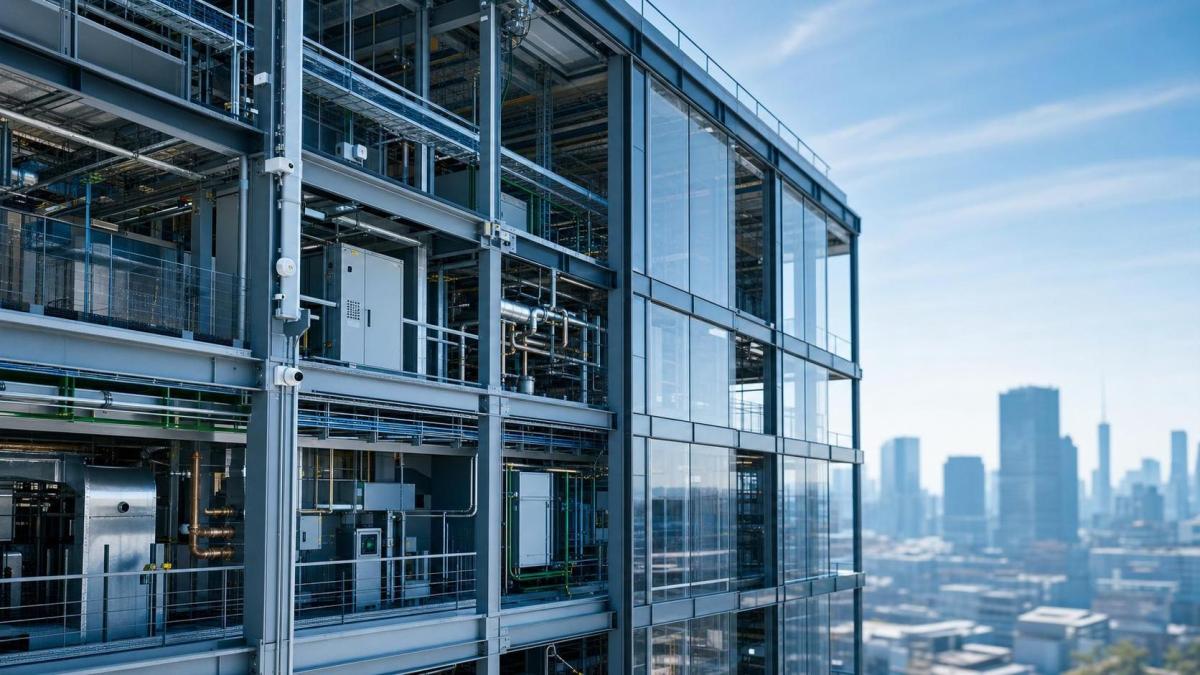
Construction and smart building will look more disciplined in 2026 than they did even two years ago.
The shift is no longer about pilots, showcase towers, or isolated digital tools.
What is becoming visible now is a broader reset in how assets are designed, built, connected, and managed.
Across infrastructure, industrial facilities, transit hubs, and commercial developments, expectations are rising on three fronts.
Projects must deliver faster, operate with tighter data visibility, and meet stronger carbon and resilience requirements.
That pressure is pulling construction and smart building into the same strategic conversation.
This matters because the physical world is being judged less by headline scale and more by lifecycle performance.
GIUT has framed this shift well through its focus on infrastructure intelligence, smart governance, and engineering-grade data.
In that context, construction and smart building are no longer separate upgrade tracks.
They are becoming part of one operational model for safer delivery, better asset control, and more sustainable urban systems.
Why the New Signals Are Getting Harder to Ignore
From recent market behavior, several signals stand out.
Digital twins are moving upstream, not staying in the facilities team after handover.
Prefabrication is expanding from cost control logic into schedule certainty and labor risk management.
Site automation is also becoming less experimental as robotics, machine control, and connected equipment mature.
At the same time, building intelligence is shifting away from standalone systems.
Owners increasingly want HVAC, security, energy, occupancy, maintenance, and grid interaction to function as one data environment.
This is where construction and smart building start to merge in practical terms.
If installation sequencing, sensor strategy, commissioning, and asset metadata are disconnected, later performance suffers.
The result is a growing preference for project models that reduce fragmentation before the building starts operating.
The forces behind that shift are not coming from one source
- Labor volatility is pushing more repeatable workflows, especially in high-complexity mechanical and electrical packages.
- Insurance and compliance pressure are increasing the value of traceable site data and verified commissioning records.
- Energy price uncertainty is making smart building controls a financial issue, not only a sustainability issue.
- Urban resilience planning is connecting buildings more tightly with transport, utility, and emergency response networks.
- Investors are paying closer attention to operational transparency, retrofit potential, and asset adaptability.
More importantly, these drivers reinforce each other.
That is why construction and smart building trends in 2026 will likely accelerate unevenly but persistently.
Digital Twins Are Becoming Decision Infrastructure
A few years ago, digital twin discussions often stayed at the visualization layer.
In 2026, the stronger use case is operational decision support.
Construction and smart building teams are using twin environments to compare design intent with field reality earlier.
That reduces rework, but the bigger value appears after turnover.
When sensor data, equipment histories, and energy performance feed the same model, the asset becomes easier to tune.
This has obvious implications for hospitals, airports, data centers, metro stations, and industrial campuses.
These assets cannot afford blind spots between construction information and operating information.
The more advanced owners now expect structured handover, not document dumps.
For GIUT’s infrastructure-oriented lens, this is a critical point.
The digital twin is no longer a design accessory.
It is becoming an operating backbone for the built environment.
Modular Delivery Is Expanding Beyond Housing and Repetition
One of the more important construction and smart building trends is the broader use of modular logic.
This does not only mean full volumetric modules.
It also includes prefabricated MEP racks, utility corridors, bathroom pods, facade units, plant rooms, and control assemblies.
The reason this matters in 2026 is simple.
Projects are under pressure to reduce site congestion while improving installation quality and predictability.
That pressure is strongest in sectors with dense systems and restricted outage windows.
More noticeable now is the connection between modular construction and smart building readiness.
When control devices, sensors, and communication pathways are integrated earlier, commissioning becomes less chaotic.
This can shorten the gap between practical completion and stable operation.
In real projects, that gap is often where value leaks out.
The opportunity is clear, but so are the constraints
Not every project is modular by default.
Transport limits, local codes, supplier depth, and tolerance management still shape feasibility.
The better question is not whether modularity is fashionable.
It is where standardization creates genuine control without damaging flexibility where it is still needed.
Smart Jobsites Are Starting to Influence Asset Quality, Not Just Site Safety
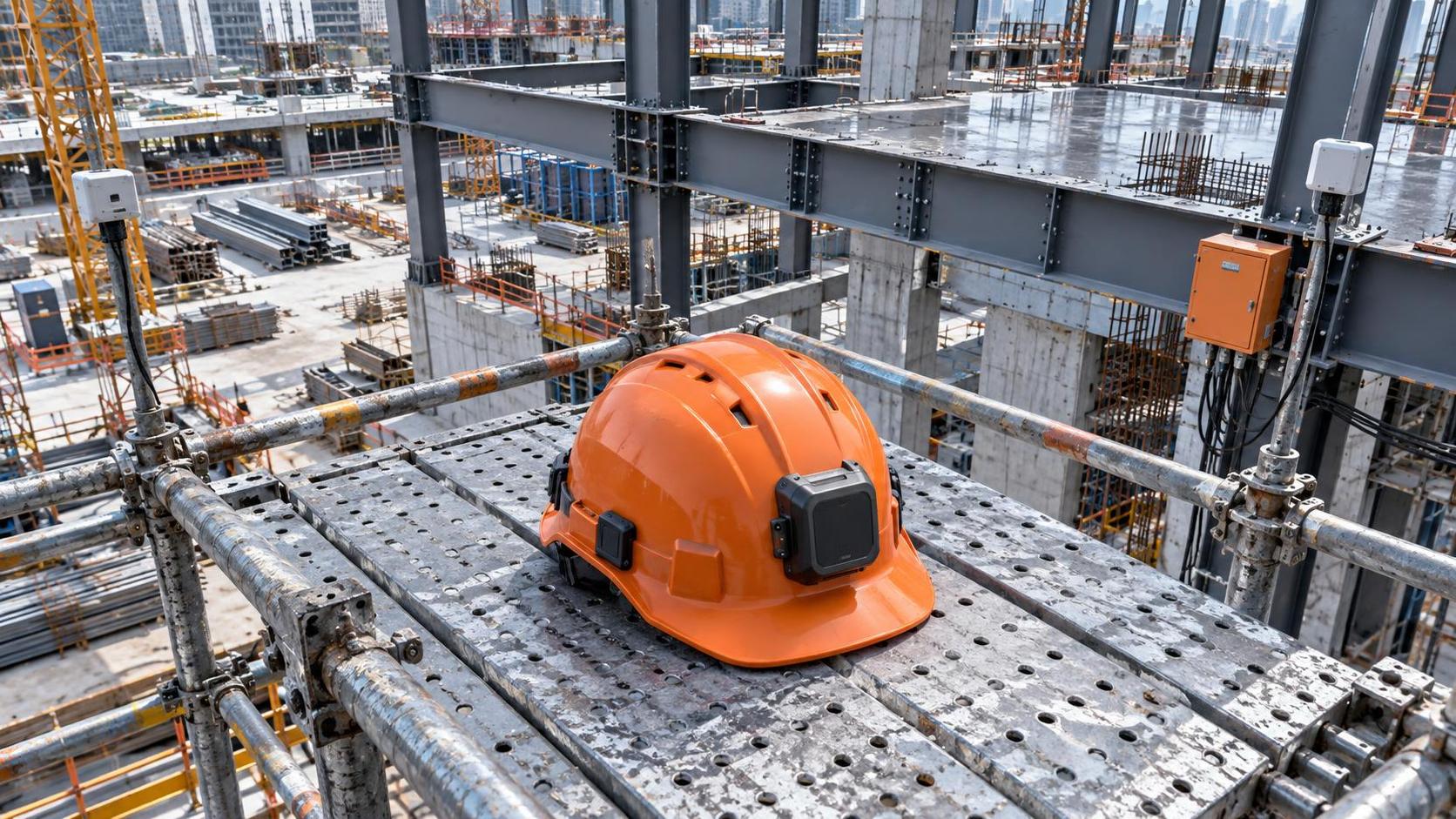
Connected jobsites used to be discussed mainly through safety wearables, cameras, and access systems.
Those remain relevant, but the stronger trend now is quality intelligence.
Construction and smart building programs are using reality capture, equipment telemetry, and sensor-based verification to improve field decisions.
This matters because many operational problems are installed during construction long before occupants arrive.
If duct leakage, cable routing conflicts, thermal bridge issues, or control device misplacement go unnoticed, the building inherits inefficiency.
A smarter jobsite catches those issues earlier.
It also creates stronger evidence for claims, schedule updates, and compliance reporting.
That is especially important on public infrastructure and cross-border projects where auditability is no longer optional.
The deeper message is that construction intelligence now affects downstream asset value in measurable ways.
Energy, Carbon, and Grid Interaction Are Reshaping Smart Building Priorities
A more obvious pressure heading into 2026 is the tightening link between buildings and energy systems.
Smart building platforms are being evaluated less for dashboard appeal and more for control precision.
Can they respond to time-based tariffs, renewable variability, battery coordination, and occupant comfort without instability?
That question is moving closer to core investment logic.
For construction and smart building teams, this creates a planning shift.
Envelope design, mechanical system selection, control architecture, and data interoperability can no longer be optimized in isolation.
Buildings are expected to behave more like active nodes in a wider urban system.
That aligns with GIUT’s broader view of smart governance, transport coordination, and infrastructure performance.
The smart building of 2026 is not only internal and automated.
It is externally responsive.
Where this creates the biggest impact
- Campus environments where multiple buildings share loads and operational schedules.
- Transit-linked assets that require energy resilience and high uptime.
- Industrial and logistics facilities with volatile occupancy or process demand.
- Urban retrofits where grid constraints shape future expansion choices.
What Deserves Closer Attention Before 2026 Planning Hardens
Not every headline trend will have the same practical value.
The more useful approach is to test construction and smart building decisions against a few hard questions.
- Does the digital model continue into operations with usable asset data, or stop at visualization?
- Can modular packages reduce schedule exposure without creating supplier concentration risk?
- Will building controls remain interoperable as future systems, vehicles, and grid interfaces are added?
- Are commissioning plans detailed enough to validate both equipment function and data quality?
- Do sustainability targets include operational realism, not only design-stage carbon claims?
These questions help separate durable progress from expensive complexity.
They also reflect a broader market reality.
In 2026, the strongest construction and smart building outcomes will come from integration discipline more than technology volume.
The Near-Term Outlook Favors Integration, Proof, and Measurable Performance
The coming year will likely reward teams that treat built assets as long-life data systems, not just completed structures.
That means earlier coordination between design, fabrication, controls, commissioning, and operations.
It also means being selective.
Some tools will remain overstated, while others quietly become essential because they solve execution bottlenecks.
For construction and smart building, the most credible direction into 2026 is not more digital noise.
It is tighter alignment between physical delivery and intelligent operation.
A practical next step is to map where asset data is created, where it breaks, and who needs it after handover.
From there, compare modular options, commissioning depth, interoperability standards, and energy control priorities against real project constraints.
That kind of staged review is far more useful than chasing every emerging feature.
It is also the clearest way to turn construction and smart building trends into durable infrastructure value.
Get weekly intelligence in your inbox.
No noise. No sponsored content. Pure intelligence.
News Recommendations
 Sep 19, 2026How an electronics application guide helps prevent component mismatchHow an electronics application guide helps prevent component mismatch
 Sep 18, 2026When a resource allocation platform improves project deliveryWhen a resource allocation platform improves project delivery
 Sep 17, 2026What to compare when evaluating mineral processing equipment manufacturersWhat to compare when evaluating mineral processing equipment manufacturers
 Sep 16, 2026How mineral separation optimization can reduce concentrate lossesHow mineral separation optimization can reduce concentrate losses
 Sep 15, 2026How to assess lifecycle costs in urban tech procurementHow to assess lifecycle costs in urban tech procurement
 Sep 14, 2026Heavy industry technology trends reshaping capital investment prioritiesHeavy industry technology trends reshaping capital investment priorities
 Sep 14, 2026Global Industrial Equipment Procurement: How Top OEMs Qualify Suppliers for Mining & Infrastructure ProjectsGlobal Industrial Equipment Procurement: How Top OEMs Qualify Suppliers for Mining & Infrastructure Projects
 Sep 14, 2026Industrial & Mining Equipment Procurement: Balancing Local Sourcing, Lead Time, and Certification RequirementsIndustrial & Mining Equipment Procurement: Balancing Local Sourcing, Lead Time, and Certification Requirements
 Sep 14, 2026Infrastructure & Equipment Upgrades: What Procurement Teams Must Verify Before Signing Off on New ContractsInfrastructure & Equipment Upgrades: What Procurement Teams Must Verify Before Signing Off on New Contracts
 Sep 14, 2026Why Infrastructure Equipment Buyers Are Shifting from Catalog-Based to Capability-Based Supplier SelectionWhy Infrastructure Equipment Buyers Are Shifting from Catalog-Based to Capability-Based Supplier Selection
 Sep 14, 2026Process Automation Project Execution: How to Align Supplier Capabilities with PLC Integration, Cybersecurity & Commissioning MilestonesProcess Automation Project Execution: How to Align Supplier Capabilities with PLC Integration, Cybersecurity & Commissioning Milestones
 Sep 14, 2026Are intelligent traffic systems worth the investment for small cities?Are intelligent traffic systems worth the investment for small cities?
 Sep 14, 2026How do intelligent traffic systems handle sensor failures?How do intelligent traffic systems handle sensor failures?
 Sep 14, 2026What should I check before accepting a smart building system?What should I check before accepting a smart building system?
 Sep 14, 2026Is a smart building system worth the maintenance cost?Is a smart building system worth the maintenance cost?
 Sep 14, 2026What data is needed for reliable resource allocation planning?What data is needed for reliable resource allocation planning?
 Sep 14, 2026How can resource allocation software reduce equipment idle time?How can resource allocation software reduce equipment idle time?
 Sep 14, 2026How should smart devices be maintained in harsh outdoor conditions?How should smart devices be maintained in harsh outdoor conditions?
 Sep 14, 2026Do smart devices improve worker safety on construction sites?Do smart devices improve worker safety on construction sites?
 Sep 14, 2026What environmental risks must be assessed before deep-sea mining?What environmental risks must be assessed before deep-sea mining?
 Sep 14, 2026Is deep-sea mining equipment commercially viable in 2026?Is deep-sea mining equipment commercially viable in 2026?
 Sep 14, 2026What Inspection Checks Should Procurement Teams Perform Before Ordering Dredging Equipment in 2026?What Inspection Checks Should Procurement Teams Perform Before Ordering Dredging Equipment in 2026?
 Sep 13, 2026How to verify an industrial product information source before specifying equipmentHow to verify an industrial product information source before specifying equipment
 Sep 12, 2026Which intelligent traffic systems hardware fits an urban intersection?Which intelligent traffic systems hardware fits an urban intersection?
 Sep 11, 2026How pump capacity affects response coverage for municipal fire fighting vehiclesHow pump capacity affects response coverage for municipal fire fighting vehicles
 Sep 10, 2026What to verify before choosing a heavy industry equipment supplierWhat to verify before choosing a heavy industry equipment supplier
 Sep 09, 2026When do adaptive urban traffic control systems reduce corridor delays?When do adaptive urban traffic control systems reduce corridor delays?