Why High-Speed Rail Maintenance Costs Catch Teams Off Guard
High-speed rail promises speed and precision, yet maintenance costs often surprise even experienced teams. From civil engineering interfaces and heavy equipment planning to digital twin diagnostics and safety controls, hidden expenses can escalate fast. For project leaders, buyers, and technical evaluators, understanding what drives these cost gaps is essential to improving lifecycle performance, risk management, and long-term investment decisions.
In high-speed rail operations, maintenance is not a narrow workshop function. It sits at the intersection of track geometry, rolling stock wear, signaling integrity, power supply stability, labor planning, and regulatory compliance. A line designed for 250 km/h to 350 km/h service can quickly accumulate cost pressure if planners underestimate renewal cycles, spare parts logistics, or fault-detection requirements.
For infrastructure researchers, operators, procurement teams, and enterprise decision-makers, the real question is not whether maintenance will be expensive. The real question is why the cost profile often differs so sharply from early forecasts. The answer usually lies in hidden interfaces, incomplete lifecycle modeling, and an underestimation of how fast small technical gaps become recurring operational expenses.
Why cost estimates fail early in the lifecycle
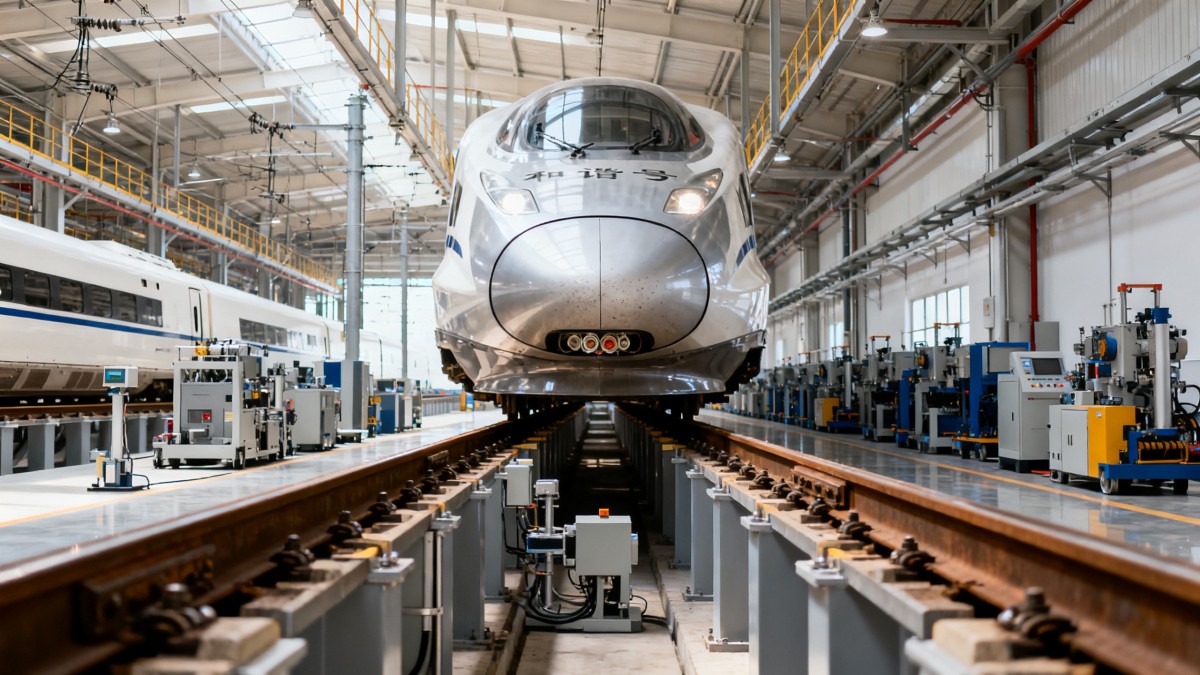
Many high-speed rail maintenance budgets start with visible assets: rails, sleepers, switches, depots, inspection vehicles, and trainsets. What gets missed is the cost of keeping these systems aligned within tight tolerances over 20 to 30 years. On a high-speed corridor, even millimeter-level deviations in track geometry can increase wear, trigger speed restrictions, or require unplanned intervention windows.
Another common issue is assuming linear wear. In reality, deterioration is rarely smooth. Traffic density, axle load, climate, tunnel humidity, ballast condition, bridge transitions, and braking patterns can create uneven degradation. Teams may budget for standard cycles such as 6-month inspections or 12-month component reviews, only to discover that some assets need attention every 8 to 10 weeks in high-stress sections.
Early business cases also tend to separate capital expenditure from operational expenditure too rigidly. A lower upfront choice in inspection equipment, condition monitoring, or access platforms may appear attractive during procurement. However, it can raise labor hours, outage time, and fault isolation costs throughout the asset lifecycle. In practice, a 5% saving at acquisition can produce a much larger maintenance burden over the next 10 years.
The table below shows where maintenance teams most often experience cost gaps between planning assumptions and field reality.
The key takeaway is that maintenance overruns are rarely caused by a single large mistake. They usually come from multiple underestimated variables that compound over time: 2-hour night work windows instead of full-day access, 3-tier approval processes for safety-critical replacements, or 12-to-24-week lead times for specialized components.
The hidden role of interfaces
Interfaces are among the least visible and most expensive aspects of high-speed rail maintenance. Track-to-bridge transitions, vehicle-to-track dynamics, overhead line-to-pantograph interaction, and signaling-to-operations coordination all create maintenance exposure. If teams budget by discipline rather than by interface, they miss the cost of diagnostics, root-cause analysis, and cross-contractor coordination.
The biggest hidden maintenance cost categories
High-speed rail systems generate hidden costs in places that look manageable on paper. The most frequent categories include access restrictions, specialist labor, precision tools, digital monitoring subscriptions, and compliance documentation. None of these are optional in a safety-critical network, and each one can grow faster than inflation if not managed with lifecycle discipline.
Access is a major example. Many teams assume maintenance can be completed during planned possession windows of 3 to 5 hours overnight. In reality, travel to site, isolation procedures, safety checks, machine setup, and hand-back protocols may consume 40% to 60% of that period. This means productive maintenance time is often far shorter than scheduled time, pushing unit costs up.
Labor is another source of surprise. High-speed rail requires certified technicians for signaling, traction power, rolling stock diagnostics, and track geometry measurement. A project may have adequate headcount on paper, but insufficient skill mix in practice. If just 1 of 4 specialist roles is unavailable, entire work packages can be delayed, extending downtime and increasing contractor call-out charges.
The following list highlights cost areas that buyers and project managers should examine before approving annual maintenance plans.
- Night possession inefficiency, where a 4-hour access slot yields only 1.5 to 2.5 hours of productive work.
- Switch and crossing maintenance, which often needs more frequent inspection than plain line track due to mechanical complexity.
- Digital system upkeep, including software updates, sensor calibration, cybersecurity reviews, and data integration support.
- Environmental exposure, especially in coastal, desert, mountainous, or freeze-thaw regions where wear patterns accelerate.
- Emergency response stock, because safety-critical components cannot always wait 8 to 16 weeks for standard delivery.
To make these exposures easier to compare, the table below summarizes hidden cost categories and their operational implications.
These categories matter because they reshape unit economics. A maintenance strategy that looks efficient at the asset level can become costly at the corridor level once crew transport, safety isolation, and digital support are added. That is why strong operators evaluate cost per intervention, cost per track-kilometer, and cost per train-kilometer together rather than in isolation.
Rolling stock and infrastructure are not separate budgets in practice
When wheels, rails, pantographs, and catenary interact, wear migrates across systems. A vehicle issue may show up as track degradation, while an infrastructure tolerance issue may increase rolling stock maintenance frequency. This is one reason separate departmental budgets often hide the true cost drivers until the system is already under stress.
How digital twins, diagnostics, and data governance affect cost
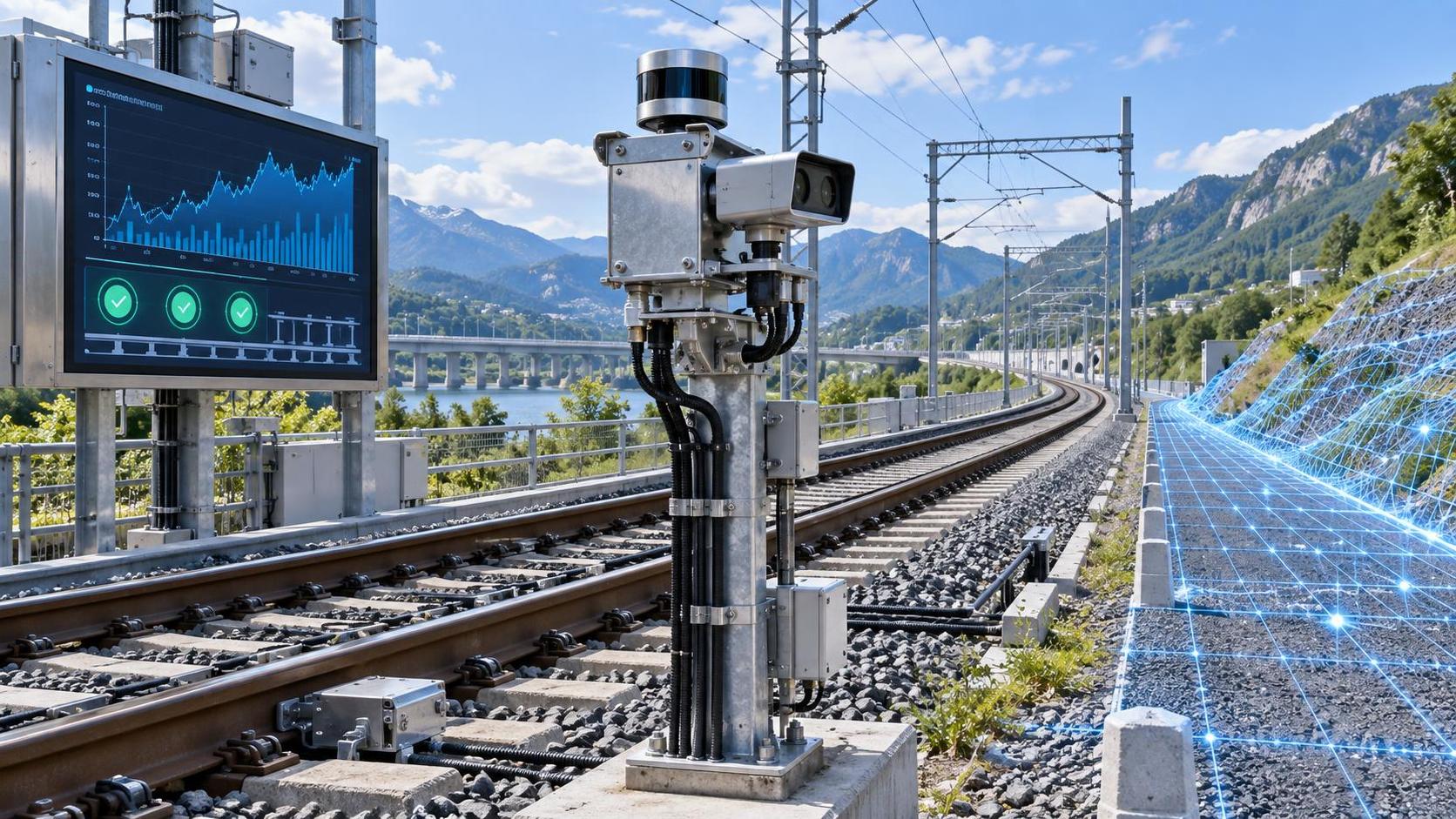
Digital twins and condition-monitoring platforms are often promoted as cost savers, and they can be. But they also introduce their own expenditure profile. Sensors must be installed, calibrated, protected, and replaced. Data must be cleaned, stored, interpreted, and linked to maintenance actions. Without a disciplined workflow, organizations end up paying for visibility without realizing operational savings.
A practical digital maintenance model usually has 3 layers: data capture, diagnostic interpretation, and decision execution. If even one layer is weak, costs rise. For example, collecting vibration and geometry data every 24 hours is useful only if threshold rules are credible and work orders are triggered fast enough to prevent secondary damage. Otherwise, teams generate alerts but still perform reactive maintenance.
Data governance also matters more than many buyers expect. Different contractors may supply track systems, signaling assets, onboard equipment, and analytics software. If data standards are inconsistent, maintenance teams spend excessive time reconciling formats, validating timestamps, and manually linking fault histories. This can absorb hundreds of labor hours per quarter on a large network.
For technical evaluators and procurement leaders, the following implementation sequence helps reduce digital maintenance waste.
- Define 5 to 8 critical failure modes before buying more sensors.
- Set action thresholds tied to speed restriction risk, service disruption, or safety exposure.
- Standardize data naming, inspection intervals, and alarm ownership across contractors.
- Pilot on one depot, one line segment, or one subsystem for 3 to 6 months before scaling.
- Measure outcomes using repeat faults, response time, and avoided corrective interventions.
This approach keeps digital twin investments linked to maintenance economics. Instead of treating software as a generic modernization expense, operators can compare the annual platform cost against concrete outputs such as reduced fault recurrence, shorter troubleshooting cycles, or fewer emergency possessions.
A common misunderstanding about predictive maintenance
Predictive maintenance does not automatically reduce labor. In many cases, the first 12 to 18 months increase workload because teams must validate models, tune thresholds, and inspect flagged anomalies. The savings appear later, when the organization learns which indicators truly predict degradation and which only create noise.
Procurement, contracting, and spare-parts decisions that change the cost curve
Maintenance costs often catch teams off guard because procurement is optimized for purchase price rather than serviceability. In high-speed rail, this is a costly shortcut. The better purchasing question is not simply, “What does this component cost today?” It is, “What will it cost to inspect, replace, stock, and support over 15 to 25 years?”
Contract design also matters. If service contracts define response times but not diagnostic depth, root-cause documentation, spare-parts availability, and training obligations, operators may receive compliance on paper but weak long-term performance. A 4-hour response SLA sounds strong, yet it has limited value if the correct replacement module arrives 10 days later.
Spare-parts strategy should be segmented by criticality. Safety-critical and long-lead items require a different stocking logic than standard consumables. Teams that rely on generic inventory targets often either overstock low-risk items or understock high-impact components. Both outcomes are expensive: one ties up capital, the other increases downtime risk.
The table below can be used as a practical procurement checklist for high-speed rail maintenance planning.
For distributors, agents, and project owners, this means maintenance cost control begins long before commissioning. Vendor support depth, documentation quality, training transfer, and data compatibility can be as financially important as the hardware itself.
Four questions buyers should ask before award
- What is the realistic lead time range for critical replacement parts: 2 weeks, 8 weeks, or 24 weeks?
- Which maintenance tasks require certified specialists rather than general rail technicians?
- How much planned work can be completed within a 3-hour possession after setup and safety isolation?
- Which subsystem data can be exported into the operator’s existing maintenance platform without manual re-entry?
A practical framework to reduce surprise maintenance costs
The most effective way to reduce surprise costs is to move from asset-based budgeting to scenario-based lifecycle planning. Instead of estimating each subsystem separately, operators should model maintenance around service intensity, corridor constraints, environmental exposure, and risk tolerance. This gives management a more realistic picture of cost volatility over 5-year, 10-year, and 20-year periods.
A strong framework usually combines technical baselines, commercial safeguards, and digital feedback loops. Technical baselines define acceptable wear, response thresholds, and intervention cycles. Commercial safeguards align contracts with availability and root-cause resolution. Digital feedback loops convert inspection and operations data into revised maintenance plans every quarter or every half year.
Project managers and quality or safety leaders can use the following 6-point checklist to improve control.
- Rank assets by consequence of failure, not just replacement value.
- Separate routine, condition-based, and emergency work in the annual budget.
- Model labor using actual access time rather than nominal shift length.
- Review top recurring faults every 90 days with engineering and procurement together.
- Set minimum data standards for all new equipment and maintenance software.
- Track cost per intervention and cost avoidance from predictive actions.
This framework is especially useful for organizations expanding networks, upgrading to smart infrastructure, or integrating digital twins into maintenance planning. It helps decision-makers compare options with more discipline, whether they are choosing inspection technology, reviewing service models, or evaluating long-term supply support.
High-speed rail maintenance costs catch teams off guard not because the systems are mysterious, but because the cost structure is deeply interconnected. Track, power, signaling, rolling stock, software, workforce capability, and procurement policy all shape the final outcome. Organizations that treat maintenance as a strategic lifecycle function, rather than a downstream repair budget, are far better positioned to improve reliability and protect investment value.
FAQ: common decision-stage questions
How often should maintenance budgets be revalidated?
For high-speed rail systems, a formal review every 6 to 12 months is common, with quarterly checks for fault trends, spare-parts exposure, and possession efficiency. Major updates are also advisable after timetable changes, fleet increases, or significant climate-related events.
Is predictive maintenance always cheaper than preventive maintenance?
Not always in the first year. Predictive models can require upfront spending on sensors, integration, and engineering validation. They usually perform best when applied to high-impact failure modes where avoided disruption and reduced secondary damage justify the added digital cost.
What should technical evaluators focus on first?
Start with the top 3 to 5 systems that combine safety criticality, long lead times, and frequent intervention. In many networks, these include switches, signaling assets, traction power interfaces, and selected rolling stock components exposed to high wear.
For organizations navigating rail maintenance strategy, digital infrastructure planning, and long-term procurement decisions, GIUT provides the engineering-focused perspective needed to connect physical assets with intelligent management. If you are assessing lifecycle risk, refining maintenance specifications, or comparing infrastructure technology options, now is the right time to get a tailored solution, consult product details, and explore more high-value infrastructure insights.
Get weekly intelligence in your inbox.
No noise. No sponsored content. Pure intelligence.
News Recommendations
 Sep 19, 2026How an electronics application guide helps prevent component mismatchHow an electronics application guide helps prevent component mismatch
 Sep 18, 2026When a resource allocation platform improves project deliveryWhen a resource allocation platform improves project delivery
 Sep 17, 2026What to compare when evaluating mineral processing equipment manufacturersWhat to compare when evaluating mineral processing equipment manufacturers
 Sep 16, 2026How mineral separation optimization can reduce concentrate lossesHow mineral separation optimization can reduce concentrate losses
 Sep 15, 2026How to assess lifecycle costs in urban tech procurementHow to assess lifecycle costs in urban tech procurement
 Sep 14, 2026Heavy industry technology trends reshaping capital investment prioritiesHeavy industry technology trends reshaping capital investment priorities
 Sep 14, 2026Global Industrial Equipment Procurement: How Top OEMs Qualify Suppliers for Mining & Infrastructure ProjectsGlobal Industrial Equipment Procurement: How Top OEMs Qualify Suppliers for Mining & Infrastructure Projects
 Sep 14, 2026Industrial & Mining Equipment Procurement: Balancing Local Sourcing, Lead Time, and Certification RequirementsIndustrial & Mining Equipment Procurement: Balancing Local Sourcing, Lead Time, and Certification Requirements
 Sep 14, 2026Infrastructure & Equipment Upgrades: What Procurement Teams Must Verify Before Signing Off on New ContractsInfrastructure & Equipment Upgrades: What Procurement Teams Must Verify Before Signing Off on New Contracts
 Sep 14, 2026Why Infrastructure Equipment Buyers Are Shifting from Catalog-Based to Capability-Based Supplier SelectionWhy Infrastructure Equipment Buyers Are Shifting from Catalog-Based to Capability-Based Supplier Selection
 Sep 14, 2026Process Automation Project Execution: How to Align Supplier Capabilities with PLC Integration, Cybersecurity & Commissioning MilestonesProcess Automation Project Execution: How to Align Supplier Capabilities with PLC Integration, Cybersecurity & Commissioning Milestones
 Sep 14, 2026Are intelligent traffic systems worth the investment for small cities?Are intelligent traffic systems worth the investment for small cities?
 Sep 14, 2026How do intelligent traffic systems handle sensor failures?How do intelligent traffic systems handle sensor failures?
 Sep 14, 2026What should I check before accepting a smart building system?What should I check before accepting a smart building system?
 Sep 14, 2026Is a smart building system worth the maintenance cost?Is a smart building system worth the maintenance cost?
 Sep 14, 2026What data is needed for reliable resource allocation planning?What data is needed for reliable resource allocation planning?
 Sep 14, 2026How can resource allocation software reduce equipment idle time?How can resource allocation software reduce equipment idle time?
 Sep 14, 2026How should smart devices be maintained in harsh outdoor conditions?How should smart devices be maintained in harsh outdoor conditions?
 Sep 14, 2026Do smart devices improve worker safety on construction sites?Do smart devices improve worker safety on construction sites?
 Sep 14, 2026What environmental risks must be assessed before deep-sea mining?What environmental risks must be assessed before deep-sea mining?
 Sep 14, 2026Is deep-sea mining equipment commercially viable in 2026?Is deep-sea mining equipment commercially viable in 2026?
 Sep 14, 2026What Inspection Checks Should Procurement Teams Perform Before Ordering Dredging Equipment in 2026?What Inspection Checks Should Procurement Teams Perform Before Ordering Dredging Equipment in 2026?
 Sep 13, 2026How to verify an industrial product information source before specifying equipmentHow to verify an industrial product information source before specifying equipment
 Sep 12, 2026Which intelligent traffic systems hardware fits an urban intersection?Which intelligent traffic systems hardware fits an urban intersection?
 Sep 11, 2026How pump capacity affects response coverage for municipal fire fighting vehiclesHow pump capacity affects response coverage for municipal fire fighting vehicles
 Sep 10, 2026What to verify before choosing a heavy industry equipment supplierWhat to verify before choosing a heavy industry equipment supplier
 Sep 09, 2026When do adaptive urban traffic control systems reduce corridor delays?When do adaptive urban traffic control systems reduce corridor delays?