How to Choose Cranes for Tight Urban Jobsites
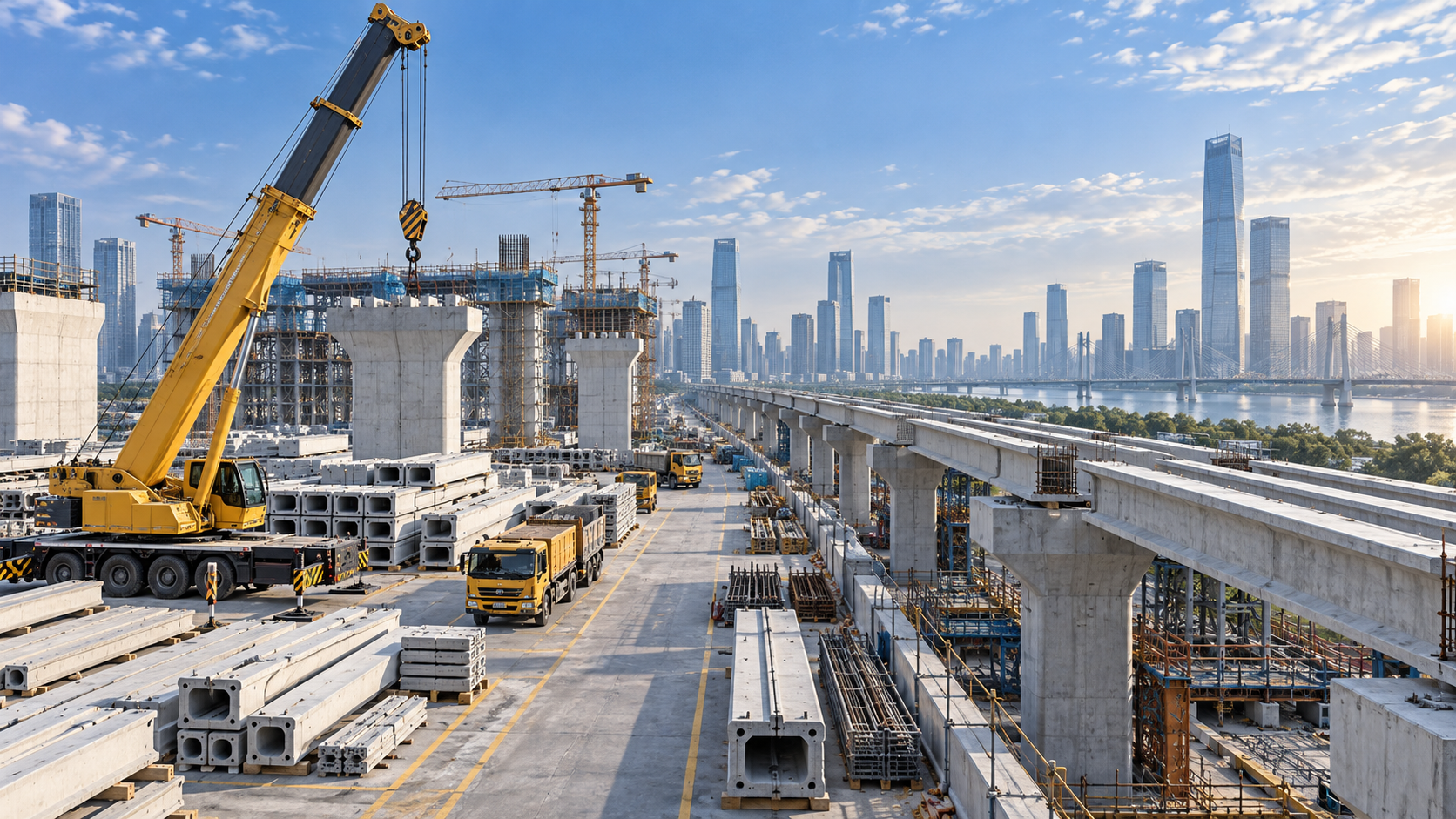
Choosing cranes for tight urban jobsites is rarely about maximum lifting capacity alone. In dense city environments, the best crane is usually the one that can safely work within street closures, nearby buildings, utility constraints, delivery windows, and strict permit conditions while still meeting productivity targets. For most urban projects, the decision comes down to matching lift requirements with site access, working radius, setup space, ground conditions, and transport logistics—not simply picking the biggest machine available.
For project managers, crane buyers, operators, safety teams, and decision-makers, the most practical approach is to compare crane types against the actual site envelope: how much room you have to enter, assemble, swing, and lift. A crane that looks ideal on paper can become costly if it needs extra road occupation, longer mobilization, or repeated reconfiguration. This guide explains how to choose cranes for tight urban jobsites with a focus on real project constraints, safer planning, and better equipment ROI.
Start with the real question: what can the site actually accept?
Before comparing brands, market shares, or headline lifting charts, define the physical and regulatory limits of the urban jobsite. This is the step that eliminates poor-fit options early.
Key site questions include:
- What is the available setup footprint? Measure not only the crane pad, but also delivery access, outrigger spread, tail swing, and assembly area.
- What is the required lift radius and hook height? Urban sites often need to reach over existing structures, power lines, scaffolding, or neighboring properties.
- How restricted is access? Narrow roads, low bridges, underground structures, and traffic control windows can limit crane size and transport method.
- What are the ground-bearing conditions? Basement slabs, utility corridors, tunnels, and suspended decks can sharply reduce allowable loads.
- What permits and neighborhood controls apply? Noise limits, lane closures, work-hour restrictions, and public safety barriers directly affect crane choice.
In many city projects, the right answer is not the crane with the highest capacity, but the crane with the best ratio of lifting performance to footprint, setup time, and compliance risk.
Which crane types work best in tight urban jobsites?
Different crane categories solve different urban constraints. The best choice depends on whether the project is a short-duration lift, a repetitive structure build, or a complex site with limited staging.
1. City cranes
City cranes are often one of the most practical solutions for congested urban work. They are designed for compact transport dimensions, tight steering, and relatively fast setup.
Best for: dense downtown streets, moderate-height projects, short mobilization windows, and jobs where road occupation must be minimized.
Main advantages:
- Compact footprint
- Better maneuverability in restricted streets
- Faster deployment than larger conventional mobile cranes in many cases
Main limits:
- Less suitable for very high hook heights or very heavy repetitive lifts
- May be constrained by radius on larger building envelopes
2. All-terrain mobile cranes
All-terrain cranes are highly versatile and commonly used for urban infrastructure and commercial construction when lift demands exceed compact city crane capability.
Best for: heavier picks, infrastructure works, mechanical installations, and projects requiring flexible road travel plus high lifting performance.
Main advantages:
- Strong lifting charts across multiple configurations
- Useful for a wide range of urban civil engineering tasks
- Can support demanding picks where a smaller crane would need multiple lift stages
Main limits:
- Larger setup area and outrigger demand
- Higher transport and permit complexity
- May create more disruption in traffic-sensitive zones
3. Tower cranes
For multi-story building projects with long durations, tower cranes are often the most efficient answer. They minimize repeated street-level crane mobilization and can serve ongoing vertical construction efficiently.
Best for: high-rise, mid-rise, and long-duration building projects with repetitive material movement.
Main advantages:
- Excellent coverage for vertical construction
- Reduced need for repeated mobile crane visits
- Efficient handling of formwork, steel, prefabricated elements, and building materials
Main limits:
- Requires planning for erection and dismantling
- Needs anchoring, climbing strategy, or foundation support
- Less flexible for changing site geometry once installed
4. Crawler cranes with compact or luffing solutions
Crawler cranes are less common in very tight downtown plots unless the site has enough staging area, but they can be valuable where pick stability and heavy loads matter. In specialized cases, compact crawler options can outperform wheeled cranes on constrained ground conditions.
Best for: heavy lifts, difficult ground, and projects where mobility on site matters more than public-road travel.
Main limits: transport complexity, assembly requirements, and larger occupation of site resources.
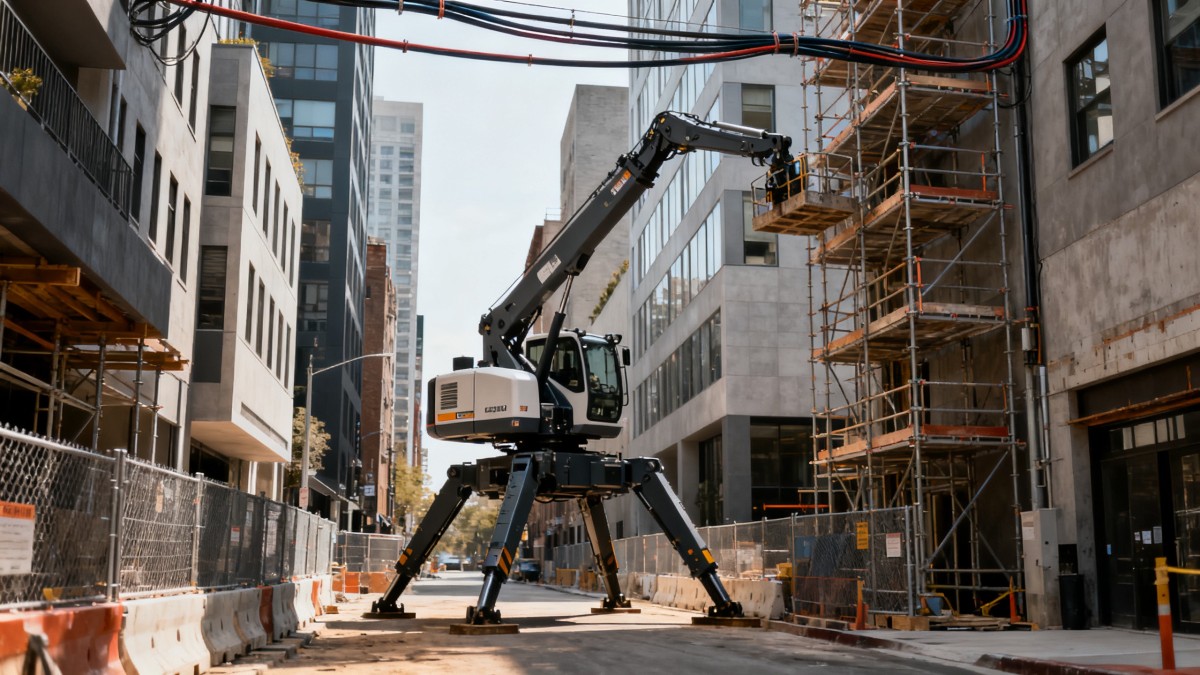
5. Spider cranes and mini cranes
For interior atriums, courtyards, alley-access projects, façade work, and retrofit jobs, spider cranes can be highly effective.
Best for: ultra-tight access, indoor lifting, glazing, MEP installation, and renovation work.
Main advantages:
- Can pass through restricted access points
- Useful where larger cranes cannot enter
- Low footprint for precision lifting
Main limits:
- Limited capacity and radius compared with mainstream mobile cranes
- Not suitable for broader structural lifting programs
How to match crane selection to urban project conditions
A reliable crane decision process should evaluate five variables together:
Lift profile
List the heaviest loads, the farthest pick radius, the highest hook height, and the most difficult installation point. One problematic lift often defines the crane class more than routine lifts do.
Site footprint
Urban jobsites are constrained not only by building edges but also by sidewalks, neighboring structures, temporary works, site cabins, concrete mixer access, and emergency access routes for vehicles such as fire trucks. If crane setup blocks critical circulation, productivity and safety both suffer.
Mobilization and assembly
Some cranes fit the lift but fail the logistics test. Evaluate how many transport vehicles are needed, whether assembly requires another assist crane, and how long the road closure must remain in place.
Ground and structural load limits
Never overlook underground basements, utilities, transit tunnels, culverts, vaults, and suspended slabs. In cities, support conditions often drive crane selection more than capacity charts do.
Operating window
If the site only allows night work, weekend closures, or short daily lifting periods, a fast-setup crane may create better total project efficiency than a larger but slower alternative.
What buyers and project leaders should compare before choosing a crane
Procurement and project evaluation should go beyond rental rate or purchase price. A lower-cost crane can become the more expensive option if it causes extra closures, lower lifting efficiency, or schedule drift.
Compare cranes using these practical criteria:
- Total installed cost: crane cost, transport, permits, escort vehicles, assembly, dismantling, and operator requirements
- Productivity per shift: lifts completed, average cycle time, and reconfiguration frequency
- Space efficiency: setup area versus usable lifting performance
- Risk profile: exposure to public interface, oversailing, weather sensitivity, and utility conflicts
- Schedule impact: time to mobilize, commission, and maintain lifting operations
- Digital compatibility: fit with BIM, digital twin planning, telemetry, anti-collision systems, and smart jobsite monitoring
For enterprise decision-makers, this wider comparison usually leads to better lifecycle value than selecting by capacity or day rate alone.
Safety factors that matter more in dense city environments
Urban crane operations face a different risk profile than open-field projects. Public exposure, limited escape routes, and overhead obstructions demand stricter planning.
Critical safety checkpoints include:
- Outrigger and support verification with documented bearing calculations
- Swing radius control near adjacent buildings, streets, and public areas
- Power line and utility clearance
- Traffic and pedestrian segregation
- Lift path planning over structures, roads, and active work zones
- Wind and microclimate assessment between tall buildings
- Emergency access preservation for site response and city services
Safety managers and quality-control teams should also confirm operator visibility, communication method, signaling procedure, and whether the crane configuration changes introduce new hazards during the project.
When digital planning improves crane choice
On advanced urban projects, crane selection increasingly benefits from BIM models, smart jobsite systems, and digital twin workflows. These tools help teams visualize crane position, hook path, building interference, and logistics timing before the machine arrives on site.
Digital planning is especially useful for:
- Testing crane placement on restricted plots
- Checking reach against adjacent buildings and temporary works
- Coordinating crane activity with concrete mixers, delivery vehicles, and erection crews
- Reducing clashes with urban traffic control plans
- Improving documentation for clients, authorities, and insurers
For smart city and digitally managed infrastructure projects, this planning layer also supports stronger auditability and more predictable resource allocation.
A practical crane selection checklist for tight urban jobsites
Use this short checklist before final approval:
- Define the worst-case lift, not just the average lift.
- Confirm actual setup footprint, including outrigger spread and assembly zone.
- Verify transport route limits: width, height, bridge load, and turning radius.
- Review ground-bearing capacity and underground constraints.
- Check permit conditions, road closures, noise windows, and public safety rules.
- Compare total project cost, not just crane rental or purchase price.
- Assess whether tower, city, all-terrain, crawler, or spider crane best fits the job duration and access profile.
- Use digital modeling if neighboring structures or traffic conditions are complex.
- Validate operator visibility, signaling plan, and emergency access.
- Choose the crane that best balances lift performance, footprint, speed, and risk.
Common selection mistakes to avoid
The most frequent urban crane selection errors are predictable:
- Choosing by maximum capacity instead of working radius and site fit
- Ignoring assembly and transport complexity
- Underestimating ground conditions over basements or utilities
- Failing to account for permit restrictions and traffic management cost
- Selecting a flexible crane for a repetitive long-term job that would be better served by a tower crane
- Skipping digital lift planning on congested sites
A well-chosen crane reduces not only lifting risk, but also labor waiting time, delivery conflicts, and schedule instability across the whole project.
Conclusion: the best urban crane is the one that fits the site, the schedule, and the risk profile
How to choose cranes for tight urban jobsites comes down to one principle: prioritize fit over headline size. The right crane must satisfy lift demands while working within the realities of city access, footprint, ground limits, permits, and safety controls. In many cases, compact city cranes, tower cranes, or even spider cranes deliver better overall value than larger machines that are harder to mobilize and manage.
For operators, evaluators, procurement teams, and project leaders, the strongest decision method is structured comparison: lift profile, site constraints, logistics, safety, and total project impact. When those factors are reviewed together—ideally with digital planning support—the crane selection becomes safer, more efficient, and more commercially sound.
Get weekly intelligence in your inbox.
No noise. No sponsored content. Pure intelligence.
News Recommendations
 Sep 19, 2026How an electronics application guide helps prevent component mismatchHow an electronics application guide helps prevent component mismatch
 Sep 18, 2026When a resource allocation platform improves project deliveryWhen a resource allocation platform improves project delivery
 Sep 17, 2026What to compare when evaluating mineral processing equipment manufacturersWhat to compare when evaluating mineral processing equipment manufacturers
 Sep 16, 2026How mineral separation optimization can reduce concentrate lossesHow mineral separation optimization can reduce concentrate losses
 Sep 15, 2026How to assess lifecycle costs in urban tech procurementHow to assess lifecycle costs in urban tech procurement
 Sep 14, 2026Heavy industry technology trends reshaping capital investment prioritiesHeavy industry technology trends reshaping capital investment priorities
 Sep 14, 2026Global Industrial Equipment Procurement: How Top OEMs Qualify Suppliers for Mining & Infrastructure ProjectsGlobal Industrial Equipment Procurement: How Top OEMs Qualify Suppliers for Mining & Infrastructure Projects
 Sep 14, 2026Industrial & Mining Equipment Procurement: Balancing Local Sourcing, Lead Time, and Certification RequirementsIndustrial & Mining Equipment Procurement: Balancing Local Sourcing, Lead Time, and Certification Requirements
 Sep 14, 2026Infrastructure & Equipment Upgrades: What Procurement Teams Must Verify Before Signing Off on New ContractsInfrastructure & Equipment Upgrades: What Procurement Teams Must Verify Before Signing Off on New Contracts
 Sep 14, 2026Why Infrastructure Equipment Buyers Are Shifting from Catalog-Based to Capability-Based Supplier SelectionWhy Infrastructure Equipment Buyers Are Shifting from Catalog-Based to Capability-Based Supplier Selection
 Sep 14, 2026Process Automation Project Execution: How to Align Supplier Capabilities with PLC Integration, Cybersecurity & Commissioning MilestonesProcess Automation Project Execution: How to Align Supplier Capabilities with PLC Integration, Cybersecurity & Commissioning Milestones
 Sep 14, 2026Are intelligent traffic systems worth the investment for small cities?Are intelligent traffic systems worth the investment for small cities?
 Sep 14, 2026How do intelligent traffic systems handle sensor failures?How do intelligent traffic systems handle sensor failures?
 Sep 14, 2026What should I check before accepting a smart building system?What should I check before accepting a smart building system?
 Sep 14, 2026Is a smart building system worth the maintenance cost?Is a smart building system worth the maintenance cost?
 Sep 14, 2026What data is needed for reliable resource allocation planning?What data is needed for reliable resource allocation planning?
 Sep 14, 2026How can resource allocation software reduce equipment idle time?How can resource allocation software reduce equipment idle time?
 Sep 14, 2026How should smart devices be maintained in harsh outdoor conditions?How should smart devices be maintained in harsh outdoor conditions?
 Sep 14, 2026Do smart devices improve worker safety on construction sites?Do smart devices improve worker safety on construction sites?
 Sep 14, 2026What environmental risks must be assessed before deep-sea mining?What environmental risks must be assessed before deep-sea mining?
 Sep 14, 2026Is deep-sea mining equipment commercially viable in 2026?Is deep-sea mining equipment commercially viable in 2026?
 Sep 14, 2026What Inspection Checks Should Procurement Teams Perform Before Ordering Dredging Equipment in 2026?What Inspection Checks Should Procurement Teams Perform Before Ordering Dredging Equipment in 2026?
 Sep 13, 2026How to verify an industrial product information source before specifying equipmentHow to verify an industrial product information source before specifying equipment
 Sep 12, 2026Which intelligent traffic systems hardware fits an urban intersection?Which intelligent traffic systems hardware fits an urban intersection?
 Sep 11, 2026How pump capacity affects response coverage for municipal fire fighting vehiclesHow pump capacity affects response coverage for municipal fire fighting vehicles
 Sep 10, 2026What to verify before choosing a heavy industry equipment supplierWhat to verify before choosing a heavy industry equipment supplier
 Sep 09, 2026When do adaptive urban traffic control systems reduce corridor delays?When do adaptive urban traffic control systems reduce corridor delays?