Concrete Mixer Buying Mistakes That Raise Jobsite Risk
Choosing concrete mixers on price or specs alone can create hidden jobsite hazards, maintenance gaps, and compliance risks. For buyers, operators, and project leaders across civil engineering and heavy equipment sectors, avoiding these mistakes is essential to safer performance and stronger lifecycle value. This guide explains the most common purchasing errors and what to evaluate before investing in concrete mixers.
Why do concrete mixer buying mistakes increase jobsite risk?
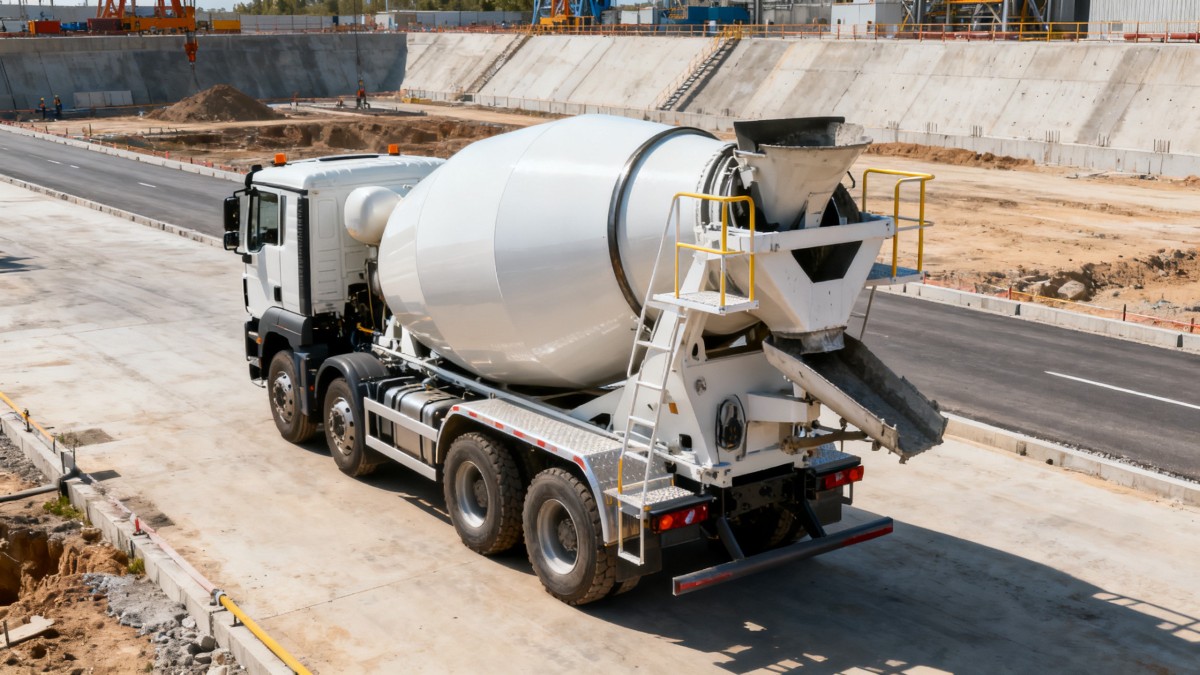
A concrete mixer is not just a transport asset or a rotating drum on a chassis. In real project conditions, it directly affects concrete workability, dispatch timing, operator safety, maintenance exposure, and quality consistency. When procurement teams focus too narrowly on upfront purchase price, they often overlook 4 core risk layers: load matching, safety configuration, serviceability, and compliance suitability.
This problem is common across infrastructure construction, urban development, railway support works, mining facilities, industrial plants, and special vehicle fleets. A mixer that performs acceptably on a short-distance urban pour may become a weak point on rough access roads, high-cycle plant supply routes, or sites requiring repeated starts and stops over 8–12 hour operating windows.
For operators, the wrong machine means higher rollover exposure, harder washout access, poor visibility, and unstable discharge control. For project managers, it can mean missed pour windows, rejected loads, and rising standby costs. For safety and quality teams, the concern is even broader: inconsistent drum performance or weak maintenance planning can trigger both product quality issues and avoidable site incidents.
GIUT tracks these issues from a full infrastructure perspective rather than a single equipment lens. That matters because concrete mixer buying decisions affect not only transport efficiency, but also digital fleet planning, urban site access, carbon-sensitive operations, and long-term equipment utilization across the physical project chain.
The most overlooked risk triggers during procurement
- Selecting drum capacity without checking legal gross vehicle limits, axle distribution, and route conditions.
- Comparing engine power or nominal volume, but not checking hydraulic system durability or drum speed control ranges.
- Ignoring service access for daily inspection points such as water system components, chute locking points, and lubrication areas.
- Buying for average conditions instead of the harshest 10%–20% of site scenarios, where risk usually becomes visible.
What are the most common concrete mixer purchasing mistakes?
The first major mistake is choosing by nominal volume alone. A mixer’s advertised capacity does not automatically translate into usable payload on your routes. Road restrictions, slope conditions, cycle time, and concrete slump requirements all affect real output. A larger drum can look efficient on paper while creating underloading, legal weight pressure, or maneuverability problems on actual jobsites.
The second mistake is underestimating safety configuration. Buyers sometimes treat cameras, access ladders, anti-slip surfaces, chute handling ergonomics, emergency stop provisions, and reversing aids as optional extras. In reality, these are risk control features. On busy sites with pedestrians, mobile plant, and constrained visibility, poor access and weak situational awareness can raise incident probability within the first 3–6 months of operation.
The third mistake is overlooking maintenance reality. Many fleets compare engine brand, price, and delivery lead time, but fail to review daily and weekly service points. If regular cleaning takes too long, if wear components are hard to reach, or if spare parts are not locally available within 24–72 hours, downtime grows quickly. Total operational risk then rises far beyond the original purchase saving.
The fourth mistake is treating all operating environments as similar. Urban ready-mix delivery, dam works, tunnel support, industrial flooring, and remote infrastructure projects place very different demands on drum retention, chassis resilience, water management, and cleaning logistics. A machine fit for short dispatch radiuses may struggle in longer-haul or uneven-terrain applications.
Mistakes that affect different decision-makers in different ways
The key lesson is that concrete mixer buying mistakes rarely stay inside the purchasing department. They spread across operations, quality control, delivery planning, and site safety. A structured review before order placement is far cheaper than solving these problems after deployment.
A practical warning sign
If a quotation compares only 3 items—price, drum size, and delivery time—it is incomplete for risk-sensitive procurement. Buyers should add at least 5 more checks: safety access, route compatibility, maintenance intervals, local support coverage, and cleaning practicality under real site conditions.
How should buyers evaluate concrete mixers before placing an order?
The safest procurement process begins with application mapping rather than model selection. Start by defining route distance, average cycle time, site access limits, expected daily pours, concrete type, and washout conditions. In many fleets, 3 operating patterns dominate: short-radius urban delivery, mixed suburban dispatch, and rough-access project supply. Each pattern changes what “best fit” really means.
Next, assess technical suitability beyond brochure values. Drum geometry, mixing and agitation speed ranges, hydraulic stability, water system capacity, chute handling design, and frame integration all affect field performance. Buyers should also ask how the unit behaves during stop-start traffic, steep entry ramps, and repeated loading cycles over a standard shift.
Third, evaluate support readiness. A concrete mixer is a working asset, not a showroom product. Check wear parts lists, service interval guidance, response times, dealer capability, and cleaning recommendations. For many contractors, a spare parts response of 24–48 hours is materially different from a 7–10 day delay, especially during high-demand project phases.
Finally, include cross-functional review. The best buying decision usually comes from a 4-role team: procurement, operations, maintenance, and safety or quality. This prevents one-dimensional decisions and improves acceptance after delivery.
Concrete mixer procurement checklist for real-world risk control
Before comparing quotations, use the following selection matrix to test whether a concrete mixer matches your operational risk profile, not just your budget target.
This checklist helps technical evaluators and project leaders translate operational risk into procurement language. It also helps distributors and dealers frame discussions around application fit instead of competing only on price.
A 4-step pre-purchase workflow
- Define application profile: route length, daily cycle count, site access limits, and concrete delivery timing.
- Shortlist 2–3 suitable mixer configurations instead of requesting one generic quote.
- Review safety, service, and support details with operations and maintenance staff before approval.
- Confirm training, spare parts, commissioning, and documentation before final order release.
Which technical and compliance factors should never be ignored?
Technical performance must be checked in relation to the site, not in isolation. Drum speed control, hydraulic consistency, water tank arrangement, and discharge accuracy influence concrete quality and handling safety. For example, where projects involve long transit times or repeated delays, stable agitation performance matters more than headline capacity figures.
Compliance should also be treated as a procurement requirement, not a post-delivery issue. Depending on market and application, buyers may need to review road transport rules, axle loading limits, operator access safety, lighting and visibility provisions, and documentation for equipment handover. If the mixer will work on regulated urban projects or contractor frameworks, these checks can affect acceptance from day one.
Quality and safety managers should ask for clear maintenance instructions, inspection points, and operating limits. A useful handover package should include service schedules, lubrication guidance, wear item intervals, and operator checks for daily or weekly use. Even a strong machine becomes a weak asset if the operating organization receives poor documentation.
In modern infrastructure fleets, digital readiness is increasingly relevant. Buyers may not need a highly complex system, but they should consider whether the concrete mixer can support fleet visibility, maintenance records, and utilization tracking over 12–36 month ownership cycles.
Common technical and compliance checkpoints
- Check whether the mixer configuration aligns with local transport regulations and planned load profiles.
- Review operator access points, guard arrangements, and slip resistance for inspection and cleaning tasks.
- Verify documentation for routine maintenance intervals such as daily checks, weekly inspections, and periodic wear review.
- Confirm support for traceability, especially where contractors require documented service and handover records.
Why this matters in broader infrastructure operations
GIUT’s cross-sector perspective is useful here because concrete mixer procurement sits inside a larger chain of smart jobsite planning, fleet utilization, and sustainable construction practice. A compliant, serviceable mixer reduces operational friction not only for one pour, but across recurring civil works, municipal development programs, and equipment modernization strategies.
How do application scenarios change the right concrete mixer choice?
Not every project needs the same concrete mixer specification. A unit serving city-center building works often prioritizes maneuverability, controlled discharge, and compliance with dense traffic movement. By contrast, a mixer supporting industrial, remote, or rail-adjacent works may need stronger route resilience, easier maintenance access, and higher tolerance for rough site entry points.
Project duration also matters. For a short 2–4 week package, rapid deployment and local service support may outweigh advanced monitoring options. For a fleet intended to run across multiple contracts for 3–5 years, lifecycle maintenance, parts planning, and operator training become much more important. The wrong buying approach often comes from using a short-term lens for a long-term asset.
Distributors and commercial evaluators should pay attention to this because end users increasingly ask for application-fit recommendations rather than generic equipment offers. A supplier who can distinguish between high-frequency urban dispatch and lower-frequency project-haul use will usually create more trust and fewer post-delivery disputes.
This is also where hidden risk appears. If site access, washout logistics, and dispatch intervals are not discussed early, even a technically acceptable concrete mixer may perform poorly in service. Procurement teams should therefore map at least 3 scenario variables before final selection: route environment, daily utilization, and cleaning support availability.
Application scenario comparison for buyers
The table below helps buyers, project managers, and dealers compare which concrete mixer priorities shift across different operating environments.
Scenario-based selection reduces guesswork. It also helps decision-makers explain internally why a slightly higher initial budget may produce better uptime, lower exposure, and fewer disputes across the full project delivery period.
FAQ: what do buyers and project teams ask most often?
How should I compare concrete mixers if quotes look similar?
Start with 5 comparison areas: usable payload, safety access, serviceability, support response time, and route fit. Similar-looking quotes often hide major differences in wear part accessibility, operator visibility, or local parts coverage. Ask suppliers to explain how the concrete mixer will perform in your exact dispatch cycle, not only in a generic specification sheet.
What delivery and commissioning points should be confirmed before purchase?
Confirm lead time, pre-delivery inspection scope, operator training, handover documentation, and spare parts readiness. For many projects, a practical acceptance plan includes 4 elements: equipment inspection, functional checks, safety review, and documentation transfer. If the concrete mixer will enter a live fleet immediately, these steps should be agreed before shipment.
Which users should be involved in the buying decision?
At minimum, involve procurement, one operator or fleet supervisor, one maintenance representative, and one safety or quality reviewer. This 4-person review structure catches risks that a price-led tender may miss. It is especially useful when the mixer will serve mixed environments such as plant dispatch, urban access roads, and rough project approaches.
Are cheaper concrete mixers always more expensive over time?
Not always, but low price becomes risky when it is achieved by removing service support, safety features, or durable design elements. The better question is whether the lower-cost concrete mixer can maintain uptime across your expected 12–36 month use period. If it cannot, savings at purchase may be lost through downtime, rejected deliveries, or higher maintenance burden.
Why work with GIUT when evaluating concrete mixer options?
GIUT supports equipment evaluation from the standpoint of infrastructure intelligence, not isolated product promotion. That means connecting concrete mixer selection with broader jobsite risk, heavy equipment deployment, smart construction planning, and sustainable asset use. For buyers and decision-makers, this creates a more practical basis for comparing options across technical, operational, and commercial dimensions.
Our value is especially relevant when your team needs to align multiple stakeholders: procurement teams seeking budget clarity, operators concerned with usability, technical evaluators reviewing fit, and project leaders managing schedule risk. Instead of reducing the conversation to one model and one price, we help clarify what should be checked before a procurement error becomes a site problem.
You can consult GIUT for parameter confirmation, application-based concrete mixer selection, delivery lead time planning, maintenance and service review points, route and scenario matching, and guidance on general compliance considerations. This is useful for contractors, dealers, distributors, and enterprise buyers comparing several options under tight timelines.
If you are assessing concrete mixers for urban construction, industrial supply, railway support works, mining-related infrastructure, or heavy fleet renewal, contact us with your operating conditions. Share your required capacity range, route profile, service expectations, delivery timeline, and documentation needs. We can help you structure the decision, reduce procurement blind spots, and shortlist options that fit real jobsite risk rather than brochure assumptions.
Get weekly intelligence in your inbox.
No noise. No sponsored content. Pure intelligence.
News Recommendations
 Sep 19, 2026How an electronics application guide helps prevent component mismatchHow an electronics application guide helps prevent component mismatch
 Sep 18, 2026When a resource allocation platform improves project deliveryWhen a resource allocation platform improves project delivery
 Sep 17, 2026What to compare when evaluating mineral processing equipment manufacturersWhat to compare when evaluating mineral processing equipment manufacturers
 Sep 16, 2026How mineral separation optimization can reduce concentrate lossesHow mineral separation optimization can reduce concentrate losses
 Sep 15, 2026How to assess lifecycle costs in urban tech procurementHow to assess lifecycle costs in urban tech procurement
 Sep 14, 2026Heavy industry technology trends reshaping capital investment prioritiesHeavy industry technology trends reshaping capital investment priorities
 Sep 14, 2026Global Industrial Equipment Procurement: How Top OEMs Qualify Suppliers for Mining & Infrastructure ProjectsGlobal Industrial Equipment Procurement: How Top OEMs Qualify Suppliers for Mining & Infrastructure Projects
 Sep 14, 2026Industrial & Mining Equipment Procurement: Balancing Local Sourcing, Lead Time, and Certification RequirementsIndustrial & Mining Equipment Procurement: Balancing Local Sourcing, Lead Time, and Certification Requirements
 Sep 14, 2026Infrastructure & Equipment Upgrades: What Procurement Teams Must Verify Before Signing Off on New ContractsInfrastructure & Equipment Upgrades: What Procurement Teams Must Verify Before Signing Off on New Contracts
 Sep 14, 2026Why Infrastructure Equipment Buyers Are Shifting from Catalog-Based to Capability-Based Supplier SelectionWhy Infrastructure Equipment Buyers Are Shifting from Catalog-Based to Capability-Based Supplier Selection
 Sep 14, 2026Process Automation Project Execution: How to Align Supplier Capabilities with PLC Integration, Cybersecurity & Commissioning MilestonesProcess Automation Project Execution: How to Align Supplier Capabilities with PLC Integration, Cybersecurity & Commissioning Milestones
 Sep 14, 2026Are intelligent traffic systems worth the investment for small cities?Are intelligent traffic systems worth the investment for small cities?
 Sep 14, 2026How do intelligent traffic systems handle sensor failures?How do intelligent traffic systems handle sensor failures?
 Sep 14, 2026What should I check before accepting a smart building system?What should I check before accepting a smart building system?
 Sep 14, 2026Is a smart building system worth the maintenance cost?Is a smart building system worth the maintenance cost?
 Sep 14, 2026What data is needed for reliable resource allocation planning?What data is needed for reliable resource allocation planning?
 Sep 14, 2026How can resource allocation software reduce equipment idle time?How can resource allocation software reduce equipment idle time?
 Sep 14, 2026How should smart devices be maintained in harsh outdoor conditions?How should smart devices be maintained in harsh outdoor conditions?
 Sep 14, 2026Do smart devices improve worker safety on construction sites?Do smart devices improve worker safety on construction sites?
 Sep 14, 2026What environmental risks must be assessed before deep-sea mining?What environmental risks must be assessed before deep-sea mining?
 Sep 14, 2026Is deep-sea mining equipment commercially viable in 2026?Is deep-sea mining equipment commercially viable in 2026?
 Sep 14, 2026What Inspection Checks Should Procurement Teams Perform Before Ordering Dredging Equipment in 2026?What Inspection Checks Should Procurement Teams Perform Before Ordering Dredging Equipment in 2026?
 Sep 13, 2026How to verify an industrial product information source before specifying equipmentHow to verify an industrial product information source before specifying equipment
 Sep 12, 2026Which intelligent traffic systems hardware fits an urban intersection?Which intelligent traffic systems hardware fits an urban intersection?
 Sep 11, 2026How pump capacity affects response coverage for municipal fire fighting vehiclesHow pump capacity affects response coverage for municipal fire fighting vehicles
 Sep 10, 2026What to verify before choosing a heavy industry equipment supplierWhat to verify before choosing a heavy industry equipment supplier
 Sep 09, 2026When do adaptive urban traffic control systems reduce corridor delays?When do adaptive urban traffic control systems reduce corridor delays?