Crane Safety Mistakes That Still Delay Big Lifts
From cranes to concrete mixers and other heavy equipment, even small safety mistakes can stall major lifts, disrupt civil engineering schedules, and raise costs. For project leaders, operators, and procurement teams navigating smarter jobsites, this article examines why these delays still happen and how better planning, risk control, and digital twin thinking can improve lift readiness across modern infrastructure projects.
Why do crane safety mistakes still delay major lifts on modern jobsites?
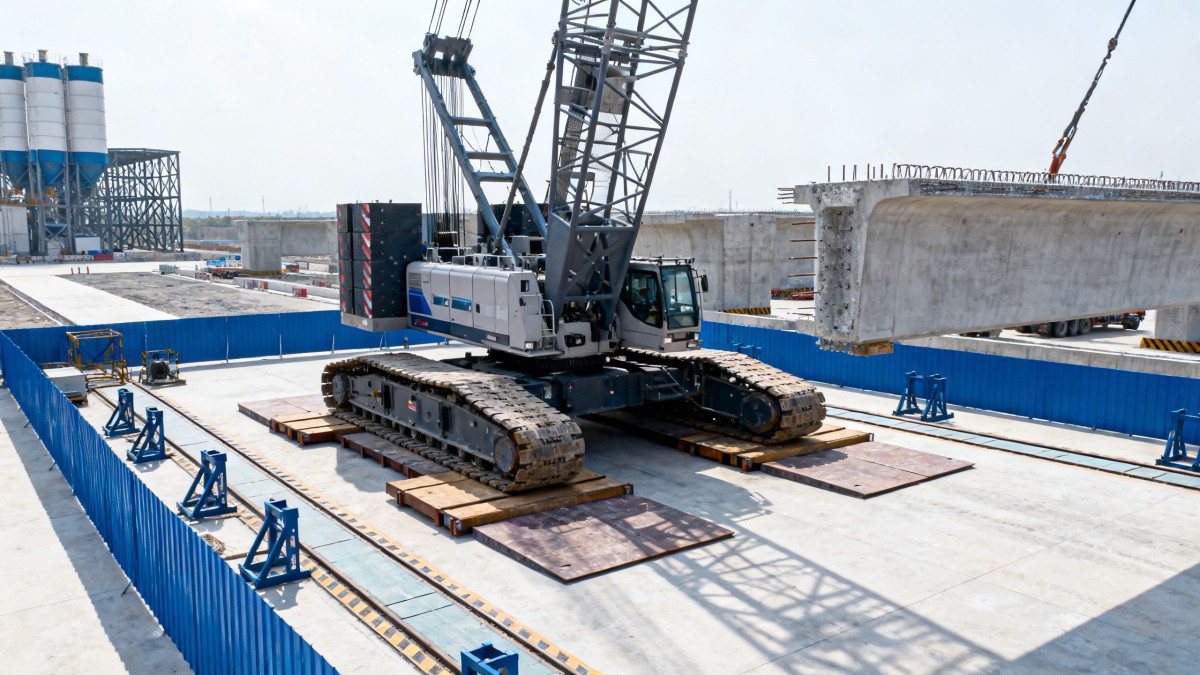
Big lifts rarely fail because of one dramatic error. In most cases, crane safety delays come from a chain of small gaps: incomplete lift planning, outdated ground condition checks, rushed rigging verification, unclear communication zones, or last-minute load changes. Across construction, mining, rail maintenance, logistics yards, and urban utility projects, these gaps can stop a lift for 2–8 hours, and on critical path work they may push dependent trades back by 1–3 days.
For operators and safety managers, the problem is practical. A crane may be available, certified, and fueled, yet the lift still cannot proceed because exclusion barriers are not ready, wind thresholds are exceeded, or the lift radius no longer matches the revised site layout. For project owners and procurement teams, these are not minor operational issues. They directly affect equipment utilization, labor efficiency, subcontractor sequencing, and sometimes liquidated damages tied to milestone dates.
GIUT approaches this issue from an integrated infrastructure perspective. Crane safety is not only an equipment topic; it sits at the intersection of site engineering, digital planning, compliance, logistics, and workforce discipline. When heavy lifts are treated as isolated operator tasks rather than system-level events, preventable delays become routine. That is why intelligent lift readiness now depends on both frontline controls and better information flow across the full project chain.
In practice, most delay patterns fall into 3 categories: planning defects before mobilization, control failures on lift day, and documentation or approval gaps between stakeholders. Understanding which category is active helps technical evaluators, contractors, and distributors recommend the right corrective action instead of only asking for a larger crane or a faster crew.
- Planning defects often include missing ground bearing pressure review, incomplete lifting studies, and no verification of route clearance for crane assembly or counterweight delivery.
- Lift-day control failures typically involve poor hand signal discipline, unconfirmed rigging configuration, changing weather windows, or unauthorized personnel entering the suspended load zone.
- Approval gaps usually appear when method statements, permit-to-work documents, inspection logs, and subcontractor sign-offs are not aligned within the same 24-hour operational window.
The most common delay triggers are usually visible before the hook is loaded
Many teams still focus heavily on crane capacity charts while underestimating the surrounding conditions that govern safe lifting. Yet in large infrastructure projects, pre-lift readiness depends on more than rated capacity. It includes access roads, outrigger setup tolerances, nearby power lines, blind spots, tandem lift interfaces, and the stability of the load path. Even a 15–30 minute delay in confirming one of these factors can cascade into a missed lifting window.
Another recurring mistake is assuming that a previous successful lift validates the next one. In reality, different boom lengths, slewing angles, load centers, or weather exposure can significantly change the risk profile. A repeated lift on the same site may still require a fresh review if the load differs, the pick point shifts, or the ground has been disturbed by rain, excavation, or heavy traffic during the previous 48–72 hours.
Which crane safety mistakes create the highest schedule and cost impact?
For procurement, project control, and safety leadership, not every crane safety mistake carries the same business impact. Some issues are corrected in minutes. Others trigger re-engineering, standby charges, reinspection, or replacement of lifting accessories. The table below summarizes frequent delay sources and why they matter across heavy industry and infrastructure environments.
The highest-cost mistake is often not the most technical one. It is the one discovered latest. When a planning defect surfaces only after crane assembly, the cost effect multiplies through idle labor, support equipment standby, access closures, and rebooking of transport or escorts. That is why mature teams assess crane safety readiness at least twice: once 7–15 days before the lift and again within the final 24 hours.
For technical reviewers, another hidden cost comes from poor assumption control. Load weight, center of gravity, lifting lug condition, and travel path obstructions must be documented as controlled variables. If even one of these changes without a formal update, the original lift study may no longer be valid. On rail, mining, or urban retrofit projects, this happens frequently because site conditions evolve faster than document revisions.
How delay risks differ by project environment
Crane safety mistakes do not appear in the same form across all sectors. In smart building sites, congestion and overlapping trades are often the main cause. In mining or resource environments, terrain variability and remote logistics become more critical. In rail corridors, possession windows and strict access timing mean that a 60-minute delay can erase the entire work package for that shift.
Urban utility and smart governance projects face an additional challenge: public interface risk. Lifts near traffic systems, power assets, or dense pedestrian zones require tighter barricading, clearer communication, and stricter permit coordination. For these environments, the procurement decision should never focus only on crane tonnage. It must also examine control technology, setup footprint, support documentation, and site-specific safety services.
A practical 5-point review before approving any high-consequence lift
- Confirm the latest load data, including weight range, center of gravity assumptions, and approved lifting points.
- Verify ground support, setup geometry, and exclusion-zone dimensions against the current site layout.
- Check that rigging certificates, visual inspections, and compatibility of shackles, slings, and spreader gear are current.
- Review weather limits, communication method, emergency stop protocol, and authority to pause the lift.
- Ensure the permit package, method statement, and responsible signatories match the actual timing and scope of work.
How should teams plan lift readiness before equipment arrives?
A strong lift readiness process starts well before mobilization. Whether the project involves cranes, concrete mixers supporting lift zones, or other heavy equipment sharing access roads, planners should treat the lift as a coordinated system event. A common and effective structure is a 4-stage workflow: pre-engineering, site verification, execution readiness, and post-lift review. This reduces the chance that critical details remain trapped in separate teams or disconnected spreadsheets.
GIUT’s digital twin perspective is especially useful here. By mapping the physical environment, delivery sequence, machine envelope, and traffic or utility interfaces into one planning model, teams can expose problems earlier. This does not require a perfect simulation for every job. Even a lightweight digital coordination layer can help compare planned lift paths against real access constraints, crane swing zones, and adjacent workfronts over a 1–2 week horizon.
For buyers and decision-makers, the planning question is straightforward: are you purchasing only lifting capacity, or are you securing lift readiness? The second option usually brings better value. It includes engineering support, setup review, accessory traceability, inspection records, and realistic sequencing advice. These services may slightly increase front-end cost, but they often reduce downstream disruption more effectively than simply booking a larger machine.
The table below can help teams evaluate lift readiness inputs before confirming mobilization dates, especially when schedules are tight or multiple subcontractors share the same working corridor.
This framework gives every stakeholder a clearer role. Operators know what is frozen and what can still change. Procurement teams understand which support services matter. Project leaders can separate avoidable delay risk from genuine site uncertainty. Most importantly, safety becomes measurable through checkpoints rather than treated as a generic instruction repeated at the gate.
What should be included in a lift readiness package?
A usable package should contain more than certificates. It should combine technical, operational, and commercial readiness in one review set. For medium and high-complexity lifts, that usually means 6 core contents: crane configuration, load data, rigging plan, ground assessment, exclusion-zone drawing, and communication or permit controls. If any one of these is handled informally, the risk of delay rises sharply.
- Crane configuration details should identify boom arrangement, counterweight assumptions, setup footprint, and any limitations linked to radius or working sector.
- Load and rigging documents should show realistic field conditions rather than idealized workshop assumptions, especially where modules are lifted after transport or partial assembly.
- Permit and control sheets should define who has authority to pause work, who verifies exclusion barriers, and what triggers a re-brief if conditions change mid-shift.
What should procurement and decision-makers compare before selecting a lifting solution?
When a lift is delayed repeatedly, the market response is often to change supplier or specify a larger crane. Sometimes that is justified. Often it is not. The better question is whether the selected solution matches the project’s risk profile, site access, schedule logic, and documentation demands. Procurement teams should compare at least 4 dimensions: technical suitability, support services, schedule reliability, and compliance readiness.
Technical suitability includes capacity, radius, setup constraints, and rigging compatibility. Support services cover lift planning, engineering review, documentation response time, and field coordination. Schedule reliability means more than availability on paper; it includes mobilization sequence, assembly time, permit dependencies, and contingency planning. Compliance readiness involves inspection records, operator competence evidence, and alignment with common site rules and recognized lifting practices.
In budget reviews, the cheapest rental line item may create the highest total project cost if it arrives with weak planning support or poor accessory traceability. Conversely, a solution with a slightly higher day rate can lower the overall commercial risk if it shortens preparation time, reduces rescheduling probability, and improves first-pass approval. This is especially relevant on infrastructure projects where shutdown windows or public access restrictions are expensive to miss.
A disciplined selection process also helps distributors and equipment agents position their offer more effectively. Instead of competing only on tonnage and daily rate, they can differentiate through planning responsiveness, lift study support, spare accessory availability, and familiarity with applications such as precast erection, rail maintenance, industrial module setting, or utility corridor lifts.
A practical comparison between reactive and readiness-driven sourcing
The following comparison highlights why recurring crane safety delays are often procurement design problems rather than only field execution problems.
The most effective choice depends on lift frequency, consequence of delay, and site volatility. If the project has only one critical lift but that lift controls downstream installation, readiness-driven sourcing is usually the safer commercial decision. If the work is repetitive and well understood, a hybrid model may be enough, provided document control and accessory quality remain strong.
Key questions buyers should ask suppliers
- What is the realistic mobilization lead time, including transport, setup, and any external permits or escorts?
- Can the supplier support pre-lift review within 3–7 days and document updates within the final 24 hours if site conditions change?
- Which lifting accessories are included, how are they inspected, and who confirms compatibility with the actual lift geometry?
- What level of field coordination is provided for exclusion zones, signaling, and interface with adjacent trades or public access controls?
FAQ: how can teams reduce crane safety delays without overcomplicating the job?
Teams do not always need a complex digital system to improve crane safety performance. What they do need is consistency. The questions below reflect common search intent from operators, HSE teams, procurement specialists, and project managers dealing with heavy lifting delays.
How early should a critical lift plan be reviewed?
For most infrastructure and industrial projects, a first review 7–15 days before the lift is practical, followed by a tighter confirmation 24–48 hours before execution. If the lift involves restricted urban access, rail possession windows, or unstable ground conditions, an additional intermediate review 3–5 days before the lift is often worthwhile. The point is not bureaucracy. It is to catch late changes before the crane is committed on site.
Which documents matter most when trying to avoid crane safety delays?
The most useful documents are the lift plan, current load data, rigging inspection records, ground or setup verification, and the permit or method statement package. Teams often overvalue generic certificates and undervalue current site-specific documents. A valid certificate does not solve a wrong sling angle assumption or an unapproved exclusion zone. Site relevance matters as much as formal validity.
Is a larger crane always the safer answer?
No. A larger crane may improve capacity margin, but it can also introduce assembly complexity, larger setup footprint, heavier ground loading, and longer mobilization time. In constrained sites, the better answer may be a different configuration, revised lift path, improved rigging, or better staging. Safety and schedule performance improve when the full lifting system is optimized, not only the headline tonnage.
How can digital twin thinking help without slowing field execution?
Digital twin thinking works best when it simplifies decisions. Even a modest coordination model can show crane swing conflicts, delivery sequence issues, access road clashes, and overlap with other heavy equipment. Used well, it shortens field debate because more decisions are settled before the shift starts. For repeat lifts or phased infrastructure projects, that can improve consistency across several weeks or several project zones.
Why work with GIUT when lift safety decisions affect schedule, cost, and infrastructure risk?
GIUT supports decision-makers who need more than surface-level equipment commentary. Our strength lies in connecting crane safety, heavy equipment operations, smart jobsite logic, and infrastructure execution realities into one decision framework. That matters when a delayed lift affects not only one machine, but also civil sequencing, logistics corridors, public interface controls, or the rollout of broader smart city and industrial systems.
For information researchers, technical evaluators, and enterprise leaders, we help clarify what to compare, what to verify, and where hidden delay risks usually sit. For operators, safety professionals, and project managers, we focus on actionable issues such as lift readiness, permit alignment, ground verification, rigging control, and digital coordination between field events and planning data. This integrated view is especially valuable in complex sectors where cranes operate alongside concrete mixers, transport fleets, rail assets, mining systems, or urban utility infrastructure.
If you are reviewing a lifting project, preparing procurement documents, or troubleshooting recurring crane safety delays, you can contact GIUT for support on parameter confirmation, application matching, planning logic, delivery lead-time considerations, compliance checkpoints, and solution comparison. We can also help structure discussions around equipment selection, site readiness, documentation scope, and risk-based decision priorities before costly lift-day disruptions occur.
Reach out when you need practical input on lift planning assumptions, procurement evaluation criteria, cross-sector heavy equipment coordination, or smarter infrastructure execution strategies. The earlier the review begins, the easier it becomes to reduce crane safety delays without adding unnecessary complexity to the project.
Get weekly intelligence in your inbox.
No noise. No sponsored content. Pure intelligence.
News Recommendations
 Sep 19, 2026How an electronics application guide helps prevent component mismatchHow an electronics application guide helps prevent component mismatch
 Sep 18, 2026When a resource allocation platform improves project deliveryWhen a resource allocation platform improves project delivery
 Sep 17, 2026What to compare when evaluating mineral processing equipment manufacturersWhat to compare when evaluating mineral processing equipment manufacturers
 Sep 16, 2026How mineral separation optimization can reduce concentrate lossesHow mineral separation optimization can reduce concentrate losses
 Sep 15, 2026How to assess lifecycle costs in urban tech procurementHow to assess lifecycle costs in urban tech procurement
 Sep 14, 2026Heavy industry technology trends reshaping capital investment prioritiesHeavy industry technology trends reshaping capital investment priorities
 Sep 14, 2026Global Industrial Equipment Procurement: How Top OEMs Qualify Suppliers for Mining & Infrastructure ProjectsGlobal Industrial Equipment Procurement: How Top OEMs Qualify Suppliers for Mining & Infrastructure Projects
 Sep 14, 2026Industrial & Mining Equipment Procurement: Balancing Local Sourcing, Lead Time, and Certification RequirementsIndustrial & Mining Equipment Procurement: Balancing Local Sourcing, Lead Time, and Certification Requirements
 Sep 14, 2026Infrastructure & Equipment Upgrades: What Procurement Teams Must Verify Before Signing Off on New ContractsInfrastructure & Equipment Upgrades: What Procurement Teams Must Verify Before Signing Off on New Contracts
 Sep 14, 2026Why Infrastructure Equipment Buyers Are Shifting from Catalog-Based to Capability-Based Supplier SelectionWhy Infrastructure Equipment Buyers Are Shifting from Catalog-Based to Capability-Based Supplier Selection
 Sep 14, 2026Process Automation Project Execution: How to Align Supplier Capabilities with PLC Integration, Cybersecurity & Commissioning MilestonesProcess Automation Project Execution: How to Align Supplier Capabilities with PLC Integration, Cybersecurity & Commissioning Milestones
 Sep 14, 2026Are intelligent traffic systems worth the investment for small cities?Are intelligent traffic systems worth the investment for small cities?
 Sep 14, 2026How do intelligent traffic systems handle sensor failures?How do intelligent traffic systems handle sensor failures?
 Sep 14, 2026What should I check before accepting a smart building system?What should I check before accepting a smart building system?
 Sep 14, 2026Is a smart building system worth the maintenance cost?Is a smart building system worth the maintenance cost?
 Sep 14, 2026What data is needed for reliable resource allocation planning?What data is needed for reliable resource allocation planning?
 Sep 14, 2026How can resource allocation software reduce equipment idle time?How can resource allocation software reduce equipment idle time?
 Sep 14, 2026How should smart devices be maintained in harsh outdoor conditions?How should smart devices be maintained in harsh outdoor conditions?
 Sep 14, 2026Do smart devices improve worker safety on construction sites?Do smart devices improve worker safety on construction sites?
 Sep 14, 2026What environmental risks must be assessed before deep-sea mining?What environmental risks must be assessed before deep-sea mining?
 Sep 14, 2026Is deep-sea mining equipment commercially viable in 2026?Is deep-sea mining equipment commercially viable in 2026?
 Sep 14, 2026What Inspection Checks Should Procurement Teams Perform Before Ordering Dredging Equipment in 2026?What Inspection Checks Should Procurement Teams Perform Before Ordering Dredging Equipment in 2026?
 Sep 13, 2026How to verify an industrial product information source before specifying equipmentHow to verify an industrial product information source before specifying equipment
 Sep 12, 2026Which intelligent traffic systems hardware fits an urban intersection?Which intelligent traffic systems hardware fits an urban intersection?
 Sep 11, 2026How pump capacity affects response coverage for municipal fire fighting vehiclesHow pump capacity affects response coverage for municipal fire fighting vehicles
 Sep 10, 2026What to verify before choosing a heavy industry equipment supplierWhat to verify before choosing a heavy industry equipment supplier
 Sep 09, 2026When do adaptive urban traffic control systems reduce corridor delays?When do adaptive urban traffic control systems reduce corridor delays?