Which railway infrastructure components need the closest lifecycle review?
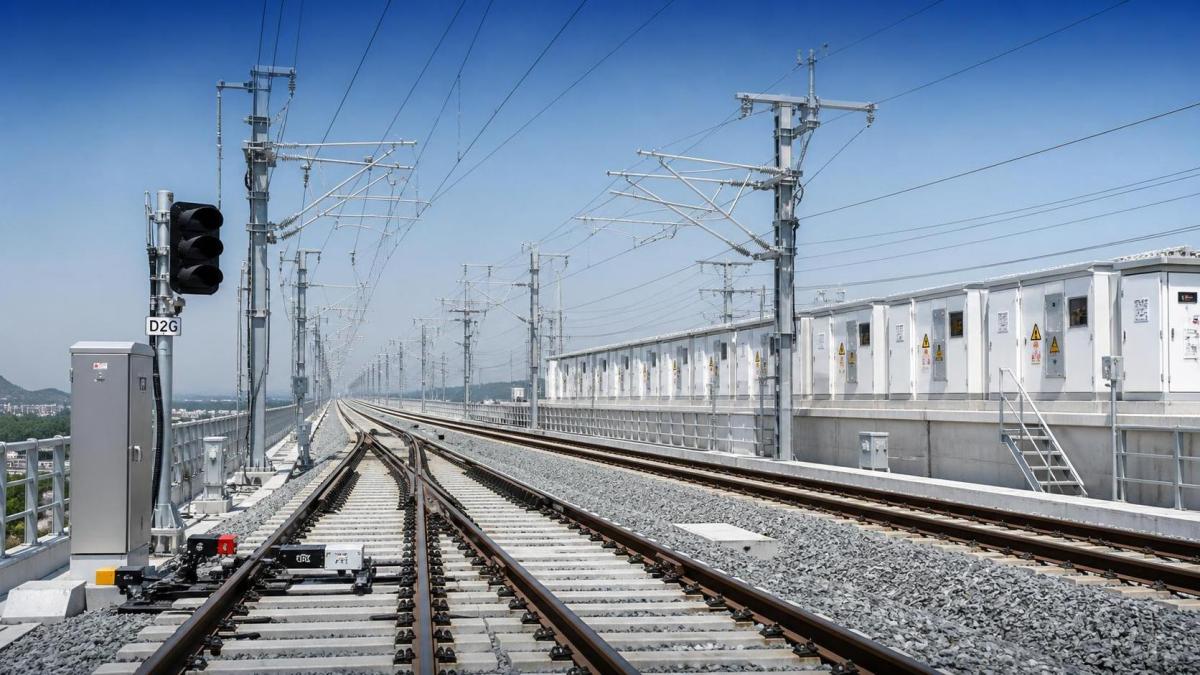
When deciding where to focus asset-management effort, railway infrastructure components should not all receive the same level of lifecycle review. The closest scrutiny belongs to assets whose failure can stop traffic, compromise safety, create a long possession requirement, or trigger expensive secondary damage. In most networks, that means track at critical locations, signaling and train-control equipment, electrification systems, structures, drainage, and interfaces between them.
The difficult part is not producing a long asset register. It is deciding which items deserve condition monitoring, deeper inspection, renewal modelling, spare-parts planning, and early intervention. A rail, cable, bearing, relay, or culvert may look like a small line item in a budget. Its operational consequences can be far larger than its purchase cost.
A useful rule is simple: review an asset closely when its remaining life is uncertain and its failure consequence is high. Assets with a short, predictable replacement cycle may be managed through routine plans. Assets with hidden deterioration, difficult access, or a network-wide operational role need a more deliberate lifecycle strategy.
Which railway infrastructure components deserve the closest lifecycle review?
The highest-priority group usually includes:
- Track and turnouts on high-tonnage, high-speed, heavily curved, or high-frequency routes.
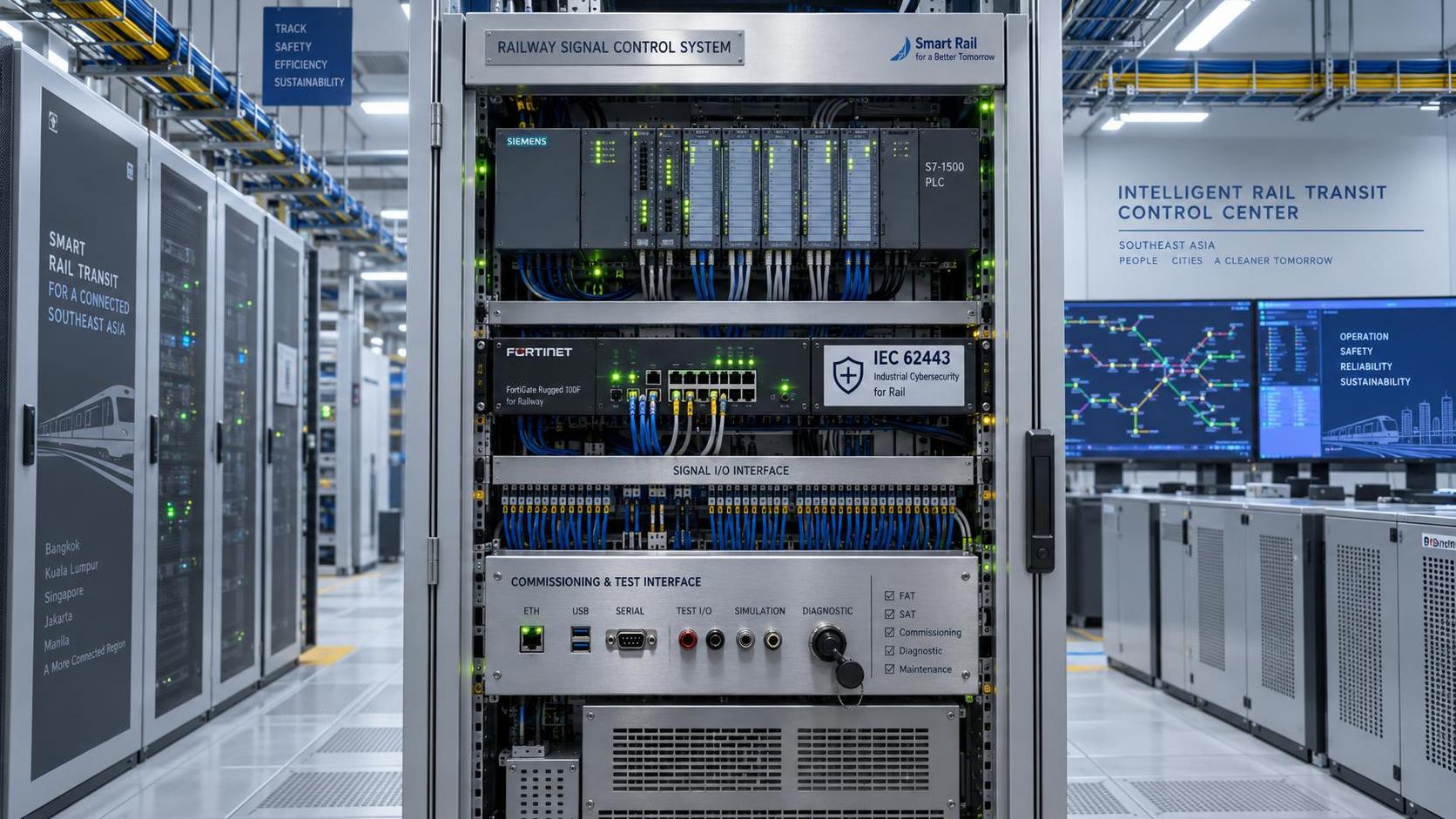
- Signaling, interlocking, train detection, and communications assets that control route availability and safe train separation.
- Bridges, tunnels, retaining structures, and earthworks where deterioration can remain concealed until it becomes serious.
- Overhead line equipment, third-rail systems, substations, and power distribution assets on electrified corridors.
- Drainage and culvert systems, particularly at known flood points, cuttings, embankments, and structure approaches.
- Level-crossing equipment and platform-edge assets where public exposure and safety duties raise the consequence of failure.
This is not a fixed ranking for every railway. A low-speed freight branch with heavy axle loads may place rails, sleepers, ballast, and bridge bearings above advanced signaling equipment. A dense metro line may find that train detection, platform systems, traction power, and communications create the biggest availability risk. Route function matters as much as asset type.
Track: look beyond rail age
Track is often the first item reviewed, but a simple age-based approach is rarely enough. Rail wear, rolling contact fatigue, corrugation, weld condition, ballast fouling, sleeper integrity, formation drainage, and geometry degradation interact. Replacing rail on a wet, poorly supported formation can restore appearance without solving the underlying mechanism that caused repeat defects.
Critical track sections deserve a lifecycle review when they combine high traffic with conditions that accelerate damage: tight curves, steep gradients, braking zones, switch approaches, bridges, tunnels, and locations with poor drainage. Turnouts deserve even closer attention because they contain multiple moving and stressed elements, are harder to renew within short access windows, and can produce disproportionate disruption when a component fails.
For selection decisions, ask whether the proposed solution addresses the dominant failure mode. A premium rail steel grade may be justified on a severe curve with recurring wear or fatigue, but it may offer little value where poor ballast support is the true source of rapid geometry loss. The same caution applies to pads, fastenings, sleepers, lubrication systems, and turnout drive arrangements.
Condition data should include more than visual inspection. Geometry trends, ultrasonic findings, defect records, tonnage, temperature history where relevant, maintenance interventions, and repeat-fault locations tell a much more useful story. A component can be within nominal limits today while its deterioration trend signals a near-term possession problem.
Signaling and train control: review obsolescence as seriously as physical condition
Signal assets may appear healthy in the field yet be approaching a lifecycle cliff because critical electronics, relays, software support, test equipment, or approved spares are no longer available. This is one of the most common planning blind spots. Physical condition is visible; supportability risk is often buried in supplier notices, maintenance workarounds, and the knowledge held by a small number of experienced technicians.
Interlockings, axle counters, track circuits, point machines, telecommunications networks, control-centre equipment, and power supplies should be assessed as operating systems rather than isolated products. Their lifecycle review needs to ask four connected questions:
- Can the asset still be maintained and tested with approved tools and parts?
- Does a single failure affect one location or a whole operating area?
- Are fault rates rising, or are technicians spending more time finding intermittent faults?
- Can the proposed replacement integrate with adjacent systems without creating a new interface risk?
A modern replacement is not automatically the best answer. A technology refresh can introduce commissioning complexity, cybersecurity obligations, revised maintenance competencies, and dependencies on digital communications. Where the existing system is stable and supportable, targeted renewal of weak elements may be more sensible. Where obsolescence is genuine, delaying action can leave the railway exposed to unplanned outages and costly emergency procurement.
Structures and earthworks: hidden condition changes the decision
Bridges, tunnels, retaining walls, culverts, embankments, and cuttings require close lifecycle review because their failure mechanisms are often gradual, concealed, and expensive to correct after they become visible. Water is frequently part of the problem. It can drive corrosion, wash out fines, weaken soils, damage bearings, enlarge voids, and undermine track support.
These assets should not be prioritized solely by age or headline size. A modest culvert beneath a busy route can have a higher renewal priority than a larger bridge in stable condition if blockage or deterioration would threaten formation stability. Similarly, a retaining wall with limited visible distress may warrant early investigation if drainage outlets are blocked or movement records show a change in trend.
For structures, the quality of inspection evidence is central. Confirm what was actually inspected, what could not be accessed, whether defects were measured consistently, and whether the assessment considered loading, water paths, and adjacent ground conditions. A condition score without inspection limitations can create false confidence.
Lifecycle options should compare intervention timing, possession needs, temporary works, construction risk, expected residual life, and resilience under severe weather. Patching is appropriate when it arrests a known local defect and preserves a sound system. It is a poor substitute for renewal when the defect is repeated, widespread, or driven by a condition that patching cannot change.
Electrification assets need corridor-level thinking
Overhead line equipment and third-rail systems have a strong operational effect: a localized defect can immobilize trains, damage pantographs or collector shoes, and constrain service recovery over a wider area. Their lifecycle review should therefore consider the entire power and contact system, including conductors, registration equipment, insulators, foundations, return circuits, switches, cables, substations, protection equipment, and remote monitoring.
Do not treat visible wear as the only trigger. Repeated dewirement events, thermal loading concerns, corroded fittings, declining insulation condition, difficult access, unsupported component types, and changing train performance demands can all justify a deeper review. The original design may also be poorly matched to the present timetable, loading pattern, or environmental exposure.
A frequent mistake is selecting components based on catalogue ratings without testing the system interfaces. A new contact wire, switchgear unit, or remote terminal can be technically compliant yet create compatibility or commissioning issues with legacy equipment. Procurement packages should define interface ownership, acceptance testing, documentation standards, and spares strategy before installation begins.
Drainage is rarely glamorous, and often decisive
Drainage can be underfunded because it does not always look like a core railway asset. In practice, poor drainage shortens the life of many other railway infrastructure components. It contributes to ballast contamination, settlement, earthwork movement, corrosion, cable-trough flooding, culvert failure, and access problems.
Give drainage the closest review where there are repeat wet-bed defects, flooding records, blocked outfalls, vegetation growth, slope movement, water staining on structures, or recurring temporary speed restrictions after heavy rain. The correct intervention may be cleaning and inspection, but only after confirming that the drainage route has capacity and a functioning discharge point. Cleaning a ditch that leads to a blocked culvert simply shifts the problem downstream.
This is also an area where local knowledge matters. Maintenance teams often know where water collects before formal datasets reveal a pattern. That knowledge should be captured and tested against inspection findings, not dismissed because it is anecdotal.
A practical way to set review depth
Rather than applying a full lifecycle study to every asset, use a tiered approach. It keeps effort focused while creating a defensible basis for investment decisions.
For the strategic tier, compare at least three options: maintain and monitor, targeted rehabilitation, and full renewal. The cheapest capital option is not necessarily the lowest whole-life cost. A full renewal that requires long closures may be difficult to justify on a lightly used route; on a constrained trunk corridor, repeated short-notice failures may make the same renewal the lower-risk choice.
Build the comparison around consequences that matter in operation: safety exposure, train delay risk, possession availability, emergency response, supply-chain support, maintainability, energy performance where relevant, and the risk of causing damage to adjacent assets. Keep assumptions visible. Lifecycle models can look precise while depending on condition data that is incomplete or inconsistent.
What teams often get wrong
The first error is prioritizing by asset age alone. Age helps, but load, environment, maintenance history, design details, and supportability often explain more.
The second is treating a component as independent from its system. A turnout problem may involve drainage, geometry, drive mechanisms, detection, and operating practice. A signaling outage may be caused by cable condition, power quality, enclosure integrity, or an unsupported software environment. Replacing the most visible item can leave the actual failure path untouched.
The third is postponing investigation because a defect has not yet caused a major disruption. That approach is risky for hidden-condition assets such as culverts, embankments, bridge bearings, cable routes, and legacy electrical equipment. Early investigation does not always mean immediate renewal. It gives the team a realistic choice between planned intervention and emergency response.
Finally, avoid assuming that digital monitoring removes the need for engineering judgment. Sensors, inspection platforms, and digital twins can improve trend visibility and planning, but they depend on good asset hierarchy, verified baseline condition, clear alarm ownership, and field validation. They are decision aids, not replacements for disciplined inspection.
Make the next investment decision easier
Start with the assets that have recently caused restrictions, repeat maintenance, difficult callouts, or spare-parts concerns. Map each one against safety consequence, operational consequence, deterioration uncertainty, access difficulty, and system dependency. The result will usually reveal a manageable shortlist of railway infrastructure components needing deeper lifecycle review.
GIUT’s coverage of railway and logistics arteries can support this wider view by connecting track, signaling, maintenance technology, smart-city interfaces, and sustainability considerations. The useful question is not simply, “Which asset is oldest?” It is, “Which failure would leave us with the least room to recover, and what evidence do we need before choosing repair, rehabilitation, or renewal?”
Frequently asked questions
Should turnouts always be reviewed more closely than plain line track?
Not always, but they often merit enhanced review because they combine moving parts, complex geometry, train detection, and concentrated loading. A heavily used turnout at a junction can carry more operational risk than a long section of stable plain line.
How often should a lifecycle review be updated?
Update it when condition trends change, traffic or axle loads materially change, supportability changes, major defects occur, or a renewal window approaches. A fixed calendar cycle alone can miss important changes between reviews.
Is condition monitoring enough to defer renewal?
It can be, when monitoring measures a known degradation mechanism and there is a practical intervention window. It is not enough when the asset is obsolete, access is limited, failure develops rapidly, or the consequence of missed detection is unacceptable.
What is the best first step when asset data is incomplete?
Do not wait for a perfect database. Identify high-consequence locations, validate their records through targeted inspection, document confidence levels, and improve the asset baseline in parallel with immediate risk decisions.
The strongest lifecycle plans focus resources where failure consequences, uncertainty, and renewal complexity meet. Used this way, a review of railway infrastructure components becomes a practical investment tool rather than another compliance exercise.
Get weekly intelligence in your inbox.
No noise. No sponsored content. Pure intelligence.
News Recommendations
 Sep 19, 2026How an electronics application guide helps prevent component mismatchHow an electronics application guide helps prevent component mismatch
 Sep 18, 2026When a resource allocation platform improves project deliveryWhen a resource allocation platform improves project delivery
 Sep 17, 2026What to compare when evaluating mineral processing equipment manufacturersWhat to compare when evaluating mineral processing equipment manufacturers
 Sep 16, 2026How mineral separation optimization can reduce concentrate lossesHow mineral separation optimization can reduce concentrate losses
 Sep 15, 2026How to assess lifecycle costs in urban tech procurementHow to assess lifecycle costs in urban tech procurement
 Sep 14, 2026Heavy industry technology trends reshaping capital investment prioritiesHeavy industry technology trends reshaping capital investment priorities
 Sep 14, 2026Why Infrastructure Equipment Buyers Are Shifting from Catalog-Based to Capability-Based Supplier SelectionWhy Infrastructure Equipment Buyers Are Shifting from Catalog-Based to Capability-Based Supplier Selection
 Sep 14, 2026Process Automation Project Execution: How to Align Supplier Capabilities with PLC Integration, Cybersecurity & Commissioning MilestonesProcess Automation Project Execution: How to Align Supplier Capabilities with PLC Integration, Cybersecurity & Commissioning Milestones
 Sep 14, 2026Are intelligent traffic systems worth the investment for small cities?Are intelligent traffic systems worth the investment for small cities?
 Sep 14, 2026How do intelligent traffic systems handle sensor failures?How do intelligent traffic systems handle sensor failures?
 Sep 14, 2026What should I check before accepting a smart building system?What should I check before accepting a smart building system?
 Sep 14, 2026Is a smart building system worth the maintenance cost?Is a smart building system worth the maintenance cost?
 Sep 14, 2026What data is needed for reliable resource allocation planning?What data is needed for reliable resource allocation planning?
 Sep 14, 2026How can resource allocation software reduce equipment idle time?How can resource allocation software reduce equipment idle time?
 Sep 14, 2026How should smart devices be maintained in harsh outdoor conditions?How should smart devices be maintained in harsh outdoor conditions?
 Sep 14, 2026Do smart devices improve worker safety on construction sites?Do smart devices improve worker safety on construction sites?
 Sep 14, 2026What environmental risks must be assessed before deep-sea mining?What environmental risks must be assessed before deep-sea mining?
 Sep 14, 2026Is deep-sea mining equipment commercially viable in 2026?Is deep-sea mining equipment commercially viable in 2026?
 Sep 14, 2026What Inspection Checks Should Procurement Teams Perform Before Ordering Dredging Equipment in 2026?What Inspection Checks Should Procurement Teams Perform Before Ordering Dredging Equipment in 2026?
 Sep 13, 2026How to verify an industrial product information source before specifying equipmentHow to verify an industrial product information source before specifying equipment
 Sep 12, 2026Which intelligent traffic systems hardware fits an urban intersection?Which intelligent traffic systems hardware fits an urban intersection?
 Sep 11, 2026How pump capacity affects response coverage for municipal fire fighting vehiclesHow pump capacity affects response coverage for municipal fire fighting vehicles
 Sep 10, 2026What to verify before choosing a heavy industry equipment supplierWhat to verify before choosing a heavy industry equipment supplier
 Sep 09, 2026When do adaptive urban traffic control systems reduce corridor delays?When do adaptive urban traffic control systems reduce corridor delays?
 Sep 08, 2026When logistics technology solutions in North America reduce delivery delaysWhen logistics technology solutions in North America reduce delivery delays
 Sep 07, 2026How reliable are wireless mining safety systems in underground mines?How reliable are wireless mining safety systems in underground mines?
 Sep 07, 2026How to assess a smart lighting technology platform for interoperabilityHow to assess a smart lighting technology platform for interoperability