Bridge Rail Infrastructure Systems: Choosing for Load and Lifespan
Bridge Rail Infrastructure Systems: Choosing for Load and Lifespan
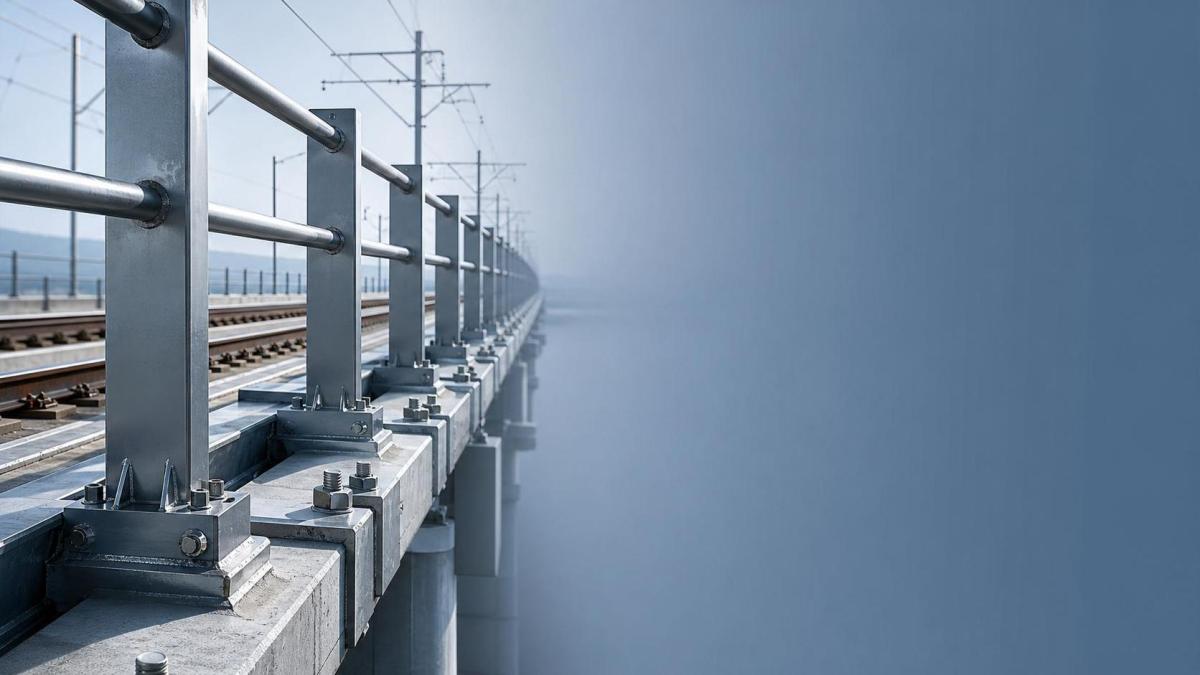
Selecting bridge rail infrastructure systems is never a short-term purchase decision.
It shapes structural safety, inspection frequency, maintenance budgets, and service reliability for decades.
That is why bridge rail infrastructure systems should be evaluated through both present load conditions and long-range operating realities.
In practice, many teams focus first on procurement cost.
A better starting point is performance across the full lifecycle.
This includes impact resistance, fatigue behavior, corrosion exposure, repair access, and expected renewal intervals.
For operators balancing rail safety with asset efficiency, the strongest option is not always the smartest one.
The right choice depends on where the system sits, how often it is stressed, and how easily it can be maintained.
Why Load Assessment Comes First
Every bridge rail infrastructure system starts with one basic question.
What loads must it resist, absorb, or redirect without compromising rail operations or structural stability?
Load assessment should cover static weight, dynamic vibration, wind pressure, braking force, derailment scenarios, and maintenance vehicle interaction.
On high-speed routes, dynamic effects usually matter more than teams expect.
Repeated vibration can accelerate fatigue around posts, anchors, joints, and welded connections.
This also means a system that passes a basic strength check may still underperform over time.
A useful evaluation framework should include these checkpoints:
- Peak train speed and resulting vibration profile
- Expected axle loads and traffic density
- Barrier containment level and impact criteria
- Deck geometry, expansion movement, and fastening limitations
- Interaction with drainage, signaling, and inspection access
When these variables are mapped early, bridge rail infrastructure systems can be selected with fewer redesigns later.
Material Choice and Structural Behavior
Material selection strongly influences lifespan, inspection burden, and repair strategy.
For bridge rail infrastructure systems, steel, galvanized steel, stainless steel, aluminum, and composite solutions each serve different priorities.
Carbon steel remains common because it is familiar, strong, and cost-effective in many bridge programs.
Yet it often demands a stricter coating and repainting plan in harsh environments.
Galvanized steel improves corrosion resistance and can lower routine upkeep.
Stainless steel performs well in coastal zones, tunnels, and deicing salt exposure, though upfront cost is higher.
Aluminum can reduce dead load, which matters on long spans or retrofit work.
Composite systems can resist corrosion well, but their long-term field history may be less established in some regions.
A practical comparison looks like this:
The best material choice should match actual exposure and structural duty, not assumptions carried over from older projects.
Environmental Exposure Often Decides Lifespan
From recent project trends, environmental stress is becoming a stronger selection driver.
Bridge rail infrastructure systems installed in coastal corridors face salt spray, humidity, and accelerated metal loss.
Mountain routes may deal with freeze-thaw cycles, runoff, and snow-control chemicals.
Urban viaducts often encounter pollution buildup, constrained inspection access, and frequent vibration from mixed traffic conditions.
These factors directly affect coatings, fasteners, drainage details, and replacement timing.
A system with strong lab performance can still fail early if drainage traps moisture around anchor points.
That is why bridge rail infrastructure systems should be reviewed together with site detailing.
Key exposure questions include:
- Will the system face chlorides, industrial pollution, or standing water?
- Can joints shed water effectively during storm events?
- Are fixings protected against galvanic interaction?
- Can damaged sections be replaced without major traffic disruption?
Better answers here usually translate into longer service life and fewer emergency interventions.
Designing for Maintenance, Not Just Installation
Installation day is short.
Maintenance lasts for the entire life of the bridge rail infrastructure system.
This is where many selection decisions create hidden cost.
If posts are hard to access, fasteners seize, or panels require special lifting arrangements, small repairs become expensive possessions of track time.
A maintainable design typically includes modular parts, standardized fixings, clear inspection sightlines, and easy replacement procedures.
It should also support predictable inspection intervals based on actual deterioration mechanisms.
For example, bridge rail infrastructure systems near marine zones may benefit from faster washdown access and coating touch-up planning.
On busy freight routes, quick-swap components can reduce outage windows and labor exposure.
In actual operations, the simplest maintenance workflow often creates the strongest lifecycle value.
How to Compare Total Lifecycle Value
A sound bridge rail infrastructure systems decision should move beyond unit price.
The more useful metric is whole-life value under real operating conditions.
This means comparing capital cost with maintenance demand, downtime impact, inspection complexity, and expected residual service life.
A lower-cost option may become more expensive if it needs recoating, frequent tightening, or repeated replacement after impact events.
By contrast, higher-grade bridge rail infrastructure systems may repay the premium through fewer interventions and stronger operational continuity.
A practical decision model should score five areas:
- Load and safety compliance under normal and extreme events
- Durability under site-specific environmental exposure
- Maintenance labor, access time, and component availability
- Compatibility with bridge geometry and adjacent systems
- Long-term budget certainty across the asset lifecycle
This structure makes supplier comparison more transparent and easier to defend during internal review.
Common Selection Mistakes to Avoid
Several mistakes keep showing up in bridge rail infrastructure systems procurement.
The first is copying a previous specification without checking whether traffic, climate, or maintenance conditions have changed.
The second is overvaluing nominal strength while underestimating corrosion and fatigue.
Another common issue is ignoring access constraints during replacement planning.
If replacement requires lengthy closures, the real operational cost can rise sharply.
Some teams also fail to align bridge rail infrastructure systems with inspection strategy.
When inspection points are hidden or access equipment is difficult to position, defect detection slows down.
A stronger approach is to test every candidate system against real maintenance scenarios before award.
A Practical Decision Path
Choosing bridge rail infrastructure systems becomes easier when the process stays disciplined.
Start with load cases and service expectations.
Then review environmental exposure, material behavior, maintenance access, and lifecycle cost together.
From there, compare suppliers using measurable criteria rather than broad claims.
The most reliable bridge rail infrastructure systems are usually the ones that fit the bridge, the corridor, and the maintenance model at the same time.
That also aligns with a broader infrastructure mindset promoted by GIUT.
Engineering decisions create long shadows across budgets, safety, and sustainability.
When selection is grounded in data and field reality, bridge rail infrastructure systems can deliver stronger resilience and better lifecycle value for years ahead.
Get weekly intelligence in your inbox.
No noise. No sponsored content. Pure intelligence.
News Recommendations
 Sep 19, 2026How an electronics application guide helps prevent component mismatchHow an electronics application guide helps prevent component mismatch
 Sep 18, 2026When a resource allocation platform improves project deliveryWhen a resource allocation platform improves project delivery
 Sep 17, 2026What to compare when evaluating mineral processing equipment manufacturersWhat to compare when evaluating mineral processing equipment manufacturers
 Sep 16, 2026How mineral separation optimization can reduce concentrate lossesHow mineral separation optimization can reduce concentrate losses
 Sep 15, 2026How to assess lifecycle costs in urban tech procurementHow to assess lifecycle costs in urban tech procurement
 Sep 14, 2026Heavy industry technology trends reshaping capital investment prioritiesHeavy industry technology trends reshaping capital investment priorities
 Sep 14, 2026Global Industrial Equipment Procurement: How Top OEMs Qualify Suppliers for Mining & Infrastructure ProjectsGlobal Industrial Equipment Procurement: How Top OEMs Qualify Suppliers for Mining & Infrastructure Projects
 Sep 14, 2026Industrial & Mining Equipment Procurement: Balancing Local Sourcing, Lead Time, and Certification RequirementsIndustrial & Mining Equipment Procurement: Balancing Local Sourcing, Lead Time, and Certification Requirements
 Sep 14, 2026Infrastructure & Equipment Upgrades: What Procurement Teams Must Verify Before Signing Off on New ContractsInfrastructure & Equipment Upgrades: What Procurement Teams Must Verify Before Signing Off on New Contracts
 Sep 14, 2026Why Infrastructure Equipment Buyers Are Shifting from Catalog-Based to Capability-Based Supplier SelectionWhy Infrastructure Equipment Buyers Are Shifting from Catalog-Based to Capability-Based Supplier Selection
 Sep 14, 2026Process Automation Project Execution: How to Align Supplier Capabilities with PLC Integration, Cybersecurity & Commissioning MilestonesProcess Automation Project Execution: How to Align Supplier Capabilities with PLC Integration, Cybersecurity & Commissioning Milestones
 Sep 14, 2026Are intelligent traffic systems worth the investment for small cities?Are intelligent traffic systems worth the investment for small cities?
 Sep 14, 2026How do intelligent traffic systems handle sensor failures?How do intelligent traffic systems handle sensor failures?
 Sep 14, 2026What should I check before accepting a smart building system?What should I check before accepting a smart building system?
 Sep 14, 2026Is a smart building system worth the maintenance cost?Is a smart building system worth the maintenance cost?
 Sep 14, 2026What data is needed for reliable resource allocation planning?What data is needed for reliable resource allocation planning?
 Sep 14, 2026How can resource allocation software reduce equipment idle time?How can resource allocation software reduce equipment idle time?
 Sep 14, 2026How should smart devices be maintained in harsh outdoor conditions?How should smart devices be maintained in harsh outdoor conditions?
 Sep 14, 2026Do smart devices improve worker safety on construction sites?Do smart devices improve worker safety on construction sites?
 Sep 14, 2026What environmental risks must be assessed before deep-sea mining?What environmental risks must be assessed before deep-sea mining?
 Sep 14, 2026Is deep-sea mining equipment commercially viable in 2026?Is deep-sea mining equipment commercially viable in 2026?
 Sep 14, 2026What Inspection Checks Should Procurement Teams Perform Before Ordering Dredging Equipment in 2026?What Inspection Checks Should Procurement Teams Perform Before Ordering Dredging Equipment in 2026?
 Sep 13, 2026How to verify an industrial product information source before specifying equipmentHow to verify an industrial product information source before specifying equipment
 Sep 12, 2026Which intelligent traffic systems hardware fits an urban intersection?Which intelligent traffic systems hardware fits an urban intersection?
 Sep 11, 2026How pump capacity affects response coverage for municipal fire fighting vehiclesHow pump capacity affects response coverage for municipal fire fighting vehicles
 Sep 10, 2026What to verify before choosing a heavy industry equipment supplierWhat to verify before choosing a heavy industry equipment supplier
 Sep 09, 2026When do adaptive urban traffic control systems reduce corridor delays?When do adaptive urban traffic control systems reduce corridor delays?