When do civil engineering solutions reduce project delays?
Project delays rarely begin with the moment a schedule slips. More often, the warning signs appear much earlier: an incomplete geotechnical picture, a drainage assumption that does not hold in the rainy season, utility conflicts that were never fully mapped, or a construction sequence that looks efficient on paper but fails under site conditions. In that sense, civil engineering solutions reduce delays not at one dramatic turning point, but at the moments when technical decisions remove uncertainty before uncertainty becomes rework.
For project managers, that distinction matters. A delay caused by weather alone is one thing; a delay caused by poor earthworks design before weather arrives is another. The second is often preventable. The best engineering response is usually not a single design package or software tool, but a combination of early-stage investigation, practical constructability thinking, coordination discipline, and field-responsive adjustment.
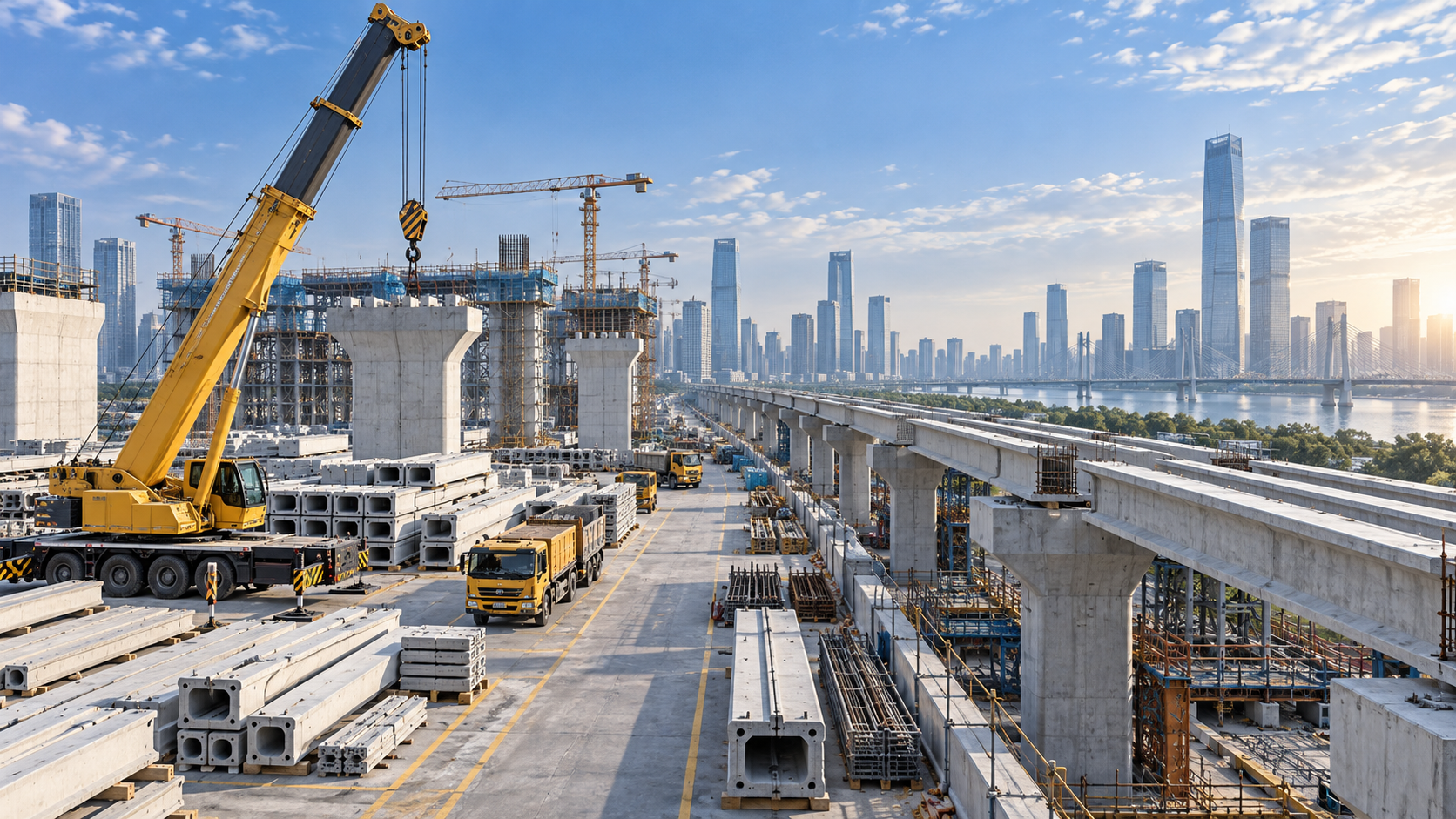
Across infrastructure, smart building, rail, urban systems, and industrial sites, the pattern is consistent: civil engineering solutions have the highest impact when they are used before site crews are boxed into bad options.
The earliest gains come before construction starts
Many project teams still treat preconstruction engineering as a design compliance exercise. That is a mistake. Delays are often rooted in issues that are technically “known” but operationally unresolved. Soil variability, access limitations, temporary works needs, groundwater behavior, retaining requirements, haul routes, and staging constraints can all exist in the tender set without being adequately translated into a buildable plan.
This is where civil engineering solutions begin to earn their value. A better site grading strategy may shorten dewatering exposure. A refined foundation approach may reduce dependence on specialized equipment with long mobilization times. Utility corridor redesign may prevent future clashes with structural works or public road access. None of these changes are glamorous, but they often decide whether a schedule remains realistic.
Projects in urban environments are especially sensitive. Smart city and transit-linked developments often face layered interfaces: public utilities, traffic management requirements, digital infrastructure, environmental restrictions, and narrow work windows. In those settings, technical planning has to work as a real operational model, not just a drawing set.
When design uncertainty is high, engineering intervention prevents cascading delays
Not every project begins with the same level of clarity. Brownfield redevelopment, transport upgrades, mining-related civil works, and utility-intensive industrial projects often carry unknowns that cannot be eliminated on day one. The question is whether the project team recognizes that uncertainty early enough to respond.
If subsurface conditions are only partly understood, civil engineering solutions can reduce delay risk by narrowing the consequences of being wrong. That may mean designing adaptable excavation support, phasing ground improvement, preserving access for alternate foundation methods, or separating critical-path works from areas still under investigation. The point is not to predict every issue perfectly. It is to avoid a schedule that collapses when one assumption changes.
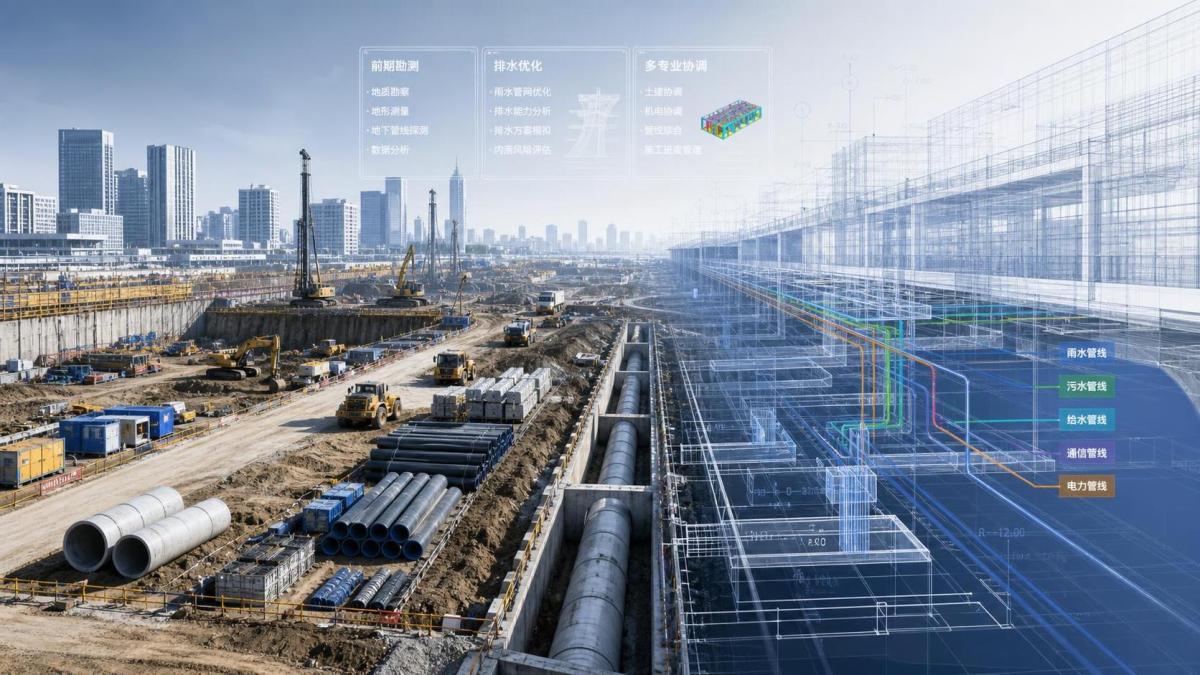
This is also where digital coordination helps, provided it is tied to engineering judgment. GIUT often frames infrastructure through a “digital twin” lens, and that idea is useful here: the more accurately the project team connects physical constraints with planning logic, the less likely it is that unseen conflicts will surface during execution. But a model alone does not reduce delays. Delay reduction happens when the model drives real decisions about sequencing, tolerances, site logistics, and contingency planning.
The biggest schedule savings often come at interfaces, not within a single discipline
A project can have sound structural design, competent contractors, and adequate budget, yet still lose time because interfaces were underestimated. Civil works sit at the base of most project systems. If levels are off, drainage is unresolved, sleeves are missing, access roads are delayed, or temporary platforms are underdesigned, every downstream trade pays for it.
That is why civil engineering solutions reduce project delays most clearly when multiple packages must move in parallel. Rail projects, smart utility corridors, logistics hubs, and mixed-use developments all depend on this. A late utility diversion can block foundations. A poorly coordinated stormwater package can hold back paving, landscaping, and public handover. An equipment pad with insufficient vibration or settlement consideration can trigger redesign after procurement is already locked.
In practice, interface-focused engineering asks a few difficult but necessary questions:
- Which civil works are truly on the critical path, and which only appear important?
- Where does one contractor’s completion condition become another contractor’s delay claim?
- Which temporary works, access provisions, or tolerances must be designed rather than improvised?
- What assumptions are different across the design, procurement, and construction teams?
Projects that ask those questions early usually lose less time later.
Delay reduction is strongest when constructability is treated as engineering, not site improvisation
Constructability reviews are often scheduled late and handled too lightly. Yet many preventable delays are really constructability failures in disguise. The design may be technically compliant and still be inefficient to build under local conditions, available equipment, labor capability, seasonal access limits, or safety constraints.
Consider a few familiar patterns. Deep excavations in dense urban areas may require traffic staging and adjacent asset protection that affect production rates more than the excavation itself. In remote infrastructure or mining support works, material sourcing and haul distances can reshape the entire earthworks sequence. In industrial or logistics facilities, slab design and subgrade preparation methods may look straightforward until equipment installation tolerances compress the schedule.
Civil engineering solutions help when they convert these realities into design and planning choices: modular retaining systems where appropriate, revised access geometry for equipment movement, prefabricated or off-site elements when site congestion is severe, or a drainage-first sequence in climates where water control governs productivity. In construction and smart building environments, this increasingly intersects with digital site planning and prefabrication strategy, but the core principle is old-fashioned: if it cannot be built reliably, it cannot be scheduled confidently.
They matter even more when external approvals can stop the job
Some delays have little to do with internal inefficiency. Permits, utility approvals, road occupation permissions, environmental conditions, and third-party asset owner requirements can all stop progress. Here, civil engineering solutions reduce delays when they anticipate what authorities and interface stakeholders will actually review, not just what the design team wants to submit.
For example, drainage outfall details, erosion control measures, temporary traffic arrangements, excavation support near public infrastructure, and stormwater detention provisions are commonly tied to approvals. The exact standard and process vary by market, so these items usually need confirmation against local requirements. But the pattern is broad: the more complete and coordinated the civil package is at submission stage, the lower the risk of iterative comments that eat into procurement and mobilization windows.
That is one reason integrated intelligence platforms such as GIUT matter to decision-makers. Their value is not just in reporting project news, but in connecting frontline engineering, urban governance logic, equipment realities, and infrastructure delivery constraints into a more usable decision context.
Mid-project engineering changes can still save time, but only under certain conditions
By the time a project is in trouble, engineering options are narrower. Still, not all late intervention is futile. Civil engineering solutions can reduce delays during execution when they remove bottlenecks faster than the change itself creates disruption.
That usually happens in three situations. One is when a revised method simplifies sequencing, such as changing temporary works, access arrangements, or dewatering strategy. Another is when a redesign reduces dependency on constrained resources, such as scarce specialist crews or long-lead components. The third is when field data reveals that the original assumption was wrong and continued compliance with the old plan would only deepen delay.
What does not work well is redesign for its own sake. A technically elegant revision that requires new approvals, new procurement, and retraining on site may worsen the schedule. Midstream engineering only helps when it is tied tightly to constructability, approvals impact, and procurement reality.
How to tell whether the right solution is likely to reduce delays
Before approving a technical change or early engineering package, project teams should test it against a few practical criteria.
If the answer to most of these questions is unclear, the project may still be in diagnosis mode rather than solution mode.
A common mistake: waiting for visible delay before using engineering to fix it
Many teams call for technical intervention only after progress has visibly fallen behind plan. By then, labor stacking, subcontractor disruption, and procurement knock-on effects are already in motion. The more effective moment is earlier, when schedule risk exists as friction rather than failure.
That early friction may look small: repeated RFIs on levels, recurring disputes over temporary access, weather-sensitive areas with no robust drainage plan, or utility coordination meetings that produce no firm interface decisions. These are not just management annoyances. They are signs that civil engineering issues are still unresolved at the level that affects execution.
When those signals appear, the right move is usually not another generic recovery meeting. It is a focused technical review tied to sequence, dependencies, and field constraints.
What project leaders should do next
If a project is approaching a high-risk phase, ask where civil works are carrying hidden assumptions for the rest of the program. Review ground conditions, drainage behavior, utility interfaces, temporary works, access, and handover criteria between packages. Then test whether the current design supports how the project will actually be built, not just how it was originally priced or programmed.
That is usually when civil engineering solutions reduce project delays: before assumptions harden into claims, before coordination gaps become demolition, and before the schedule depends on site improvisation. The strongest projects are not the ones with no uncertainty. They are the ones that use engineering early enough to keep uncertainty from taking control.
For teams working across infrastructure, smart urban systems, transport corridors, industrial facilities, or heavy-equipment environments, the next step is often quite practical: confirm which constraints are technical, which are approval-driven, and which are simply planning habits that no longer match the site reality. That distinction is where recovery usually begins.
Get weekly intelligence in your inbox.
No noise. No sponsored content. Pure intelligence.
News Recommendations
 Sep 19, 2026How an electronics application guide helps prevent component mismatchHow an electronics application guide helps prevent component mismatch
 Sep 18, 2026When a resource allocation platform improves project deliveryWhen a resource allocation platform improves project delivery
 Sep 17, 2026What to compare when evaluating mineral processing equipment manufacturersWhat to compare when evaluating mineral processing equipment manufacturers
 Sep 16, 2026How mineral separation optimization can reduce concentrate lossesHow mineral separation optimization can reduce concentrate losses
 Sep 15, 2026How to assess lifecycle costs in urban tech procurementHow to assess lifecycle costs in urban tech procurement
 Sep 14, 2026Heavy industry technology trends reshaping capital investment prioritiesHeavy industry technology trends reshaping capital investment priorities
 Sep 14, 2026Why Infrastructure Equipment Buyers Are Shifting from Catalog-Based to Capability-Based Supplier SelectionWhy Infrastructure Equipment Buyers Are Shifting from Catalog-Based to Capability-Based Supplier Selection
 Sep 14, 2026Process Automation Project Execution: How to Align Supplier Capabilities with PLC Integration, Cybersecurity & Commissioning MilestonesProcess Automation Project Execution: How to Align Supplier Capabilities with PLC Integration, Cybersecurity & Commissioning Milestones
 Sep 14, 2026Are intelligent traffic systems worth the investment for small cities?Are intelligent traffic systems worth the investment for small cities?
 Sep 14, 2026How do intelligent traffic systems handle sensor failures?How do intelligent traffic systems handle sensor failures?
 Sep 14, 2026What should I check before accepting a smart building system?What should I check before accepting a smart building system?
 Sep 14, 2026Is a smart building system worth the maintenance cost?Is a smart building system worth the maintenance cost?
 Sep 14, 2026What data is needed for reliable resource allocation planning?What data is needed for reliable resource allocation planning?
 Sep 14, 2026How can resource allocation software reduce equipment idle time?How can resource allocation software reduce equipment idle time?
 Sep 14, 2026How should smart devices be maintained in harsh outdoor conditions?How should smart devices be maintained in harsh outdoor conditions?
 Sep 14, 2026Do smart devices improve worker safety on construction sites?Do smart devices improve worker safety on construction sites?
 Sep 14, 2026What environmental risks must be assessed before deep-sea mining?What environmental risks must be assessed before deep-sea mining?
 Sep 14, 2026Is deep-sea mining equipment commercially viable in 2026?Is deep-sea mining equipment commercially viable in 2026?
 Sep 14, 2026What Inspection Checks Should Procurement Teams Perform Before Ordering Dredging Equipment in 2026?What Inspection Checks Should Procurement Teams Perform Before Ordering Dredging Equipment in 2026?
 Sep 13, 2026How to verify an industrial product information source before specifying equipmentHow to verify an industrial product information source before specifying equipment
 Sep 12, 2026Which intelligent traffic systems hardware fits an urban intersection?Which intelligent traffic systems hardware fits an urban intersection?
 Sep 11, 2026How pump capacity affects response coverage for municipal fire fighting vehiclesHow pump capacity affects response coverage for municipal fire fighting vehicles
 Sep 10, 2026What to verify before choosing a heavy industry equipment supplierWhat to verify before choosing a heavy industry equipment supplier
 Sep 09, 2026When do adaptive urban traffic control systems reduce corridor delays?When do adaptive urban traffic control systems reduce corridor delays?
 Sep 08, 2026When logistics technology solutions in North America reduce delivery delaysWhen logistics technology solutions in North America reduce delivery delays
 Sep 07, 2026How reliable are wireless mining safety systems in underground mines?How reliable are wireless mining safety systems in underground mines?
 Sep 07, 2026How to assess a smart lighting technology platform for interoperabilityHow to assess a smart lighting technology platform for interoperability