Steel Sheet Pile Applications: How Civil Buyers Match Material to Site Risk
In civil engineering procurement, the most expensive material mistake is often not the highest unit price; it is choosing a profile that does not match the soil, water, installation method, or temporary works plan. For contractors, project owners, port engineers, and distributors, Steel Sheet Pile is best evaluated as part of an application system rather than as a simple steel profile line item.
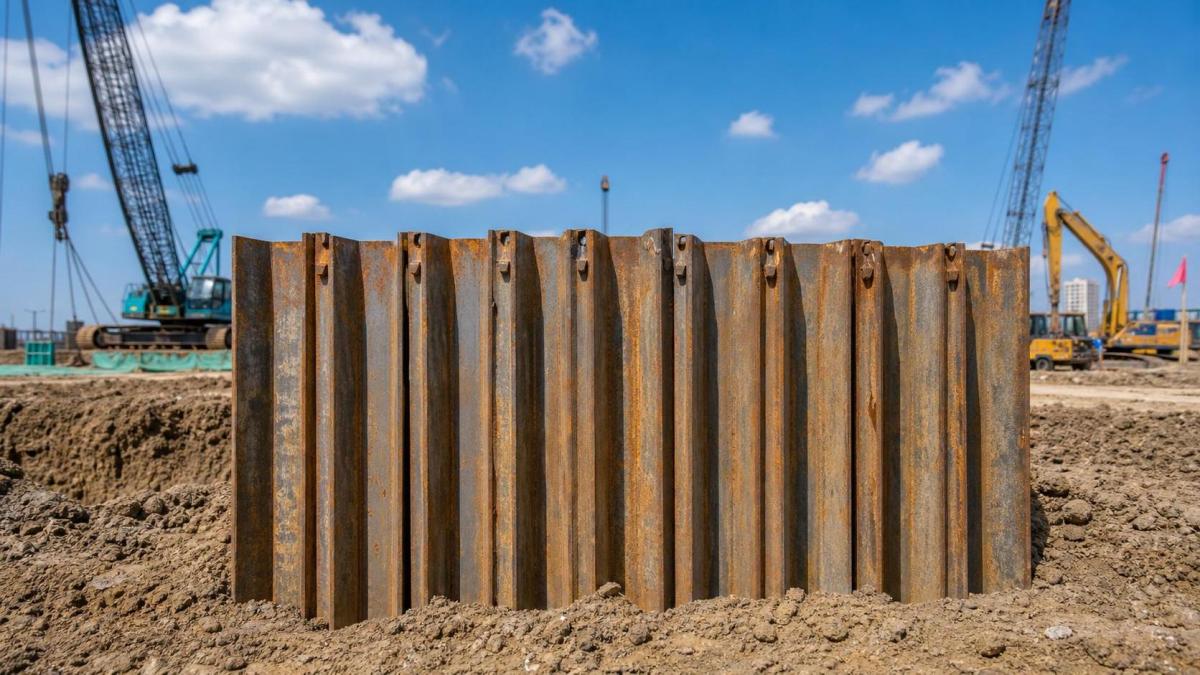
Sheet piles are used where soil, water, and construction sequencing meet. They can support excavation edges, create temporary cofferdams, form quay walls, protect riverbanks, support road and railway works, and help manage working space on dense construction sites. The material itself matters, but so do interlock behavior, section modulus, driving method, corrosion exposure, reuse expectations, logistics, and whether the design is temporary or permanent. A practical buying decision connects the project condition with the profile that will actually perform at site level.
Why Sheet Pile Decisions Are Application-Led
A sheet pile order begins with dimensions and grade, but the real selection process begins with site risk. Excavation depth, soil type, groundwater level, nearby structures, vibration limits, access for piling equipment, and the required service period all influence the material choice. A profile that works for a shallow temporary trench may be unsuitable for a deep waterfront cofferdam. A profile that is easy to source may still create problems if the installation equipment cannot drive it efficiently in the expected ground conditions.
For this reason, civil buyers should not separate procurement from engineering review. The buyer may not be responsible for final structural design, but the purchasing team should understand which engineering assumptions are already fixed and which remain open. This includes required length, profile type, wall stiffness, interlock requirement, installation method, and whether the pile will be extracted and reused after the project. Clear communication between engineering, procurement, and site teams reduces the chance of buying material that looks correct on paper but slows the project in the field.
Common Civil Engineering Uses
One of the most common uses is excavation support. In urban building projects, underground structures, drainage channels, utility trenches, and basement works often require temporary retaining walls. Sheet piles can help keep soil in place while giving contractors space to work. In these projects, installation speed, vibration control, pile length, and removal planning may be important. If nearby buildings, roads, or buried utilities are sensitive, the installation method deserves careful attention before the order is placed.
Water-related works are another major application. Cofferdams, riverbank protection, quay walls, small harbor structures, bridge foundations, and drainage projects often involve soil and water pressure at the same time. In these settings, the buyer should pay attention to interlock condition, corrosion exposure, wall alignment, and whether water tightness needs additional treatment. The material purchase should support the contractor's construction sequence, not merely satisfy a generic profile description.
Infrastructure projects may also use sheet piles for road retaining systems, railway embankment protection, temporary platforms, slope stabilization, and construction staging. These projects can involve tight delivery windows and large quantities, so procurement teams should consider bundle identification, shipping schedule, yard storage, and how quickly material can be located and delivered to the correct work face after arrival.
Matching Profile Choice to Project Conditions
Sheet pile selection is a balance of structural demand, installation practicality, and commercial availability. Engineers may specify a required performance level, while procurement teams must source material that matches the requirement without adding avoidable delay. The buyer should confirm the section type, length, weight, grade, interlock compatibility, tolerance expectations, and any coating or corrosion allowance needs. If the project involves reuse, extraction damage risk and handling discipline also matter.
Some buyers focus on the strongest profile available, but stronger is not always the most economical solution. Over-specification may raise material and transport cost. Under-specification can create installation or stability risk. The better approach is to use the project condition as the control point: soil pressure, water pressure, depth, service duration, equipment access, and safety margin should guide the profile conversation. If the final design is still under review, the buyer can request material options rather than forcing a single uncertain specification.
Installation Method Shapes the Buying Decision
Sheet piles may be installed by vibratory driving, impact driving, pressing, or other project-specific methods depending on ground conditions and equipment availability. Procurement teams do not need to choose the installation method alone, but they should know which method the contractor expects to use. The method can influence required pile length, acceptable straightness, profile choice, interlock condition, and tolerance requirements.
If the material is difficult to drive, the site may lose time and increase equipment cost. If the interlocks are poorly matched or damaged before installation, alignment can become harder. If the piles are longer than the site can handle, storage and lifting become inefficient. These issues are not solved by a low unit price. They are prevented by connecting the purchase order with the installation plan before shipment.
Corrosion, Coating, and Service Duration
Corrosion expectations differ by project. A short-term excavation wall may not require the same corrosion discussion as a waterfront retaining structure. Permanent or semi-permanent works often require engineering review of exposure conditions, steel thickness, coating requirements, and maintenance expectations. Buyers should avoid making broad assumptions and instead ask whether the specification includes corrosion allowance, coating, painting, or other protective measures.
For marine, river, and wet soil environments, documentation and application clarity become especially important. The buyer should confirm whether the supplied material is intended for temporary works, permanent works, or a project where additional treatment will be applied locally. If coating is required, handling and transport must protect the coating from avoidable damage. If no coating is required, the buyer should still confirm storage and shipment practices that reduce unnecessary surface deterioration before installation.
Logistics and Site Sequencing
Sheet piles are long, heavy, and often delivered in project quantities. Logistics planning therefore affects the success of the application. Buyers should consider loading method, bundle weight, length limitations, port handling, inland transport, storage yard capacity, and delivery sequence. A shipment that arrives in the wrong order can slow a project even when the material itself is correct.
Clear marking is valuable. If a project uses multiple lengths or profile types, bundle labels should help the site team identify material quickly. For distributors, traceability also helps when serving several contractors or resale customers. Good documentation reduces receiving errors and supports faster allocation from warehouse to jobsite.
Application Planning Checklist
- Confirm whether the sheet pile wall is temporary, permanent, or intended for reuse.
- Review excavation depth, soil condition, groundwater level, and nearby structure sensitivity.
- Match profile type, length, grade, and section requirement to engineering assumptions.
- Confirm interlock compatibility and surface condition before large-volume ordering.
- Discuss installation method and equipment constraints with the contractor or engineering team.
- Check whether corrosion allowance, coating, painting, or special handling is required.
- Plan bundle marking, delivery sequence, yard storage, and inland transport before shipment.
- Use trial confirmation or sample documentation when working with a new profile or supplier.
FAQ
Can one sheet pile profile fit every civil engineering project?
No. Profile choice depends on wall height, soil and water pressure, installation method, service duration, and site constraints. Buyers should align the material with the project design instead of treating profiles as interchangeable.
Why is interlock condition important?
The interlock helps adjacent piles connect and form a continuous wall. Poor interlock condition can affect installation, alignment, and wall behavior. It is especially important where water control or wall continuity matters.
Should buyers choose a category page or a specific product page for reference?
A specific product page is stronger when the article focuses on one product type. It gives readers a direct path to the relevant material and helps keep the external-link anchor aligned with the article topic.
What should buyers clarify before requesting a quotation?
Buyers should clarify application, wall type, length, grade, section requirement, installation method, delivery location, packing expectations, and whether the material is for temporary or permanent use.
Editorial Review Note
This article is buyer-facing application guidance for civil engineering steel profiles. It avoids fabricated prices, unsupported project data, invented case studies, and unverified certification claims.
Get weekly intelligence in your inbox.
No noise. No sponsored content. Pure intelligence.
News Recommendations
 Sep 19, 2026How an electronics application guide helps prevent component mismatchHow an electronics application guide helps prevent component mismatch
 Sep 18, 2026When a resource allocation platform improves project deliveryWhen a resource allocation platform improves project delivery
 Sep 17, 2026What to compare when evaluating mineral processing equipment manufacturersWhat to compare when evaluating mineral processing equipment manufacturers
 Sep 16, 2026How mineral separation optimization can reduce concentrate lossesHow mineral separation optimization can reduce concentrate losses
 Sep 15, 2026How to assess lifecycle costs in urban tech procurementHow to assess lifecycle costs in urban tech procurement
 Sep 14, 2026Heavy industry technology trends reshaping capital investment prioritiesHeavy industry technology trends reshaping capital investment priorities
 Sep 14, 2026Global Industrial Equipment Procurement: How Top OEMs Qualify Suppliers for Mining & Infrastructure ProjectsGlobal Industrial Equipment Procurement: How Top OEMs Qualify Suppliers for Mining & Infrastructure Projects
 Sep 14, 2026Industrial & Mining Equipment Procurement: Balancing Local Sourcing, Lead Time, and Certification RequirementsIndustrial & Mining Equipment Procurement: Balancing Local Sourcing, Lead Time, and Certification Requirements
 Sep 14, 2026Infrastructure & Equipment Upgrades: What Procurement Teams Must Verify Before Signing Off on New ContractsInfrastructure & Equipment Upgrades: What Procurement Teams Must Verify Before Signing Off on New Contracts
 Sep 14, 2026Why Infrastructure Equipment Buyers Are Shifting from Catalog-Based to Capability-Based Supplier SelectionWhy Infrastructure Equipment Buyers Are Shifting from Catalog-Based to Capability-Based Supplier Selection
 Sep 14, 2026Process Automation Project Execution: How to Align Supplier Capabilities with PLC Integration, Cybersecurity & Commissioning MilestonesProcess Automation Project Execution: How to Align Supplier Capabilities with PLC Integration, Cybersecurity & Commissioning Milestones
 Sep 14, 2026Are intelligent traffic systems worth the investment for small cities?Are intelligent traffic systems worth the investment for small cities?
 Sep 14, 2026How do intelligent traffic systems handle sensor failures?How do intelligent traffic systems handle sensor failures?
 Sep 14, 2026What should I check before accepting a smart building system?What should I check before accepting a smart building system?
 Sep 14, 2026Is a smart building system worth the maintenance cost?Is a smart building system worth the maintenance cost?
 Sep 14, 2026What data is needed for reliable resource allocation planning?What data is needed for reliable resource allocation planning?
 Sep 14, 2026How can resource allocation software reduce equipment idle time?How can resource allocation software reduce equipment idle time?
 Sep 14, 2026How should smart devices be maintained in harsh outdoor conditions?How should smart devices be maintained in harsh outdoor conditions?
 Sep 14, 2026Do smart devices improve worker safety on construction sites?Do smart devices improve worker safety on construction sites?
 Sep 14, 2026What environmental risks must be assessed before deep-sea mining?What environmental risks must be assessed before deep-sea mining?
 Sep 14, 2026Is deep-sea mining equipment commercially viable in 2026?Is deep-sea mining equipment commercially viable in 2026?
 Sep 14, 2026What Inspection Checks Should Procurement Teams Perform Before Ordering Dredging Equipment in 2026?What Inspection Checks Should Procurement Teams Perform Before Ordering Dredging Equipment in 2026?
 Sep 13, 2026How to verify an industrial product information source before specifying equipmentHow to verify an industrial product information source before specifying equipment
 Sep 12, 2026Which intelligent traffic systems hardware fits an urban intersection?Which intelligent traffic systems hardware fits an urban intersection?
 Sep 11, 2026How pump capacity affects response coverage for municipal fire fighting vehiclesHow pump capacity affects response coverage for municipal fire fighting vehicles
 Sep 10, 2026What to verify before choosing a heavy industry equipment supplierWhat to verify before choosing a heavy industry equipment supplier
 Sep 09, 2026When do adaptive urban traffic control systems reduce corridor delays?When do adaptive urban traffic control systems reduce corridor delays?