Steel Grating Risk Guide: How Industrial Buyers Can Prevent Slips, Corrosion, Drainage Failures, and Costly Platform Rework
Industrial flooring failures often look small at first: one loose panel, one slippery stair tread, one corroded edge, one drain area that clogs after rain. Yet these small issues can lead to safety incidents, production interruptions, extra maintenance, and expensive replacement work. When buyers select Steel Grating, the decision should be based on the working environment, load conditions, surface finish, drainage needs, fixing method, and inspection plan rather than only the lowest price per square meter.
This problem-solving guide is written for procurement teams, EPC contractors, plant maintenance managers, warehouse builders, civil engineering buyers, and industrial platform designers. The goal is to identify common grating problems before they appear on site. Open-grid flooring is widely used because it allows drainage, ventilation, light passage, and debris fall-through while supporting pedestrian or equipment traffic. But the same open structure also requires careful specification. Bar size, spacing, cross bar type, span, support layout, surface treatment, edge banding, and installation clips all affect long-term safety.
Problem 1: Slippery Walking Surfaces
Slip risk is one of the most visible concerns in industrial platforms, stair treads, maintenance walkways, drainage covers, and outdoor access areas. A grating panel may look strong enough, but if workers use it in wet, oily, dusty, or sloped conditions, surface traction becomes critical. Smooth bearing bars may be acceptable in dry, low-risk areas, while serrated surfaces may be needed where water, oil, mud, or metal dust can reduce foot grip.
Buyers should ask where the product will be installed, who will walk on it, what footwear is used, and whether the surface will be exposed to rain, washdown, lubricants, or process residue. The solution is not always to choose the most aggressive surface. Serrated bars can improve traction but may be harder to clean in some environments. A practical specification balances slip resistance, cleaning needs, worker comfort, and the plant's safety procedures.
Problem 2: Poor Drainage and Debris Build-Up
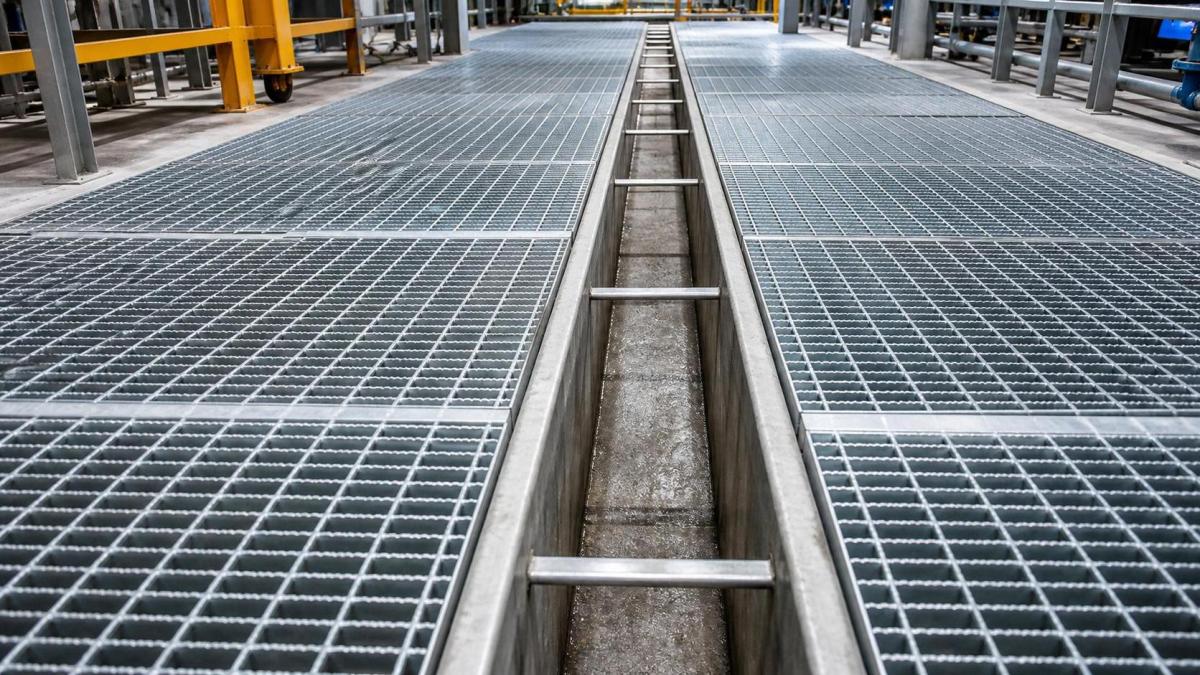
One reason buyers choose open-grid flooring is drainage. However, drainage performance depends on bar spacing, panel orientation, support design, and surrounding site conditions. If the opening size is too small for the debris pattern, the surface may clog. If the panel is placed over a drainage channel but the support frame blocks flow, water can collect. In food, chemical, mining, marine, and outdoor industrial areas, poor drainage can create corrosion, odor, slipping, and cleaning problems.
The buyer should review what will pass through the floor: rainwater, wash water, dust, metal chips, leaves, mud, snow, or process waste. A grating layout that works in a clean plant may not work in a quarry, coastal facility, wastewater site, or steel structure exposed to heavy debris. The design should allow inspection and cleaning access, not only initial drainage. If panels must be lifted for cleaning, fixing details should be planned so maintenance teams can remove and reinstall them safely.
Problem 3: Deflection, Vibration, and Overloading
A grating panel must do more than avoid breaking. It should also feel stable under foot traffic or equipment loads. Excessive deflection can make workers feel unsafe, damage surrounding frames, loosen fasteners, and shorten service life. Vibration can appear where panels are under-supported, where traffic is repetitive, or where the actual load differs from the original assumption.
Buyers should define the expected load case before ordering. Is the surface for pedestrians, carts, forklifts, maintenance equipment, drums, or temporary storage? Will workers carry heavy tools across the platform? Is there a possibility of impact from dropped objects? The supplier needs span length, support conditions, bearing bar direction, and load requirements to recommend a suitable configuration. If those details are missing, a low-cost panel may be selected for a job it was never meant to handle.
Problem 4: Corrosion in Outdoor and Industrial Environments
Corrosion risk depends on location, exposure, material choice, surface treatment, drainage, and maintenance. Outdoor platforms, coastal walkways, chemical plants, wastewater facilities, and industrial rooftops may require stronger corrosion protection than indoor dry areas. A product that performs well in a warehouse may deteriorate quickly near salt air, acidic vapor, standing water, or abrasive dust.
Buyers should compare carbon steel, galvanized options, stainless materials, and other finish choices according to the operating environment. Hot-dip galvanizing is commonly used for outdoor corrosion protection, while stainless may be selected for more demanding chemical or hygiene-sensitive environments. The decision should include not only initial cost but also inspection access, expected service life, repair difficulty, and the cost of shutting down a platform for replacement.
Problem 5: Installation Errors and Panel Movement
Even a suitable product can fail if it is installed poorly. Panels may shift if clips are not tightened, support frames are uneven, edge banding is damaged, or installers ignore the bearing bar direction. In areas exposed to vibration, thermal movement, or repeated maintenance removal, fixing details become especially important. Loose panels are not only a nuisance; they can create trip hazards and falling-object risks.
Before installation, buyers should confirm panel layout drawings, bearing direction, support points, edge clearance, cut-out details, stair tread dimensions, and fixing method. Panels should be marked or organized so site teams do not install them in the wrong location. If custom cut-outs are needed for pipes, columns, drains, or equipment bases, those openings should be planned rather than cut randomly on site.
Problem 6: Mismatched Product for Maintenance Reality
Some grating problems appear months after installation because maintenance conditions were ignored during procurement. A panel might be strong enough and corrosion-protected, but if it is difficult to remove for cleaning, workers may leave debris in place. If replacement panels are not identified properly, future repairs may use the wrong bar spacing or thickness. If the original drawings are not kept, maintenance teams may struggle to reorder matching panels.
The solution is to treat grating as a maintainable asset. Buyers should keep panel drawings, specifications, coating details, batch records, and installation notes in the project file. For plants with many platforms, tagging or layout references can help maintenance teams locate and replace panels correctly. A small amount of documentation at the beginning can prevent confusion years later.
How Buyers Should Build a Safer Specification
A useful specification begins with the environment and load requirement. It should state the application area, traffic type, span, support layout, surface type, material or finish, opening size, edge treatment, fixing method, and any special cut-outs. If the product will be used in a regulated or high-risk environment, project engineers should confirm the required standard, safety practice, and inspection criteria.
Buyers should also compare suppliers based on engineering support. A supplier that can discuss load direction, surface finish, drawings, packing, and installation guidance is often more useful than one that only quotes a generic panel size. For export orders, packaging also matters. Bent edges, damaged coating, or mixed panel sizes can create site delays even before installation begins.
Procurement Checklist
- Confirm whether the installation area is dry, wet, oily, dusty, corrosive, coastal, or chemical-exposed.
- Define pedestrian, cart, equipment, impact, or maintenance load requirements before quotation.
- Check bearing bar size, spacing, cross bar type, span direction, and support frame design.
- Select surface finish based on slip risk, cleaning requirements, and operating environment.
- Plan fixing clips, welded connections, removable panels, edge banding, and cut-outs before shipment.
- Keep drawings, batch information, coating details, and installation notes for future maintenance.
- Inspect packing, coating condition, panel dimensions, and markings when goods arrive on site.
FAQ
Is galvanized material always enough for outdoor use?
Not always. Galvanizing is widely used for outdoor protection, but severe coastal, chemical, or abrasive environments may require additional review. Buyers should match material and coating to the actual exposure.
When should serrated surfaces be considered?
Serrated surfaces are useful where water, oil, mud, or dust may reduce traction. They should be evaluated together with cleaning needs, worker footwear, and the site's safety rules.
Why is bearing bar direction important?
Bearing bars carry the main load between supports. If panels are installed in the wrong direction, the floor may deflect more than expected or fail to meet the intended load condition.
What information should be kept after installation?
Buyers should keep drawings, panel sizes, material or coating details, installation notes, supplier records, and any inspection requirements. These records make future replacement and maintenance easier.
Final Problem-Solving Perspective
Industrial flooring problems are easier to prevent than to repair after a platform is in service. Buyers who define slip risk, drainage behavior, load requirements, corrosion exposure, installation details, and maintenance needs before purchase can avoid many common failures. The strongest grating decision is not simply the cheapest panel; it is the specification that protects workers, keeps operations moving, and remains maintainable throughout the life of the facility.
Editorial Review Note
This article is buyer-facing problem-solving guidance for structural steel and civil engineering material procurement. It avoids fabricated prices, unsupported market statistics, exaggerated claims, and invented case numbers. Final upload should be checked against the destination portal's house style and category setup.
Get weekly intelligence in your inbox.
No noise. No sponsored content. Pure intelligence.
News Recommendations
 Sep 19, 2026How an electronics application guide helps prevent component mismatchHow an electronics application guide helps prevent component mismatch
 Sep 18, 2026When a resource allocation platform improves project deliveryWhen a resource allocation platform improves project delivery
 Sep 17, 2026What to compare when evaluating mineral processing equipment manufacturersWhat to compare when evaluating mineral processing equipment manufacturers
 Sep 16, 2026How mineral separation optimization can reduce concentrate lossesHow mineral separation optimization can reduce concentrate losses
 Sep 15, 2026How to assess lifecycle costs in urban tech procurementHow to assess lifecycle costs in urban tech procurement
 Sep 14, 2026Heavy industry technology trends reshaping capital investment prioritiesHeavy industry technology trends reshaping capital investment priorities
 Sep 14, 2026Global Industrial Equipment Procurement: How Top OEMs Qualify Suppliers for Mining & Infrastructure ProjectsGlobal Industrial Equipment Procurement: How Top OEMs Qualify Suppliers for Mining & Infrastructure Projects
 Sep 14, 2026Industrial & Mining Equipment Procurement: Balancing Local Sourcing, Lead Time, and Certification RequirementsIndustrial & Mining Equipment Procurement: Balancing Local Sourcing, Lead Time, and Certification Requirements
 Sep 14, 2026Infrastructure & Equipment Upgrades: What Procurement Teams Must Verify Before Signing Off on New ContractsInfrastructure & Equipment Upgrades: What Procurement Teams Must Verify Before Signing Off on New Contracts
 Sep 14, 2026Why Infrastructure Equipment Buyers Are Shifting from Catalog-Based to Capability-Based Supplier SelectionWhy Infrastructure Equipment Buyers Are Shifting from Catalog-Based to Capability-Based Supplier Selection
 Sep 14, 2026Process Automation Project Execution: How to Align Supplier Capabilities with PLC Integration, Cybersecurity & Commissioning MilestonesProcess Automation Project Execution: How to Align Supplier Capabilities with PLC Integration, Cybersecurity & Commissioning Milestones
 Sep 14, 2026Are intelligent traffic systems worth the investment for small cities?Are intelligent traffic systems worth the investment for small cities?
 Sep 14, 2026How do intelligent traffic systems handle sensor failures?How do intelligent traffic systems handle sensor failures?
 Sep 14, 2026What should I check before accepting a smart building system?What should I check before accepting a smart building system?
 Sep 14, 2026Is a smart building system worth the maintenance cost?Is a smart building system worth the maintenance cost?
 Sep 14, 2026What data is needed for reliable resource allocation planning?What data is needed for reliable resource allocation planning?
 Sep 14, 2026How can resource allocation software reduce equipment idle time?How can resource allocation software reduce equipment idle time?
 Sep 14, 2026How should smart devices be maintained in harsh outdoor conditions?How should smart devices be maintained in harsh outdoor conditions?
 Sep 14, 2026Do smart devices improve worker safety on construction sites?Do smart devices improve worker safety on construction sites?
 Sep 14, 2026What environmental risks must be assessed before deep-sea mining?What environmental risks must be assessed before deep-sea mining?
 Sep 14, 2026Is deep-sea mining equipment commercially viable in 2026?Is deep-sea mining equipment commercially viable in 2026?
 Sep 14, 2026What Inspection Checks Should Procurement Teams Perform Before Ordering Dredging Equipment in 2026?What Inspection Checks Should Procurement Teams Perform Before Ordering Dredging Equipment in 2026?
 Sep 13, 2026How to verify an industrial product information source before specifying equipmentHow to verify an industrial product information source before specifying equipment
 Sep 12, 2026Which intelligent traffic systems hardware fits an urban intersection?Which intelligent traffic systems hardware fits an urban intersection?
 Sep 11, 2026How pump capacity affects response coverage for municipal fire fighting vehiclesHow pump capacity affects response coverage for municipal fire fighting vehicles
 Sep 10, 2026What to verify before choosing a heavy industry equipment supplierWhat to verify before choosing a heavy industry equipment supplier
 Sep 09, 2026When do adaptive urban traffic control systems reduce corridor delays?When do adaptive urban traffic control systems reduce corridor delays?