Civil Engineering Projects: Where Digital Twin Pays Off
From civil engineering megaprojects to digital cities, digital twin technology is proving where investment delivers measurable value. Whether managing cranes, concrete mixers, fire trucks, smart grids, or high-speed rail assets, stakeholders now need clearer insight into performance, safety, and market shares. This article explores where digital twin pays off most across heavy equipment, infrastructure, and smart operations.
For researchers, operators, technical evaluators, procurement teams, safety managers, project leaders, distributors, and executives, the central question is no longer whether digital twin matters. The practical question is where it generates the fastest operational return, the lowest implementation risk, and the clearest decision support across construction, rail, urban systems, mining, and special-purpose equipment.
In civil engineering, the value of a digital twin is strongest where assets are expensive, schedules are compressed, risks are cumulative, and maintenance decisions affect safety or service continuity. A bridge, tunnel, rail corridor, batch plant, crane fleet, substation, or municipal response vehicle does not need a theoretical model. It needs a living operational replica linked to data, workflows, and measurable outcomes over 12, 24, or 60 months.
Where Digital Twin Creates the Earliest ROI in Civil Engineering
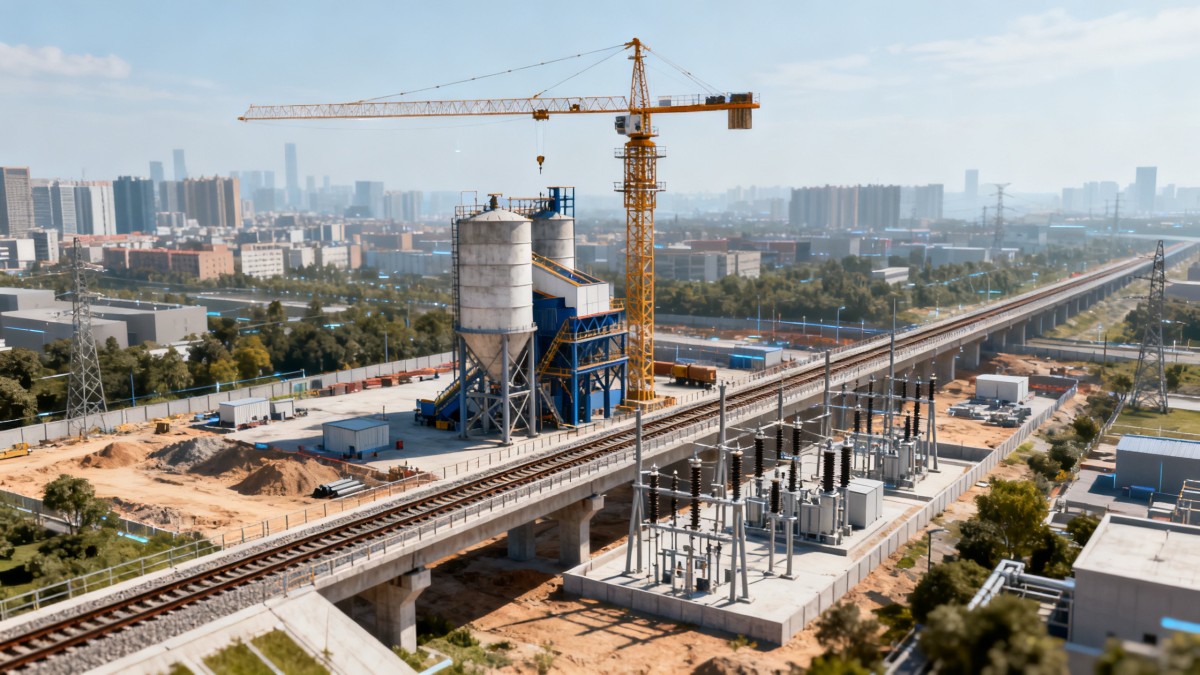
The earliest return usually appears in assets with high downtime cost, strict safety thresholds, and multi-team coordination. In civil engineering projects, these often include tower cranes, concrete production systems, tunneling equipment, rail signaling interfaces, pumping stations, and energy-intensive building services. When one asset failure delays 20 to 200 workers or halts a critical sequence for 4 to 12 hours, digital twin investment becomes easier to justify.
A useful digital twin combines three layers: a physical asset model, live operational data, and decision rules. In practice, this may mean sensor feeds every 1 to 5 seconds, model updates every 15 minutes, and exception alerts when temperature, vibration, load, pressure, or energy use crosses a threshold. This is where value shifts from visualization to operational control.
For project managers, the biggest payback often comes from avoiding coordination losses rather than from flashy 3D displays. If a digital twin can reduce rework by even 2% to 5%, shorten inspection cycles by 1 to 3 days, or improve equipment utilization by 8% to 15%, the effect on large civil works budgets is significant. In long-duration projects, these gains accumulate across hundreds of work orders.
For procurement and business evaluators, it helps to rank use cases by operational pain. The best candidates are not always the most advanced assets. They are the assets where data can trigger action quickly, where teams can agree on baseline metrics within 30 to 60 days, and where service-level consequences are visible in cost, uptime, safety, or throughput.
High-payoff scenarios across infrastructure and heavy equipment
The table below compares common civil engineering scenarios where digital twin programs tend to generate value faster and with lower adoption friction.
The key conclusion is that digital twin pays off fastest when the asset is operationally critical and data can be tied to action. A simple twin with 5 to 10 decisive variables often outperforms a complex model with poor workflow integration.
How Different Stakeholders Measure Value
Different departments buy into digital twin for different reasons, and civil engineering projects fail when these expectations are not aligned early. Operators usually care about alarms, usability, and reduced manual checks. Safety and quality teams care about traceability, threshold violations, and incident prevention. Procurement teams focus on integration cost, deployment scope, and vendor lock-in risk over a 3- to 5-year period.
Executives and commercial evaluators usually ask four questions: How fast can the system be deployed? Which assets should be digitized first? What metrics will prove value in the first quarter? Can the platform scale from one project to a portfolio of 10, 20, or 50 sites? If those questions are not answered up front, adoption slows even when the technology itself is sound.
For technical evaluators, the most important distinction is between a visual model and an operational twin. A visual model may support planning, but an operational twin must connect to telemetry, maintenance records, GIS layers, work orders, and asset history. In many infrastructure environments, the highest value comes from linking 3 to 6 data sources rather than attempting a perfect enterprise model on day one.
Distributors and channel partners should also pay attention to after-sales value. In equipment categories such as cranes, mixers, and municipal vehicles, digital twin capability can strengthen service contracts, spare parts forecasting, and remote diagnostics. That creates recurring commercial value beyond the initial sale.
What each role should evaluate first
- Operators: alert accuracy, screen simplicity, mobile access, and response time under 10 seconds for critical events.
- Project managers: schedule impact, utilization gains, and integration with daily reporting or BIM workflows.
- Procurement teams: total cost over 24 to 60 months, interface openness, and deployment support scope.
- Safety and quality managers: audit trail retention, threshold logic, inspection interval reduction, and incident replay capability.
- Executives: portfolio scalability, data governance, cyber risk controls, and payback milestones at 3, 6, and 12 months.
Common decision gap to avoid
A common mistake is asking one platform to solve every problem at once. In most infrastructure settings, value comes from sequencing. Start with one asset class, one operational workflow, and 3 to 5 measurable KPIs. Expansion works better after the first cycle proves reduced downtime, better inspection precision, or lower dispatch uncertainty.
Implementation Priorities: Start Small, Build Operational Depth
The strongest digital twin deployments in civil engineering do not begin with a giant transformation program. They begin with a focused operating case: a crane fleet on a dense urban jobsite, a concrete plant serving multiple pours per day, a rail corridor with repetitive inspection demand, or a district energy asset with high service continuity requirements. A 90-day pilot is often more useful than a 12-month theoretical roadmap.
Implementation should be staged. In phase 1, teams define the asset boundary, core KPI set, and data quality baseline. In phase 2, they integrate telemetry, maintenance records, and exception logic. In phase 3, they connect the twin to decision workflows such as dispatch, work orders, maintenance scheduling, or safety review. This 3-stage structure reduces technical sprawl and makes ownership clearer.
Data quality matters more than model complexity. If 15% to 20% of sensor data is delayed, mislabeled, or disconnected from asset IDs, the twin will generate noise rather than insight. For this reason, many project teams prioritize 10 to 20 high-value signals first, then expand after validation. This is especially relevant in mixed fleets and legacy infrastructure where data consistency varies by supplier and age.
Another priority is operational ownership. A digital twin should not remain an IT-only tool. On successful projects, engineering, maintenance, operations, and HSE teams all have defined roles. Review cycles often run weekly during the first 8 to 12 weeks, then move to monthly optimization once the alert logic stabilizes.
Typical implementation roadmap
The table below shows a practical rollout structure for infrastructure and heavy equipment environments.
This phased model helps teams prove business value before pursuing broader city-scale or network-scale deployment. It also reduces the risk of buying a platform that looks advanced in a demo but lacks field readiness.
Minimum viable KPI set
- Uptime or availability percentage by asset and by shift.
- Fault frequency per 100 operating hours or per service cycle.
- Inspection or maintenance compliance within planned windows.
- Energy, fuel, or material efficiency variance against baseline.
- Safety-related threshold events and closure time.
Selection Criteria for Buyers, Evaluators, and Project Owners
When comparing digital twin solutions for civil engineering, buyers should look beyond visualization quality. A strong platform must support real asset hierarchies, event handling, role-based access, and field service coordination. It should also work across a mixed infrastructure environment where some assets are new, some are retrofitted, and some only expose limited data through gateways or manual records.
In procurement terms, there are at least six decision factors: interoperability, deployment speed, lifecycle cost, cybersecurity maturity, workflow fit, and service capability. If a vendor cannot explain how the twin will function under intermittent connectivity, partial sensor coverage, or multi-supplier fleets, the proposal may look strong commercially but weak operationally.
Technical evaluators should also ask how the system handles historical data and engineering context. A digital twin becomes much more valuable when it can compare current performance with 6, 12, or 24 months of service records. This is critical for rail maintenance, municipal fleets, mine infrastructure, and long-life civil assets where deterioration trends matter more than single-point alarms.
For enterprise decision-makers, scalability is essential. The right solution should move from a single plant or site to a regional portfolio without requiring a full rebuild. That means standardized naming, usable APIs, version control for models, and governance rules that support contractors, owners, operators, and service partners.
Buyer checklist for practical evaluation
- Can the platform ingest data from at least 3 common sources such as sensors, CMMS, BIM, GIS, or ERP?
- Can it support both real-time monitoring and historical trend analysis over 12 to 24 months?
- Does it allow threshold configuration by asset type, operating zone, and maintenance class?
- Can field teams use it on mobile devices during inspections or emergency response?
- Is the commercial model sustainable for expansion from 1 site to 10 or more locations?
Signals of a weak fit
Warning signs include overreliance on manual uploads, poor support for equipment heterogeneity, no clear maintenance workflow integration, and excessive customization before the first pilot. In infrastructure settings, long implementation cycles often hide weak operational fit rather than strong engineering rigor.
Risks, Misconceptions, and the Next Wave of Adoption
One common misconception is that digital twin only makes sense for smart cities or iconic megaprojects. In reality, many of the most practical returns come from mid-scale assets and repeatable operations: fleet dispatch, materials handling, pump station monitoring, temporary power systems, waste transfer facilities, and rail maintenance planning. A smaller asset with predictable workflows may show value in 60 to 90 days, while a massive symbolic project may take much longer.
Another misconception is that more data automatically means better decisions. In heavy industry and infrastructure, too many uncontrolled signals can increase false alarms and reduce trust. Good programs define alert priorities, response ownership, and review frequency. Many teams perform best with tiered alarms in 3 levels: informational, action-required, and critical.
The next wave of adoption will likely deepen around operational resilience, carbon visibility, and service optimization. Civil engineering organizations are under pressure to reduce energy waste, improve asset life, and document risk controls more clearly. Digital twin helps by linking physical performance to maintenance, dispatch, and planning decisions rather than treating sustainability and productivity as separate agendas.
For GIUT-aligned sectors such as construction, smart buildings, urban technology, mining, logistics railways, and special-purpose vehicles, the strategic opportunity is not just digitization. It is the creation of an intelligence layer over the physical world. That intelligence layer becomes most valuable when it supports better urban governance, safer operations, more efficient equipment use, and more disciplined capital planning.
FAQ for project teams and buyers
How long does a first deployment usually take?
A focused pilot often takes 8 to 16 weeks, depending on data access, sensor readiness, and workflow complexity. Portfolio-scale deployment can take 6 to 18 months if multiple asset classes and sites are involved.
Which projects are best suited for a first digital twin investment?
Projects with high asset criticality, recurring maintenance burden, or measurable downtime cost are usually the best starting point. Examples include crane fleets, concrete operations, rail maintenance zones, substations, pumping assets, and emergency response vehicles.
What should buyers request during evaluation?
Request a KPI map, integration list, alarm logic examples, data governance outline, and a 90-day rollout plan. Buyers should also ask how the platform performs when only partial telemetry is available.
Can digital twin work with legacy infrastructure?
Yes, if the approach is practical. Many legacy environments start with gateway connections, manual inspection data, or SCADA feeds, then add deeper instrumentation over time. The goal is useful decision support, not perfect data from day one.
Digital twin pays off in civil engineering when it is tied to asset-critical decisions, measurable workflows, and realistic rollout sequencing. The strongest returns typically come from equipment-heavy operations, infrastructure systems with maintenance intensity, and smart urban assets where uptime, safety, and efficiency must be managed together.
For organizations navigating construction modernization, rail and logistics upgrades, smart city operations, mining technology, or intelligent heavy equipment management, the priority is to identify the first 3 to 5 use cases with the clearest value path. GIUT’s sector-wide perspective is designed to support that decision process with practical insight across the physical and intelligent infrastructure landscape.
If you are evaluating where digital twin can create the strongest operational and commercial impact, now is the right time to map your assets, define measurable KPIs, and compare deployment options. Contact us to discuss a tailored solution, request deeper sector analysis, or explore more infrastructure intelligence strategies.
Get weekly intelligence in your inbox.
No noise. No sponsored content. Pure intelligence.
News Recommendations
 Sep 19, 2026How an electronics application guide helps prevent component mismatchHow an electronics application guide helps prevent component mismatch
 Sep 18, 2026When a resource allocation platform improves project deliveryWhen a resource allocation platform improves project delivery
 Sep 17, 2026What to compare when evaluating mineral processing equipment manufacturersWhat to compare when evaluating mineral processing equipment manufacturers
 Sep 16, 2026How mineral separation optimization can reduce concentrate lossesHow mineral separation optimization can reduce concentrate losses
 Sep 15, 2026How to assess lifecycle costs in urban tech procurementHow to assess lifecycle costs in urban tech procurement
 Sep 14, 2026Heavy industry technology trends reshaping capital investment prioritiesHeavy industry technology trends reshaping capital investment priorities
 Sep 14, 2026Why Infrastructure Equipment Buyers Are Shifting from Catalog-Based to Capability-Based Supplier SelectionWhy Infrastructure Equipment Buyers Are Shifting from Catalog-Based to Capability-Based Supplier Selection
 Sep 14, 2026Process Automation Project Execution: How to Align Supplier Capabilities with PLC Integration, Cybersecurity & Commissioning MilestonesProcess Automation Project Execution: How to Align Supplier Capabilities with PLC Integration, Cybersecurity & Commissioning Milestones
 Sep 14, 2026Are intelligent traffic systems worth the investment for small cities?Are intelligent traffic systems worth the investment for small cities?
 Sep 14, 2026How do intelligent traffic systems handle sensor failures?How do intelligent traffic systems handle sensor failures?
 Sep 14, 2026What should I check before accepting a smart building system?What should I check before accepting a smart building system?
 Sep 14, 2026Is a smart building system worth the maintenance cost?Is a smart building system worth the maintenance cost?
 Sep 14, 2026What data is needed for reliable resource allocation planning?What data is needed for reliable resource allocation planning?
 Sep 14, 2026How can resource allocation software reduce equipment idle time?How can resource allocation software reduce equipment idle time?
 Sep 14, 2026How should smart devices be maintained in harsh outdoor conditions?How should smart devices be maintained in harsh outdoor conditions?
 Sep 14, 2026Do smart devices improve worker safety on construction sites?Do smart devices improve worker safety on construction sites?
 Sep 14, 2026What environmental risks must be assessed before deep-sea mining?What environmental risks must be assessed before deep-sea mining?
 Sep 14, 2026Is deep-sea mining equipment commercially viable in 2026?Is deep-sea mining equipment commercially viable in 2026?
 Sep 14, 2026What Inspection Checks Should Procurement Teams Perform Before Ordering Dredging Equipment in 2026?What Inspection Checks Should Procurement Teams Perform Before Ordering Dredging Equipment in 2026?
 Sep 13, 2026How to verify an industrial product information source before specifying equipmentHow to verify an industrial product information source before specifying equipment
 Sep 12, 2026Which intelligent traffic systems hardware fits an urban intersection?Which intelligent traffic systems hardware fits an urban intersection?
 Sep 11, 2026How pump capacity affects response coverage for municipal fire fighting vehiclesHow pump capacity affects response coverage for municipal fire fighting vehicles
 Sep 10, 2026What to verify before choosing a heavy industry equipment supplierWhat to verify before choosing a heavy industry equipment supplier
 Sep 09, 2026When do adaptive urban traffic control systems reduce corridor delays?When do adaptive urban traffic control systems reduce corridor delays?
 Sep 08, 2026When logistics technology solutions in North America reduce delivery delaysWhen logistics technology solutions in North America reduce delivery delays
 Sep 07, 2026How reliable are wireless mining safety systems in underground mines?How reliable are wireless mining safety systems in underground mines?
 Sep 07, 2026How to assess a smart lighting technology platform for interoperabilityHow to assess a smart lighting technology platform for interoperability