How Intelligent Transportation Cuts Congestion and Response Time
Urban growth is putting pressure on roads, freight corridors, and emergency routes at the same time. In that environment, intelligent transportation is no longer a narrow traffic upgrade.
It has become a practical framework for reducing congestion, shortening response time, and improving how cities coordinate physical infrastructure with digital decision-making.
For organizations tracking infrastructure performance, the issue is not only mobility. It is also about resilience, operating cost, public safety, and the long-term value of connected urban systems.
Why intelligent transportation now sits at the center of urban performance
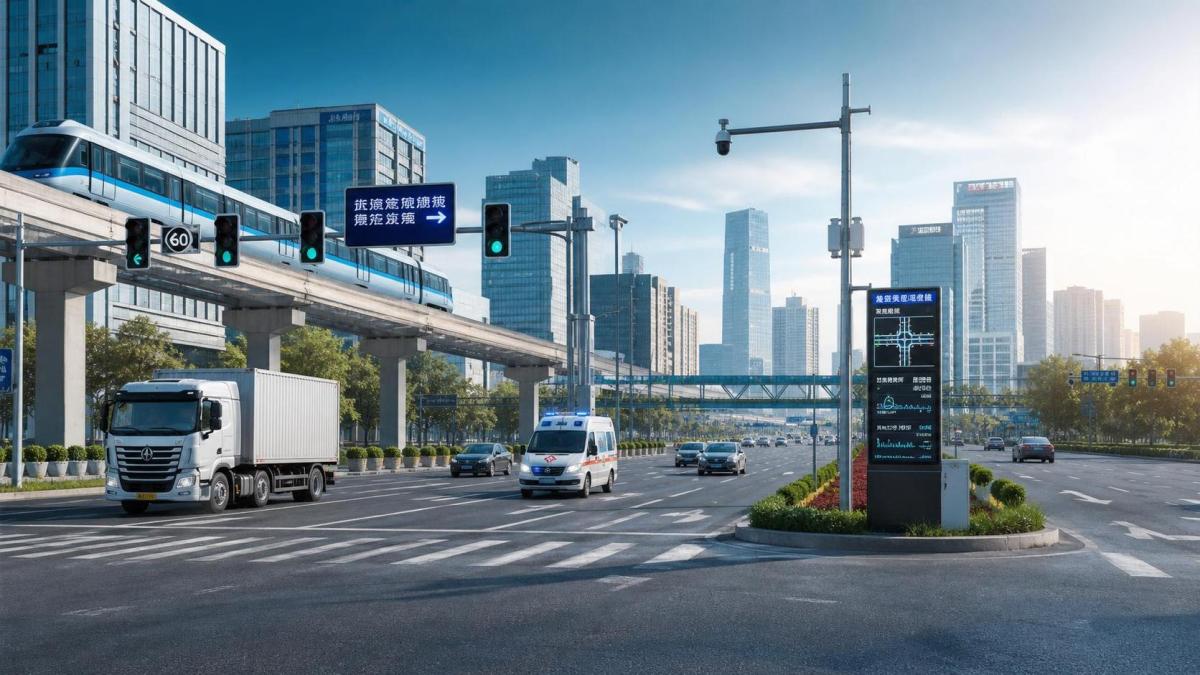
A modern city moves through linked networks, not isolated roads. Passenger traffic, logistics fleets, rail connections, utility maintenance, and emergency vehicles all compete for limited space.
When one layer fails, the effects spread quickly. A blocked junction can delay deliveries, slow ambulances, disrupt construction schedules, and increase fuel waste across an entire corridor.
That is why intelligent transportation matters across the broader infrastructure economy. It connects traffic control with smart governance, logistics reliability, and the operating rhythm of the built environment.
This broader view aligns with GIUT’s role as an intelligence hub for physical-world systems. Traffic is not treated as a stand-alone issue, but as part of a digital twin for cities, industry, and critical services.
What intelligent transportation actually includes
At its core, intelligent transportation combines sensing, communication, software, and operational rules to manage movement more precisely than static road systems can.
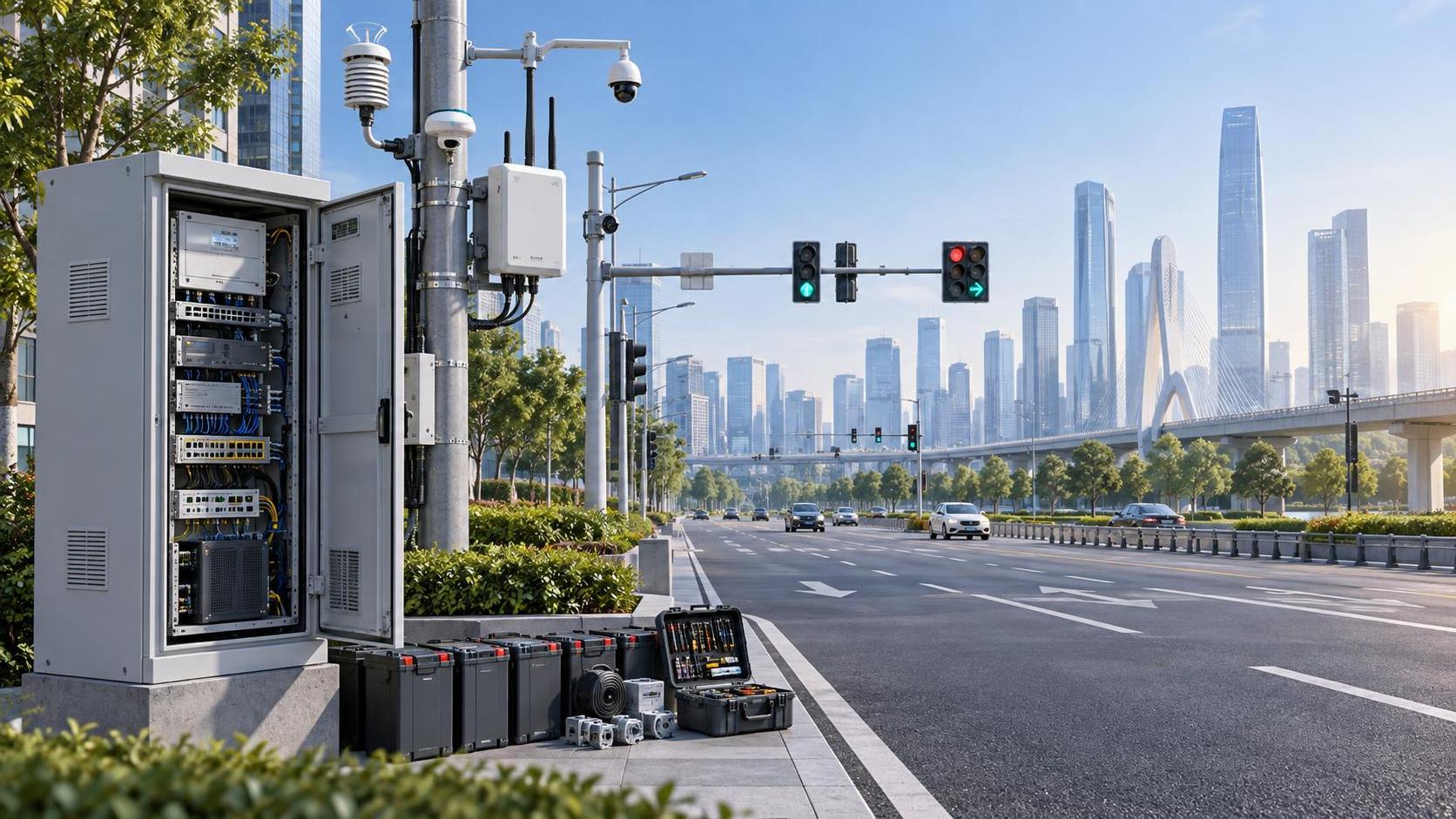
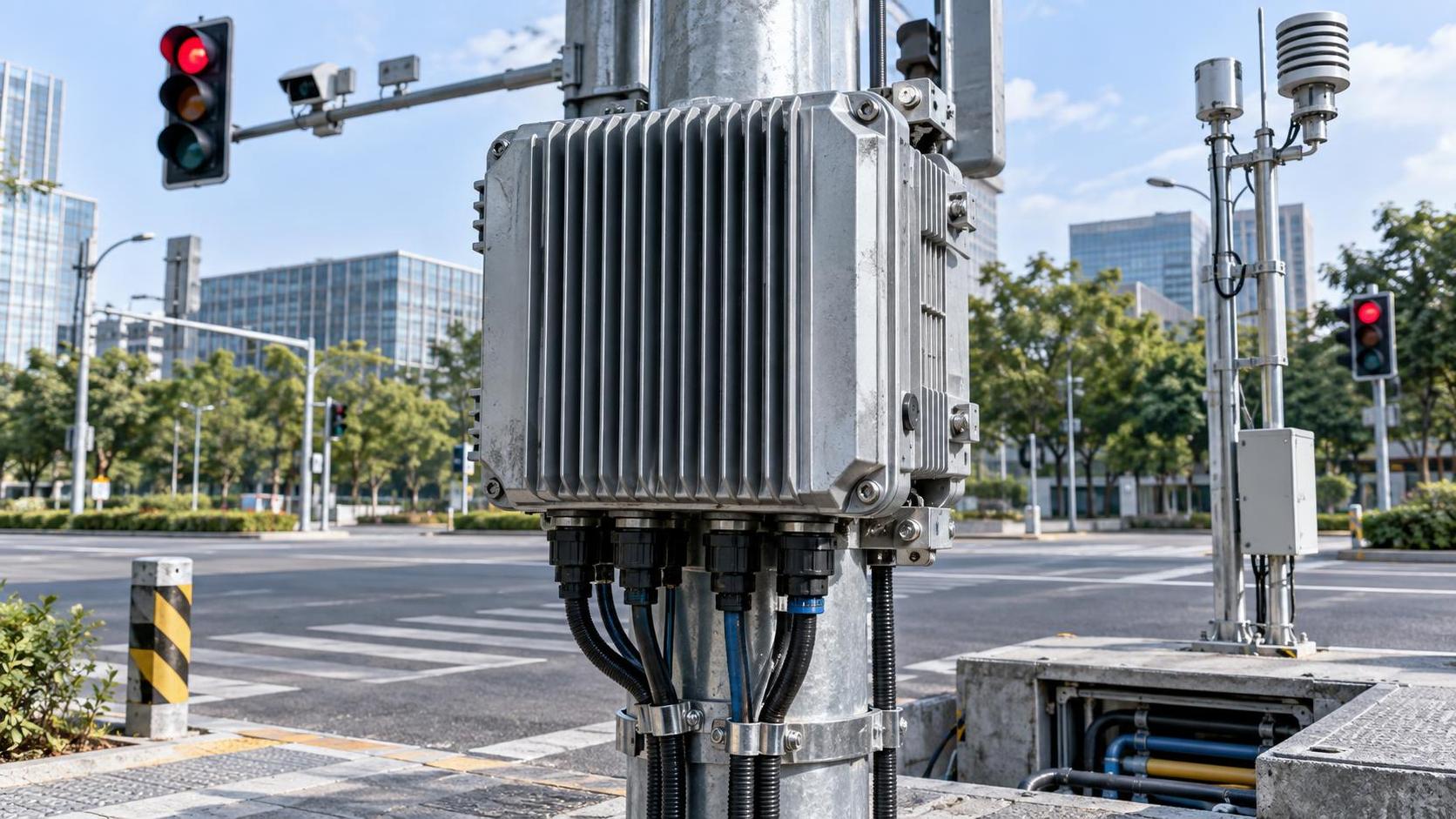
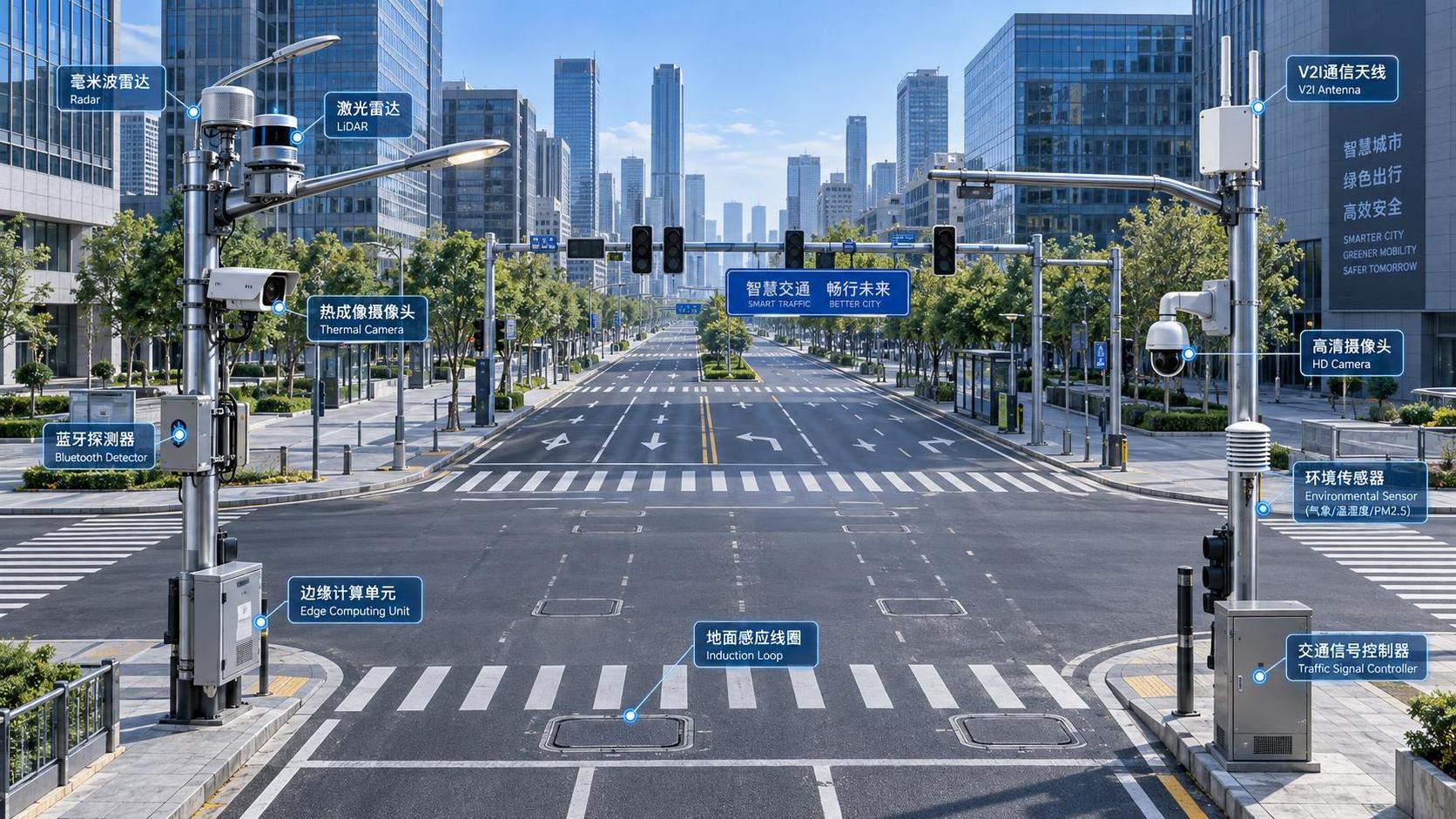
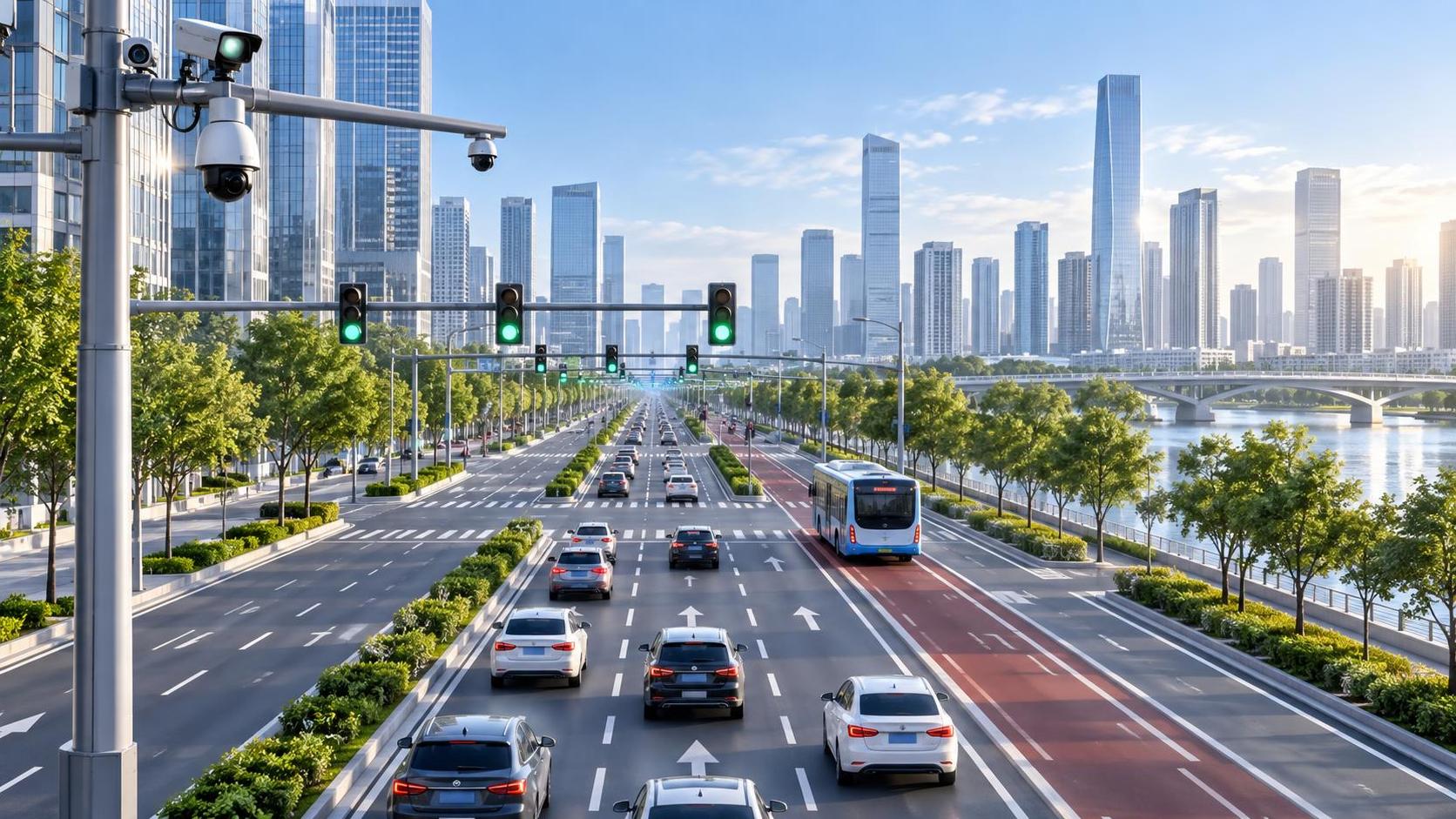
It usually brings together real-time data from intersections, connected vehicles, cameras, road sensors, GPS feeds, signal controllers, and incident reporting platforms.
The value appears when those signals are used to make coordinated decisions. That may mean adjusting traffic phases, clearing routes, prioritizing transit, or redirecting heavy vehicles before a bottleneck forms.
Common building blocks
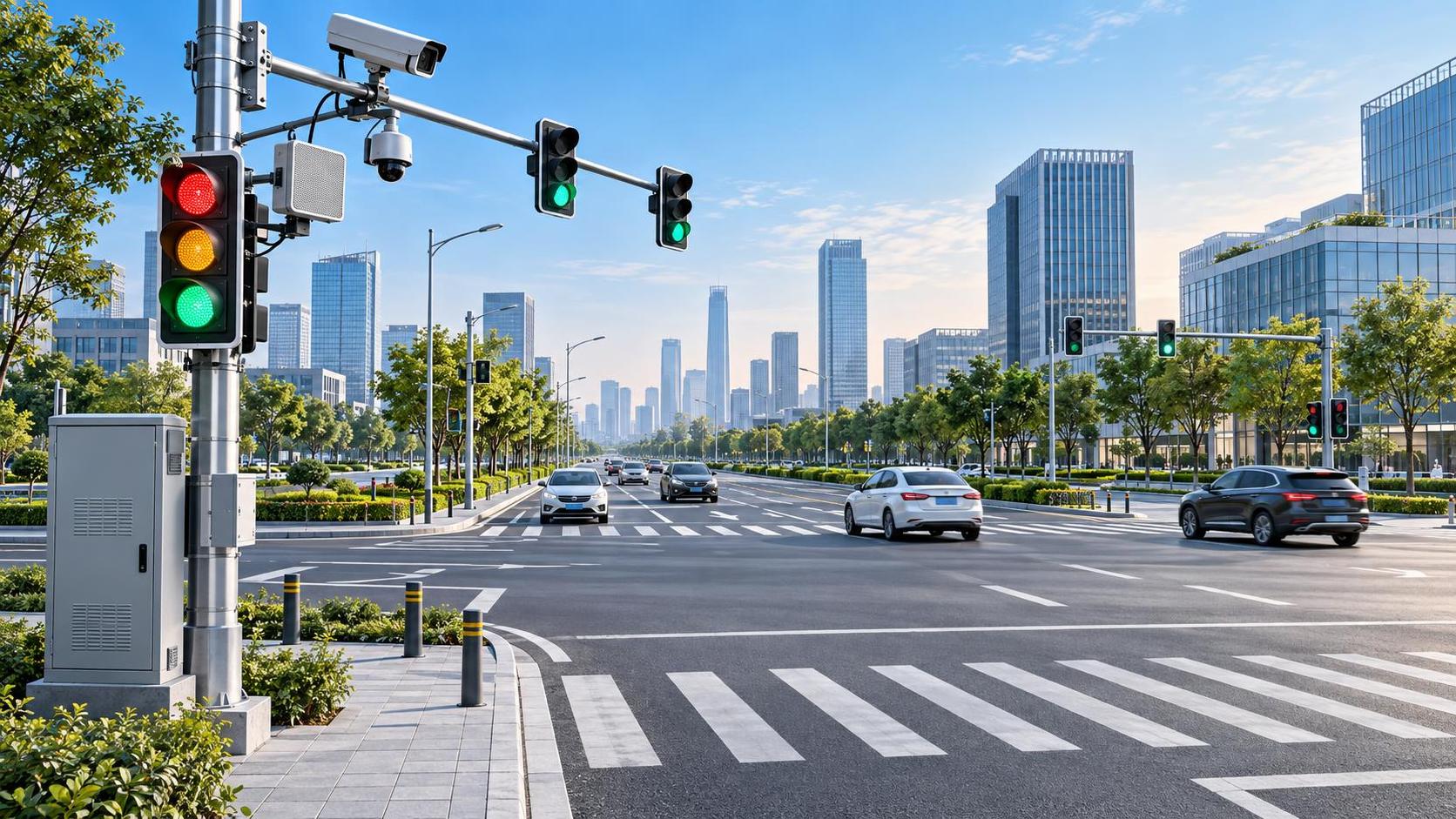
- Adaptive traffic signal control based on live traffic conditions
- Incident detection systems that identify congestion causes early
- Connected emergency vehicle priority at key intersections
- Freight routing tools linked to industrial parks and ports
- Integrated control centers that combine transport and city operations
Simple deployment does not guarantee results. The real advantage comes from how well data, rules, and field operations are linked.
How it cuts congestion in practical terms
Congestion rarely comes from traffic volume alone. It often grows from mistimed signals, poor lane use, slow incident clearance, weak freight coordination, and limited visibility across agencies.
Intelligent transportation addresses those friction points directly. Instead of relying on fixed schedules, it allows traffic systems to respond to current flow patterns and predicted peaks.
For example, adaptive intersections can extend green time when one direction starts saturating. Corridor management tools can synchronize nearby signals so that traffic does not stop and restart unnecessarily.
In logistics-heavy zones, dynamic routing can separate freight movement from commuter peaks. Around job sites or rail terminals, temporary traffic plans can be adjusted using live road data rather than weekly assumptions.
This matters for energy use as well. Less stop-and-go movement means lower fuel burn, reduced idle time, and more stable fleet schedules.
Where congestion reduction usually shows up first
Why response time improves when systems are connected
Emergency response depends on more than vehicle speed. It depends on route visibility, signal priority, dispatch accuracy, and the ability to avoid secondary congestion.
Intelligent transportation improves each of those points. Dispatch centers can see road conditions in real time. Signals can be adjusted before a fire truck or ambulance reaches an intersection.
Roadside systems can also flag incidents faster. That shortens the time between disruption, diagnosis, and field action, which is critical during crashes, weather events, industrial accidents, or equipment failures.
The same logic applies beyond public safety. Utility repair teams, maintenance crews, and special-purpose vehicles benefit when route access is managed dynamically rather than manually.
This is one reason the topic now crosses sectors. Smart mobility, heavy equipment operations, and urban resilience increasingly depend on shared situational awareness.
Business value beyond traffic management
The strongest case for intelligent transportation is rarely limited to shorter travel time. Its broader business value appears across planning, risk control, and asset utilization.
A city or operator gains better evidence for where to invest. Instead of reacting to complaints, decision-making can be tied to corridor performance, incident frequency, freight dwell time, and emergency access gaps.
There is also a governance advantage. When transport data is integrated with smart grids, public works, and land development plans, infrastructure priorities become easier to sequence.
That integrated lens reflects GIUT’s cross-sector coverage. Transport intelligence affects smart buildings, railway operations, heavy machinery deployment, and sustainable urban expansion at the same time.
Key value signals to watch
- Average delay reduction across priority corridors
- Emergency route clearance time during peak periods
- Freight reliability near ports, warehouses, and rail hubs
- Asset productivity for buses, maintenance fleets, and special vehicles
- Lower emissions from reduced idling and smoother traffic flow
Where implementation often succeeds or fails
Technology alone is not the hard part. The more difficult issue is operational alignment across agencies, contractors, utilities, transport authorities, and field teams.
Many projects underperform because they collect data without defining response rules. Others install advanced systems in one corridor but leave neighboring networks unmanaged.
A stronger approach starts with a limited set of high-value use cases. That may include emergency signal priority, freight corridor optimization, or congestion management around critical infrastructure projects.
It also helps to judge readiness in four areas before scaling:
- Data quality across traffic, fleet, and incident systems
- Interoperability between control platforms and field devices
- Clear authority for traffic interventions and escalation
- Performance metrics tied to service outcomes, not installation counts
In practice, intelligent transportation works best when it is treated as an operating model, not just a procurement category.
A practical next step for evaluating intelligent transportation
The most useful next move is to map congestion and response-time problems to specific corridors, assets, and operational decisions. That creates a clearer basis for judging where intelligent transportation can deliver measurable impact.
From there, compare options through system compatibility, response logic, deployment speed, and evidence quality. Solutions that support cross-sector coordination usually create more durable value than isolated traffic tools.
As cities evolve into more connected physical systems, intelligent transportation becomes a foundation layer for safer movement, stronger logistics, and smarter infrastructure governance.
That makes it worth assessing not as a single upgrade, but as part of a broader strategy for engineering the foundation and sustaining the future.
Get weekly intelligence in your inbox.
No noise. No sponsored content. Pure intelligence.
News Recommendations
 Sep 19, 2026How an electronics application guide helps prevent component mismatchHow an electronics application guide helps prevent component mismatch
 Sep 18, 2026When a resource allocation platform improves project deliveryWhen a resource allocation platform improves project delivery
 Sep 17, 2026What to compare when evaluating mineral processing equipment manufacturersWhat to compare when evaluating mineral processing equipment manufacturers
 Sep 16, 2026How mineral separation optimization can reduce concentrate lossesHow mineral separation optimization can reduce concentrate losses
 Sep 15, 2026How to assess lifecycle costs in urban tech procurementHow to assess lifecycle costs in urban tech procurement
 Sep 14, 2026Heavy industry technology trends reshaping capital investment prioritiesHeavy industry technology trends reshaping capital investment priorities
 Sep 14, 2026Global Industrial Equipment Procurement: How Top OEMs Qualify Suppliers for Mining & Infrastructure ProjectsGlobal Industrial Equipment Procurement: How Top OEMs Qualify Suppliers for Mining & Infrastructure Projects
 Sep 14, 2026Industrial & Mining Equipment Procurement: Balancing Local Sourcing, Lead Time, and Certification RequirementsIndustrial & Mining Equipment Procurement: Balancing Local Sourcing, Lead Time, and Certification Requirements
 Sep 14, 2026Infrastructure & Equipment Upgrades: What Procurement Teams Must Verify Before Signing Off on New ContractsInfrastructure & Equipment Upgrades: What Procurement Teams Must Verify Before Signing Off on New Contracts
 Sep 14, 2026Why Infrastructure Equipment Buyers Are Shifting from Catalog-Based to Capability-Based Supplier SelectionWhy Infrastructure Equipment Buyers Are Shifting from Catalog-Based to Capability-Based Supplier Selection
 Sep 14, 2026Process Automation Project Execution: How to Align Supplier Capabilities with PLC Integration, Cybersecurity & Commissioning MilestonesProcess Automation Project Execution: How to Align Supplier Capabilities with PLC Integration, Cybersecurity & Commissioning Milestones
 Sep 14, 2026Are intelligent traffic systems worth the investment for small cities?Are intelligent traffic systems worth the investment for small cities?
 Sep 14, 2026How do intelligent traffic systems handle sensor failures?How do intelligent traffic systems handle sensor failures?
 Sep 14, 2026What should I check before accepting a smart building system?What should I check before accepting a smart building system?
 Sep 14, 2026Is a smart building system worth the maintenance cost?Is a smart building system worth the maintenance cost?
 Sep 14, 2026What data is needed for reliable resource allocation planning?What data is needed for reliable resource allocation planning?
 Sep 14, 2026How can resource allocation software reduce equipment idle time?How can resource allocation software reduce equipment idle time?
 Sep 14, 2026How should smart devices be maintained in harsh outdoor conditions?How should smart devices be maintained in harsh outdoor conditions?
 Sep 14, 2026Do smart devices improve worker safety on construction sites?Do smart devices improve worker safety on construction sites?
 Sep 14, 2026What environmental risks must be assessed before deep-sea mining?What environmental risks must be assessed before deep-sea mining?
 Sep 14, 2026Is deep-sea mining equipment commercially viable in 2026?Is deep-sea mining equipment commercially viable in 2026?
 Sep 14, 2026What Inspection Checks Should Procurement Teams Perform Before Ordering Dredging Equipment in 2026?What Inspection Checks Should Procurement Teams Perform Before Ordering Dredging Equipment in 2026?
 Sep 13, 2026How to verify an industrial product information source before specifying equipmentHow to verify an industrial product information source before specifying equipment
 Sep 12, 2026Which intelligent traffic systems hardware fits an urban intersection?Which intelligent traffic systems hardware fits an urban intersection?
 Sep 11, 2026How pump capacity affects response coverage for municipal fire fighting vehiclesHow pump capacity affects response coverage for municipal fire fighting vehicles
 Sep 10, 2026What to verify before choosing a heavy industry equipment supplierWhat to verify before choosing a heavy industry equipment supplier
 Sep 09, 2026When do adaptive urban traffic control systems reduce corridor delays?When do adaptive urban traffic control systems reduce corridor delays?