Land Minerals vs Aggregates: Key Differences in Project Planning
Land Minerals vs Aggregates: why this distinction matters early
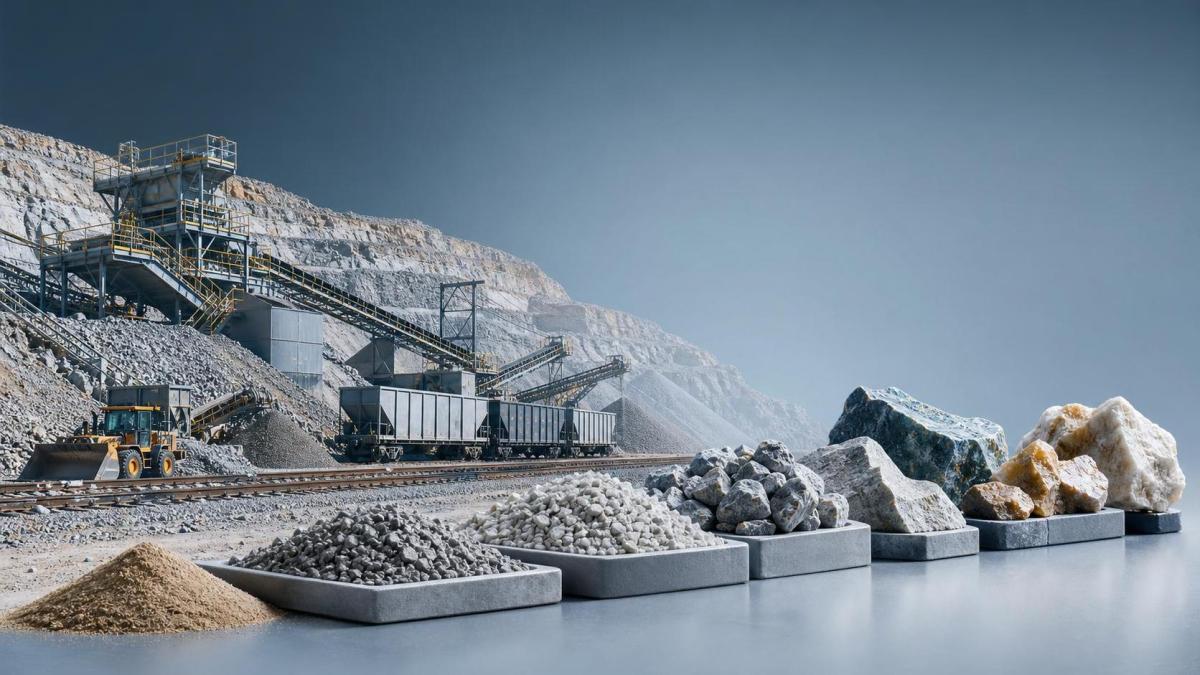
In infrastructure planning, one naming mistake can spread into procurement, permitting, and scheduling.
That is especially true when land minerals are treated as if they were ordinary aggregates.
The two may come from the ground, yet they serve very different value chains.
Land minerals usually carry extraction value tied to metal content, industrial processing, or strategic resource use.
Aggregates are typically bulk construction materials such as sand, gravel, and crushed stone.
In practical terms, this difference affects royalties, testing methods, logistics, and supplier qualification.
For sectors tracked by GIUT, from smart building to railway systems, that distinction shapes better site decisions.
A rail embankment, smart city utility trench, or concrete batch plant cannot rely on vague material categories.
A clear understanding of land minerals helps reduce rework and keeps resource planning aligned with project intent.
Are land minerals and aggregates basically the same thing?
Not really, even though both originate from geological deposits.
The simplest way to separate them is by economic purpose.
Land minerals are extracted because of their inherent mineral value or downstream industrial use.
Aggregates are extracted because they provide physical bulk, grading, and structural support.
A mineral deposit may be assessed for ore quality, concentration, and processing yield.
An aggregate source is more often judged by size distribution, hardness, cleanliness, and compaction behavior.
This is where planning teams sometimes get misled.
If material is labeled only as quarried stone or mined material, the commercial meaning stays unclear.
A source with usable aggregates does not automatically qualify as a land minerals asset.
Likewise, a land minerals site may produce waste rock, but that does not guarantee compliant aggregate performance.
In heavy industry reporting, GIUT often treats resource categories through a full lifecycle lens.
That means geology, processing, transport, regulation, and end use all matter at the same time.
A quick comparison for field decisions
Before tendering or site mobilization, a simple comparison table can prevent category errors.
Where does confusion usually happen in project planning?
The confusion often starts during early land assessment or cost planning.
A site investigation may identify stone, sand, clay, or mineralized layers without defining commercial classification.
Once that vague description enters internal documents, bad assumptions follow.
For example, excavated material may be counted as reusable aggregate before lab results confirm specification compliance.
In another case, a mineral-bearing zone may trigger licensing requirements that were never budgeted.
Projects in transport, utilities, and urban redevelopment face this issue more often than expected.
Brownfield sites are particularly sensitive because subsurface material may have mixed quality and contamination history.
The more complex the project interface, the more expensive the misunderstanding becomes.
In smart city and heavy infrastructure programs, material data should connect with digital planning systems early.
That approach reflects the GIUT view of the built world as a linked physical and intelligence network.
Common warning signs
- Material descriptions rely on generic terms such as rock resource or site fill.
- Permitting teams and design teams use different definitions for the same deposit.
- On-site reuse assumptions appear before geotechnical and chemical testing is complete.
- Supplier quotations mix mining output with construction-grade aggregate pricing.
- Transport plans ignore processing needs, stockpile segregation, or moisture control.
How do land minerals and aggregates change sourcing and compliance?
This is where the distinction becomes operational, not academic.
Land minerals can involve concession rights, royalty structures, extraction reporting, and stricter environmental monitoring.
Aggregates usually move through local or regional construction supply chains with performance-based specifications.
If a project needs road sub-base, drainage stone, or concrete sand, compliance depends on engineering properties.
If the resource is categorized as land minerals, compliance may also depend on extraction law and mineral ownership.
That difference changes lead times.
An aggregate supplier may deliver quickly from a licensed quarry with known gradation records.
A land minerals source may require additional surveys, beneficiation studies, or public approvals before commercial use.
Cost risk also behaves differently.
Aggregate pricing is heavily shaped by haul distance, crushing, washing, and local demand cycles.
Land minerals pricing is more exposed to commodity value, processing complexity, and regulatory burden.
In railway, utility, and urban growth corridors, these distinctions affect contract packaging and risk allocation.
What should be confirmed before approval?
- The legal classification of the resource at site and at source.
- The exact engineering specification for the intended end use.
- Whether processing waste, overburden, or by-product can be reused lawfully.
- The test regime needed for both quality assurance and environmental compliance.
- How transport, storage, and weather exposure affect usable yield.
Can excavated or mined material be reused as aggregate?
Sometimes yes, but only after disciplined verification.
This is one of the most misunderstood areas in land minerals planning.
A material may look suitable in the field and still fail as aggregate in service.
Particle shape, fines content, weathering, organic contamination, and sulfate risk can all change performance.
For concrete applications, consistency matters as much as strength.
For road or rail layers, drainage, compaction, and long-term durability become more important.
The practical question is not whether the source came from a mine.
The practical question is whether the processed output meets the actual project specification.
This matters for sustainability targets too.
Reuse can lower hauling and reduce virgin extraction, but only if performance and legal status are clear.
A circular materials strategy without robust testing can easily become a liability.
A practical reuse check
What is the smarter way to decide during project planning?
A good decision framework starts with intended use, not with material origin alone.
That sounds simple, but it changes the entire planning sequence.
First, define whether the project needs resource extraction value or construction performance value.
Then map legal classification, specification requirements, testing scope, and logistics around that purpose.
In real delivery programs, the best results come from aligning geology, design, and supply planning early.
That is consistent with GIUT’s broader approach to linking physical assets with decision intelligence.
When land minerals data, material testing, and construction sequencing sit in separate silos, risk increases.
When they are integrated, choices become faster and more defensible.
A concise planning checklist
- Define the final application before classifying the source material.
- Separate mineral rights questions from aggregate performance questions.
- Use tested specifications, not descriptive labels, in procurement documents.
- Verify reuse pathways with both technical and regulatory review.
- Track haul distance, processing losses, and permit lead time together.
If the choice is still unclear, compare at least two compliant sourcing routes side by side.
One may look cheaper at extraction stage yet become slower after testing, transport, and approvals.
The most resilient plans treat land minerals and aggregates as related, but never interchangeable by default.
A better next step is to review material categories, confirm end-use standards, and flag legal constraints before procurement starts.
That small discipline can protect cost, schedule, and compliance across the full project lifecycle.
Get weekly intelligence in your inbox.
No noise. No sponsored content. Pure intelligence.
News Recommendations
 Sep 20, 2026How to evaluate high speed rail systems equipment for reliabilityHow to evaluate high speed rail systems equipment for reliability
 Sep 19, 2026How an electronics application guide helps prevent component mismatchHow an electronics application guide helps prevent component mismatch
 Sep 18, 2026When a resource allocation platform improves project deliveryWhen a resource allocation platform improves project delivery
 Sep 17, 2026What to compare when evaluating mineral processing equipment manufacturersWhat to compare when evaluating mineral processing equipment manufacturers
 Sep 16, 2026How mineral separation optimization can reduce concentrate lossesHow mineral separation optimization can reduce concentrate losses
 Sep 15, 2026How to assess lifecycle costs in urban tech procurementHow to assess lifecycle costs in urban tech procurement
 Sep 14, 2026Heavy industry technology trends reshaping capital investment prioritiesHeavy industry technology trends reshaping capital investment priorities
 Sep 14, 2026When Should You Update Supplier Capability Data? Triggers, Frequency & Audit RequirementsWhen Should You Update Supplier Capability Data? Triggers, Frequency & Audit Requirements
 Sep 14, 2026Supplier Specification vs. Vendor Specification: Key Differences That Impact Procurement ComplianceSupplier Specification vs. Vendor Specification: Key Differences That Impact Procurement Compliance
 Sep 14, 2026How to Compare Vendor Specifications Across Industrial Equipment Categories — A Framework for EngineersHow to Compare Vendor Specifications Across Industrial Equipment Categories — A Framework for Engineers
 Sep 14, 2026Global Industrial Equipment Procurement: How Top OEMs Qualify Suppliers for Mining & Infrastructure ProjectsGlobal Industrial Equipment Procurement: How Top OEMs Qualify Suppliers for Mining & Infrastructure Projects
 Sep 14, 2026Industrial & Mining Equipment Procurement: Balancing Local Sourcing, Lead Time, and Certification RequirementsIndustrial & Mining Equipment Procurement: Balancing Local Sourcing, Lead Time, and Certification Requirements
 Sep 14, 2026Infrastructure & Equipment Upgrades: What Procurement Teams Must Verify Before Signing Off on New ContractsInfrastructure & Equipment Upgrades: What Procurement Teams Must Verify Before Signing Off on New Contracts
 Sep 14, 2026Why Infrastructure Equipment Buyers Are Shifting from Catalog-Based to Capability-Based Supplier SelectionWhy Infrastructure Equipment Buyers Are Shifting from Catalog-Based to Capability-Based Supplier Selection
 Sep 14, 2026Process Automation Project Execution: How to Align Supplier Capabilities with PLC Integration, Cybersecurity & Commissioning MilestonesProcess Automation Project Execution: How to Align Supplier Capabilities with PLC Integration, Cybersecurity & Commissioning Milestones
 Sep 14, 2026Are intelligent traffic systems worth the investment for small cities?Are intelligent traffic systems worth the investment for small cities?
 Sep 14, 2026How do intelligent traffic systems handle sensor failures?How do intelligent traffic systems handle sensor failures?
 Sep 14, 2026What should I check before accepting a smart building system?What should I check before accepting a smart building system?
 Sep 14, 2026Is a smart building system worth the maintenance cost?Is a smart building system worth the maintenance cost?
 Sep 14, 2026What data is needed for reliable resource allocation planning?What data is needed for reliable resource allocation planning?
 Sep 14, 2026How can resource allocation software reduce equipment idle time?How can resource allocation software reduce equipment idle time?
 Sep 14, 2026How should smart devices be maintained in harsh outdoor conditions?How should smart devices be maintained in harsh outdoor conditions?
 Sep 14, 2026Do smart devices improve worker safety on construction sites?Do smart devices improve worker safety on construction sites?
 Sep 14, 2026What environmental risks must be assessed before deep-sea mining?What environmental risks must be assessed before deep-sea mining?
 Sep 14, 2026Is deep-sea mining equipment commercially viable in 2026?Is deep-sea mining equipment commercially viable in 2026?
 Sep 14, 2026What Inspection Checks Should Procurement Teams Perform Before Ordering Dredging Equipment in 2026?What Inspection Checks Should Procurement Teams Perform Before Ordering Dredging Equipment in 2026?
 Sep 13, 2026How to verify an industrial product information source before specifying equipmentHow to verify an industrial product information source before specifying equipment