Industrial Cranes Price Guide: Comparing Capacity, Safety, and Maintenance
Industrial Cranes Price Guide: Comparing Capacity, Safety, and Maintenance
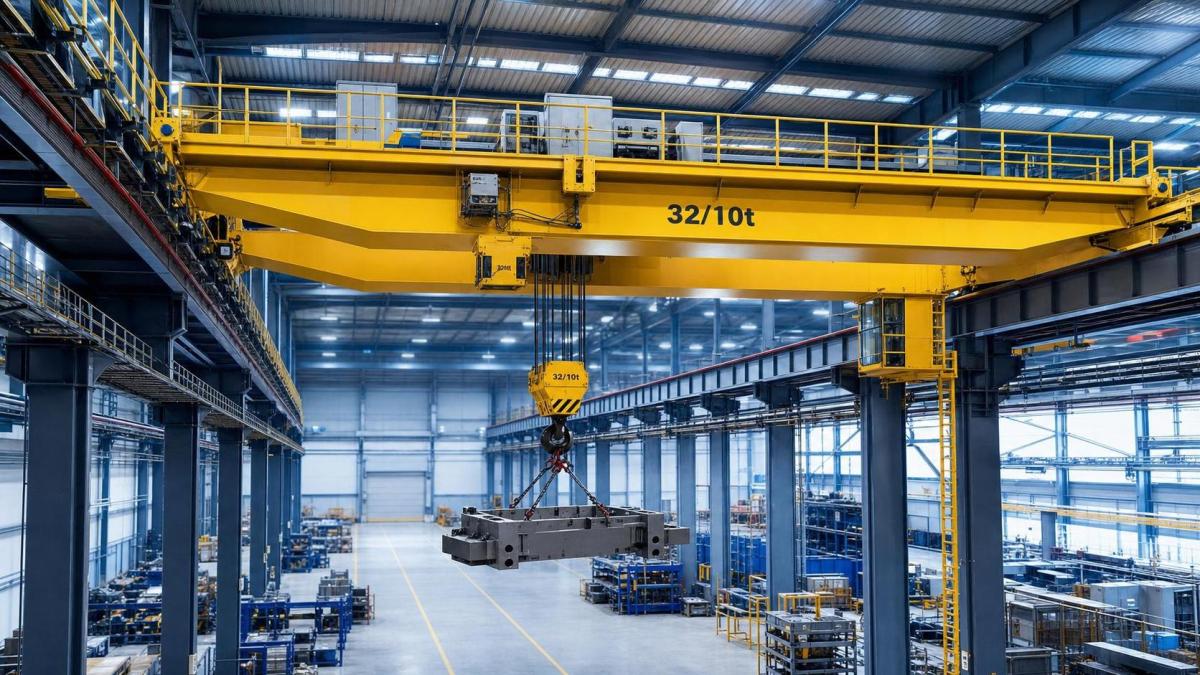
For procurement teams evaluating lifting solutions, understanding industrial cranes price goes far beyond the initial quote.
Capacity, safety systems, maintenance demands, and lifecycle efficiency all shape the true investment value.
This guide compares the key cost drivers behind industrial cranes, helping buyers make informed decisions.
The goal is simple: balance lifting performance, compliance, and long-term operating reliability.
Why Industrial Cranes Price Varies So Much
At first glance, two cranes may look similar.
In practice, their industrial cranes price can differ sharply because the specification depth is rarely the same.
The biggest factors are lifting capacity, span, duty cycle, hoist speed, controls, and structural design.
Safety features and maintenance access add another layer of cost.
So does the operating environment, especially in steel mills, ports, mines, and corrosive plants.
From recent market shifts, a clearer signal is emerging.
Buyers are no longer comparing crane quotes only by tonnage.
They are comparing uptime, digital monitoring, parts availability, and compliance risk.
That shift changes how industrial cranes price should be evaluated.
Capacity: The Most Visible Cost Driver
Capacity is usually the first filter in any buying decision.
Higher rated loads require stronger girders, larger hoists, more robust drives, and reinforced runway systems.
That is why industrial cranes price rises quickly as tonnage increases.
Still, rated capacity alone does not tell the full story.
A 10-ton crane in light service may cost far less than a 10-ton crane in continuous heavy duty.
This is where buyers often miss hidden exposure.
If the duty classification is too low, the lower quote can become the more expensive option.
Repairs, downtime, and early component wear usually follow.
Key capacity questions before comparing quotes
- What is the maximum load, and what is the typical daily load?
- How many lifting cycles occur per shift?
- Is the crane handling standard loads, hot materials, or precision equipment?
- Will future production expansion require higher capacity?
In real operations, buying too close to today’s peak load often limits flexibility.
A modest capacity buffer can protect throughput and reduce replacement pressure later.
Safety Systems: Cost Increase or Risk Reduction?
Safety options often look like add-ons during tender review.
In reality, they are a core part of industrial cranes price and a major part of total risk control.
Modern cranes may include overload protection, anti-collision systems, limit switches, sway control, and emergency braking.
Higher-end models may also offer load monitoring, event logs, and remote fault diagnostics.
These features raise the initial industrial cranes price, but they often lower liability and downtime exposure.
This matters even more in regulated industries.
When lifts happen near personnel, expensive assets, or continuous production lines, safety failures become business failures.
That also means compliance should never be treated as a last-minute checkbox.
Safety features that commonly justify higher industrial cranes price
- Load limiters that prevent overloading
- Variable frequency drives for smoother motion control
- Anti-collision systems in multi-crane bays
- Redundant brakes for critical applications
- Condition monitoring for predictive maintenance
When comparing crane costs, ask which safety elements are standard and which are optional.
That distinction changes quote quality more than many buyers expect.
Maintenance: The Hidden Multiplier in Crane Cost
Maintenance is where short-term savings often disappear.
A lower industrial cranes price can be attractive, but poor serviceability usually creates long-term cost pressure.
This includes hard-to-access components, proprietary electronics, long spare-part lead times, and weak local support.
In practical terms, maintenance affects availability more than the original purchase price.
That is especially true in logistics hubs, mining facilities, fabrication plants, and rail maintenance depots.
A crane that stops unexpectedly can interrupt a much larger revenue chain.
Maintenance items worth reviewing before purchase
- Inspection intervals for hoists, ropes, hooks, brakes, and electrical systems.
- Availability of local technicians and stocked spare parts.
- Access design for routine servicing and component replacement.
- Warranty scope, exclusions, and response time commitments.
- Software support for diagnostics and usage history.
A more expensive crane with easier maintenance can deliver a lower total cost of ownership.
That is the comparison that matters when industrial cranes price is reviewed seriously.
Comparing Typical Price Influences by Crane Type
Different crane types bring different cost structures.
This is why industrial cranes price should always be reviewed in the context of application fit.
A lower-cost type may still be the wrong technical fit.
When that happens, industrial cranes price becomes misleading rather than useful.
How to Evaluate Quotes Beyond the Base Price
A clean quote comparison needs a structured checklist.
Without that, industrial cranes price comparisons can become unreliable very quickly.
Vendors may quote different boundaries for supply, installation, testing, and operator training.
Some include controls, runway adaptations, and commissioning.
Others do not.
A practical comparison framework
- Check rated capacity against actual duty cycle.
- Review all safety inclusions and certification status.
- Confirm installation scope and site preparation requirements.
- Estimate annual maintenance and spare-parts cost.
- Measure supplier responsiveness and local support strength.
- Ask for expected service life under your operating profile.
This approach makes industrial cranes price easier to compare on real business value.
It also reduces the chance of buying a technically acceptable but operationally expensive crane.
Making the Final Decision with Lifecycle Value in Mind
The best industrial cranes price is rarely the lowest number on the page.
It is the option that matches load demands, protects people, supports uptime, and stays maintainable over time.
That is especially important as infrastructure, manufacturing, and urban logistics become more automated.
Cranes are no longer isolated lifting tools.
They are part of a wider productivity and safety system.
For that reason, the smartest buying decision starts with application clarity and ends with lifecycle discipline.
When reviewing industrial cranes price, compare more than steel, motors, and lifting speed.
Compare risk, serviceability, and long-term operational fit.
That is usually where the strongest procurement decision becomes obvious.
Get weekly intelligence in your inbox.
No noise. No sponsored content. Pure intelligence.
News Recommendations
 Sep 19, 2026How an electronics application guide helps prevent component mismatchHow an electronics application guide helps prevent component mismatch
 Sep 18, 2026When a resource allocation platform improves project deliveryWhen a resource allocation platform improves project delivery
 Sep 17, 2026What to compare when evaluating mineral processing equipment manufacturersWhat to compare when evaluating mineral processing equipment manufacturers
 Sep 16, 2026How mineral separation optimization can reduce concentrate lossesHow mineral separation optimization can reduce concentrate losses
 Sep 15, 2026How to assess lifecycle costs in urban tech procurementHow to assess lifecycle costs in urban tech procurement
 Sep 14, 2026Heavy industry technology trends reshaping capital investment prioritiesHeavy industry technology trends reshaping capital investment priorities
 Sep 14, 2026Why Infrastructure Equipment Buyers Are Shifting from Catalog-Based to Capability-Based Supplier SelectionWhy Infrastructure Equipment Buyers Are Shifting from Catalog-Based to Capability-Based Supplier Selection
 Sep 14, 2026Process Automation Project Execution: How to Align Supplier Capabilities with PLC Integration, Cybersecurity & Commissioning MilestonesProcess Automation Project Execution: How to Align Supplier Capabilities with PLC Integration, Cybersecurity & Commissioning Milestones
 Sep 14, 2026Are intelligent traffic systems worth the investment for small cities?Are intelligent traffic systems worth the investment for small cities?
 Sep 14, 2026How do intelligent traffic systems handle sensor failures?How do intelligent traffic systems handle sensor failures?
 Sep 14, 2026What should I check before accepting a smart building system?What should I check before accepting a smart building system?
 Sep 14, 2026Is a smart building system worth the maintenance cost?Is a smart building system worth the maintenance cost?
 Sep 14, 2026What data is needed for reliable resource allocation planning?What data is needed for reliable resource allocation planning?
 Sep 14, 2026How can resource allocation software reduce equipment idle time?How can resource allocation software reduce equipment idle time?
 Sep 14, 2026How should smart devices be maintained in harsh outdoor conditions?How should smart devices be maintained in harsh outdoor conditions?
 Sep 14, 2026Do smart devices improve worker safety on construction sites?Do smart devices improve worker safety on construction sites?
 Sep 14, 2026What environmental risks must be assessed before deep-sea mining?What environmental risks must be assessed before deep-sea mining?
 Sep 14, 2026Is deep-sea mining equipment commercially viable in 2026?Is deep-sea mining equipment commercially viable in 2026?
 Sep 14, 2026What Inspection Checks Should Procurement Teams Perform Before Ordering Dredging Equipment in 2026?What Inspection Checks Should Procurement Teams Perform Before Ordering Dredging Equipment in 2026?
 Sep 13, 2026How to verify an industrial product information source before specifying equipmentHow to verify an industrial product information source before specifying equipment
 Sep 12, 2026Which intelligent traffic systems hardware fits an urban intersection?Which intelligent traffic systems hardware fits an urban intersection?
 Sep 11, 2026How pump capacity affects response coverage for municipal fire fighting vehiclesHow pump capacity affects response coverage for municipal fire fighting vehicles
 Sep 10, 2026What to verify before choosing a heavy industry equipment supplierWhat to verify before choosing a heavy industry equipment supplier
 Sep 09, 2026When do adaptive urban traffic control systems reduce corridor delays?When do adaptive urban traffic control systems reduce corridor delays?
 Sep 08, 2026When logistics technology solutions in North America reduce delivery delaysWhen logistics technology solutions in North America reduce delivery delays
 Sep 07, 2026How reliable are wireless mining safety systems in underground mines?How reliable are wireless mining safety systems in underground mines?
 Sep 07, 2026How to assess a smart lighting technology platform for interoperabilityHow to assess a smart lighting technology platform for interoperability