When does extraction technology automation reduce processing bottlenecks?
Extraction technology automation reduces processing bottlenecks when the constraint is no longer the physical capacity of the mine, plant, or handling system, but the repeated decisions, handoffs, measurements, and interventions surrounding it. A processing line may appear adequately sized on paper, yet lose hours through delayed sample results, inconsistent equipment settings, manual material tracking, or operators reacting to problems after they have already spread downstream.
The practical test is simple: automation is justified when it can remove a recurring source of waiting, variation, or unsafe intervention without merely moving the delay to another part of the workflow. In extraction operations, the best candidates are usually high-volume tasks with stable rules, processes that depend on timely operational data, and activities where manual work creates a queue between extraction, transport, processing, and reporting.
Start by locating the real bottleneck
A slow processing stage is not always the bottleneck. A crusher may be running below target because haulage delivery is irregular. A separation circuit may be unstable because feed characteristics are not being measured quickly enough. A control room may receive alarms continuously, yet lack a clear priority system for deciding which intervention matters first.
Before selecting extraction technology automation, map the movement of material and information together. Follow one production unit from the extraction face through loading, hauling, stockpiling, crushing, processing, sampling, and production reporting. At each handoff, ask two questions: what must happen before the next activity can begin, and who or what is waiting?
Delays often sit in one of four places:
- Material availability: equipment is ready, but ore, aggregate, slurry, or recovered material does not arrive at the required rate or quality.
- Decision latency: field conditions change faster than measurements, approvals, or instructions can be issued.
- Equipment variability: operating settings drift, maintenance needs are recognized late, or machine utilization is uneven.
- Information reconciliation: production, quality, dispatch, maintenance, and inventory records are updated separately and cannot support immediate action.
This distinction matters because automation aimed at the wrong constraint can create impressive dashboards while throughput remains unchanged. For example, automating a reporting workflow will not solve a feed inconsistency caused by unplanned loader downtime. Conversely, adding another piece of processing equipment may not help when the actual delay comes from manual sample handling and late quality decisions.
Signs that manual processing is limiting output
Manual work is not inherently inefficient. Experienced operators make essential judgments in variable geological, mechanical, and environmental conditions. The warning sign is not that people are involved; it is that routine tasks consume attention needed for exceptions and control decisions.
Consider a shift where operators repeatedly adjust feed rates based on radio calls, visual observations, and delayed laboratory information. Each decision may be reasonable in isolation, but the combined effect can be unstable feed, avoidable recirculation, and difficulty explaining why output changed. Automation becomes relevant when the same measurement, instruction, or adjustment must be repeated frequently enough that delay and inconsistency become operational risks.
A useful indicator is the gap between a process event and the response to it. When a conveyor develops abnormal loading, a pump begins to cavitate, or material properties shift, how long does it take for the condition to be detected, verified, communicated, and corrected? If several teams must interpret the same event before action is taken, the workflow may be a stronger automation candidate than the machine itself.
Where automation tends to remove bottlenecks first
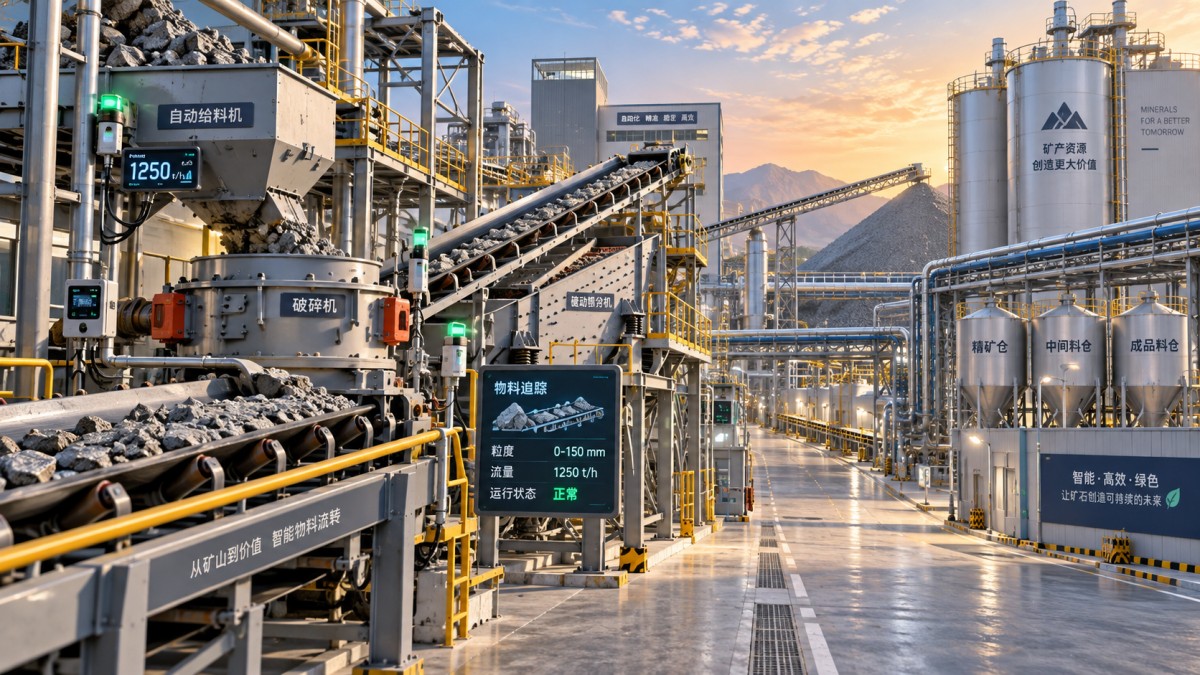
Material tracking and routing
In extraction and bulk-material operations, material frequently loses its identity as it moves through stockpiles, transfer points, blending areas, and processing stages. When origin, grade, moisture, contamination risk, or destination are tracked through paper records and disconnected systems, routing decisions become conservative. Material may be held longer than necessary, mixed without sufficient visibility, or sent through a process path that is poorly matched to its characteristics.
Automated tracking can reduce this delay when the operation has defined material categories and routing rules. The system does not need to make every decision autonomously. Its value may be as straightforward as presenting the current location, estimated characteristics, and intended destination of each material stream in time for dispatch and processing teams to coordinate.
Feed control at transfer points
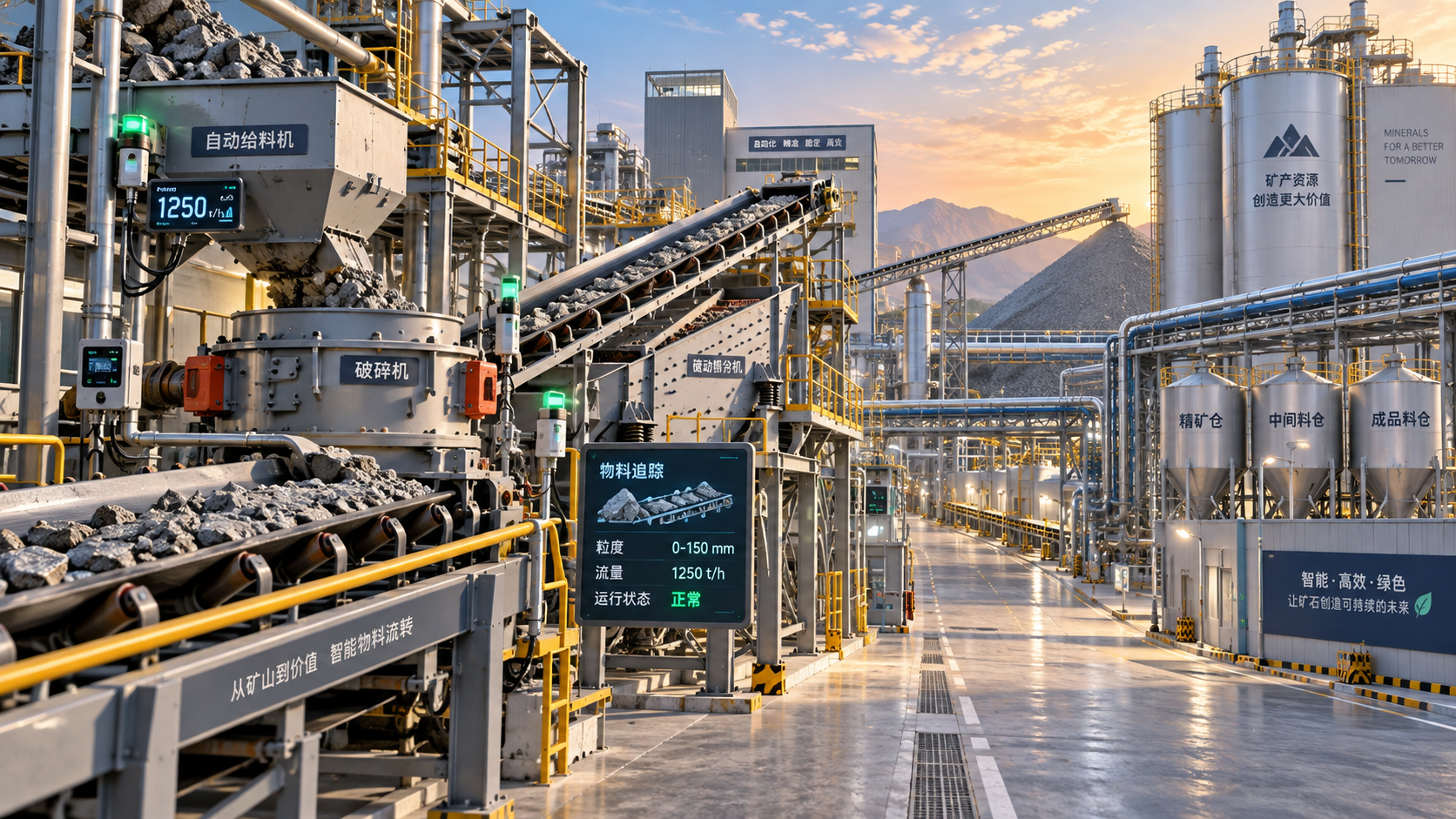
Processing bottlenecks are often amplified at the point where extracted material becomes plant feed. A feeder, conveyor, crusher, screen, mill, or separator performs more consistently when it receives material within an acceptable operating range. Manual adjustments can work in low-variation conditions, but they become less effective when feed changes rapidly or several upstream assets affect the same downstream constraint.
Automation is most useful here when sensors provide a dependable view of rate, load, level, particle size, density, moisture, or another relevant process variable. Control logic can then keep the process inside agreed limits, reduce abrupt swings, and alert operators when the cause lies outside the controllable range. The goal is not to eliminate operator oversight; it is to prevent routine corrections from becoming delayed reactions.
Sampling, testing, and quality release
Quality information is often treated as a laboratory issue, but its timing directly affects production capacity. If samples are manually collected, logged, transported, prepared, tested, and entered into separate records, material may wait for release or continue through the wrong process route while results are pending. This creates both physical queues and decision queues.
Automated sampling and data transfer can shorten the time between collection and use of results, provided the sampling design remains representative. Faster analysis does not compensate for poor sampling locations, contaminated samples, or unclear responsibility for responding to out-of-range results. The process should define which results trigger a routing change, rate adjustment, hold decision, or additional verification.
Remote and condition-based interventions
Some bottlenecks are created by necessary but disruptive human access. Inspections around moving equipment, confined areas, unstable ground, high temperatures, dust, or water hazards may require isolations, travel time, permits, and carefully coordinated work. Remote sensing, cameras, drones where appropriate, and condition-monitoring devices can reduce the frequency of routine access while improving visibility between scheduled inspections.
The strongest use case is not “replace every inspection.” It is separating normal-condition verification from exceptions that truly require a person on site. When operational teams can see a developing issue earlier, they can plan an intervention during a suitable window instead of stopping a critical process after a failure or safety concern emerges.
Do not automate a process that has not been stabilized
Automation can make an unstable process operate faster in the wrong direction. Before configuring rules, alarms, or autonomous sequences, define the normal operating envelope. This includes acceptable feed ranges, equipment limits, material classifications, alarm thresholds, handoff responsibilities, and the conditions under which a human must take control.
A practical preparation phase should answer the following:
- Which delay has the greatest effect on the constrained processing stage?
- What event begins the delay, and what evidence confirms that it has ended?
- Which data points are reliable enough to support an automated action?
- Which operating decisions follow repeatable rules, and which require contextual judgment?
- What downstream effect could occur if the automated action is wrong or unavailable?
This exercise frequently exposes a hidden issue: teams may use different definitions for the same measure. “Available,” “processed,” “high-grade,” “ready for dispatch,” or “downtime” can mean different things to operations, maintenance, and planning. Connecting inconsistent definitions only accelerates disagreement. Establishing a shared operating logic is therefore part of the automation work, not administrative overhead.
Choose the level of automation by decision risk
Not every bottleneck needs closed-loop control. A staged approach is usually safer and easier to evaluate because it shows whether the underlying data and workflow are dependable before more consequential actions are delegated.
Visibility automation collects and presents operating status without changing the process. It suits situations where teams lack a shared view of equipment, material movement, or production constraints.
Decision-support automation identifies deviations, recommends priorities, or calculates likely responses. It is useful when rules are understood but an accountable operator should still approve the action.
Supervisory automation carries out predefined adjustments within controlled limits, such as regulating feed rate or directing material according to confirmed classifications. This requires reliable instrumentation, tested interlocks, and clear fallback procedures.
Autonomous operation is appropriate only where operating conditions, safety controls, communications, and exception handling have been designed for limited human intervention. It should not be selected solely because a task is labor-intensive. A task with rare but severe consequences may need human authority even when it is repetitive.
Measure whether the bottleneck has actually moved
After implementation, avoid judging success only by whether the new system is active. Measure the specific constraint identified at the start. Depending on the workflow, that may be waiting time at a transfer point, feed-rate variability, time from sample collection to process adjustment, unplanned intervention frequency, or the duration of equipment queues.
Also watch for displacement. Faster extraction can overload hauling. Faster hauling can overfill stockpiles. Better plant visibility can expose maintenance capacity as the next limiting factor. This is not a failure of automation; it is evidence that the former bottleneck has been relieved. The next decision is whether the newly exposed constraint warrants operational changes, added capacity, or another targeted automation step.
Maintain a record of manual overrides, alarm events, sensor faults, and conditions where operators reject automated recommendations. These records show whether the logic needs refinement or whether the process is encountering variability that was not included in the original design. An automation system that cannot explain its actions or preserve an auditable operating history will be difficult to improve and difficult to trust.
Questions that arise during implementation
Is automation worthwhile when production volumes are not very high?
It can be. Volume alone is not the deciding factor. Automation may be justified where a low-volume process creates safety exposure, requires repeated travel to remote assets, depends on time-sensitive quality decisions, or causes expensive downtime when a condition is missed. The expected value should be tied to the specific bottleneck rather than to output volume alone.
Will automated controls reduce the need for experienced operators?
Usually, the work changes rather than disappears. Routine monitoring and repetitive adjustments can be handled more consistently, while experienced personnel focus on abnormal conditions, production trade-offs, maintenance coordination, and process improvement. Their input is especially important when defining operating limits and override rules.
What should be automated first when data quality is poor?
Begin with data capture, equipment status visibility, and standard definitions rather than automatic control actions. Improve sensor maintenance, timestamp consistency, and ownership of critical records first. Automated decisions should wait until the relevant inputs are reliable enough to support them.
Get weekly intelligence in your inbox.
No noise. No sponsored content. Pure intelligence.
News Recommendations
 Sep 30, 2026What makes a special purpose vehicle road legal for public roads?What makes a special purpose vehicle road legal for public roads?
 Sep 29, 2026When does extraction technology automation reduce processing bottlenecks?When does extraction technology automation reduce processing bottlenecks?
 Sep 28, 2026How urban traffic upgrades can reduce congestion at busy intersectionsHow urban traffic upgrades can reduce congestion at busy intersections
 Sep 27, 2026What drives deep-sea mining cost estimates before project approval?What drives deep-sea mining cost estimates before project approval?
 Sep 26, 2026When does steel outperform concrete for long-span bridges?When does steel outperform concrete for long-span bridges?
 Sep 25, 2026Which logistics technology software features reduce manual shipment updates?Which logistics technology software features reduce manual shipment updates?
 Sep 24, 2026How to verify a mine safety systems supplier meets site requirementsHow to verify a mine safety systems supplier meets site requirements
 Sep 23, 2026What should you compare when choosing an earthmoving equipment manufacturer?What should you compare when choosing an earthmoving equipment manufacturer?
 Sep 22, 2026How to compare total landed cost in industrial solutions procurementHow to compare total landed cost in industrial solutions procurement
 Sep 21, 2026When do logistics technology solutions reduce warehouse picking errors?When do logistics technology solutions reduce warehouse picking errors?
 Sep 20, 2026How to evaluate high speed rail systems equipment for reliabilityHow to evaluate high speed rail systems equipment for reliability
 Sep 19, 2026How an electronics application guide helps prevent component mismatchHow an electronics application guide helps prevent component mismatch
 Sep 18, 2026When a resource allocation platform improves project deliveryWhen a resource allocation platform improves project delivery
 Sep 17, 2026What to compare when evaluating mineral processing equipment manufacturersWhat to compare when evaluating mineral processing equipment manufacturers
 Sep 16, 2026How mineral separation optimization can reduce concentrate lossesHow mineral separation optimization can reduce concentrate losses
 Sep 15, 2026How to assess lifecycle costs in urban tech procurementHow to assess lifecycle costs in urban tech procurement
 Sep 14, 2026Heavy industry technology trends reshaping capital investment prioritiesHeavy industry technology trends reshaping capital investment priorities
 Sep 14, 2026How Heavy Equipment OEMs Can Scale Durability Validation & Supplier Risk Management Across Global Supply ChainsHow Heavy Equipment OEMs Can Scale Durability Validation & Supplier Risk Management Across Global Supply Chains
 Sep 14, 2026What Evidence Actually Counts in Supplier Scoring? A Technical Guide for Procurement TeamsWhat Evidence Actually Counts in Supplier Scoring? A Technical Guide for Procurement Teams
 Sep 14, 2026When Should You Update Supplier Capability Data? Triggers, Frequency & Audit RequirementsWhen Should You Update Supplier Capability Data? Triggers, Frequency & Audit Requirements
 Sep 14, 2026Supplier Specification vs. Vendor Specification: Key Differences That Impact Procurement ComplianceSupplier Specification vs. Vendor Specification: Key Differences That Impact Procurement Compliance
 Sep 14, 2026How to Compare Vendor Specifications Across Industrial Equipment Categories — A Framework for EngineersHow to Compare Vendor Specifications Across Industrial Equipment Categories — A Framework for Engineers
 Sep 14, 2026Global Industrial Equipment Procurement: How Top OEMs Qualify Suppliers for Mining & Infrastructure ProjectsGlobal Industrial Equipment Procurement: How Top OEMs Qualify Suppliers for Mining & Infrastructure Projects
 Sep 14, 2026Industrial & Mining Equipment Procurement: Balancing Local Sourcing, Lead Time, and Certification RequirementsIndustrial & Mining Equipment Procurement: Balancing Local Sourcing, Lead Time, and Certification Requirements
 Sep 14, 2026Infrastructure & Equipment Upgrades: What Procurement Teams Must Verify Before Signing Off on New ContractsInfrastructure & Equipment Upgrades: What Procurement Teams Must Verify Before Signing Off on New Contracts
 Sep 14, 2026Why Infrastructure Equipment Buyers Are Shifting from Catalog-Based to Capability-Based Supplier SelectionWhy Infrastructure Equipment Buyers Are Shifting from Catalog-Based to Capability-Based Supplier Selection
 Sep 14, 2026Process Automation Project Execution: How to Align Supplier Capabilities with PLC Integration, Cybersecurity & Commissioning MilestonesProcess Automation Project Execution: How to Align Supplier Capabilities with PLC Integration, Cybersecurity & Commissioning Milestones