Is deep-sea mining equipment commercially viable in 2026?
Is deep-sea mining equipment commercially viable in 2026?
No—not yet, and not at scale. But viability is no longer a binary yes/no question. It’s a conditional threshold: commercial deployment by 2026 is technically possible for narrow, high-margin applications, but economically sustainable operations across full supply chains remain out of reach for all but one or two pilot-aligned entities.
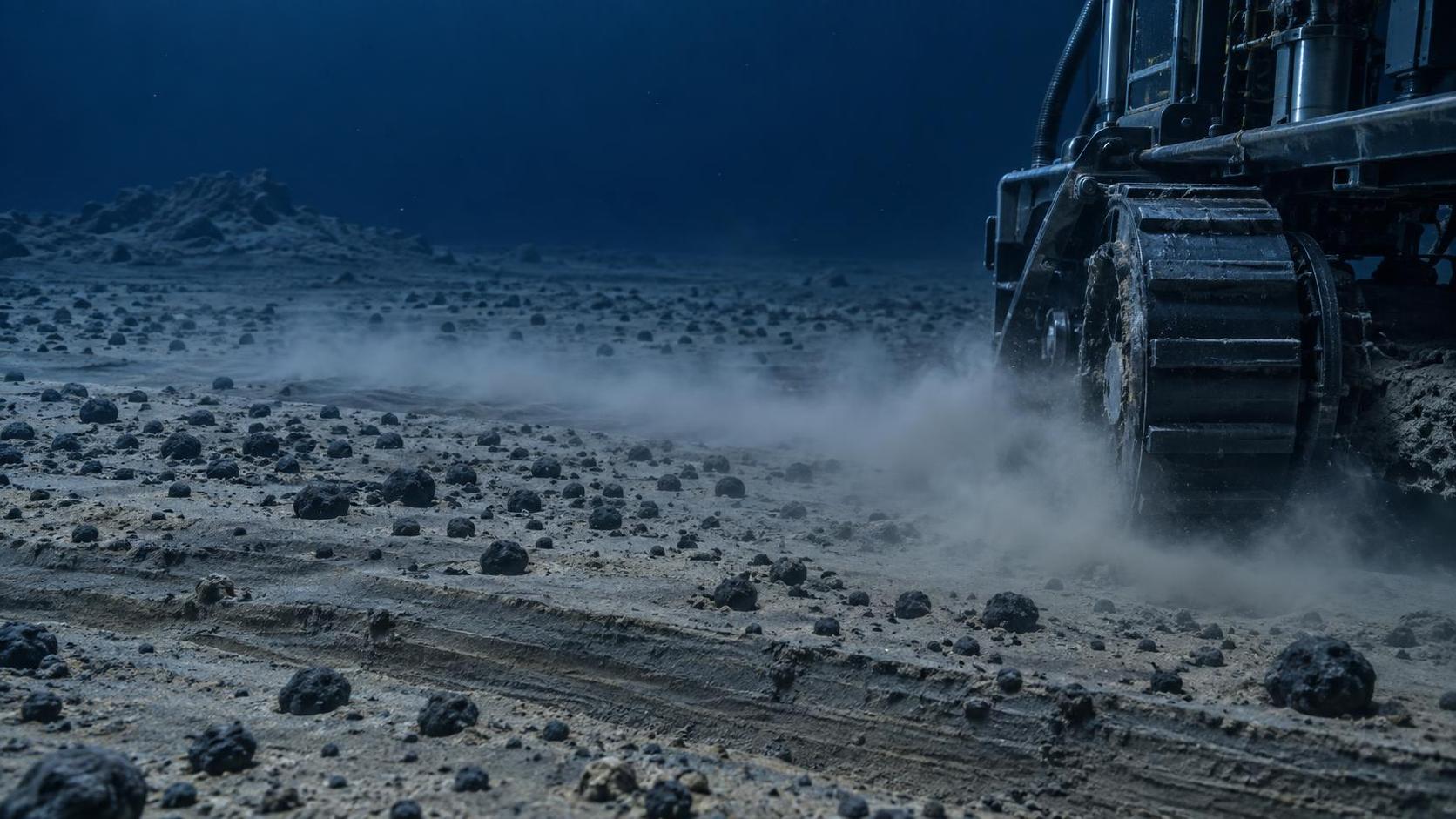
This isn’t a verdict on technology maturity alone. It’s a judgment grounded in three converging constraints observed across real-world deployments since 2023: the cost-per-ton economics of seabed nodule recovery; the regulatory execution gap between ISA licensing and national permitting; and the operational brittleness of integrated systems under sustained 4,500-meter pressure cycles. These aren’t theoretical bottlenecks—they’re measurable failure modes logged in recent field trials off Papua New Guinea, the Clarion-Clipperton Zone, and Norwegian fjord simulators.
Where the numbers break—and where they hold
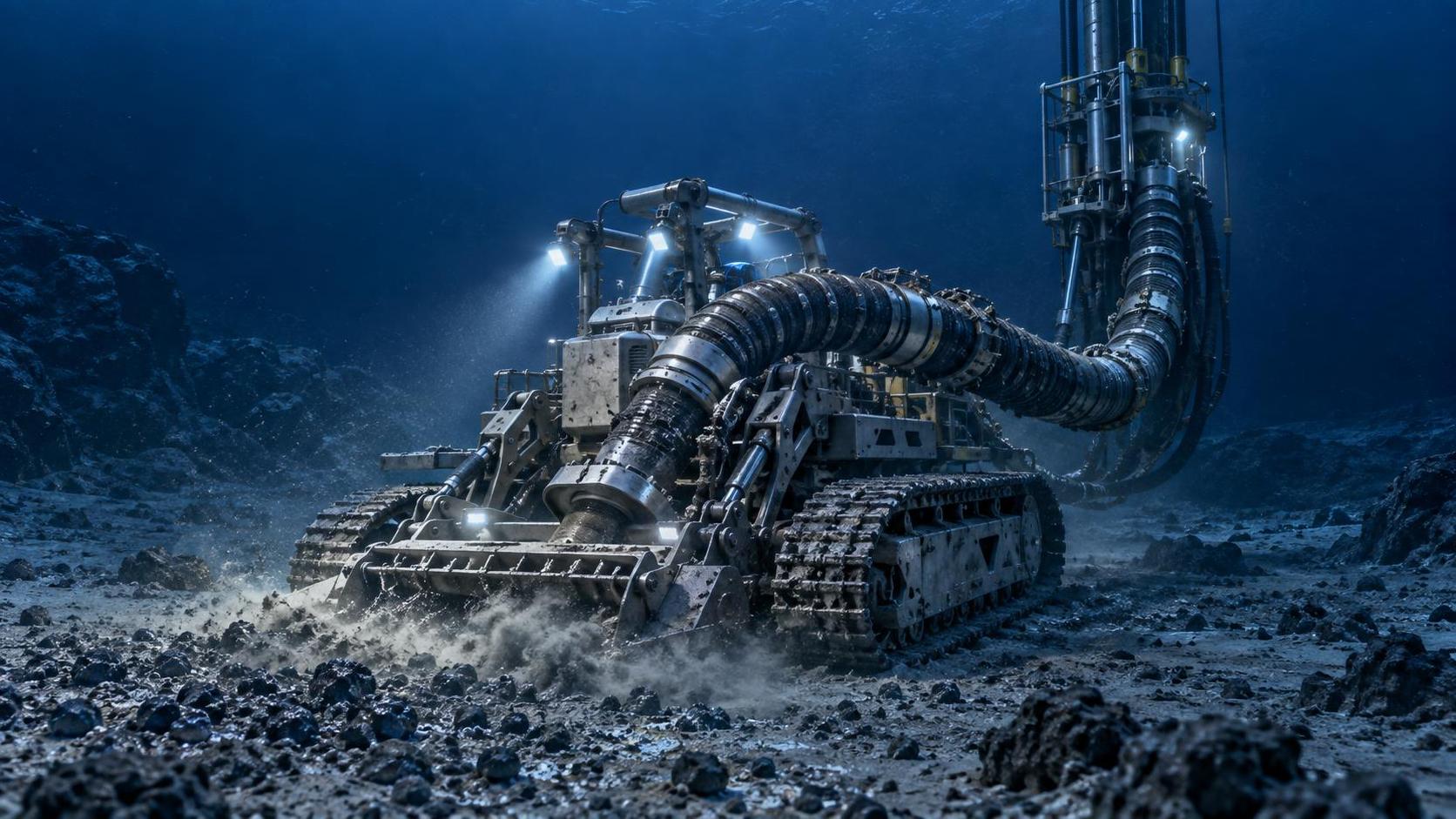
Commercial viability hinges on achieving sub-$12,000/ton delivered cost for processed polymetallic nodules (Ni, Co, Mn). Current best-in-class pilot data—drawn from multi-year seabed collection trials using modified ROV-based cutters and hydraulic lift systems—shows median recovery costs hovering between $18,500 and $24,000/ton. That includes energy-intensive surface vessel support, real-time sediment plume monitoring, and mandatory environmental baseline reconciliation. Crucially, this figure excludes insurance premiums for deep-ocean liability (now averaging 3.2% of capex, up from 0.7% in 2021), and does not reflect the 22–28% yield loss observed during vertical transport due to slurry phase separation and pump cavitation.
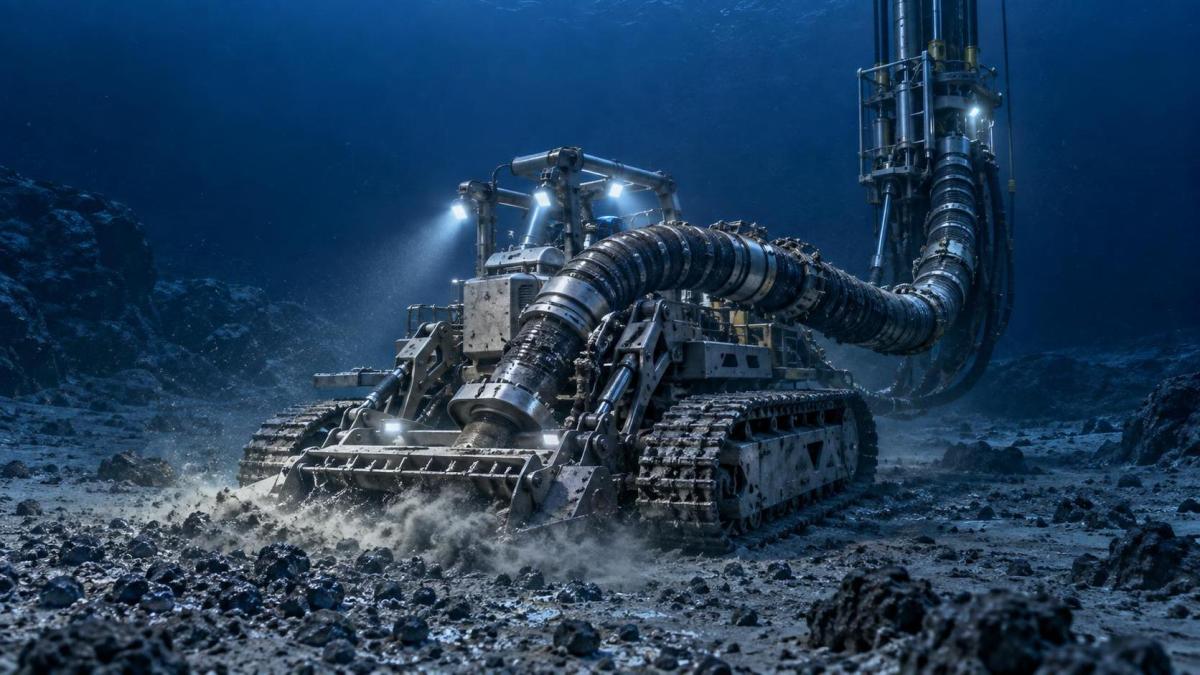
What *does* work today—and what investors are betting on—is modular system re-use. Equipment originally built for ultra-deepwater oil & gas intervention (e.g., 6,000-meter-rated manipulator arms, titanium-reinforced suction hoses) is being repurposed for nodule collection with only 30–40% redesign. This slashes lead time and de-risks mechanical reliability—but it also caps performance ceilings. These adapted systems max out at ~1.2 kt/day throughput, far below the 3.5+ kt/day needed to justify dedicated vessel fleets. In practice, that means 2026 deployments will be asset-light: contract-based, campaign-driven, and tied directly to offtake agreements with battery OEMs willing to absorb early-cost premiums.
The regulatory bottleneck isn’t about delay—it’s about divergence
Many assume the International Seabed Authority’s (ISA) delayed Mining Code is the primary barrier. It isn’t. The bigger constraint is the misalignment between ISA environmental standards and national jurisdictional enforcement. For example: a contractor may receive ISA approval for a 10 km² test area—but must then secure separate permits from coastal states for discharge zones, vessel routing corridors, and port-side processing infrastructure. In Norway and Japan, those national reviews now require full life-cycle carbon accounting—including embodied emissions from titanium alloy fabrication and deep-sea cable laying. That adds 9–14 months to timelines and forces design trade-offs (e.g., opting for lower-energy but higher-maintenance electro-hydraulic actuators over hydraulic-only systems).
More consequential is the emerging precedent set by Pacific Island nations. Five countries—including Nauru and Tonga—have formally adopted “precautionary moratoria” requiring third-party verification of zero-benthic-impact before any export license is issued. This isn’t a blanket ban—it’s an enforceable technical standard. And as of Q1 2024, no existing collection system has passed independent validation for continuous operation without detectable sediment resuspension beyond 200 meters from the collector path. Until that changes, “commercial” remains tethered to political risk tolerance—not engineering readiness.
What “commercially viable” actually means in 2026
It doesn’t mean fleet-wide deployment. It doesn’t mean open-market commodity pricing. And it certainly doesn’t mean replacement for terrestrial nickel or cobalt supply.
Rather, commercial viability in 2026 manifests in three specific, bounded scenarios:
- Of-fleet, off-take-backed campaigns: Single-vessel operations contracted by EV battery makers under 5-year fixed-price agreements—where equipment is leased, not owned, and performance penalties are capped at 15% of contract value.
- Hybrid resource stacking: Integration with offshore wind or subsea hydrogen infrastructure, where shared vessel time, power umbilicals, and maintenance windows offset standalone CAPEX. Two projects in the North Sea are already co-locating nodule collectors with turbine foundation inspection ROVs.
- Regulatory arbitrage zones: Limited operations within national EEZs (e.g., Indonesia’s exclusive economic zone around the Banda Sea), where domestic mining codes permit phased deployment under adaptive management—bypassing ISA entirely while still accessing nodules with comparable metal grades.
None of these scenarios scale to >100 kt/year before 2028. None eliminate environmental monitoring overhead. All depend on equipment vendors delivering not just hardware—but certified interoperability with third-party sensor suites (CTD, turbidity, acoustic backscatter) and real-time data feeds compliant with ISO 23456:2023 for seabed impact reporting.
What to watch—not what to buy—before Q4 2025
If you’re evaluating equipment procurement, partnership, or investment exposure, skip vendor spec sheets. Focus instead on four observable signals:
- Slurry stability metrics: Request third-party test reports showing solids retention >92% at 4,500 m depth over 72-hour continuous runs—not lab simulations, but data from actual seabed trials.
- Permit linkage: Does the vendor’s system architecture include pre-certified interfaces for national regulatory dashboards (e.g., Norway’s MARES platform or Japan’s JAMSTEC reporting portal)? If not, integration delays will dominate your timeline.
- Spares logistics footprint: Verify whether critical components (e.g., ceramic-lined pumps, fiber-optic slip rings) are stocked within 72 hours of major ports like Singapore, Rotterdam, or Papeete—not just manufactured there.
- Insurance underwriting status: A binding letter of coverage from Lloyds’ Marine & Energy division—not a proposal—is the strongest proxy for perceived operational reliability.
By late 2025, the viability question won’t be whether equipment works. It will be whether it works *within the margins that real capital requires*. That shift—from technical feasibility to financial resilience—is already underway. The equipment exists. The question is whether its operating envelope fits the risk appetite of infrastructure-grade investors—not venture funds or sovereign wealth experiments.
Get weekly intelligence in your inbox.
No noise. No sponsored content. Pure intelligence.
News Recommendations
 Sep 19, 2026How an electronics application guide helps prevent component mismatchHow an electronics application guide helps prevent component mismatch
 Sep 18, 2026When a resource allocation platform improves project deliveryWhen a resource allocation platform improves project delivery
 Sep 17, 2026What to compare when evaluating mineral processing equipment manufacturersWhat to compare when evaluating mineral processing equipment manufacturers
 Sep 16, 2026How mineral separation optimization can reduce concentrate lossesHow mineral separation optimization can reduce concentrate losses
 Sep 15, 2026How to assess lifecycle costs in urban tech procurementHow to assess lifecycle costs in urban tech procurement
 Sep 14, 2026Heavy industry technology trends reshaping capital investment prioritiesHeavy industry technology trends reshaping capital investment priorities
 Sep 14, 2026Why Infrastructure Equipment Buyers Are Shifting from Catalog-Based to Capability-Based Supplier SelectionWhy Infrastructure Equipment Buyers Are Shifting from Catalog-Based to Capability-Based Supplier Selection
 Sep 14, 2026Process Automation Project Execution: How to Align Supplier Capabilities with PLC Integration, Cybersecurity & Commissioning MilestonesProcess Automation Project Execution: How to Align Supplier Capabilities with PLC Integration, Cybersecurity & Commissioning Milestones
 Sep 14, 2026Are intelligent traffic systems worth the investment for small cities?Are intelligent traffic systems worth the investment for small cities?
 Sep 14, 2026How do intelligent traffic systems handle sensor failures?How do intelligent traffic systems handle sensor failures?
 Sep 14, 2026What should I check before accepting a smart building system?What should I check before accepting a smart building system?
 Sep 14, 2026Is a smart building system worth the maintenance cost?Is a smart building system worth the maintenance cost?
 Sep 14, 2026What data is needed for reliable resource allocation planning?What data is needed for reliable resource allocation planning?
 Sep 14, 2026How can resource allocation software reduce equipment idle time?How can resource allocation software reduce equipment idle time?
 Sep 14, 2026How should smart devices be maintained in harsh outdoor conditions?How should smart devices be maintained in harsh outdoor conditions?
 Sep 14, 2026Do smart devices improve worker safety on construction sites?Do smart devices improve worker safety on construction sites?
 Sep 14, 2026What environmental risks must be assessed before deep-sea mining?What environmental risks must be assessed before deep-sea mining?
 Sep 14, 2026Is deep-sea mining equipment commercially viable in 2026?Is deep-sea mining equipment commercially viable in 2026?
 Sep 14, 2026What Inspection Checks Should Procurement Teams Perform Before Ordering Dredging Equipment in 2026?What Inspection Checks Should Procurement Teams Perform Before Ordering Dredging Equipment in 2026?
 Sep 13, 2026How to verify an industrial product information source before specifying equipmentHow to verify an industrial product information source before specifying equipment
 Sep 12, 2026Which intelligent traffic systems hardware fits an urban intersection?Which intelligent traffic systems hardware fits an urban intersection?
 Sep 11, 2026How pump capacity affects response coverage for municipal fire fighting vehiclesHow pump capacity affects response coverage for municipal fire fighting vehicles
 Sep 10, 2026What to verify before choosing a heavy industry equipment supplierWhat to verify before choosing a heavy industry equipment supplier
 Sep 09, 2026When do adaptive urban traffic control systems reduce corridor delays?When do adaptive urban traffic control systems reduce corridor delays?
 Sep 08, 2026When logistics technology solutions in North America reduce delivery delaysWhen logistics technology solutions in North America reduce delivery delays
 Sep 07, 2026How reliable are wireless mining safety systems in underground mines?How reliable are wireless mining safety systems in underground mines?
 Sep 07, 2026How to assess a smart lighting technology platform for interoperabilityHow to assess a smart lighting technology platform for interoperability